- Follow us:


Tuesday, September 27th, 2016
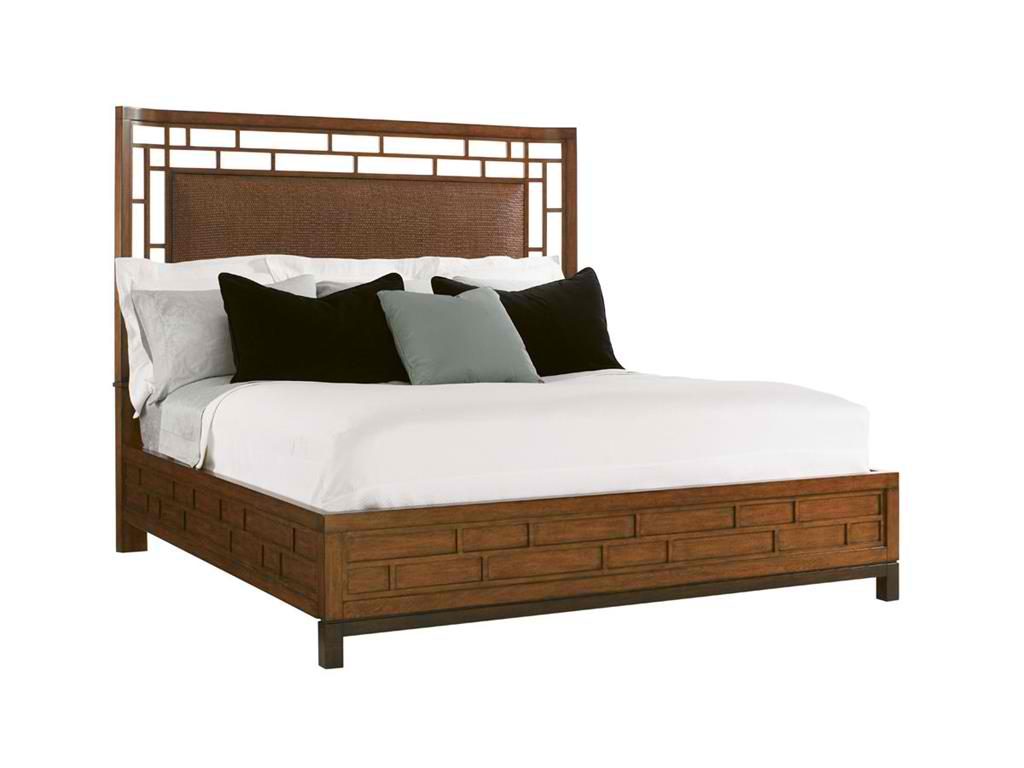
Tommy Bahama Home Bedroom Paradise Point 5.0 Queen Bed 536-133C
People these days live fast-paced lives with most living in an urban lifestyle. It helps when you do come home to a wonderfully peaceful place, doesn’t it? Not a lot of home designs can give you that feeling. If you want to feel unruffled, then you might want to look into Asian interior design.
Embracing the Asian theme is a lot more than adding distinct décor. It requires precision and care as well as a careful thought process that would allow you to do away with unnecessary additions.
Asian design, at its very core, is a melting pot of various styles coming from different Asian regions. This could be Chinese, Japanese, Indian, and many others. For many designers, though, the theme is dominated by a lot of Oriental influences originating from the Far East, centuries ago.
It’s time to incorporate the wonderfully Asian elements in your home while keeping the contemporary vibe –
The Asian Backdrop
Asian designs are greatly inspired by Mother Nature’s colors. The décor often mimics beautiful landscapes and natural outdoor elements. Since this is so, your best bet in achieving Asian interior design is to be as neutral as possible.
Having a neutral backdrop does not automatically mean that your only option is white. You can have the understated calmness of blue, or the elegance of gray, even the gentleness of cream. Just keep in mind that the backdrop has to be soothing and relaxed.
If you want to stage a more mystical look, then you can add some subtle blacks. Another wonderful option is to fuse a neutral backdrop with some golden tones that evoke a majestic flair. You’re in good hands with gold tones this season because they are absolutely hot. Very few colors can be classified as a fashionable hue.
Asian Textural and Visual Balance
When planning for Asian interiors, it would help if you keep the word balance in your head. This is a term that you will encounter many times yet there is not overstating the importance of this oriental design aspect.
Balance is the key to the definition of Asian interiors. You need to harmonize the textures and elements all around you. If you have a concrete home, it would pay to add glass partitions, some wooden floors, stone décor, and bamboo blinds.
Organic texture is also welcome.
Asian and Water Features
Equilibrium can be achieved with the use of a simple water feature. The mere sound of flowing water ushers in the simple, calming effect in every Asian style.
Water is an element that is considered positive. The Feng Shui makes good use of this element so it would be great to have a water feature right by your home’s entrance, the living area as well as the backyard. Reflecting pools are also amazing additions.
If you are looking into adding a more unique water feature, then why not try a koi pond? This still adds the needed fluidity while giving you a spectacular view of the school of koi fish each time that you go to your front or backyard.
Asian Style Means Chinese, Japanese, Indian, etc…
The fusion of different styles in Asian interior design could be tricky to realize if you want to have each element brought in. It is crucial to know every style as well as the distinct elements that go in each. Japanese design, for instance, is minimalist, always focusing on the essence of Zen.
Chinese, on the other hand, uses a lot of colors from jade, to purple, to reds, yellows and golds. Opulence is the keyword in Chinese interior design.
Indian design is even more colorful. Use deep reds, oranges, blues and greens, even lots of yellows.
Lastly, Asian interior design is all about being organic and sustainable in all of the elements. Replace the traditional lighting fixtures, window treatments, and such and you should be fine.
Tags: Asian furniture, Asian interior design, Asian interiors, Asian style, bamboo, Chinese design, Chinese style, decorating with bamboo, Indian, Indian interior design, Indian interiors, Japanese design elements, Japanese interior design, Japanese interiors, Japanese style, McCreerys, McCreerys Home Furnishings, water elements, water feature, Zen, Zen design, Zen home, Zen interiors, Zen living, Zen style, Zen-inspired home
Posted in Interior Design 101, Interior Design Elements | No Comments »
Friday, February 12th, 2016
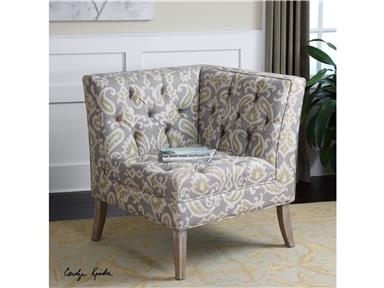
Living Room Uttermost Meliso Tufted Corner Chair 23167
Have you ever heard of the term Ikat? This is actually a kind of fabric that has been woven, dipped and dyed in almost the same way as tie-dyed stuff. The creation of Ikat prints is time consuming, hence, it was a symbol of power and wealth among Indonesians.
Ikat became available to interior design just a few years back. John Robshow, a famous fabric collector, as well as Madeline Weinrib, took Ikat and turned it into a high-end material. Soon, Oscar dela Renta also used the material on their scarves, bags, dresses and shoes.
The Ikat Technique
Ikat is a technique of resist dyeing that is used in making textile patterns. Resist dyeing often involves covering some parts of the fabric to shield them from the dye’s penetration. Thread is wound around the fabrics then wax is applied to the cloth’s surface (batik).
Ikat, in contrast, is a process done before weaving, warping or wefting. To come up with the patterns, the threads are first set on a frame. Several threads are then grouped then tied all at once. This results in knot units where the overall pattern made obvious.
Resist ties are then removed or some are added for every color. The combinations give birth to the designs. As the dyeing is completed, every single one of the resists is opened then the patterned yarns are finally woven.
Ikat is a Malay-Indonesian term for tie. Depending on whether tied fibers are used on the weft or warp, the technique can be called either as weft ikat or warp ikat. The double ikat is known as the third variety. This mixes the weft and warp tied resist.
The pattern becomes visible through the use of a major resist-dyed thread system. Warp ikat makes use of weave that is warp-faced while weft ikat has a weft-faced look.
Plain weave is best for showcasing the ikat design. Weft ikat which is a twill weave, can also be used.
Double ikat is ideally woven using a balanced weave, with weft and warp both visible. Any kind of textile fiber can be used to create ikat, though cotton and silk are quite common.
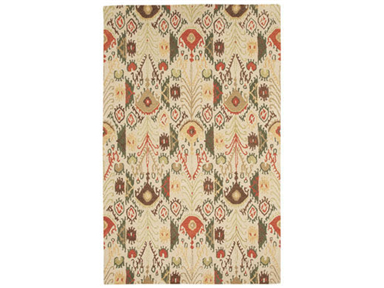
Capel Incorporated Floor Coverings Ikat 3′ x 5′ Rug 3261RS03000500800
More Ikat History
It is not established where and when the resist technique first came into existence. Asia comes with cultural regions with strong ikat culture. India, Central Asia and Maritime Southeast Asia are all candidates for where the technique originated.
Ikat could have evolved earlier, though. The Austronesian world also knows of this technique of tie dyeing. Madagascar and Indonesian ikat traditions seem to have similarities.
The earliest productions of ikat have also been seen in Peru, Chile, Guatemala, even Nigeria and Ghana. The Mediterranean region and Europe answered with ikat when Islamic textiles became renown. Italy soon welcomed this lovely print during the 17th century. The rest of Europe including Spain and France also started to produce these lovely prints.
The 19th and 20th centuries witnessed how Asia produced quality ikat textiles. Countries such as Japan, India and the rest of Asia produced these quality textiles in abundance. China, though famous for textile production, was not able to develop this technique.
India and the rest of Southeast Asia are the regions that offered more diverse ikat designs. Andhra Pradesh, Gujarat and Orissa proved to have their own ikat traditions. The sari-length silk cloths were soon manufactured in double ikat by Patan weavers.
Ikat designs, even to this day, require precision and a great amount of planning. If you have one in your home, then you are in possession of a piece that has weathered the test of time.
Tags: 19th century, 20th century, Asian design, Asian style, geometric patterns, ikat, ikat design, ikat patterns, ikat prints, Indian, McCreerys, McCreerys Home Furnishings, patterns
Posted in Interior Design 101, Interior Design Elements, Interior Design Themes | No Comments »
Tuesday, January 12th, 2016
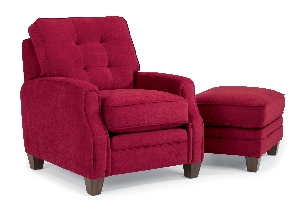
5682-10 Sloan Chair without Nails and 5682-08 Sloan Ottoman without Nails in Fabric 917-60. This chair shows that Bohemian is all about vibrant colors.
Bohemian interior design involves the infusion of hippies, travelers, even gypsies. These are the very people who are out to have fun. They also live the most colorful lives as is evident in their style and their homes.
The bohemian interiors are lived spaces. There is nothing drab about this style as it is colorful, full of ornaments, exclusive, and electrifying. Bohemian accessories should be able to showcase a special appearance. The decor is not just amazing to look at in bedrooms and living rooms but also in other areas of your home like your kitchen, even the bathroom.
The Mingling of Creativity and Art
The bohemian style is exclusive because it displays the effects of art and creativity. It can lift a boring facade without you putting too much energy. Just hunt for the right furniture pieces (and colors) that are most suitable for this design.
Step number one is to pick the right color scheme for your home. Whatever hue you settle with, make sure that it has the capacity to deliver a harmonious effect on the walls, floor, accessories and the furniture.
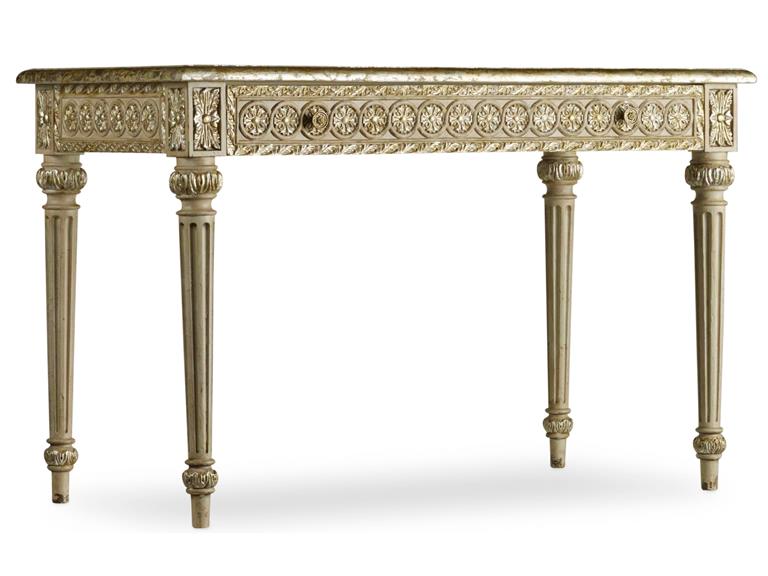
This Hooker Furniture Home Office Accent Desk is what you need for your Bohemian home work space.
There are a few more daring interior designers who choose bold and dark colors for the bohemian look. There are actually a lot of options on your color palette. Combine different colors till you reach a blend that you like. Some of the more interesting hues include rust, brick red, sunny yellow, deep brown, plum, violet, gold, burnt orange, magenta, emerald and camel.
There are also a few color schemes that you should avoid for this design. Colors such as pastel, neon and those shimmering shades (‘cept gold) should be avoided like the plague.
Now for the furniture, you can choose to combine different kinds of furniture to make a room more exciting. A leather sofa would be perfect for your bohemian living room. As for the seating area, be sure to deliver a non-cluttered impression.
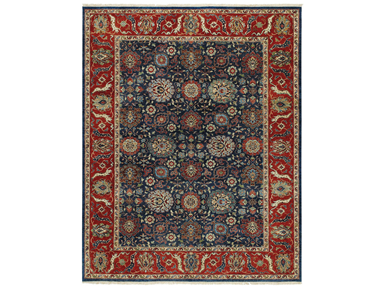
This very bohemian rug is the Capel Incorporated Floor Coverings Biltmore Select Bidjar Rug 1773RS02000300450.
The decorative appeal of this interior style lies heavily on the accessories that you will be bringing in. Choose unique accessories such as artwork coming from Africa, India, and the Middle East. Enhancing the flavor of your bohemian style is as easy as adding an eclectic taste. It wouldn’t be wrong to display accessories that have been inspired by Boho arts including tea seats, musical instrument, easels of vintage artists, some hookah pipes, too.
When it comes to bohemian colors, the most used are warm earthy colors as are metallic hues. So think of gold, terracotta, brown and other hues belonging to this family. Look for jewel tones such as fiery orange, purple, or electric blue. Always think warm when looking for the right bohemian color. White should never be a part of this design.
Bohemian is for people who want their homes to look vibrant, filled with culture and the most appealing pieces. It flees in the presence of modernism but it embraces what’s carefree, unusual and relaxed. Fuse lots of patterns and experiment with the loudest colors. Layer those throws on your sofa, use colorful area rugs, and hang never-before-seen tapestries.
Bohemian means you learn to mix and match. Find natural materials such as sisal, burlap then fuse them with chenille and silk. These materials should look slightly worn. Pillows, lampshades and curtains could have fringe.
Tags: African, art, bohemian, Bohemian art, bohemian interiors, bohemian style, guidelines, harmony, hippie, Indian, McCreerys, McCreerys Home Furnishings, mixing and matching furniture, mixing colors, mixing designs, mixing style, Moroccan, Moroccan interior design, Moroccan interiors, Moroccan style, tips
Posted in Interior Design 101, Interior Design Elements, Interior Design Themes | No Comments »
Follow us on our social media


© McCreery's Home Furnishings | All Rights Reserved | Privacy Policy
