- Follow us:


 Popping the cork and raising your glasses with the fizzy and sparkling champagne as the clock strikes midnight is already a tradition for many people all around the globe. So, why is it that champagne is the special beverage that takes center stage during such momentous occasions?
Looking Back
This bubbly wine is known throughout history as the star of parties and many luxurious royal occasions. This, somehow, symbolized aristocracy in Europe; even after the French Revolution, this wine became a huge part of secular rituals which replaced the religious rituals.
In fact, you could even christen a new ship minus the priest. A bottle of champagne could easily replace the holy water that is supposed to be sprinkled throughout the vessel. This same drink can also be opened during baptisms, weddings, and many other religious occasions.
Originally produced in England in the 1500s, it was a carbon dioxide filled corked bottle then minus the sparkle. Adding the sugar in the late 1600s brought about the wine’s signature sparkle.
It took almost a hundred years for chemists to figure out the correct amount of sugar that would not result in exploding bottles. While the English preferred their dry version of the champagne, the French, on the other hand, wanted the newer, sweeter version.
The very tradition of drinking champagne during celebrations can be attributed to the European royal courts before 1789. Back then, it was a status symbol, and it was even widely believed that the wine had positive effects on men’s wits and women’s beauty.
It has long since become a worldwide drinking marvel. It is now famous for occasions such as tossing champagne glasses on the floor of Russian weddings and smashing a bottle or two against the ship that’s about to have its maiden voyage.
Champagne drinking has always been symbolic. Visually, it shows abundance and happiness. Racecar drivers and athletes are bathed with champagne during their victories but they don’t even drink it. It even shows the occasion’s sanctity.
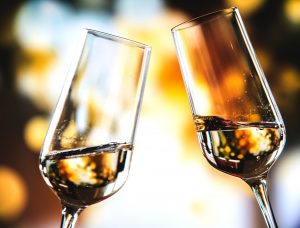
Champagne Sources
The cuvée or the base wine is picked from the pure grapes like Pinot Noir or Chardonnay. There are also varieties that have mixed grapes. Pinot Noir is the red grape type which produces white juice. Chardonnay, on the other hand, comes from white grapes.
Now let’s have a little lesson here. When you read blanc de noirs, it means white of blacks. This is the kind of wine produced from black grapes (which is another term for red grapes). Pinot Noir and Pinot Meunier are the sole black grape duo that is permitted in the Champagne AOC (champagne appellation).
The white of whites are blanc de blancs are used to describe champagnes produced solely from Chardonnay grapes. Rose wines or the pink champagne are made by macerating the clear black grape juice on its skins or by merely infusing the sparking cuvée with just a small amount of Pinot Noir red wine.
Correct Champagne Storage
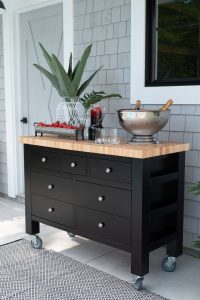
Canadel_2RST7
Proper storage does not begin and end with you, it begins right at the point of sale so be sure to buy champagne only from a reputable merchant.
Traditional wisdom dictates that wine must be stored in a constantly cool environment of about 10-12°C and no greater than 15°C. You would want to have humidity work with you when you’re setting up a wine cellar. Just make sure that this does not exceed 60-70% as a lot of humidity could foster mold growth.
Other factors that could also damage the taste of your champagne are light, sudden temperature changes, vibrations, and draughts. Don’t be too concerned about the angle of the bottle because, unlike regular wines, champagne can be stored sideways or even upright.
You may question this storage technique but the moistness of the cork is maintained because of the pressure that’s already inside your champagne bottle. If you would still want to store the bottles on their sides (just to be sure that the cork won’t dry up), then do so.
Keep in mind that champagne is highly susceptible to light exposure so always keep your stored bottles in a dark room. Fail to do that and you’d have a bad-tasting beverage to look forward to.
If you currently do not have a potential wine cellar in your home, then just screen your bottles with tinted glass or just wrap them all in aluminum foil or yellow cellophane.
So now that you know that you need a dark and slightly dank room, the next thing to do is to find a sturdy wine rack. If you have more money to invest, you can have a refrigerated wine cabinet instead.
If you’re wondering how long you should store the champagne in a cellar, then know that you should store them longer if you have the ideal temperature and conditions in the cellar. If the bottles have been exposed to light, then be sure to consume them right away.
With proper storage and handling, champagne reaches its peak in just a few years of its disgorgement. From there, it will start a gradual decline. Successful storage in your home depends on many factors including how it was made, how it evolved, and how it was handled eventually.
A few wine connoisseurs choose to store their champagne bottles for a number of years. The British are most popular for doing this because they know how aging makes the champagne richly-flavored.
Prepping the Drink
When you’re about to entertain guests or when you look forward to celebrating something with your family, you would want nothing but the best kind of champagne, right?
Let’s enhance your drinking and toasting experience. Discover how you can properly serve this symbolic drink.
First, plan prior to serving. Take a step back then make sure that you have everything that you need to set up the best ambiance.
Next, prepare the environment. Consider the lighting, aromas and temperature. The best tasting environment must be in room temperature, well-lit, and of course, well ventilated.
You would want your guests to be comfortable when drinking their champagne. They will savor the moment if they’re not feeling too warm or too cold. Making sure that the lighting sources are not overwhelming is a great step towards seeing this sparkling wine as it should be perceived.
There should be no stray odors that will throw off the smell of the wine such as cooking odors and baking aromas. As you’ve prepped the setting, it’s time to take out the glasses and have them cleaned.
Never wash the champagne glasses through a dishwasher since this can leave traces of lime scale and soap. Handwash each one instead and allow them to dry naturally.
Time to Uncork
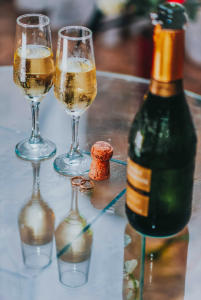
Popping open the champagne bottle can be quite fun but there are certain societies that look down on this practice. Begin by holding the bottle at a 45-degree angle. Be sure that the mouth of the bottle is pointed in a safe direction. Have a cloth of napkin draped over the arm that’s holding the bottle.
Remove the foil then loosen the wire cage or muselet. Unwind the key by making six half-turns. Don’t take it out completely, instead, have your thumb pressed to the top so that the cork won’t pop out.
Have the cloth or napkin cover the bottle’s cork. This looks both classy and clean when you’re serving the wine. The thumb must be back over the stopper. Rotate the base and carefully wiggle the cork out if it remains stuck.
Make sure the cork won’t pop no matter how much you feel the pressure from the inside of the bottle. The champagne will whisper once the cork releases. A few seconds should be enough to pour the drink without causing foaming.
Always have the napkin held above the bottle so that you could catch the overflow.
Let’s Celebrate
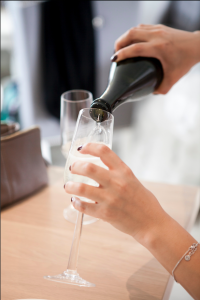
Now that you’ve opened the bottle, the next step is to pour it. Have someone with a steady hand pour the wine to each of the glasses.
Put your thumb under the bottle or the punt then spread your fingers on the bottle’s body. With your free hand, hold a wine glass at a 45-degree angle. Be sure to pour at the side of the champagne glass.
Let the foam diminish, making sure each time that the bottle does not touch the glass. The liquid must be poured halfway through and not to the brim. Finish pouring by quickly twisting the bottle and catching drops on the bottle’s lips.
It might seem inconsequential for people to learn how to properly serve champagne but doing so could actually heighten one’s drinking experience. The difference will be quite obvious, you’ll see.
Follow us on our social media


© McCreery's Home Furnishings | All Rights Reserved | Privacy Policy
