- Follow us:


Monday, April 8th, 2019
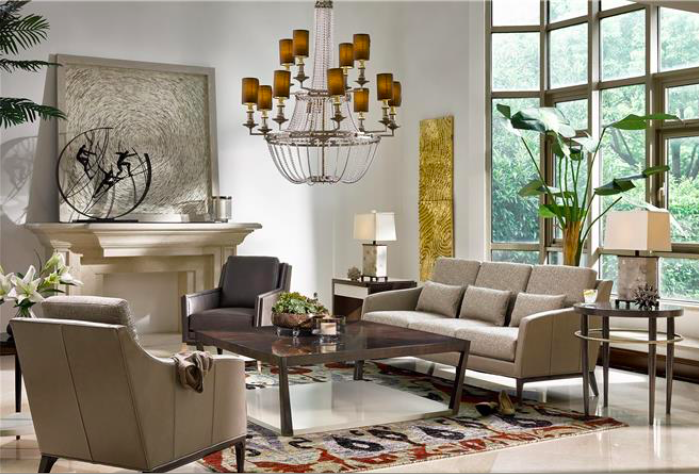
Fine Furniture Design Art Deco Collection.
There are many factors that affect the odds of a person winning the lottery but, statistically, a person’s chances of hitting the jackpot (picking the right six numbers from a pool of 49 choices) is at 1 in 13,983,816 or, approximately, 1 in 14 million.
That’s an awful lot of numbers with just one shot at winning but, hey, what if you really do become a winner, have you ever thought of how you’ll spend your money? Most people think of building their own house but what style do you have in mind?
Traditional Style
This is the interior design for people who want the classic details in their home. These are the dark, finished woods, different textures, exciting color palettes, and curvy lines. The ornate details include velvet, brocade and silk.
An exciting way to dress up your home with traditional style is to add depth, use layers, and to add a sense of dimensionality to whole ensemble. Both rustic and French country styles could fall under this style with the first being focused on stone and wood features while the other uses warmer tones of red, yellow and gold.
Modern Style
Modern is not an exact term actually but it often refers to a house that has clean lines and a basic color palette. Materials that are commonly used in such a home are metal, steel, and glass.
The furnishings in this home are also simple yet sleek. Don’t try looking for clutter here because you won’t find any (well, at least that’s the general notion).
Contemporary Style
A lot of people interchange modern and contemporary styles. But if you look more closely, you will find a lot of differences.
Contemporary interior design, in a nutshell, is a style that’s based on what’s hot right now. Modern design, on the other hand, strictly implements interpretations of the styles beginning from the 20th century.
Contemporary design is also more fluid, thus, you can be more creative on this realm. It could include curvy lines in one home whereas the next home could be more simplistic.
Scandinavian Style
This is the interior design that pays homage to the simplistic approach to life that the Nordic peoples do. The furniture pieces here are simple but all works of art. There is function for each piece, although, they remain aesthetically interesting.
A lovely offshoot of this style is the shabby chic style where white and neutral elements are also given emphasis.
Minimalist Style
This concept is getting more and more popular each year. It has elements of modern interior design with its color palettes being airy and neutral. The furnishings are also streamlined with nothing being excessive or flamboyant.
Minimalism can be defined in two words – clean lines.
Mid-Century Modern Style
If you’d like a throwback sort of look, sometime in the mid-1900s specifically the 50s till the 60s, then you could go nostalgic. Add a fuss-free look with pared down forms, egg-shaped chairs, and organic shapes.
This is a style that can easily complement any house structure.
Industrial Style
As this style’s name implies, it is a design that’s inspired by warehouses and urban lofts. You will see a lot of unfinished elements. There’s a kind of rawness that gives emphasis to wood, bricks, even the ductwork. Think of metal fixture pendants, high ceilings and old timber and you’re right at home with the industrial style.
If you’re feeling up for burst of color somewhere, then you could use abstract art or flamboyant photography to complete the look.
Transitional Style
This is getting to be more popular each year, too, because it can work for any house. This suits the homeowners who are still unsure about the eventual interior design that they would use for their place.
Transitional design could use modern elements like glass or steel while still using plush furnishings. This style also makes use of neutral colors to create a relaxed space that’s inviting and warm.
There are other styles that can make you happy when you finally win the lottery. There’s Bohemian, eccentric, Hollywood glam, Art Deco, Victorian, and many more.
Just be sure to choose whichever style speaks to you.
Tags: industrial interiors, industrial style, McCreerys, McCreerys Home Furnishings, Mid-century modern, Mid-century modern design, minimalism, minimalist interiors, minimalist style, modern interior design, modern interiors, modern style, traditional interior design, traditional style, transitional, transitional design, transitional interiors, transitional style
Posted in Interior Design 101, Interior Design Elements, Interior Design Themes | Comments Off on What House Will You Build If You Bag the Lottery?
Monday, May 8th, 2017
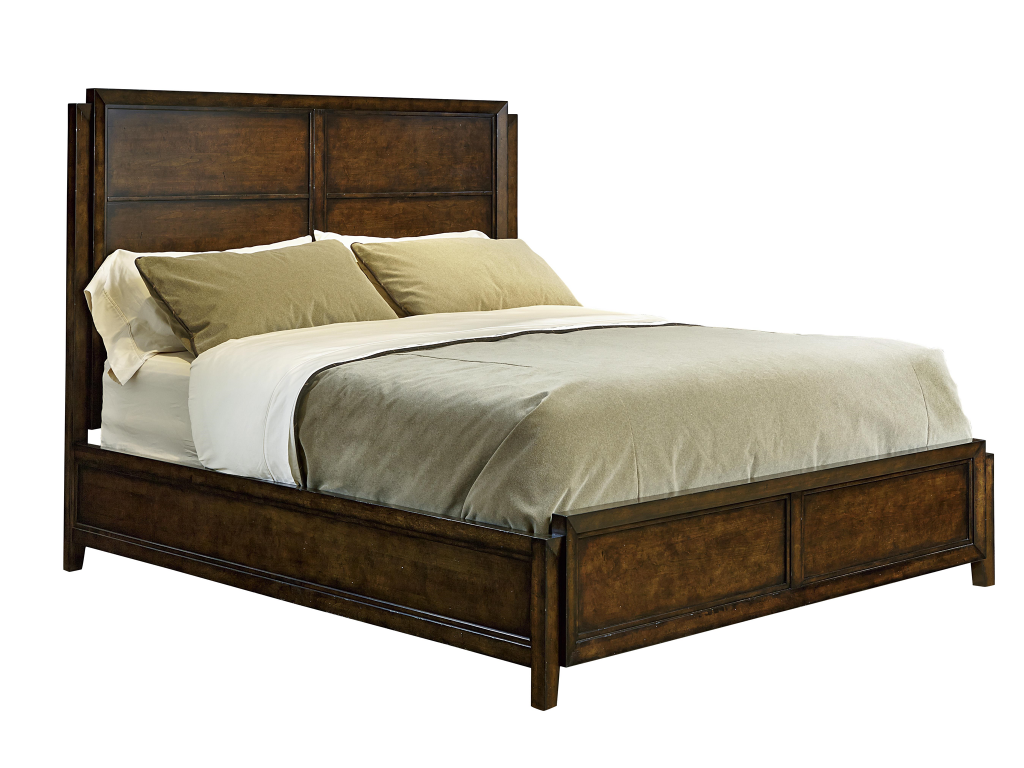
FFDM Del Mar Collection: Bradbury Queen Bed features straightforward yet delicious lines which are perfect for your transitional home.
You might have heard the definition of transitional interior design to be that balance between traditional and contemporary styles. The truth is, this isn’t always the case. You can also fuse a few pieces from other styles that you love. This is pretty much like serving Twinkies on chinaware.
You are sure to love transitional interior design if you prefer layering of accessories and elegance in every corner. To you, these are far from boring.
Layer Tones
Achieving the transitional look does not mean having your room washed up in color. What you need is to strategically give neutrals the chance to rule. Love khaki, cream, tan, taupe, even gray. Espresso brown and chocolate are also considered fundamentals.
Begin the neutral palette on your flooring. The flooring is a huge background player especially in transitional homes. Go for natural stone, woods, neutral carpeting and tiles. And remember, always practice restraint.
A muted stone tiling inside the bathroom can become more exciting if you mix in parti-colored patterns.
If you have to use patterns, make sure that they are understated. You can repeat turquoise throughout the room since this is a must-have hue for the year. Shading must be subtle especially on your rugs, walls and the upholstery.
If you have a home that has wide windows, then be sure to let in a lot of natural light. Bring in those balloon valances, ornate finials and flowing draperies. These must just add ample visual weight but not in a way that would be visually obtrusive. Use window treatments that are elegant but simple such as bamboo blinds, basic panels and Roman shades.
Unassuming Silhouettes and Accents
Transitional furnishings come with clean profiles and a design that is pretty straightforward. This is definitely not baroque since it offers only the gentlest curves and simple yet energetic lines.
Gather accessories but do so wisely. You will not need a lot just to achieve impact. Artwork must have simple frames and subjects. Your lighting must also have clean and strong lines.
One of the key rooms that you need to be worried about is the transitional kitchen. Blend traditional surfaces like stone and wood with stainless steel pieces. You should not use ornate pieces or painted tiles in this room.
Hints of Texture
You cannot rely on bright hues to liven up a transitional home. Textures can help you do this so go ahead and use textured, woven fabrics, matte and shiny finishes, also natural fibers. Layer these exciting textures and finishes to achieve a room that excites.
Think also of burlap, leather, rattan, sisal, etc. Never go overboard, though, or you would end up losing the elegance which you are also trying to achieve for this style.
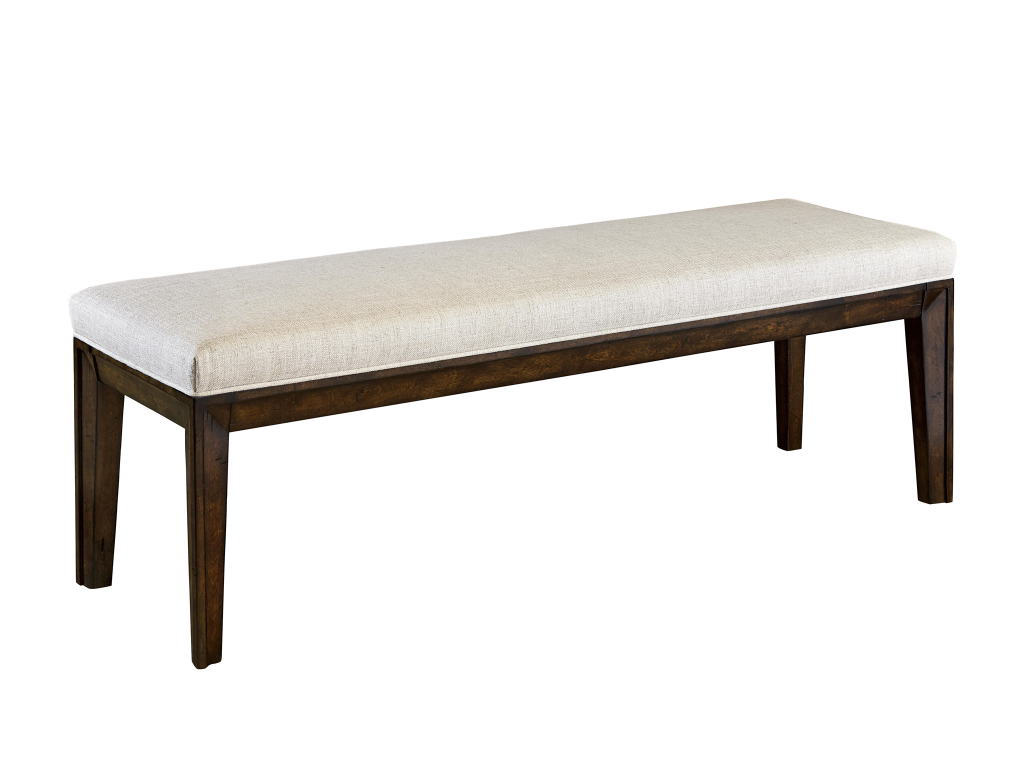
Still from the Del Mar Collection: Coronado Bed Bench
Zen Is the Word
Most important of all, you need to achieve a serene, highly restful area. Be sure to set up your furnishings in a non-brash kind of way yet it shouldn’t also be too quiet. Remember crisp lines, interesting textures, and ample patterns as well as fundamental lighting fixtures.
More on Updated Classic
The transitional style is also referred to as updated classic design. Based on the term transition, this is moving from one place to the next. In reference to interior design, though, it means meshing traditional and contemporary.
Transitional style is a hot trend these days. You can also say goodbye to the difficult design rules because this is an easy style to pull off. In a nutshell, here are your transitional design tips –
Tags: McCreerys, McCreerys Home Furnishings, transitional, transitional design, transitional interiors, transitional style, transitional theme
Posted in 2017 Trends, Interior Design 101, Interior Design Themes | Comments Off on Making Transitional Your New Style
Thursday, April 28th, 2016
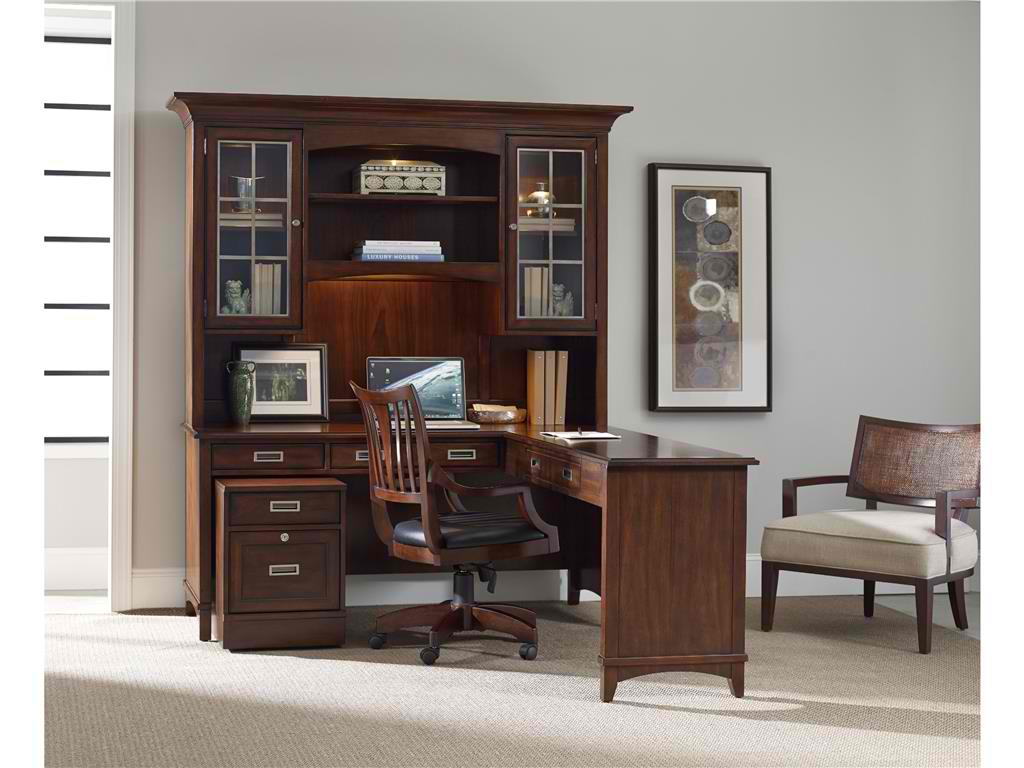
Hooker Furniture Home Office. Latitude Modular Group
What is transitional design? This is known as a design that is just right. It is not too formal, yet not too casual. It is also comfortable even while offering clean profiles. Transitional design also spells understated colors and the modern look. The result is a streamlined yet gracious space that’s right about in the middle.
Transitional design works because it is a look that’s familiar. If you try to browse home design magazines, you would be surprised that more than half of the featured homes there are transitional.
Transitional design is much like a world that lies between two dimensions. You have the leeway to find something fresh yet not straying from the proverbial.
Transitional also means being able to balance the traditional with the modern. The beauty of it is that you can mix a dash of other styles so long as they do not stray from the tailored setup.
If you love everything that is natural, then you will love the look that transitional design offers.
Defining Tone-on-Tone
Transitional design isn’t for color junkies, though. The palette that rules is – warm neutrals. So it’s time to use a lot of taupe, cream, khaki, tan, and gray. You can have a hint of espresso or chocolate here and there.
In essence, the brown palette reigns supreme. Keep patterns to a bare minimum. Say no to the punchy look of florals and Pucci prints.
If you think that you can’t live without bright colors, then be strategic in using transitional palette. Use bright turquoise, for instance, with coral in an interesting piece of artwork.
Use a pair of lamps or some throw pillows to add a bit of color inside a transitional home.
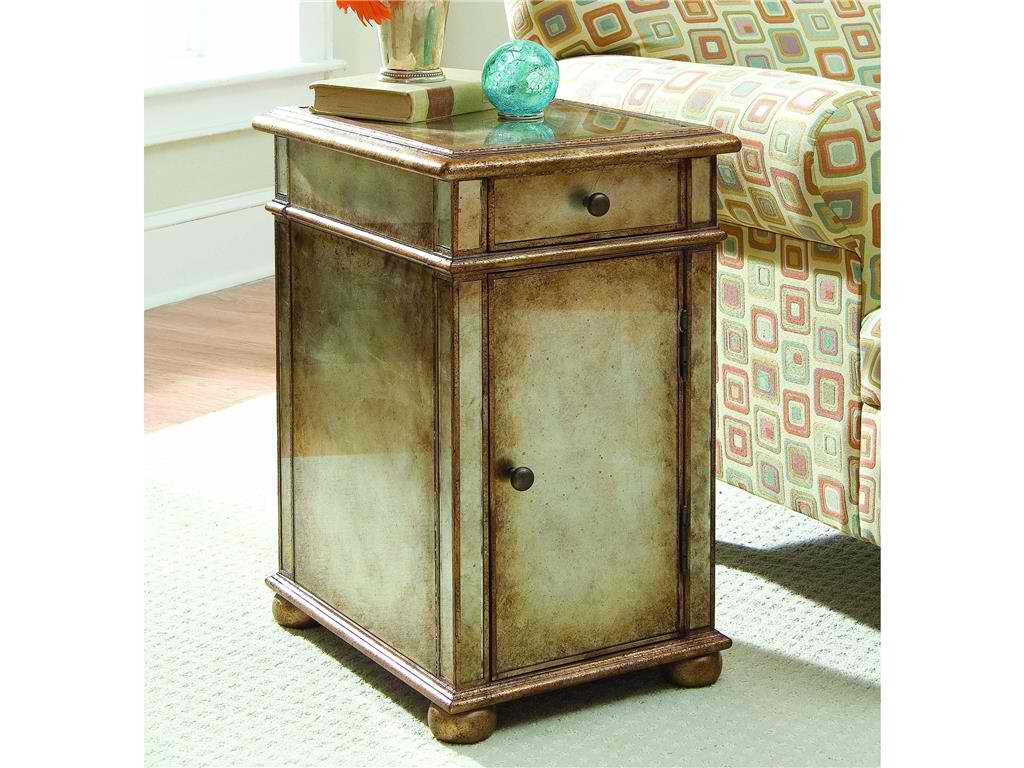
Hooker Furniture Living Room One-Door One-Drawer Antique Mirror Chest is a transitional chest with gold/silver metallic paint.
Monochrome Is In
The living area can be monochromatic though not boring. The furniture that you choose should be able to carry the space. There must be some patterns on the curtains and the coffee table’s grain can break the monotony of neutrals.
Wide windows also provide a bright source of light. If you want shading, then use light shades on the rug, walls and upholstery.
Neutral flooring plays a huge role in transitional rooms. Don’t think too much about the materials that you would use but more of the colors. Go with natural woods, tiles, stone, and carpeting. Transitional palette is a subtle palette. You can combine various floor surfaces, though.
A muted stone tile can be used in bathrooms. Carrying it up the walls can give it a more noticeable presence.
Basic Silhouettes
Furnishings for transitional homes offer crisp looks. They should be pretty straightforward. You will never be able to see a hint of baroque in any of the design elements. Rigid lines and the gentlest curves create energy.
Older furniture styles don’t have to be completely snubbed, though. You can use the more updated versions like a modern chair. Use large scales to make the place more inviting and comfortable. You would want the guests to feel relaxed.
Add Textures
You cannot rely on colors to create the needed punch in a transitional home. Texture can rise to the challenge. Fabrics that you use are coarse, made of natural fibers, shiny or matte finishes. You can also combine these elements for layering.
Think of burlap, leather, sisal, rattan, chenille, and others. Any materials that are tactile would be suitable for a transitional home.
Add some beaded board right up the ceiling and place a rattan chair right by a wooden desk to complete the look. Limit your accessories while still creating some impact. This is especially useful in a style that says no to frills.
Tags: McCreerys, McCreerys Home Furnishings, mixing and matching furniture, mixing designs, mixing style, monochromatic color palette, monochromatic color scheme, monochrome, monochrome color palette, monochrome design, monochrome interiors, monochrome palette, texture in interior design, textures, transitional design, transitional interior design, transitional style, transitional theme
Posted in Interior Design 101, Interior Design Elements, Interior Design Themes | No Comments »
Follow us on our social media


© McCreery's Home Furnishings | All Rights Reserved | Privacy Policy
