- Follow us:


Tuesday, July 4th, 2017
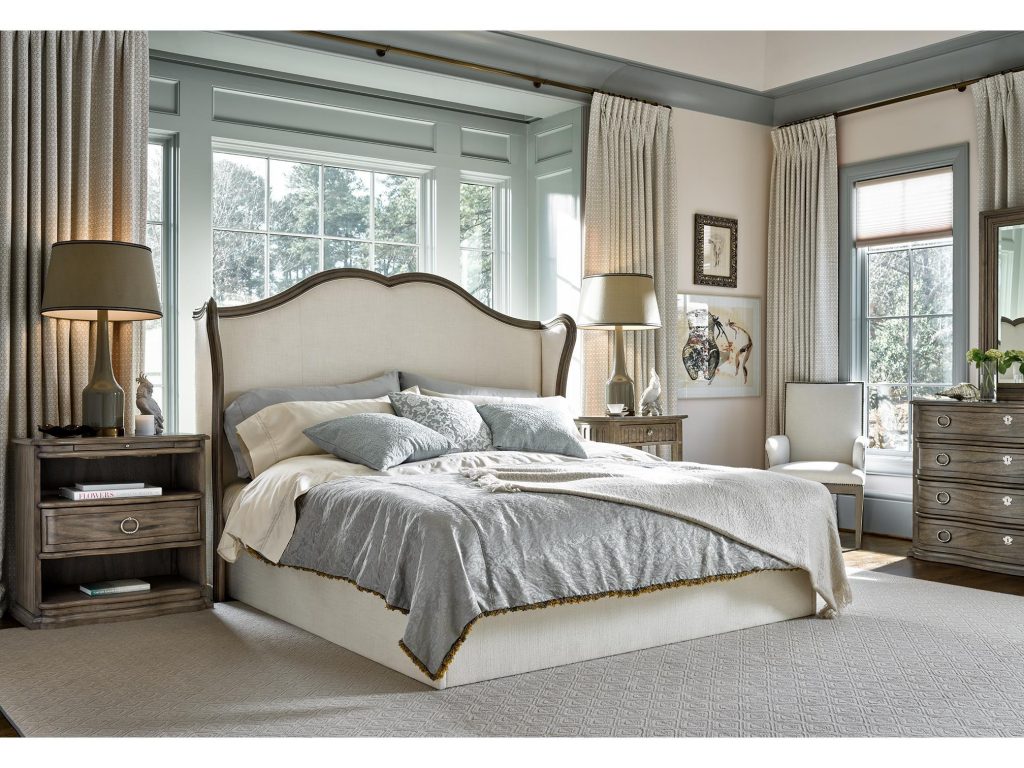
This bedroom still manages to stand out even with an all-neutral background and furnishings. Featured furniture is the Lazarus Queen Headboard piece from FFDM’s Meritage Collection.
(Second in a Six-Part Series)
Pronounced (NOO-trul), neutral colors are not the hues that you would expect to see on your color wheel. Neutrals include light, midtone and the darker shades that are all classified as earthen colors. When talking about the interior design context, neutral actually means minus the color.
The most famous neutrals include black, ivory, beige, taupe, shades of gray, and white. These colors plus undertones will create variety despite your color palette being neutral.
To illustrate this, picture different shades of beige. There are actually some that have undertones of pink, gold or tan. Even white is not just the stark white that we compare hospital environments to. White can be bluish, ivory, or yellowish.
The Light Neutrals
Beige and white are two favorite light neutrals that are standalone hues. While this is so, they are still versatile enough to be used with other equally subtle colors.
White and beige are not even referred to as real colors but they do give a clean and classic feeling especially when used in the right rooms such as the bedroom, powder room or the dining room.
Light neutrals are there to trick the eye to believe that there is more space when it is actually limited. When you pair furnishings with like shades, you could create a sprawling room illusion without too much effort.
The Midtones
Mid-tones are cocoa, khaki, camel, and sand which all offer a natural ambiance. These hues also provide the best backdrop for colorful or like-colored furnishings.
The use of midtone in interior design is now a popular move among homeowners. These neutrals give comfort and warmth where necessary though they are also versatile to work with tropical, classical, and even modern designs.
In essence, the mid-tone is any indirect lighting that is directed at an object. Just imagine an apple that is receiving an enormous amount of sunlight. The surface that gets hit with the most light is the highlighted area. The shadows are the areas where there is no light. Now imagine the line where these two meet – that’s the perfect midtone.
The Dark Neutrals
The best examples of dark neutrals are black and gray. These are the colors that can effortlessly add drama, sexiness, and a dash of sleek to any living space.
Dark neutrals are sophisticated tones whether you intend to use them as an accent or background. Make a minimalist and stark statement as you contrast the dark colors against a lighter, neutral background (white and beige are absolutely perfect). You can also choose to be bold by pairing black or gray with bright colors such as yellow or red.
The All-Neutral Living Space
If you’re brave enough to do the all-neutral theme, then be sure to layer the varying hues of the color that you choose to use. This will ensure that you achieve a sophisticated ambiance.
Still, be sure to use colors that harmonize with one another. Pick a lighter shade for your walls (take note to always begin with the walls) while you use dark upholstery. You can also use an area rug in hues that blend well with a wood flooring. Just make sure that this shade is darker than your walls so that your furniture will still stand out.
Be sure to tie the room with the right accessories. When you properly use neutrals to your advantage, then you will see that all these stand out – the fireplace surrounded with stone, wood, and bricks’; the exposed beams; the hardwood flooring; and the wooden window frames.
Having a light and large home means you have a lot of options. If your home is small and a little on the dark side, then it would do you good to lighten up your neutral color palette.
Tags: light neutrals, McCreerys, McCreerys Home Furnishings, midtone, midtones, neutrals
Posted in Color Schemes, Interior Design 101, Interior Design Elements, Interior Design Themes | Comments Off on Color 101: Lovin’ the Neutrals
Tuesday, July 4th, 2017
(The First of a Six-Part Series)
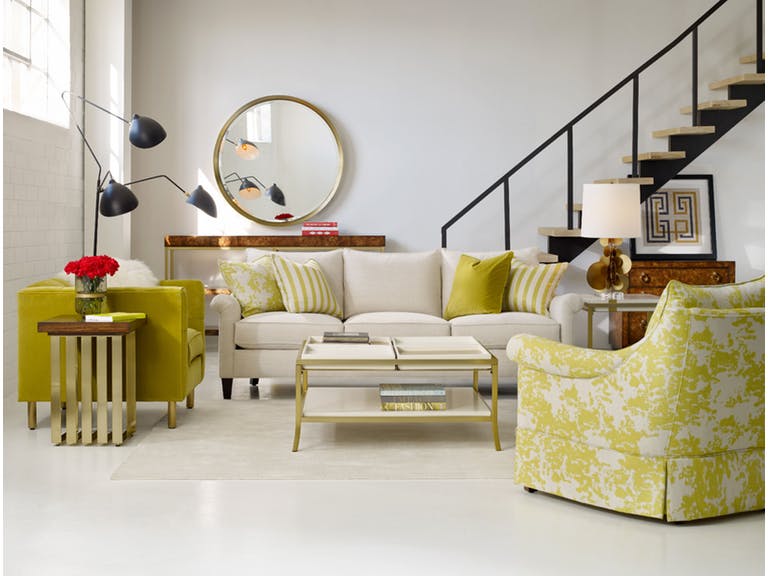
Cynthia Rowley’s Rivington 3-Over-3 Sofa together with the most colorful decorative elements to adorn a living room.
Adding color to your home – or at the very least, conceptualizing how the hues will make your habitat more amazing – is also a way to add more color to your life. Yet there are a lot of questions as to what paint color to use in a home as well as color predicaments like whether to pick gray or blue.
Of course we won’t be able to send you paint swatches just so you know how to begin your color 101 journey. What you can do is to read this series of color and paint basics that will teach you how to shop for the best colors and to effectively use them in your home.
This first of a six-part series will teach you about color fundamentals – this is more like a crash course to reading the color wheel and how to harmonize hues.
Matching and mixing colors is no easy business, though. Don’t get the idea that everyone can do this without any knowledge of color fundamentals, don’t feel, insecure in pairing unique hues, too. It’s all about learning the science and the art behind it all and being comfortable in using it in your own home.
Decorating with Hues
It is crucial to keep the color theory in mind when it comes to color decoration. Before you start thinking if it’s complicated or not, here are the basic principles –
Color theory also creates logical color structure. For instance, you could have a bunch of vegetables and fruits. Color theory would dictate that you would organize these based on their color relation. The oranges would sit next to the lemons while the lemons would be right next to the green apples which sit right next to the blueberries, and so on.
Don’t fret, it is not as complex as it seems to sound. You just have to, primarily, orient yourself to the color wheel. This is a tool, a handy helper of sorts, which will guide you in picking the specific colors – even down to the specific shades – that you want.
The color wheel comprises 12 basic colors which are –
When dealing with paint, remember these terms –
Shade means any pure hue fused with black.
Tone is a hue mixed with gray.
Hue is any pure color with the exception of white or black.
Tint is a color mixed with white.
Here are the fundamental color harmonies that you need to keep in mind –
Analogous hues are three hues that sit side-by-side on your color wheel such as green, yellow green and yellow.
Note that every hue outside of these already come from a mixture of hues to varying degrees.
Use the color wheel and these basic color guides so you don’t go wrong. Also, make it a point to look at Mother Nature for color inspirations. Just imagine a red flower encircled by green and yellow leaves. All these, the color of the leaves, the flowers and grass, all are inspirations for your color palette.
What about you, what are your color inspiration sources? Look around you – the possibilities are actually endless.
Tags: color 101, color basics, color choices, color combination, color fusion, color options, color palette, color schemes, McCreerys, McCreerys Home Furnishings
Posted in Color Schemes, Interior Design 101, Interior Design Elements | Comments Off on Color 101: Using the Color Wheel, Choosing and Matching Hues
Saturday, July 1st, 2017
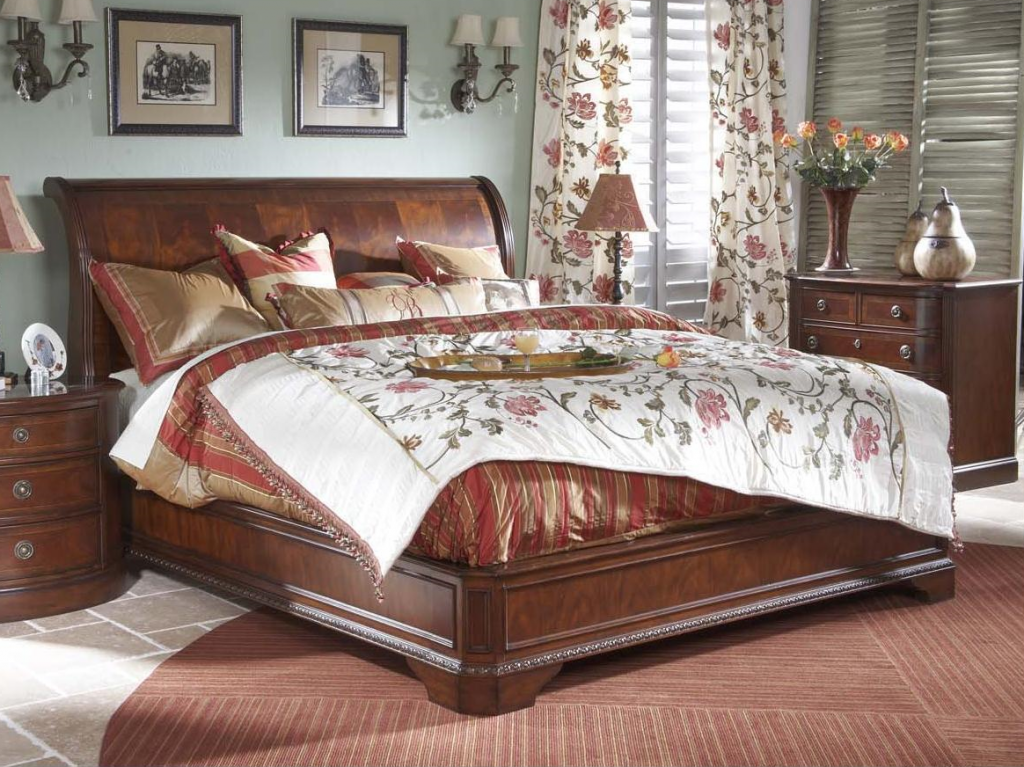
Notice how the framed photos complement the rest of the furnishings? Featured furniture is the King Sleigh Bed from the Antebellum Collection.
When you’ve decided to redecorate your home, the first that could probably catch your attention are the bare walls. As you see these, you are driven to fill up these spaces with stuff that are amazing. The only limit is your imagination.
You can have beautiful walls display artworks which can make the most amazing conversation pieces. These, when chosen properly, can make the most appealing spaces.
Don’t fall victim to what most homeowners resort to which is to paint the walls.
The Dynamic Walls
You need to think outside of the box when you want to infuse design elements in a unique way. Look at bare walls as an empty canvas. This means that you are free to do whatever you want to do with them. Just make sure that what you achieve is something stylish and one that represents who you are.
Just imagine all the stuff that you can use to decorate that bare part of your home – from suspended shelves, framed photographs, artworks, and mirrors – your options are almost limitless.
What is popular nowadays is to use the bare walls as a photo gallery. This could be one framed photo or a series of photos that come in matching frames. You can choose the pictures that are most significant for you and your family. This could be photos of your travels all over the globe or snapshots of special occasions.
You can also fashionably combine different hues then use them as graffiti. Just make sure that create something artistic and not something that is chaotic.
Album covers and old vinyl records are also a trendy way to embellish those empty walls. Give your room an interesting vibe as you create a mosaic-like artwork. Pick a pattern that you’re comfortable with.
You can also make walls less stark as you hang some painted wood panels. Be sure to choose the colors that you love then have them nailed neatly onto the walls. You can also create fabric art using your most creative mind.
How about drawing attention to accessories like an oversized framed poem? A massive print could be both contemporary and modern. It could go with a modern console table which is then flanked by a duo of Industrial style wall sconces.
You can also update botanical prints by having them laid on a blank canvas. You can then spray them with paint or have them brushed with watercolors. These can then come up with the loveliest silhouettes that are inexpensive yet classy.
And whoever said that a calendar cannot be used as a wall décor? In order to create a more unique wall calendar, be sure to mount it on a frame with the glass removed. Be sure to line the inside part of the frame with a colorful scrapbook paper.
‘Ever seen those lovely, framed butterflies? You can now use them to decorate the once bare walls. The boring sitting room could now become a more interesting place when you place the framed butterflies right by the large bay windows.
If you have a small yet bare wall, then don’t let its size stand in your decorative flair. Be sure to hang a pair of shelves placed at floating angles on the blank wall. Fill the floating shelves with lovely framed photos, books or chinaware. These are the items that can definitely make your display pop.
If you have a larger wall to fill, then you might as well create a gallery. Be sure to use matching frames so that your collection will still look fun and interesting. Choose from neutral, bold or dark shades – your choice is boundless.
Tags: decorating bare walls, McCreerys, McCreerys Home Furnishings, stylizing bare walls
Posted in Interior Design 101, Interior Design Elements, Wall Design | Comments Off on Bare Walls No More
Friday, June 30th, 2017
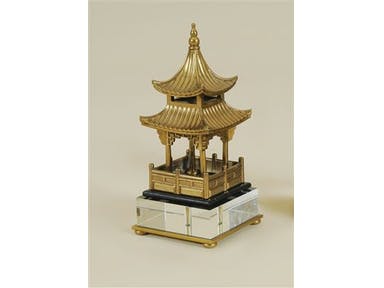
Gold is the lovely color of this Maitland-Smith Accessories Cast Brass Chinese Temples 1043-141; a color that’s believed to be lucky in Asian tradition.
Feng shui, in Chinese means wind and water and they represent harmony and balance, respectively. This is considered an ancient art that focuses on the flow of energy or chi throughout the universe. Imagine how this power can influence your daily life especially the habitat that you set up.
Feng shui is supposed to be compatible with all the good elements. This means being compatible with nature and how this can influence one’s health, finance, even emotions.
Feng Shui Principles
One of the basic Feng Shui principles are yin and yang. These represent balance and continuous change. Yin and Yang are the very foundations of Feng Shui which support the five elements namely wood, earth, fire, water and metal.
Under yin comes the following comparisons – female, negative, night and intuitive. Yang, on the other hand, represents positivity, male, day and anything logical.
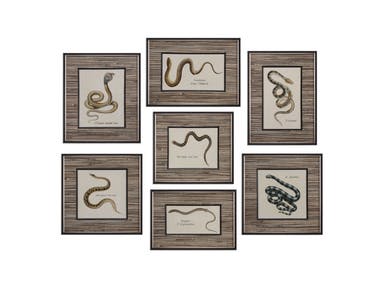
The snake is usually associated with the dragon, thus, it is considered lucky. Featured here is the Uttermost Accessories Snakes Under Glass Prints S/7 33637.
Feng Shui in Interior Design
When you are considering Feng Shui for your home, you must prioritize how energy will flow positively throughout the space. Think of arranging your rooms according to the principles taught by the ancient Chinese civilization.
Consider what you would need to bring in, how the rooms are going to be arranged, and how the place is going to be maintained. Know that every little piece has energy, Chinese believe this. Even the inanimate stuff have energy.
Feng Shui is all about guiding the energies and letting them flow through the right venues.
When it comes to seating and spatial design, always remember that you must have a view of the door – like all the time. Sure you can place the sectional against the wall but just make sure that you leave a few inches off the furniture piece and the wall.
A floating sofa could work but make sure that you place a console behind it. Have a pair of sturdy lamps placed on the said console for balance.
One of the biggest mistakes that you could have when it comes to Feng Shui seating is when you put a chair 10 feet away from the couch. Having every seat placed against the walls is also not recommended. This may look like energy is free-flowing but this is bad for Feng Shui.
The general idea – whether you’re setting up the furniture layout for your living room, dining room, bedroom, or any room in your home – is for you not to hit any of the furniture as you move about. Circles are a great option for your furniture especially the coffee table.
Square furniture represent earth while the rectangles represent wood. When you want to have a fire element in your home, use triangular-shaped furnishing.
When it comes to the windows, be sure to put drapes when the windows are opposite a door. It is believed that energy would fly right out of the door because of this architectural layout.
If you don’t like covered windows, then use sheers at the very least. You can also choose to hang a crystal by the window so that energy is redirected.
As for the color, be sure to use rich, saturated hues especially for public living spaces. Red spurs energy while deep blue and purple are known to invigorate, too.
Another mistake that you must not make when decorating with Feng Shui is to use the dining room as a dumping room of sorts. Remember that clutter and Feng Shui could never mix. Waste depletes energy and it can also make the place appear less appealing.
Crystals are a good idea – all the time. Consider also other materials that have reflective surfaces such as nickel, bronze or brass. Gold is a rich color often used in Chinese habitats.
Tags: McCreerys, McCreerys Home Furnishings
Posted in Interior Design 101, Interior Design Elements | Comments Off on Chinese Designs – Amazing Feng Shui for Your Home
Friday, June 30th, 2017
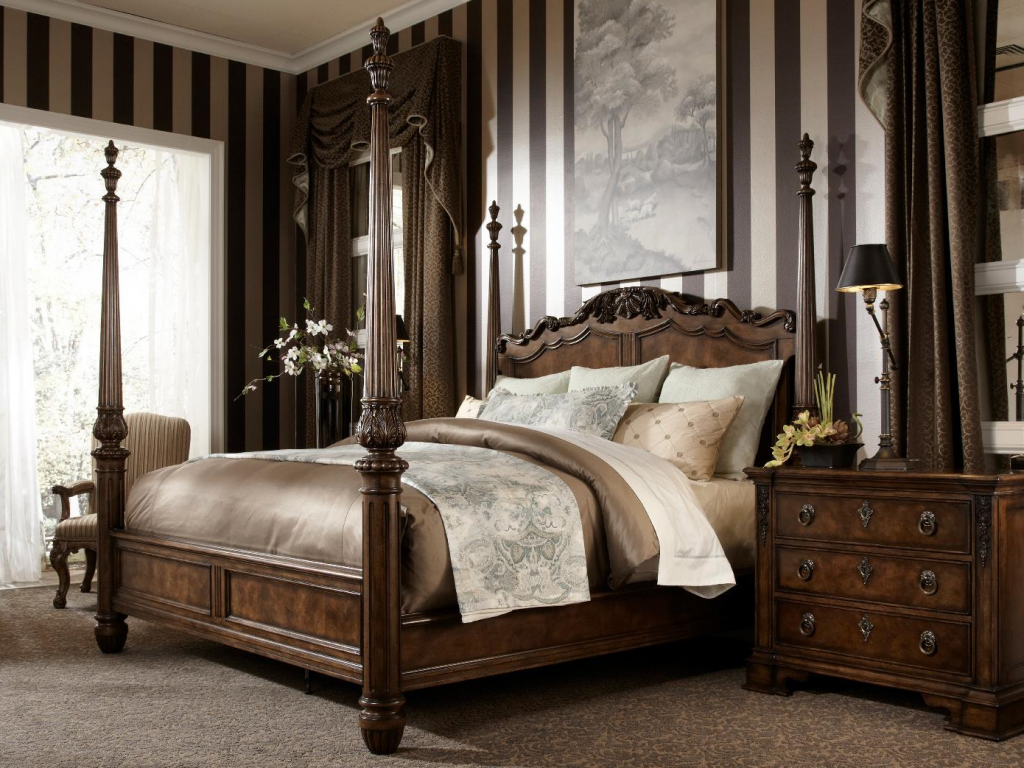
Belvedere Collection by FFDM: The enormity of this bedroom is emphasized by the vertical striped wallpaper.
Think of all the styles of wallpaper that you see in the market these days – from modern to artistic to contemporary – there simply is a lot to choose from. Of course, you must not choose the type of wallpaper that your Grandma had installed in your childhood home. Your Grammy may have found beauty in floral burgundy and green but your home is yours to decorate so what are you going to pick?
There are more options to look at nowadays. The trendiest include geometrics such as chevron. There are also those that look like fine art. There are also wallpapers that come in bright, bold colors. It’s all a matter of showing who you are now.
It’s the perfect time to show who you are now. This is your home, your turf. Find influence in magazines and online blogs. There are literally thousands of images to get your inspiration from. Find which ones are trending. If you are the traditional type, then find the ones that show classic styles.
Wallpapers are a dramatic means to express who you are. It is less permanent than paint so you always have the opportunity to transform your space. As soon as you have decided to use wallpaper, then your next goal should be to narrow down your choices.
Function of the Room
One of the first things that you need to consider is the room’s function. Majority of homeowners prefer pacific patterns as well as subdued shades when wallpapering the bedroom. But when they are out to decorate the livelier rooms such as the entertainment space and living room, the colors that they choose are supposed to be energetic, too.
A teenager’s room must have a more durable wallpaper when compared to a regular adult’s. The guest bedroom, on the other hand, can take the more fragile type of wallpaper.
Square Footage
Oversized patterns will only overwhelm a small room – that’s the general rule. This rule – just like many others – can also be broken, you just have to know how.
If you prefer anything dramatic, then use big patterns in darker shades. If you really have to, use more complex patterns and prints as focal points.
Remember also that lighter hues will make a room appear more buoyant. The simpler the prints, the more spacious.
Scale
You also need to consider the scale of your living space. High walls would look great with a vertical, long pattern. Lower ceilings will do with smaller and busier patterns.
Brightness
Don’t go for a dark wallpaper when you are designing a small room. This will only lead to a more cramped look. You can use bolder patterns inside a bigger room.
Frequency of Redecoration
How often would you want to redecorate your home? If you answered less than two or three years, then you could opt for the easily removable wallpaper types. There are now stick and peel types which will never even leave a mark on the walls when you use them.
Statement or Not
If the very idea of wallpapering still makes you feel uneasy, they try a patch on just a part of your wall. Always go for the simpler patterns at first if you’re not ready to make a statement. If, however, you’re ready to claim that title as the Drama Queen, then you might as well go for the bolder patterns.
At the end of the day, you must be able to create a story out of your wallpaper. This is what designers do. Cutout images from magazines, collect wallpaper swatches, and use them against the walls in the rooms that you would want to redecorate.
Always refer to the storyboard as you go along.
Tags: McCreerys, McCreerys Home Furnishings, wallpaper, wallpaper design, wallpapering
Posted in Accents, Interior Design 101, Interior Design Elements, Wall Design | Comments Off on Beautiful Wallpaper – 6 Things to Consider When Picking Wallpaper for Your Home
Thursday, June 29th, 2017
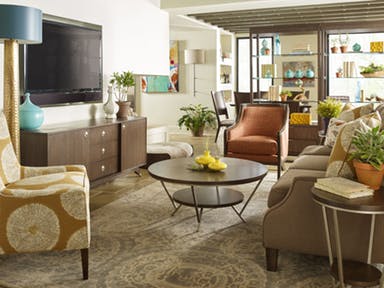
Veer away from anything rectangular or squarish as they take up more space. Here is a piece that will fit right into your tiny home – the Rachael Ray Home by Legacy Classic Furniture Living Room Cocktail Table Round 6020-501. d
Would you want to have a show-stopping space no matter how small it is? Now you can. Know that there is also an upside to living in a small space. You pay lower rent, you live closer to the downtown areas, plus it becomes easier to achieve a cozy appeal in your home.
One of the leading misconceptions when it comes to tiny space living is to focus only on functionality. You won’t have to worry about giving up on design just because you have a small home. Being short on space doesn’t have to mean that you will fall short on style.
It’s All About Balance
Achieving correct balance between functionality and style should be your goal. Focus on having your home filled with stuff that will fit your needs while also highlighting aesthetics.
To begin, learn to delineate different areas. At first, it may seem that open space layout is the only way to go, however, this could overwhelm you in the long run. Imagine not being able to define where one area begins and where one ends.
Try to define all the separate areas. Provide a specific purpose for each area. As simple as a shoe rack could serve as the door from the entryway to the living room. You can also use a buffet between the dining room and the kitchen. This is not just a storage unit, it can also serve as the divider for those areas.
If you are enamored by a particular hobby or interest, don’t hesitate to display them. In fact, they should be able to play a key role in having spaces separated. In fact, even potted plants can be used to signify a change in space usage.
Furniture with Dual Purpose
When you’re dealing with a very small space, you have to learn to use every inch and make the most out of it. Invest in furniture that have a double duty. Focus on having pieces that have multi-purposes.
Find a sofa that can unfold as a trundle bed in the evening. A hollow ottoman can be both a storage unit and a seat. You can also have a dining table with built-in leaf which will open when you’re out to entertain more guests.
Whichever furniture that has dual purpose that you can use, use it. Find pieces that are size-appropriate, though, as overstuffed pieces will only make your space look a lot smaller.
Search for Unused Spaces
It may be easy to get stuck in a rut when you’re in a small space. Be able to use your space in the most effective manner, hey, it’s about time.
Look for these unused areas in your cute home. Find the dead spaces that do not have a purpose at the moment. Find blank walls, windowsills, corners and nooks that have remained unused for so long.
Place a basket or two on top of the refrigerator or have a corner shelf set up.
Go Up, Not Sideways
When planning to use space optimally, it is important that you plan vertically. Narrow and tall storage systems are the best pieces to use especially when you want to get the most out of a tiny space.
Place two tall bookshelves on either side of the main doorway. This will give the area a built-in sort of look. A large entertainment system can both serves as a divider and a storage/display unit for the living and dining rooms.
Organize
Storage is the key to living effectively in a small home. Invest in organizers that will help you in keeping track of your home and the rest of your life. Think of shoe hangers or corner shoe shelves. Back of the door pockets will also serve a lot of purpose.
See, design drama is still possible even in a tiny space.
Tags: dramatic design, dramatic style, dramatic styles for homes, McCreerys, McCreerys Home Furnishings
Posted in Interior Design 101 | Comments Off on Design Drama In Your Tiny Space
Thursday, June 29th, 2017
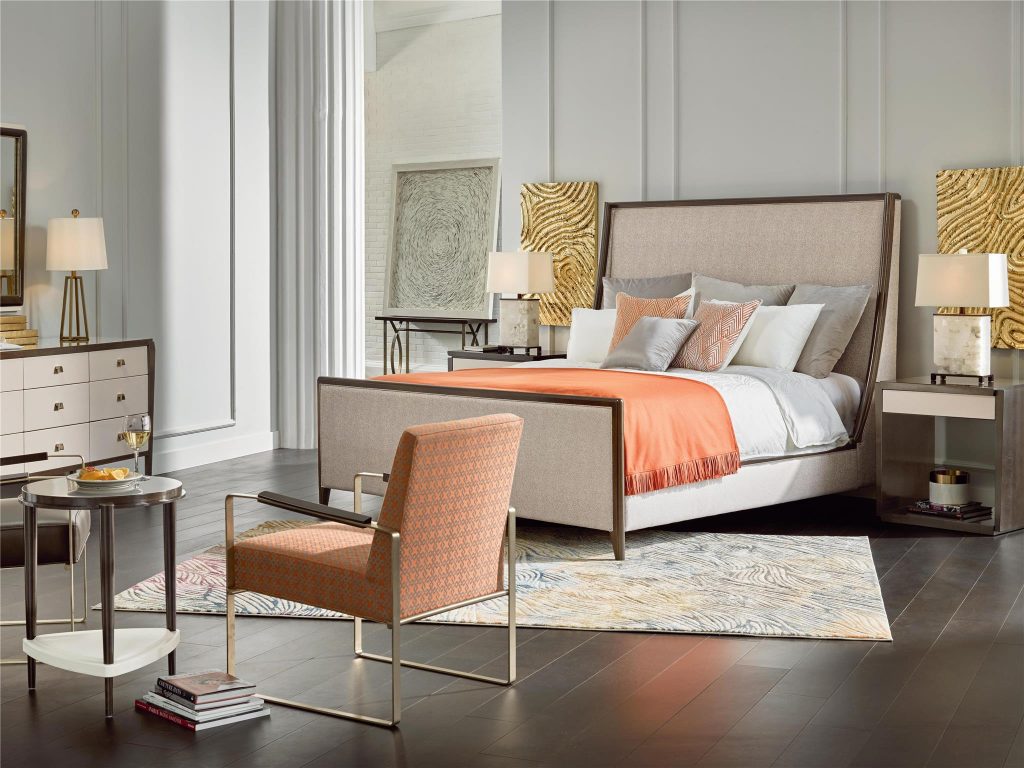
A living room ensemble from FFDM’s Deco Collection.
It’s that time of the year to frolic under the sun once more – summer is officially here. Your environment is a pleasant place to be in, to many homeowners, this could also be the signal to go for a season-inspired interior design.
How about Art Deco?
Take a closer look at the skyscrapers that are lining New York’s horizon. The Rockefeller and Chrysler buildings are the perfect example of Art Deco displayed in the most awesome manner. The birth of this design can be traced to the early 1920s all the way to the 1940s.
Art Deco was a style that showed a lot of accomplishments. It portrayed hope and strength for the future. It paid homage to past designs but, at the same time, it acknowledged newer technologies.
Art Deco – The Origins
Art Deco is often associated with nationalism, color, iconography, zigzag lines, geometry, relief, sculpture, murals, botany, mythology, and many more things. In terms of hue, buildings use pastels, to vivid paint, to gold to glossy hues.
Colors often contrast on the interior and exterior parts of the building. The artworks were inspired by a wide array of colors from bright down to mute. Some buildings also used ornamentation which referenced mythology, more particularly, Egyptian mythology.
Art Deco was easily recognizable with its rounded edges. These were seen on planes, in vehicles, on ships and other forms of sleek modes of transport.
Glass is also a common material used in Art Deco. You will see a lot of etching and blocks in this style. You will also see geometric forms and other materials such as linoleum, jade, plastic, steel, Bakelite and chrome.
Metal also perfectly represented Art Deco because it showed industrialism and strength.
Art Deco Artists – Influencers and Inspiration
There were many architects and artists that helped develop Art Deco. Cedric Gibbons was one such artist. Gibbons was a Hollywood set designer who was able to attend the 1925 Paris exhibition. He created Art Deco in all his Hollywood sets.
Another one was William Van Allen who was the architect that conceptualized the Chrysler Building. Donald Deskey, also an architect, built the Radio City Music Hall. Other names followed suit such as Edward McKnight Kauffer, A.M. Cassandre, Rene Lalique, Jean Puiforcat, Jacques Ruhlmann, and jean Dunand.
Today’s Art Deco
These days, Art Deco is a style that relies in the past though it continues to imagine, re-imagine and pay attention to the design elements of today. It is often studied and collected by people who are fascinated by the ‘20s and ‘30s styles.
People all over the world collect jewelry, posters, chinaware and furniture.
Art Deco Furniture
Parisian factors influenced the Art Deco furniture pieces of today so you will see a lot of grandiose features. Expect opulence and exotic pieces like ebony furniture and rare materials like ivory.
Stained glass is also possibly included as are enamels and inlays. Other materials that are used in Art Deco pieces are marble, wood, metal, plastic, animal skin, and lacquer pieces.
The different types of Art Deco furniture include chairs, cabinets, beds, and tables. Chairs come with curved lines and often represent the human form. Some pieces incorporate leather and chrome.
Cabinets, on the other hand, are often rigid and large. They have lacquered wood with distinctive grains such as burled oak, bird’s eye maple and Macassar ebony.
The beds are oversized and they come with head and footboards. These are often constructed from metal or wood. The tables – specifically the cocktail tables – come with glass or leather tops, or wood or chrome legs.
The factors that you need to consider when buying Art Deco pieces, are its condition, quality, and its details.
Tags: art deco, Art Deco interior design, Art Deco style, McCreerys, McCreerys Home Furnishings
Posted in Interior Design 101, Interior Design Themes, Summer Season | Comments Off on Summer Is Art Deco
Wednesday, June 28th, 2017
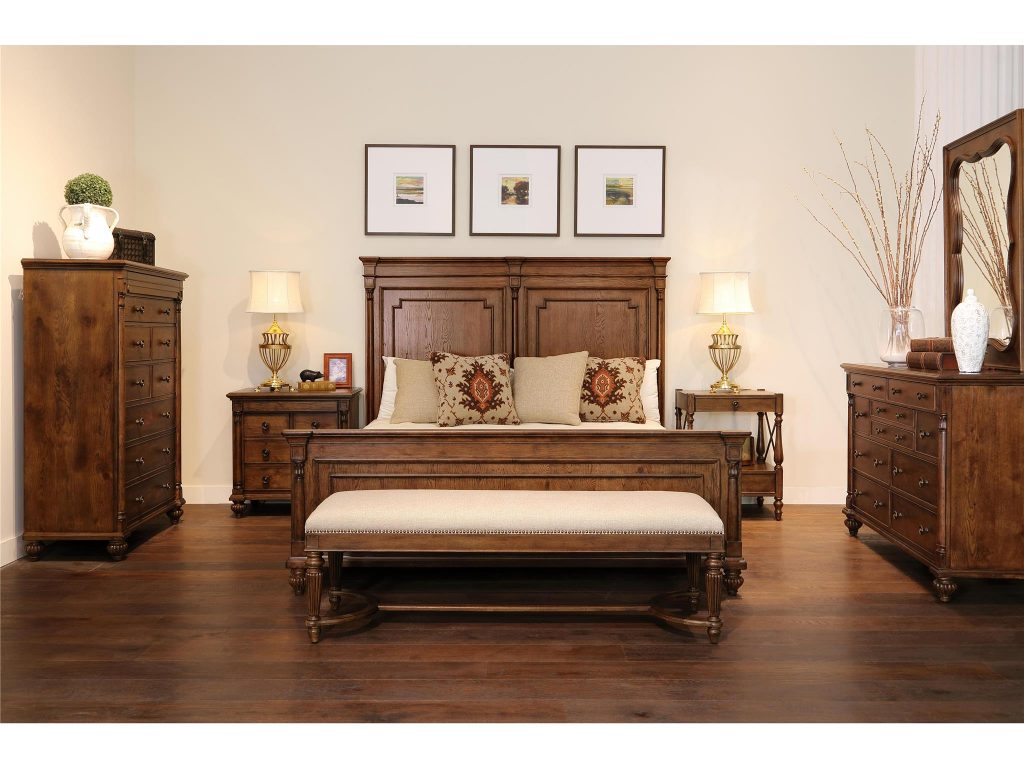
Camden-Griffin Bedroom ensemble
Have you always dreamt of setting up a casual home? Or are you – just like many countless homeowners all over the globe – growing tired of the ornate and overly decorative look that’s your current home? If you said yes to one or both of these questions, then it’s time to go casual.
Who wouldn’t want a comfortable home, right? Yet putting together a casual room is not as easy as it seems. Yes, there are some considerations to make, even some unlearning to do, so you need to prepare for your truly casual habitat.
Simplicity – Will Always Be – Beauty
To begin with, a casual home must have simple details. The only things that should add interest in a room are the textured elements in accessories and fabrics. The horizontal lines must be restful, never jarring.
When it comes to upholstery, it must be soft while the surfaces must not show any luster (or low-luster at best). You must also avoid the perfect symmetry that is often seen in the most composed interior designs.
Rooms that are decorated in a casual style must show your whimsical side. Find a vintage-looking wooden candlestick or a birdhouse. These can serve as lamp base. You may also stack several old luggage as the side table.
Rustic, cottage, French country, shabby chic or American Country are all interior designs that work well with a casual ambience. And with more and more people trying to enjoy a relaxed lifestyle, a lot of the homes these days are now designed with casual elements.
The casual design elements can be used in almost any room which means you can infuse it or use it totally in your bedroom, living room, dining room, your kitchen, even the bathroom.
Casual Design Elements
Furniture pieces inside a casual atmosphere must be soft and comfy, nothing less. This means that upholstered pieces, even the oversized and slipcovered ones are most welcome.
As to their color, be sure to cover your furniture with neutral hues like beige, tans, grays, as well as off-white. Other colors are welcome, too. Softer pastels can offer the needed peaceful feeling. The darker tones like rust, navy blue, wine, forest green and cranberry will offer the needed punch.
As for the fabrics on pillows and furniture, make sure that they are beautifully textured. Don’t go for anything shiny. Instead, invest on natural linen, cotton or wool weaves. Synthetic weaves also offer a natural look.
Of course, you would also need accents even in a casual atmosphere. Include pleats, ruffles, ribbons, cording or buttons. These are the simplest contrasts that you can incorporate in your controlled ambience.
Casual Furniture Layout
Casual rooms often have a diagonally-arranged furniture layout. It is so in order to cut off those sharp corners. It is not necessary to match the furniture pieces.
It is also essential to have an ottoman for added comfort. Add a rattan or wooden tray so that this ottoman becomes a converted coffee table.
Light woods are also welcome especially on a wooden flooring. Pine and oak are quite popular. Whether you would have this finished or painted, what you need to concern yourself with is to protect the wood grain.
Bedrooms, in particular, must have a mound of pillows and a quilt. Window coverings such as shades, shutters and blinds must be used for light control. Enhance them with beautiful fabric valances.
As to the floors, have tiles, hardwood, stone or stained concrete. If you intend to use carpet, then make sure that it is not plush. Choose berber, sisal or long shaggy types instead.
To cap your casual theme, find an artwork that comes with wooden frame.
Tags: casual interior design, casual interiors, casual style, McCreerys, McCreerys Home Furnishings
Posted in Interior Design 101, Interior Design Themes | Comments Off on Casual Interior Design – For That Timeless Appeal
Wednesday, June 28th, 2017
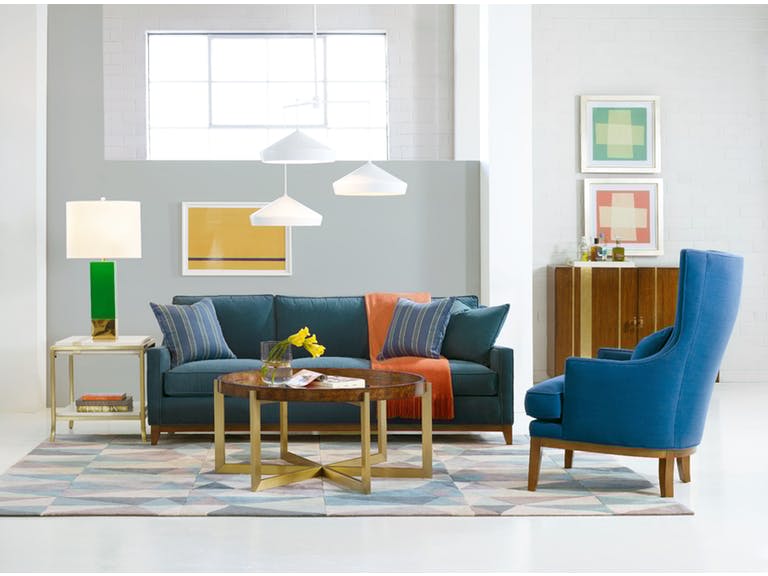
Cynthia Rowley Horizon Line Round Metal Cocktail Table is simple and suitable for this casual, contemporary home.
Contemporary design is not modern design – let’s make that clear, okay? These two are often confused, though. There are some elements of modern design that are found in contemporary style but they have their stark differences, too.
Let’s examine, carefully, what makes contemporary style a lot different from its predecessor.
By Definition
Bring down that dictionary from the shelf and search for the word contemporary. This term is defined as “living, occurring at the exact same time”. It is also seen as occurring at present.
Basically, contemporary means at the moment.
Seeing the Line of Demarcation
It is interesting to note that a lot of people interchange contemporary with modern design. Modern design is generally referring to the mid-1900s design. Its features include expansive spaces, neutrals, natural materials, clean lines and pops of bright colors. Low lines are also apparent.
Modern design is also geared towards functionality or practicality. For something to be referred to as modern, it must have a functional form. This means clean lines, open space layouts, and to some degree, innovation.
Contemporary style came to the scene near the ‘80s. It was during the late 1970s when various styles were mixed including modernism, post-modernism, Art Deco, De-constructivism and Futurism.
Current designs are contemporary designs, that’s all there is to it. Moving forward, the design elements that we see today may be referred to as something else. It could be the 21st century design or whatnot.
The reason behind the confusion lies in the similarities between Modern and Retro Modern elements. The former has evergreen elements, though, while the latter is minimalistic.
Contemporary style is ever-evolving. It can easily relate to many styles no matter what kind you would like to put on your plate. Any space can have contemporary elements because of the very nature of this theme.
Contemporary living means saying yes to shifting preferences, changing styles and tastes, and evolutionary pieces.
Your Home’s Contemporary Needs
Light. The emergence of Modern and Post-modern designs in the 1920s till the 1960s brought with it larger rooms. These are a far cry from the closed-off and small windows from the previous era.
Airy and light rooms began to replace the darker ones. Skylights, translucent glass windows and solar tubes became ever popular.
Subtlety. Whether you’re thinking about the colors that you would use or the accents. Use grays, black, browns and whites for your furnishings, flooring, textiles and lighting fixtures.
Natural elements. Instead of defaulting to wood, why not experiment with leather, wool, cotton, slate, teak and rock? Use these to give the interior and exterior parts of your home a natural look. Contemporary doesn’t always have to be plastic, you know.
Breeziness. Don’t go for stuffy or heavy atmosphere. Ornamentation must not be a part of your theme. See if you could have the kind of furniture that is raised off the floor. This will give the pieces a look of weightlessness.
Dare to bare. Another contemporary element is living with less. This means learning to live with bare flooring with lovely finishes such as ceramic, hardwood or porcelain tiles. It would also be a great idea to include an area rug. This will make your underfoot a lot more comfy.
Open floor layout. Contemporary habitats often have a grand look because they have non-obvious boundaries. The open space layout is common inside such homes, thus, all the living spaces are unified yet separation lines are there somewhere – you can still feel them.
Streamlined. Contemporary homes say no to curvilinear furniture pieces. For a contemporary appeal, use distinct lighting fixtures with simple hand railings, banisters, and simple art. Minimalism is key to contemporary living.
Tags: contemporary interior design, contemporary interiors, contemporary style, McCreerys, McCreerys Home Furnishings
Posted in Furniture, Interior Design 101, Interior Design Themes | Comments Off on Contemporary Style: Saying No to Excessive Living
Tuesday, June 27th, 2017
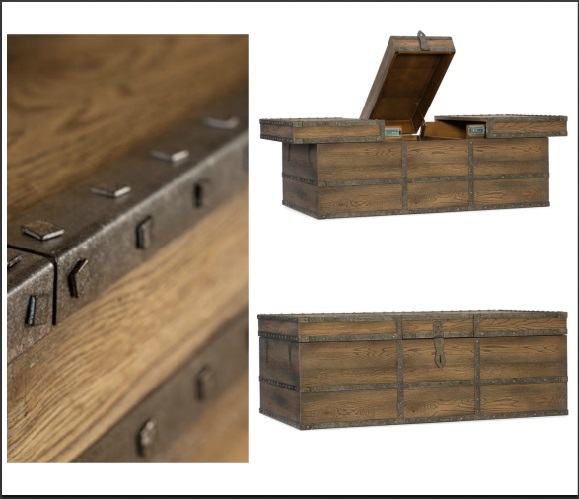
Hooker Furniture Living Room Pinta Trail Strong Box Cocktail Table
Throughout furniture-making history, furniture pieces evolved just as societies grew and also developed. Of course, people had access to different materials as time moved forward. To determine fine woodworking history, you have to learn the categories as to where each wood furniture belongs to.
The first category is by species and the more renowned way of categorizing furniture periods is by century where multiple centuries sometimes comprise a design theme.
For today, though, you will learn about the species-based categorization.
The Oak Period
The age of oak comprises the pieces that were crafted during the British Tudor monarch reigns. Think of Henry VIII and Elizabeth I, etc.
Oak was the leading species of wood that was used during this period. Just like other period designs, there isn’t any clear beginning as well as an end. One could deduce, though, that it span a period of about 160 years with about 1,500 characteristics seen.
The Oak Period also retained much of the Gothic era. Just look at the carvings on panels and the frames and you would know that Gothic still has much influence over this style. Pierced carving became less popular, though.
The furniture pieces during this period were massive and sturdy. Many ordered four poster beds, heavy, rectangular tables and chairs with stout legs. Benches for general uses were also a popular item.
The 17th century, also called the Jacobean period, happened around 1603 as James I became the ruling monarch. Elizabethan oak gave way to the less ornamented pieces. Table legs became straighter and lost the bulky turnings. The profiles became lower and a tad more rectangular.
The Jacobean furniture pieces during Cromwell the Protector’s time were square, frugal and stern. With the monarchy returned to Charles II, once more, the Carolean furniture paved the way for a more ornate design.
The Walnut Period
This term does not describe any particular furniture style. This period is roughly dated 1600-1730. A probable reason behind the birth of walnut furniture making is the improvement in sawing. During this time, furniture makers were able to saw thinner than an inch, hence, more and more of them employed these planks in their works of art.
It was also during this time that carved surfaces decreased in number because a new technique has emerged. Thanks to the use of walnut inlaid as well as the veneered walnut upon oak.
The Mahogany and Satinwood Period
The Mahogany Age dominated mid-18th century. During that time, furniture styles became a lot simpler. People were slowly veering away from ornamented pieces as elegance is expressed in finer, flowing lines.
Later, the pieces became more fretted, heavily carved, and the cabriole leg emerged. At first, it was too plain with the pad foot but it developed into something that has a bit of carving, hairy paw, ball-and-claw or the lion’s feet.
The Satinwood age still saw the popularity of mahogany though the Adams brothers popularized the less curvilinear pieces.
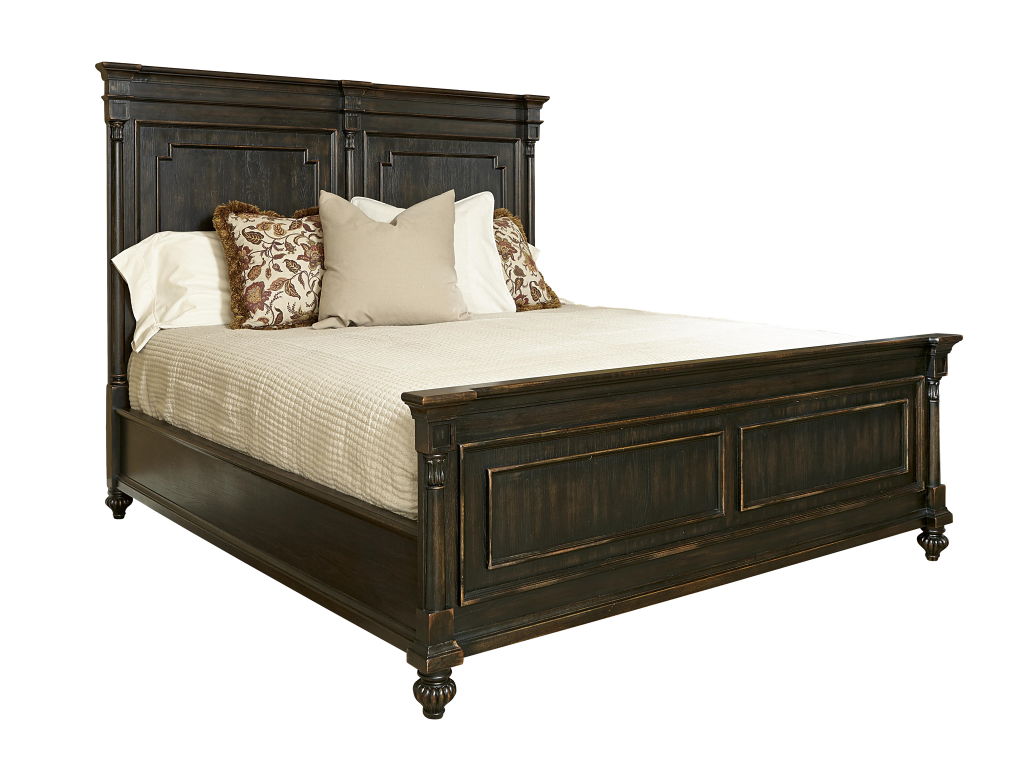
Camden Collection’s Brookston Cal King Bed
18th to 19th Century
Speaking in terms of 18th century furniture means Chippendale, Georgian, Queen Anne, French, Regency, Sheraton, etc. Whether you’re thinking about British, American or French, commercialism has emerged and mass-produced pieces were welcomed in the market.
The cabinetmakers became the rock stars of this furniture era.
During the 19th century, all people could think about is the Industrial Revolution. Society changed and so did the furniture makers. The individual craftsman has vanished and the mass-producing manufacturers have emerged.
Revival styles were already a lot easier to make.
The 20th Century
This comprises many furniture and wood styles. Included are Art Deco, Art Nouveau, Modern and Post-modern styles, to name a few. During this era, more materials have emerged, paving the way for more diverse furniture styles.
Tags: furniture era, furniture eras, furniture periods, McCreerys, McCreerys Home Furnishings, wood furniture, wood furniture pieces
Posted in Furniture, Interior Design 101, Interior Design Elements | Comments Off on Furniture Periods According to Wood Types and Eras
Follow us on our social media


© McCreery's Home Furnishings | All Rights Reserved | Privacy Policy
