- Follow us:


Thursday, June 7th, 2018
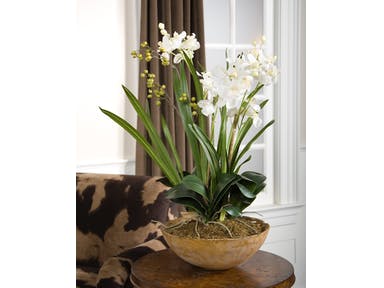
Uttermost Accessories Moth Orchid Planter 60039
Spring is about to say goodbye but we’re just not ready to say goodbye yet. Everything, after all, is still in full bloom and we would want to enjoy the warm breezes and the lovely sunsets some more. You might have been done with your spring cleaning but are you done with your spring redecorating?
Spring redecoration does not have to be a major remodel. You can make easy changes that would brighten up the current season and even welcome the equally warm and bright summer.
Use the Basic Light Sources
If you want your home to look and feel brighter, then you need to find the best spot to begin. Your choice of light makes a huge difference. Of course, you need natural light to pour in during the day but, at night, what would you do?
Remember that the higher the lighting fixture goes, the more that it is going to resemble daylight. This is if you invest in a bulb or lighting fixture that has ample illumination according to the space measurements.
You do not have to limit the ceiling lights. You could set up several recessed lighting on the ceiling and even in cabinets to showcase your collections.
Fewer Window Coverings
Window treatments can surely beautify the home but, at times, they could also block the light that is supposed to make your home look brighter and, therefore, more inviting. Use light-colored, sheer curtains. Have these curtains hung in such a way that you still have a little privacy but also enough to let in ample light and the cool breeze.
If you are used to hanging dark draperies, then swap them for the sheer curtains just for the upcoming season. This is an easy enough task to refresh the look of your home.
Explore the Outdoors
Why not? After all, it’s summer soon so you might as well explore the nature outdoors. Do not remain cooped inside your home. If you have available outdoor space, then utilize it. Set a few chairs in your backyard and enjoy al fresco dining with your family.
You can also leave the living door open between the different rooms. Doing this would result in more light and air in your home.
Use Mirrors
It’s going to be sunny soon so why not use a reflective surface to help illuminate your home? You can strategically place the mirrors so that natural light would become more abundant as it is reflected on the mirror surfaces.
The living room is an inspiring room to set up mirrors. This can become a more sociable spot the moment you add in more light.
Remember that it’s all about the position or the angle of the mirror towards the light. Hang a mirror right across an open window, preferably one that opens to a lovely greenery. The light from this window, as well as the beautiful scenery, will be reflected, making your living room a more cheerful place to be in.
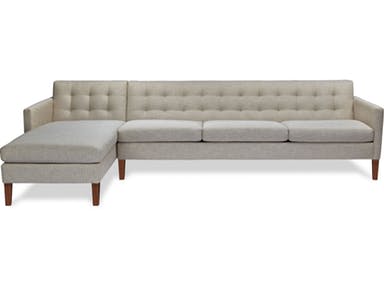
The American Leather Living Room Ainsley-Sectional is a type of linear furniture that you can use to brighten and freshen up your home.
Alter the Furniture
Heavy, ornate pieces just won’t work if you want an airier and brighter surrounding If you want your home to look and feel airier, then you have to let go of these kinds of furniture. Buy a new set that allows more breathing room. Swap the chunky pieces with the ones that have hairpin legs.
Add Plant Life
Spring is the symbol of new life. So what could be more apt in brightening your home than to add some potted plants? Decorate with orchids or even a small tree. Fill those usually boring corners with these interesting live art.
Tags: brightening up rooms, brightening up your home, McCreerys, McCreerys Home Furnishings
Posted in Interior Design 101, Interior Design Elements, Window Design | Comments Off on Brighten Up Your Home Now with These Tricks
Monday, October 9th, 2017
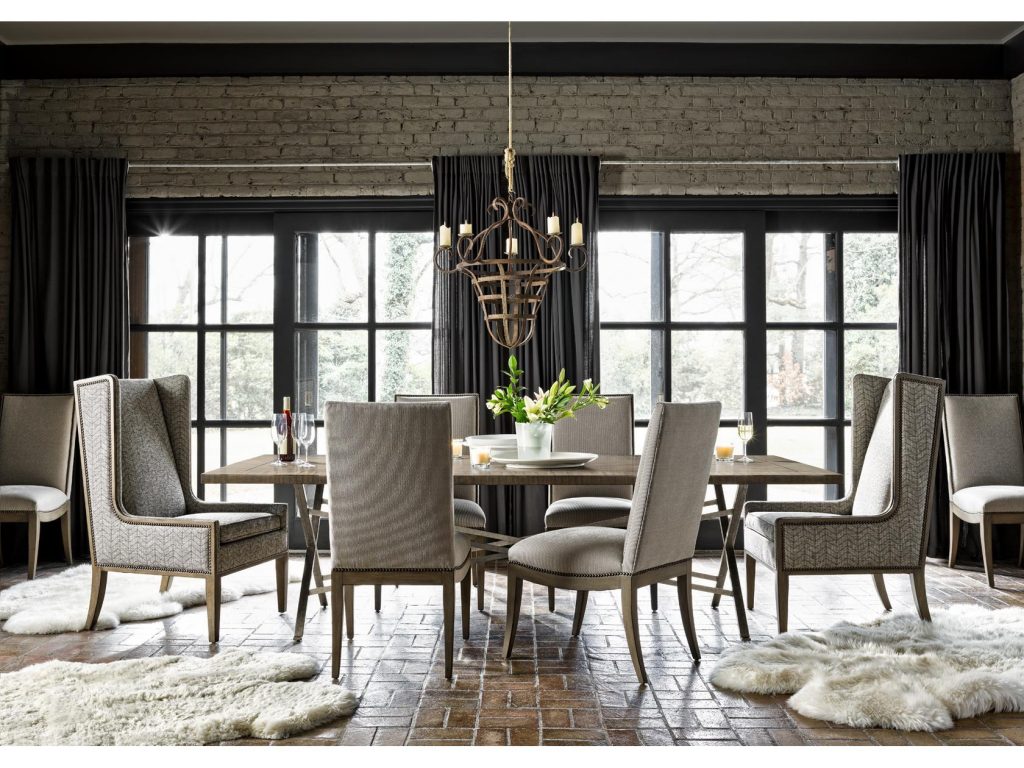
Meritage Marion Dining Chair: The beautiful interplay of light and shadow makes this dining room both cozy yet airy.
When you are asked to brighten up a dim room, what’s your immediate reaction? Do you instantly think of bringing in more lights? The great news is, this is not the only way to brighten up an otherwise dim area. Here are other ways –
Depend on White
To brighten up a cave-like room, don’t immediately turn to mirrors. While mirrors reflect light, they do not scatter light, hence you will need a lot of mirrors to make a dim room brighter.
To scatter light, use lots of white. Since this is not even considered a color, it does not absorb any hues. White bounces off as much light as it can. This would mean brighter surfaces especially when you have an all-white ceiling and walls.
To be more aggressive about this project, you don’t have to stop with the ceilings and walls. Consider putting other white elements like white frames for your art, white furnishing, white bedding, and white curtains.
Experiment with Cool Blue
The cool shades of blue are cooler than the usual yellow tone of incandescent light bulbs. Blue light gives a different crispness to the surroundings, plus it easily reminds us of the skies.
Apart from adding blue, you can also opt for a light bulb update. Use cool daylight colors on your bulbs. True white bulbs achieve the coolest, freshest, and brightest in any room.
Add Wall Lights
Let’s go ahead and wash your walls with more light. Light washing the walls will guarantee edges that are bright so be sure to add sconces that have shades aiming downward and upward. You will soon see that despite the lack of windows in, say, the bedroom, that it still looks illuminated.
When adding lights, consider adding lights also closer to your walls. These will cast down or pour light onto your walls. This will be a beautiful way to highlight features such as your kitchen cabinets.
You can also resort to under cabinet lighting which creates the same effect. Adding this glow will balance the edges which will solve the shadows created by the bulky cabinets.
When you’re planning to brighten a den or the laundry room, try to replace the pendant or flush-mount light with a semi-flush which hangs just below the ceiling. This should help diffuse the light across the ceiling almost like the bright effects of a skylight.
Picture lights can also brighten up walls while making a focal point of your artwork.
Balance with Black
It may seem ironic that you’re asked to use black when you are aiming to brighten up a room but charcoal black can make surrounding areas appear lighter and brighter. Black makes other hues pop so use black chairs, photos in black frames, or doses of black patterns on fabrics.
Add blue to your charcoal black (more particularly navy blue) and you’d have achieved a beachy vibe.
Balancing between shadows and light is a natural interplay that you should not interrupt. Offer balance by understanding depth while adding a sense of life to the rooms in your home.
A Colorful Rug on Dark Flooring
Laminate or dark hardwood flooring is a wonderful addition to any home but their dark vibe can drain light out of your space. To avoid this, especially in tight corridors, you might want to roll out a runner rug in a lighter tone. This should break up the dark hue and create an airier and richer zone.
Or Just Use Blond Woods
If you’re really into hardwood floors but do not want to go for the darker ones, then opt for pale woods. These will surely liven up your space. Once installed, just throw in some potted plants and your home will be the sunniest space there is.
Tags: brightening up rooms, home lighting, improving home lighting
Posted in Interior Design 101, Interior Design Elements, Lighting | Comments Off on Brightening Up a Dim Room with These 6 Awesome Elements
Saturday, August 13th, 2016
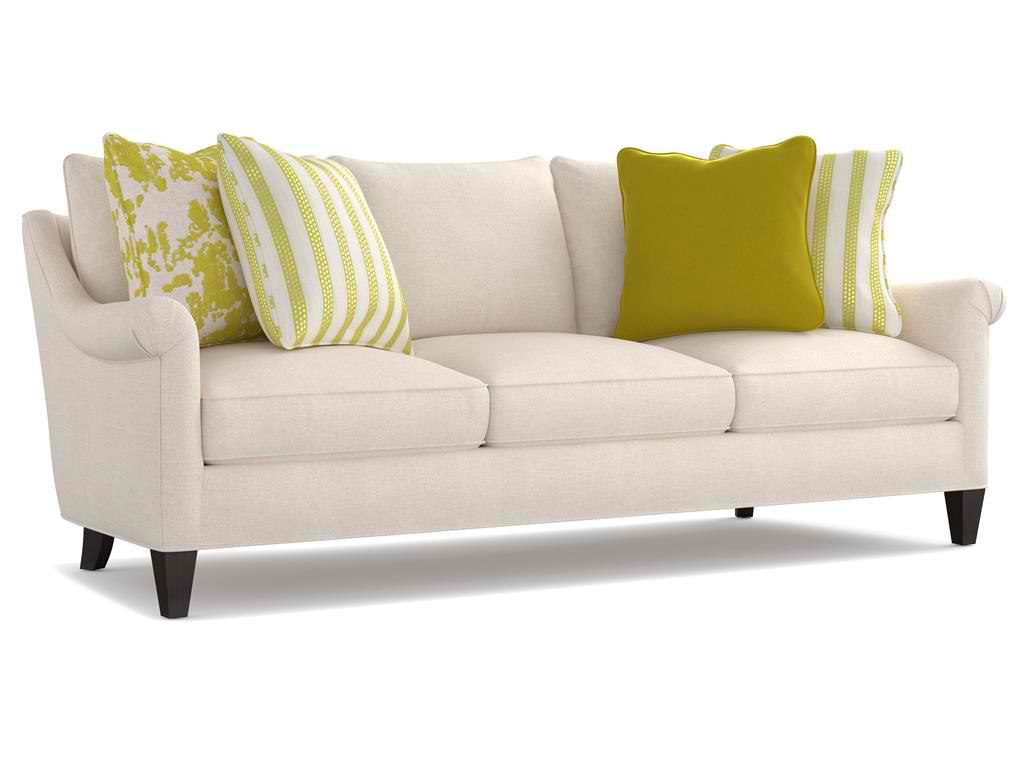
CYNTHIA ROWLEY FOR HOOKER FURNITURE RIVINGTON 3 OVER 3 SOFA’s beautiful, bright colors will surely give your sunroom a lively yet relaxing vibe.
Everyone loves a great sunroom. This is that bright, inviting and open space that allows you to bask in natural light while securing that pesky bugs don’t disturb. The sunroom is one home addition that most homeowners would love to have. This dream world comes with heated flooring, the most comfortable furniture, casual décor, and beautiful windows and walls. This is one room that most homeowners love to frequent.
Sunroom is equated to leisurely living where every square footage offers relaxation and serenity. If you have been contemplating of adding a sunroom in your home, then think of any space that you are not using too often. Consider that this part of your home will be a sunny retreat so it has to be where the sun shines warmly during the day.
Consider these elements as you set up your lovely sunroom –
Comfy Seats
The best sunrooms often act as a second living room. It shouldn’t always have wicker chairs. You could also put upholstered seats there, plush throws, and colorful pillows. Even outdoor-indoor rugs and a table could be brought in there.
Be sure to install electrical outlets if you are going to use the sunroom as an alternative living room. Don’t forget the table lamps to light your evening reads.
Ambient Setting
A lot of sunrooms are built minus the heating or air conditioning systems. This does not mean that you have to suffer each time that you go there, after all, this should be a place for relaxation. It would be nice if you could install a ceiling fan in the middle of the room. This is great to use when the air gets too hot. As for chilly nights, see if you could have a fireplace installed, too.
Privacy Features
The sunroom can get really sunny so it is often installed with high-end doors and windows. These do not guarantee a hundred-percent privacy, though. Shades and curtains are the perfect solutions to such a scenario. They don’t just offer insulation, they can also effectively guard your privacy.
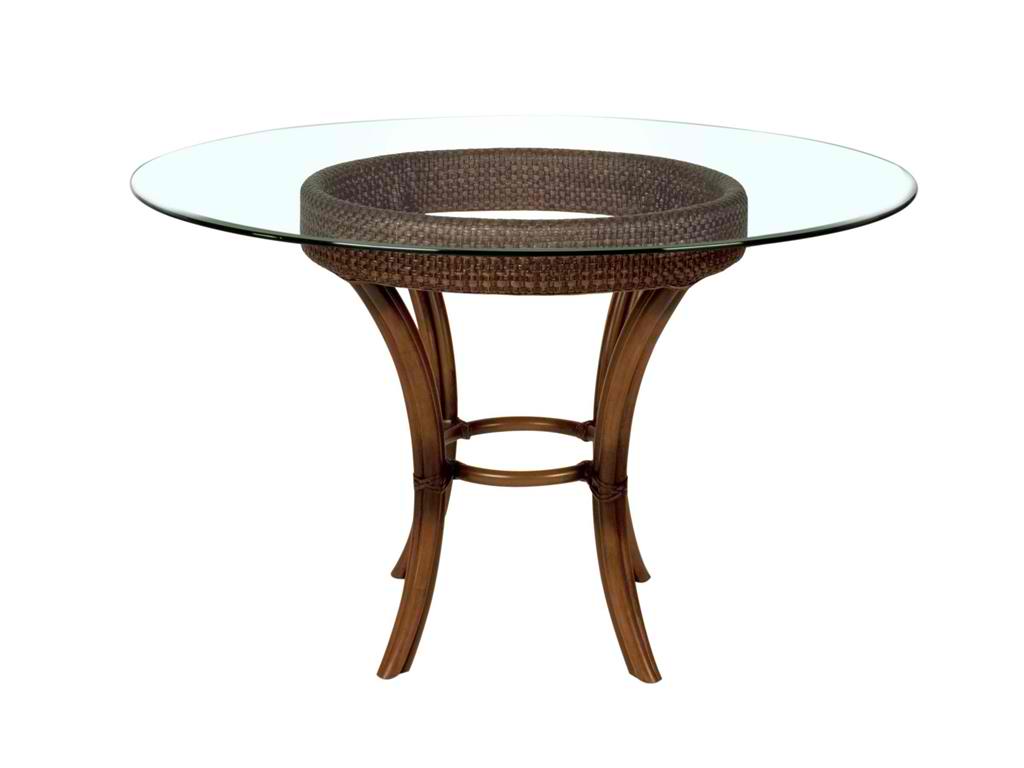
Orient Express Furniture Dining Room Mexico Dining Base 6830
Multi-Function
A sunroom can also accommodate a dining area. Ideally, the seating arrangement should be done so that it could still give ample space for the dining table and a pair or more of chairs.
The sunroom can also be an added space if you have set up a large dinner date with friends or colleagues. The dining and living areas might not have ample space to accommodate all of your guests so you could also open the sunroom for them. Just have ample table space, lighting, and make sure that air circulation is great so that what you’d have is an unforgettable event.
During those days when you just want to laze around and relax, this zone could also serve as your entertainment area. Be sure to protect your sunroom from the harsh elements so that you could bring your stereos, TV and lamps in there. Family and friends are welcome to outdoor-focused activities during the night while the day could offer a maximized sunroom enjoyment when you can just read books or magazines.
Typical furniture that you could use for sunroom corners is a table and a chair.
Tags: brightening up rooms, brightening up your home, decorating the sunroom, designing the sunroom, McCreerys, McCreerys Home Furnishings, sunroom, sunroom design, sunroom features, sunroom style
Posted in Interior Design 101, Special Rooms In Your Home | Comments Off on Creating the Dream Sunroom: A Sun-Drenched World of Fantasy
Tuesday, August 2nd, 2016
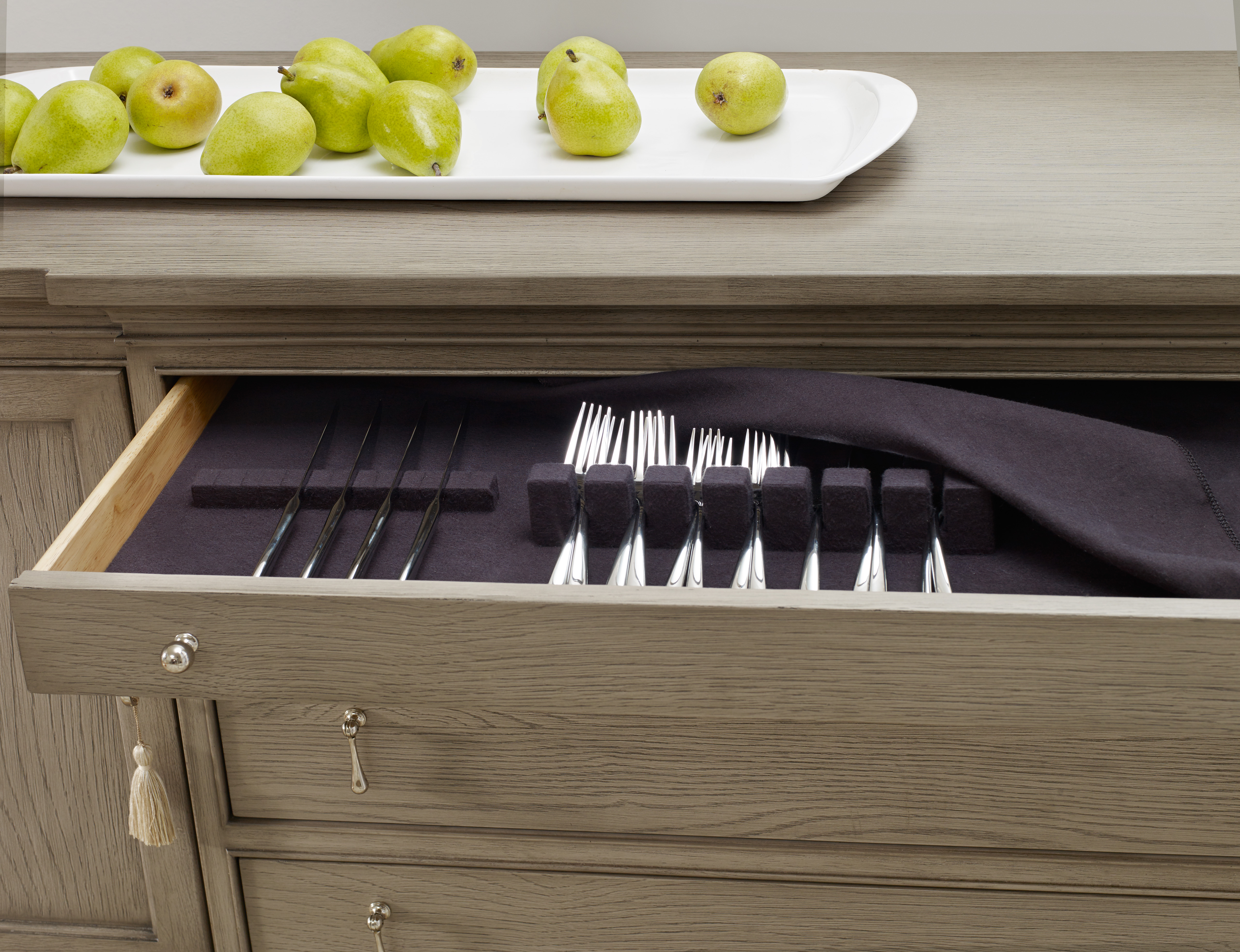
The rustic beauty of the 1586-75907-GRY1 Soiree Sideboard can perfectly house your fine silverware. Use fresh fruits as decorative enhancers.
Summer is all about relaxation and reveling in the season. You get to use cooler interior color palettes plus you get to a respite from the formal look. With casual interiors come summer décor and thoughts of evening breezes and warm, sunny outdoors. See how you can use these summer décor ideas in your home –
Furniture: Screaming for Airiness
Everything that’s dark and muted is the right thing to use during fall or winter. The colors of summer are different in such that they are light and airy. It would be correct to use removable slipcovers, colorful decorative throws that bring brightness and pigments into your home.
The greatest finds for this season can be found in FFDM’s Summer Home Collection.
If you prefer neutrals, then use khaki or white slipcovers because these are the most casual that you could use to dress up your usually formal throw pillows.
Window Treatments: Instruments in Achieving Picturesque Views
If you want to feel the cool night air while keeping the blistering heat of the sun from entering your home, then use curtains. Draperies have dark and heavy materials while sheer curtains are versatile and could be flexibly used during the summer months.
Having lovely outdoors views are things that you can savor during these warm months so do not try to cover them up. Use valances to keep the windows as a picture frame that offers amazing views at all times.
Valances also come in delicious summer colors and textures.
Bring Nature Inside Your Home
Bringing the outdoors is also a wonderful idea if you can’t keep your windows open all the time. Summer, after all, is all about the feeling of being outdoors so you might as well bring in some fresh fruits and use them as centerpieces. Potted green plants and flowers in beautiful glass vases are sure to make your home smell wonderful while also looking very pretty.
For a more rustic vibe, you can use green materials such as hemp, bamboo, or jute. Woven, colorful area rugs are most welcome as these bring in an exotic feel to your home.
Keep in mind, though, that actually entertaining people outside is a welcoming break that most people look forward to. If the idea of open windows doesn’t exactly excite you then you can always buy a painting or any wall décor that you would love to look at. Again, summer is all about spontaneity and being flexible.
Get Ready for Some Kiddie Action
Summer means kids are out of school which also means that they are going to be around the house a lot. Make sure slipcovers and fabrics used are machine washable. These are fun and casual so you won’t have to worry too much about their upkeep.
Summer also means arts and crafts so get ready to pick some pine cones, seashells, and many nature-inspired finds. Such projects can also be turned into summer décor which you can use proudly in your home.
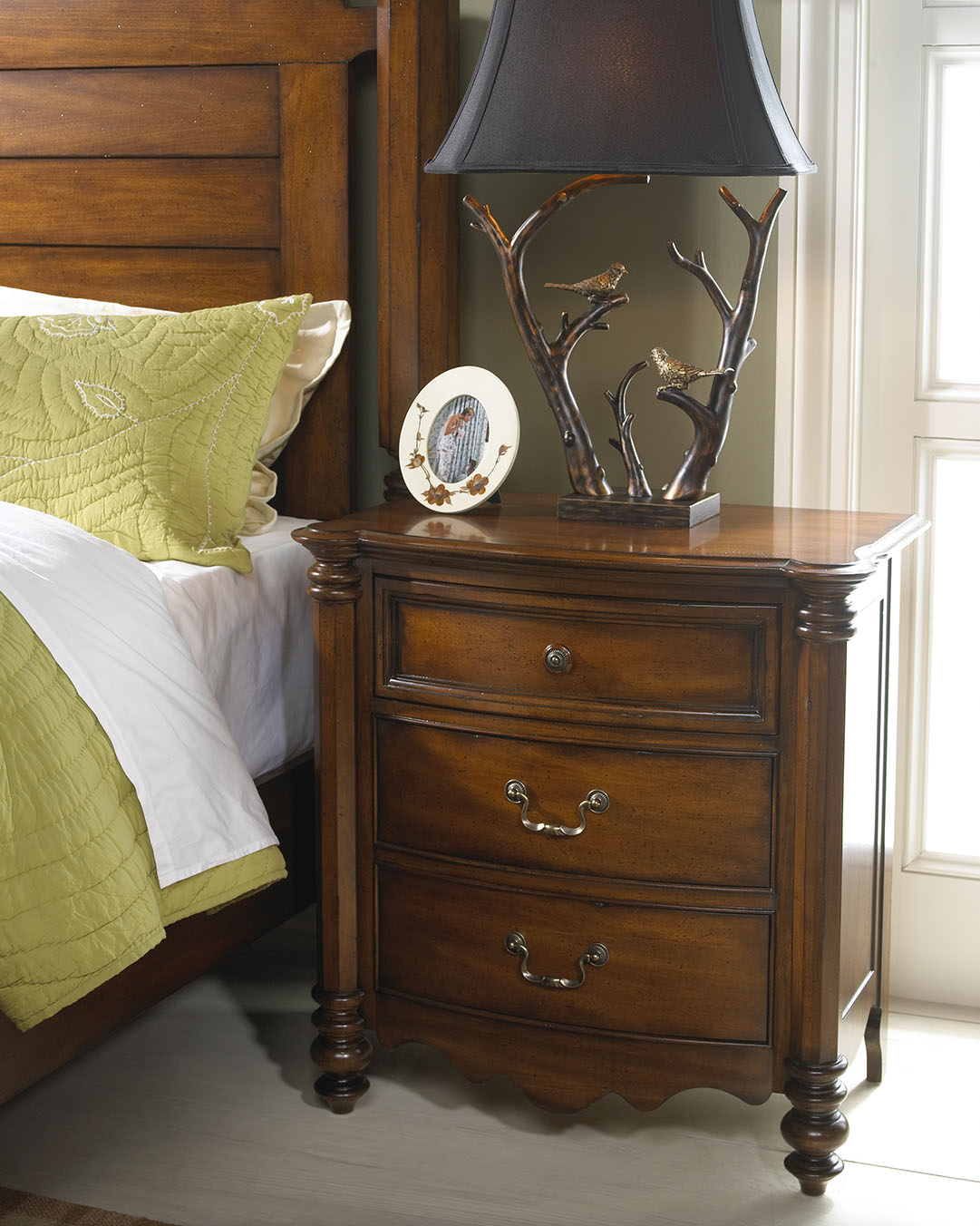
The greatest finds for this season can be found in FFDM’s Summer Home Collection.
Sunshine Yellow and Cheerful Orange
Hands down, the happiest colors that you could find to use in your summer theme are orange and yellow. Both colors remind us of the sun, pretty flowers, even citrus fruits. They can grab the attention of any person especially if you want a certain room to stand out.
Different interiors come with different lighting and the lack of lighting means you have to use bolder colors sparingly. The brightest and boldest colors can easily overwhelm any space more so a compact one so be sure to use color swatches before you actually paint a wall yellow or orange. There is also a wide selection of these colors in different tones so take your time before you finalize your selection.
Tags: bright colors, bright hues, brightening up rooms, brightening up your home, McCreerys, McCreerys Home Furnishings, summer color scheme, summer colors, summer home, summer theme, summer vibe, tips
Posted in Accents, Color Schemes, Interior Design 101, Interior Design Themes | No Comments »
Friday, July 8th, 2016
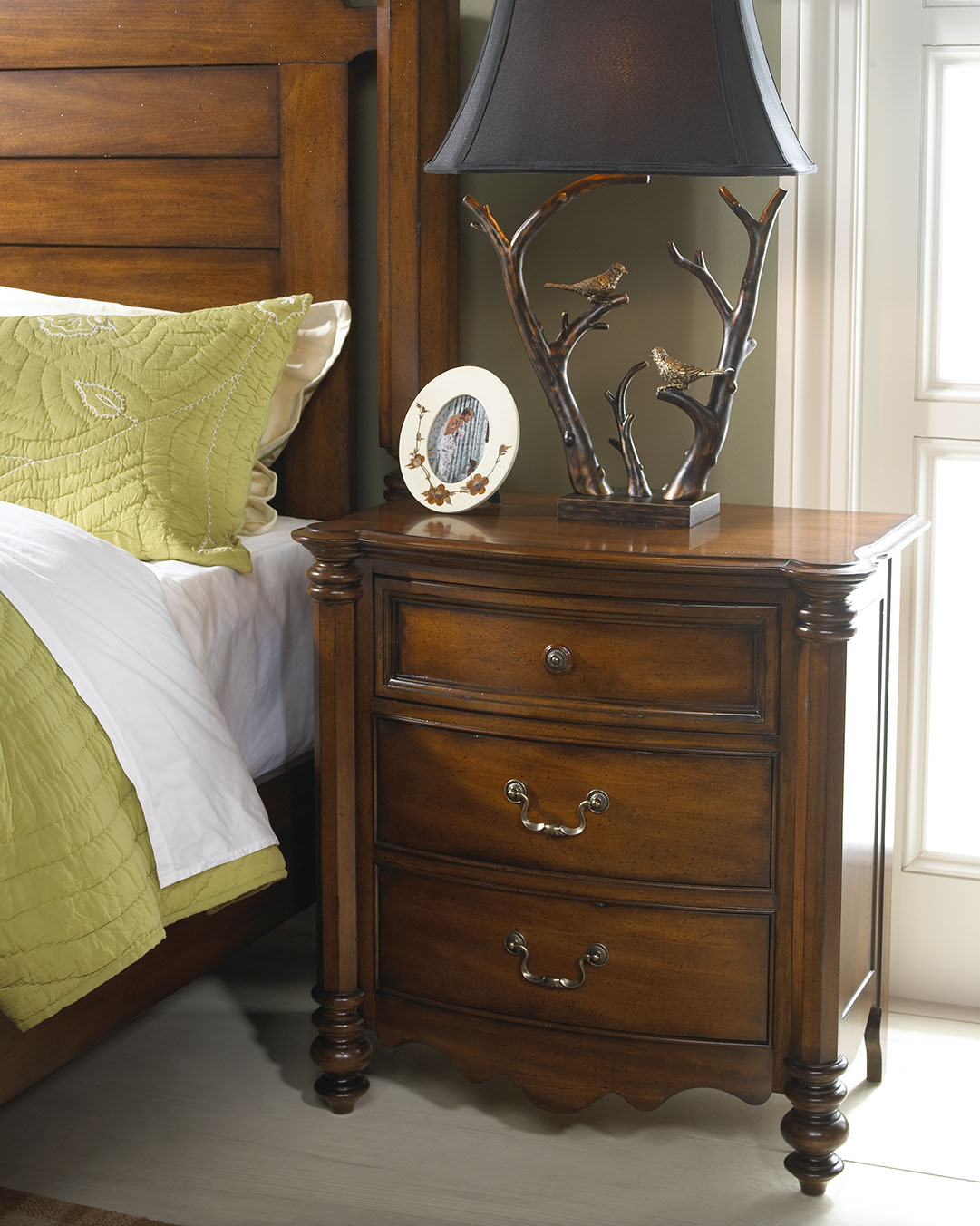
FFDM Summer Home Collection epitomizes the beauty of nature.
Who cares if it’s another season and you’d want to feel the warmth of summer in your home? Just picture the beauty of this sunny season, from curtains billowing in the gentle wind, shell décor, freshly-squeezed orange juice, and such, and you would be begging to get into the summer vibe straightaway.
If you’re ready to jump into the summer routine, here are ways to get crafty and creative –
Outdoor Curtains Are In
What could be more summery than white curtains hung outdoors? Add these ASAP to your lovely porch, they are the perfect provisions for privacy and a little shade.
Pearly Shells and Flowers
Begin your decorating project by filling up, partway, a huge glass vase with sand. You can then add shells that you found on the beach to complete this summer decorative piece. If you have kids, have them help out in filling up the vase with their own shell picks.
If shells don’t tickle your fancy then you can always add wild flowers into the glass jar instead. Snip some flowers from your own garden and have them fill a jelly jar. This is the natural alternative to buying those bottled potpourri in shops.
Fun and Calm
What was that again? Yup, you can actually have both fun and calm on the same deck. Place colorful cushions, your guitar on its stand, and your collection of pottery out on your deck. This is the perfect setup for a series of relaxed afternoons in that area.
‘Want to hold parties instead? That’s possible, too. Invite your friends and have a fun party right by the deck.
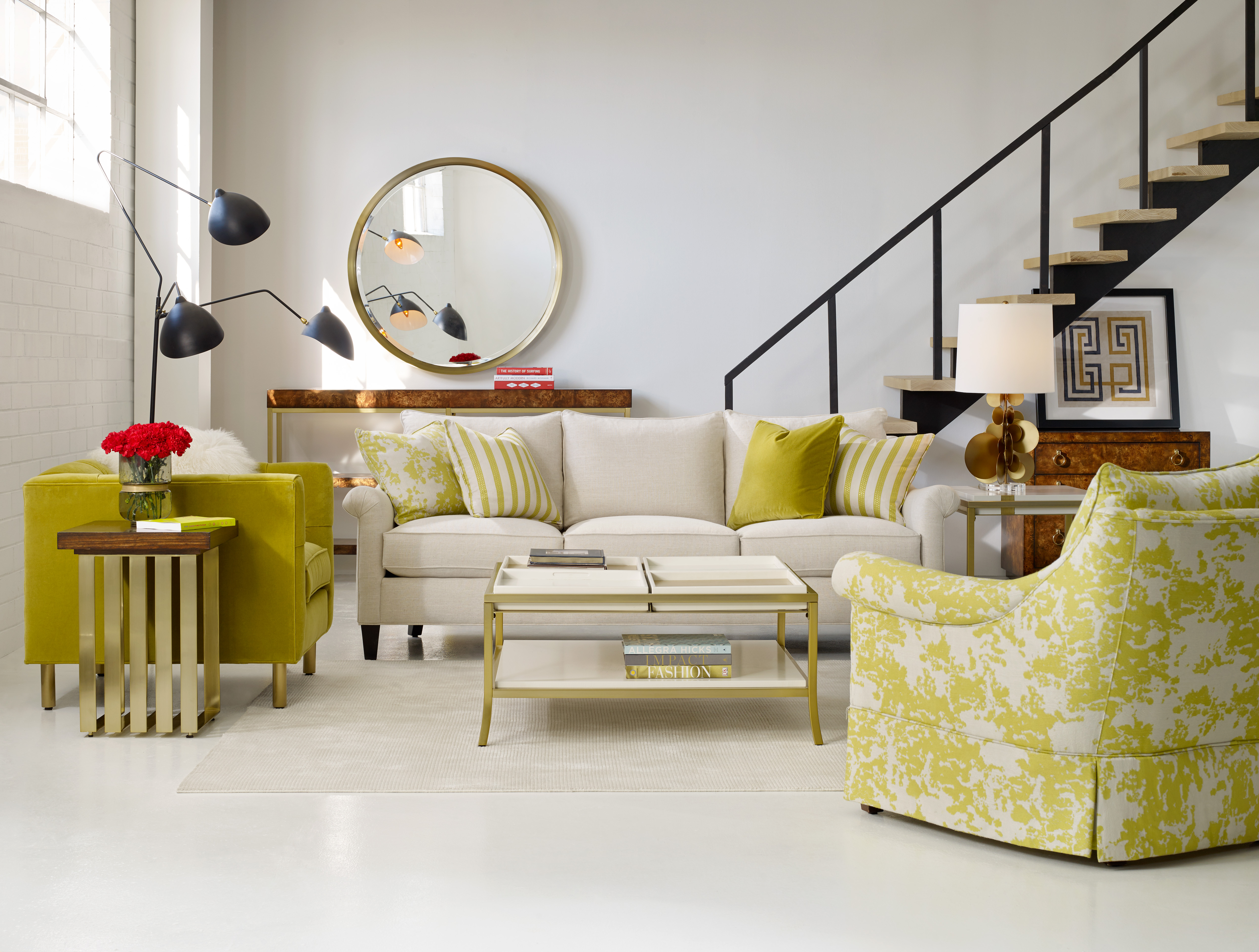
The lively color of summer is depicted in this 7070-002CR Rivington 3 over 3 Sofa
The All-Summer Bar
Set up a lovely tray complete with some glasses and lime – these are the starter pieces for your summer bar. Add a few summer drinks that you love and – voila – you have an instant bar right in your home.
‘Want to set up the bar outdoors? Then do so. A cabana would be the perfect alternative to a corner bar in your home. Hang a colorful swinging chair to complete the theme.
Speak of outdoor changing area, if you happen to have a pool in your backyard, then it would also be handy to have a changing booth right outside. Be sure to stylize this booth in your home, too.
Summer Spells Remodeling
Remove all sorts of clutter in your home, especially from the kitchen cabinets. Have the unused pieces donated or handed down. You will be amazed at the amount of breathing space that you’d be able to create with some cleanups.
As soon as you’re done cleaning, you can then bring in a visual masterpiece such as well-chosen driftwood. This cool chunk of wood can be placed as a decorative piece on the coffee table or in your bookshelf.
Summer Colors Only
It’s only logical to use lively colors when setting up a summer-themed home. Use blue as it is the perfect representation of the color of water. This offers a calming and cooling effect that is very gentle to the eyes.
Orange tones also work because it is as energetic as the rays of the summer sun. Use it with yellow or red to bring a zing to your home.
Whoever thought soft gray could also work on a summer theme? Its neutrality will add that classic touch to the bright yellows that you bring in. This gives any home a concrete-like vibe so it is a convenient and cool foundation to your summer elements.
Pink is a standalone color that will create an impact that’s difficult to forget. Use champagne pink or hot pink to complement the summer hues all over your home.
The Beach Theme
You can never go wrong with white and blue stripes when it comes to summer design so go ahead and freshen up your bed with these crisp stripes. This fusion of colors provides the needful beach house elegance so shop around for the coolest bedding and accessories.
Bring in a surfboard, roll up some beach towels by your front entrance, have everything as bright and sunny as your disposition and, yes, no one can beat your lovely summer theme.
Tags: beach colors, beach design, beach interior design, beach interiors, beach-inspired interior design, bright colors, bright hues, brightening up rooms, brightening up your home, decorating for summer, designing for summer, McCreerys, McCreerys Home Furnishings, styling for summer, summer design, summer interior design, summer theme, summer vibe
Posted in Color Schemes, Interior Design 101, Interior Design Themes, Summer Season | No Comments »
Saturday, May 14th, 2016
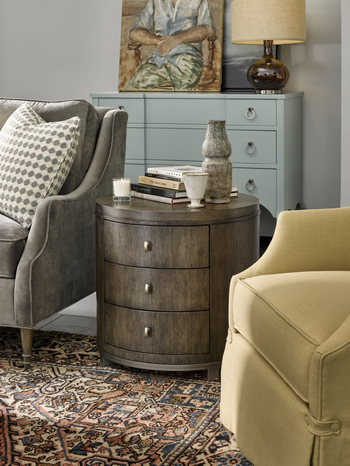
FFDM Brentwood Collection: The light touch of yellow on the lampshade, artwork, area rug and accent chair makes it a noticeable yet non-glaring element inside this beautiful room.
You either love or hate yellow – what is it? Some may answer that their level of emotion towards this color depends on how vibrant or soft it is. Believe it or not, though, yellow is crucial in interior design.
Color can affect humans physiologically without them noticing it most of the time. This only means that you must never underestimate the power that colors or color combinations have among humans.
A Fair Share of Yellow
You might have seen a good amount of yellow in interior design magazines and sites these days. Stop wondering why yellow seems to be taking the interior design industry by storm.
Yellow is a retrospective color, meaning, your grandma and grandpa did enjoy using this color during their days.
Yellow is often used because of its positive qualities. It is known to evoke happiness, confidence and optimism. Imagine feeling optimistic just because you wake up to a sunny yellow room every day. There is a downside to this color, though. Overusing it (meaning you surround yourself with everything that’s yellow), or using the wrong tone, even pairing it with the wrong hue will render the yellow useless (if not damaging to the overall design).
This means that you should harness just the right shade of yellow. If you don’t know what shade to pick, then find the one that resonates the most with you. See also that this shade of yellow does not create disharmony in your existing interior design theme.
Yellow can range from daffodil, creams, sunflower shades and acid hues.
Choosing or Avoiding Yellow
The rooms where you should use yellow are the hallways, the breakfast nook, and any room that asks for a lot of activities and foot traffic. The hallways, for instance, are often dark and so yellow is the best welcoming color that you can use there.
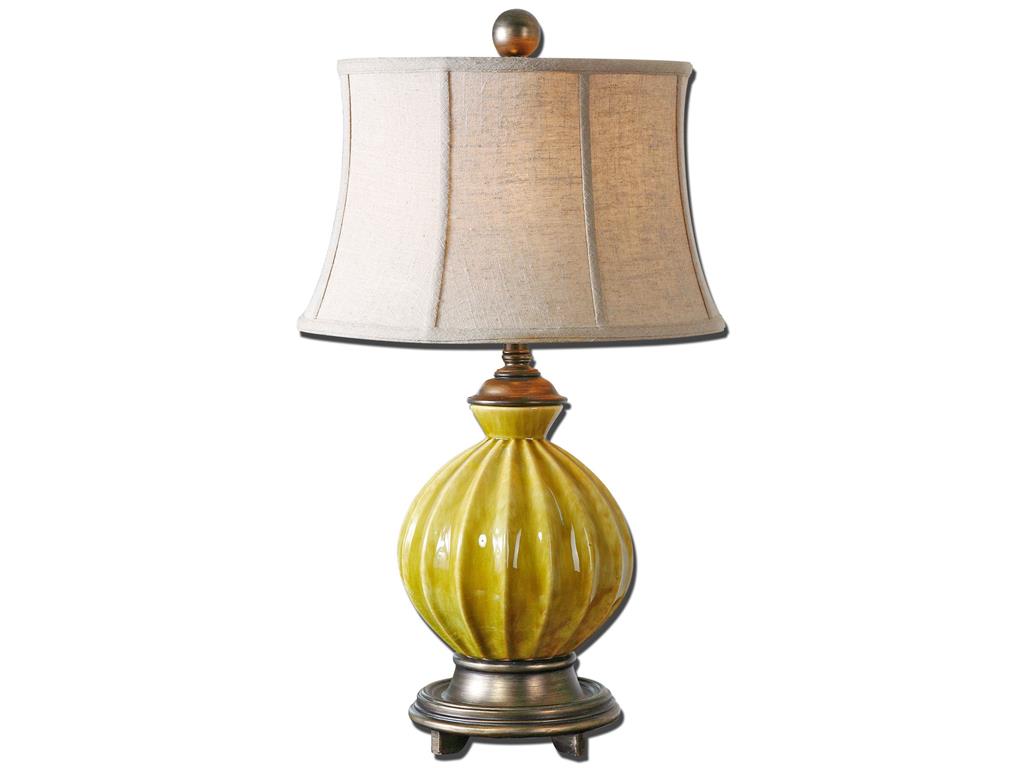
Uttermost Lamps and Lighting Pratella Lamp 27491 features a bright yellow base that will surely captivate the beholder.
Teaming Up with YellowYellow can relate to the emotions just like a person taking an upper. This only means that you shouldn’t use yellow in areas where you should be resting such as the bedroom or the bathroom. The reading room might not be a good area to use this color in. Being exposed to yellow in these places of relaxation will only make the person annoyed or irritable in the long run. Remember that even as you sleep, the psychological properties of yellow are still at work so better be careful in using this activity-inducing hue.
You are seeing a lot of yellow pairings in many interiors at the moment. Different combinations are being used under different circumstances. Depending on yellow’s strengths, gray is often used as the hue to tone down this active color.
Tonal white versions of yellow include ivory, cream and oyster hues. These look lively, fresh and happy and are known to excite the senses. Spring showed much of these beautiful colors so it would be a waste if you would not be able to harness yellow to your home’s advantage.
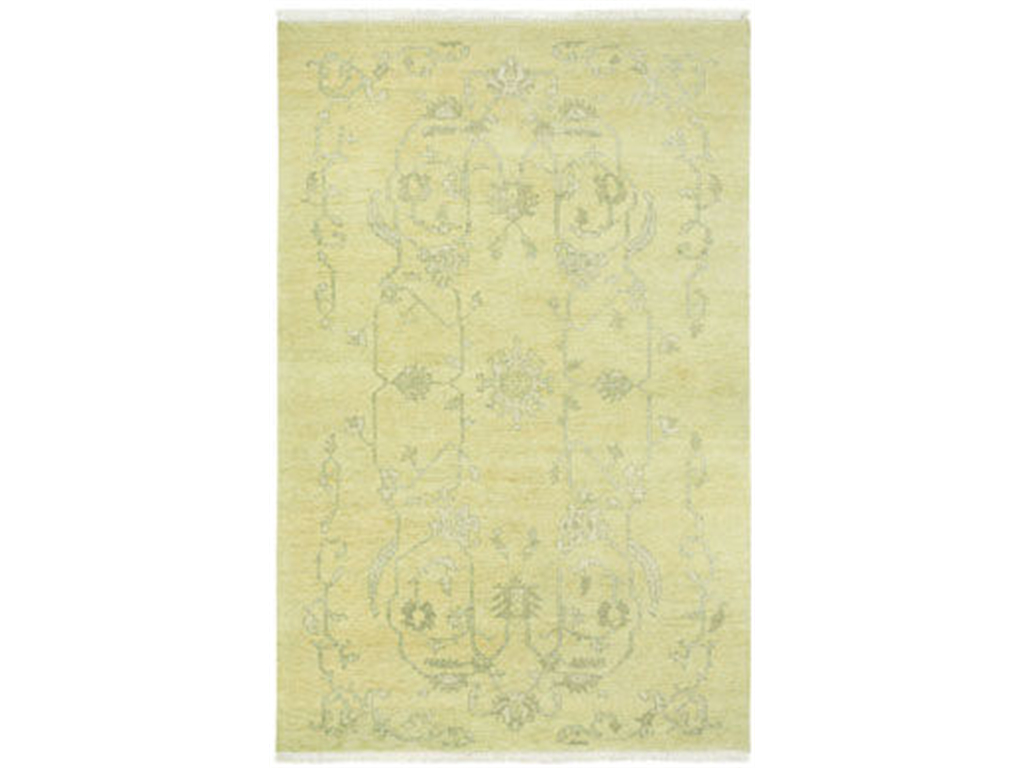
A complementary color to yellow is any shade of purple. If you think you have doused your home with too much yellow, then freely use purple to counteract the overactive environment that you have created.
For a calmer color scheme, find the analogous colors. Which colors sit right next to yellow on the color wheel?
For yellow, these would be red and orange.
The key to successfully using yellow as a color scheme is to use it together with the hues from the same family. It also pays to identify which colors are primary, secondary and accents.
Yellow has always been a contradictory color. It can be the color of slaves (during the Spanish Inquisition) or it can represent nobility (this is apparent among the Chinese). At the end of the day, it will always represent cheerfulness so use it with caution.
Tags: bright colors, bright hues, bright paint colors, brightening up rooms, brightening up your home, McCreerys, McCreerys Home Furnishings, yellow, yellow color palette, yellow color psychology, yellow interior design, yellow interiors
Posted in Color Schemes, Interior Design 101, Interior Design Elements, Interior Design Themes | No Comments »
Friday, May 6th, 2016
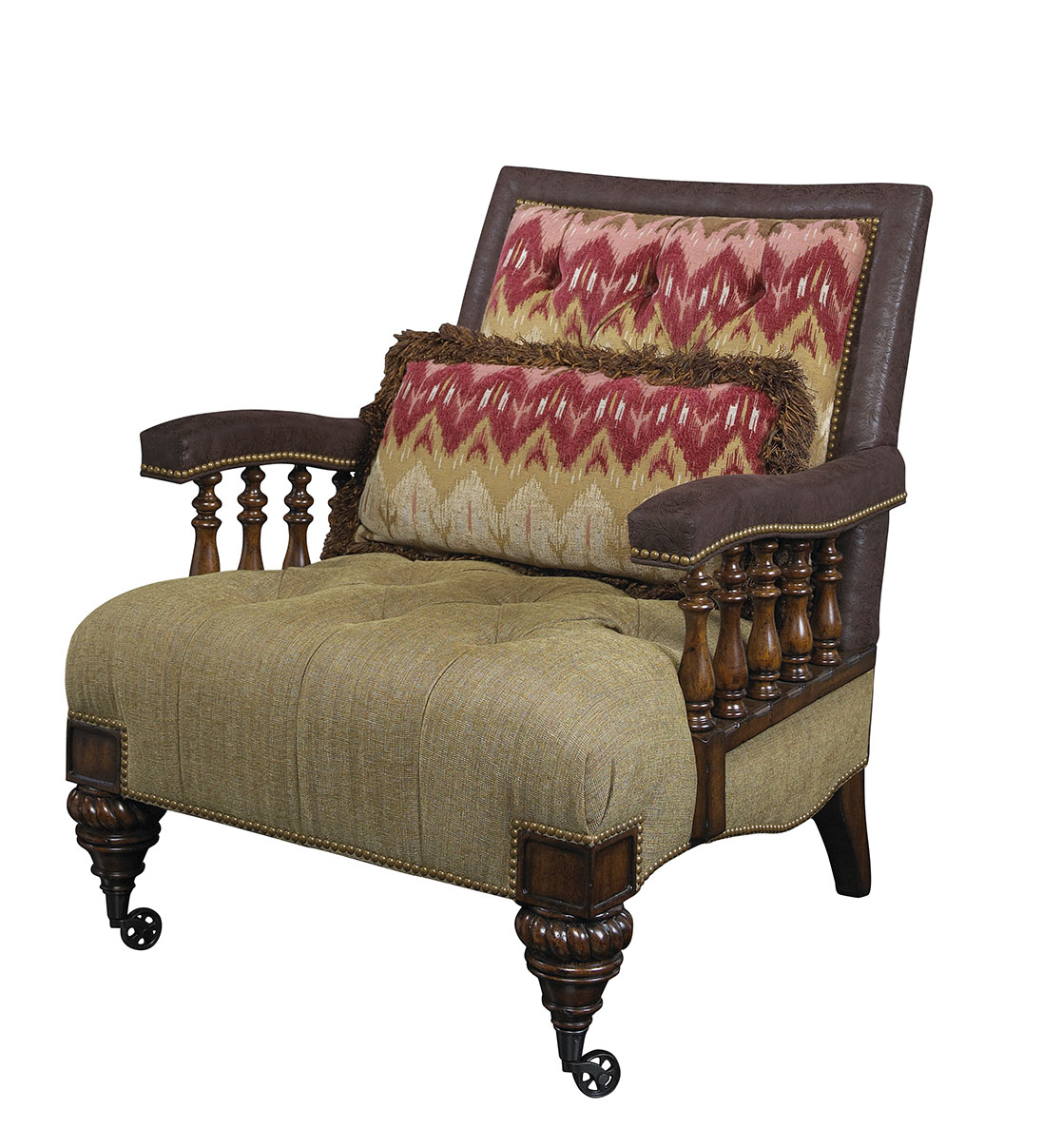
FFDM’s Protege collection offers this interesting, multi-colored seating piece.
Having the will to tackle a multi-colored theme project in your home requires a lot of vision. When you are set to do this, begin by looking at walls, ceilings and floors as empty canvasses that need to be filled with exciting colors. A multi-color palette may not be an easy theme to project but you will certainly find joy once you accomplish it.
A multi-color scheme looks best when there is one dominant color that will anchor the rest together. With this in mind, you need to come up with a color palette that you really love to begin with. After choosing the color that tickles your senses, you can then determine the colors that will contrast or complement your chosen anchor color. As soon as you have decided on these, find out which other colors you will add to the existing pool.
Hiring a Professional Colorist
It is advisable that you find a professional colorist if this is your first time to delve into the multi-color scheme. The judgment of such professionals are highly esteemed so all you’ll need to do is to meet up with some of them, decide whose portfolio impresses you the most, then sit down and have a heart-to-heart talk with the winning fellow. Cut through the usual chitchats. Tell the colorist what you want from the onset. Remember that you are still the boss and that the colorist should know how to fuse your ideas with his color expertise.
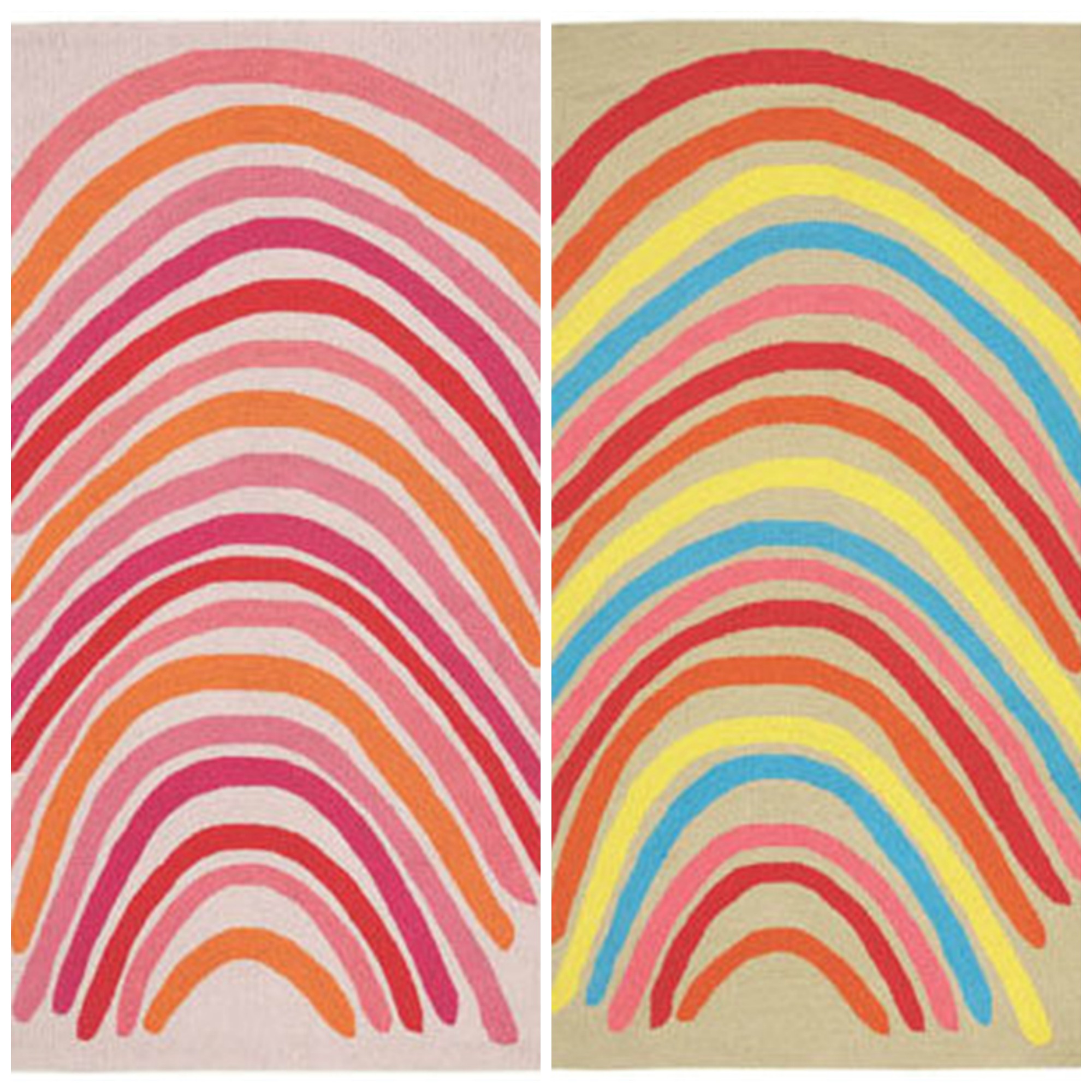
From L-R: Capel Incorporated Floor Coverings Rainbows; Capel Incorporated Floor Coverings Rainbows.
What to Discuss
Before you set that meeting with the colorist, you can begin your color search by cutting some color cards. These samples can be set up against the walls so you’ll have an idea on how they will look. Place one color card after the other and see how they will interact. See how each color looks under natural and artificial lighting.
You can also use a color visualizer. This is often available in paint shops or in paint manufacturers’ websites. This is a special software that will help you experiment with colors without making your walls look like toddler’s playroom.
The development of a multi-color palette can also begin with the purchase of paint samples. There are also swatches that you can use right onto your walls. Using these may take a bit more effort but seeing the results will help you make a more intelligent decision.
Whichever technique you use to create the color plan for your home, always make sure that the dominant color you chose will still be the star of the show. This should be used in no less than 40% of the interior design elements. The secondary color can have 25%, with the rest taking in the rest of the percentage.
Rainbows and Stripes? Why Not?
It is easy to be bold when one uses colors. Varying shades bring about different patterns which, in turn, evoke different emotions.
If you want to go a step further and employ stripes with colors, then you’re in for a real adventure. This combination creates the most exciting visual delights.
Versatility is key to achieving balance even when presented with a lot of activity – imagine using colors and stripes. Adding drama to the room could be the use of bold yet contrasting colors it could be the installation of wide-striped wallpapers as backdrop for multi-colored furniture.
If you want something subtler, then settle for monochromatic stripes instead. These are less distracting.
The way the stripes are presented can also create different illusions. Vertical stripes create height while horizontal ones can make a small room seem wider.
Stripes can also harmonize any busy space. These are simple, parallel lines that can interact with any kind of graphics. Add stripes to some colorful florals and the latter become immediately grounded.
Take time to try different combinations for stripes and your multi-color palette. It’s an awesome way to enliven your home.
Tags: adding colors to a home, bright colors, bright hues, bright paint colors, brightening up rooms, brightening up your home, color consultant, McCreerys, McCreerys Home Furnishings, multi-colored interiors, multi-colored palette, rainbow interior design, rainbow interiors
Posted in Color Schemes, Interior Design 101, Interior Design Elements, Interior Design Themes | No Comments »
Sunday, April 17th, 2016
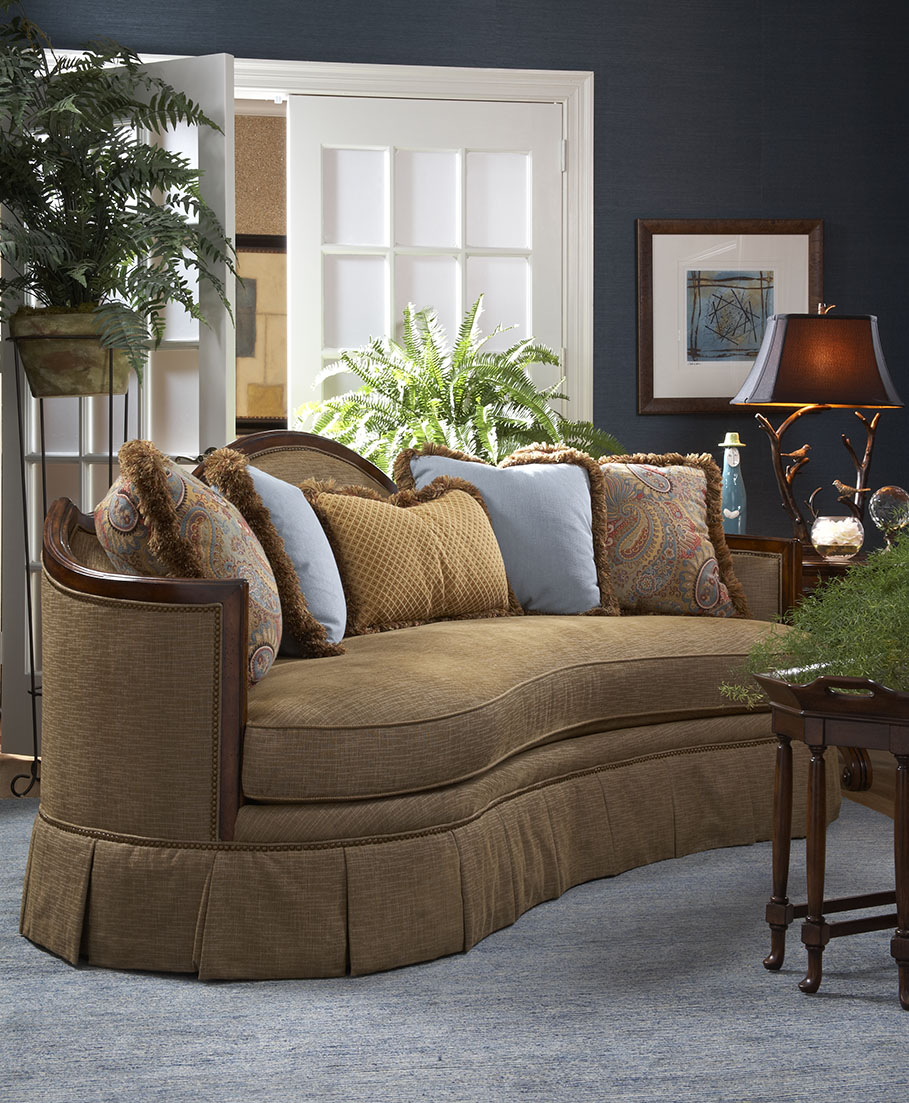
FFDM Protege Collection: Air quality improves greatly when you open the doors and windows, let sunlight in, and add potted plants indoors.
Did you know that you should also let your house breathe? Homes that are sealed tightly are likely to cause problems. To cite an example, there are homeowners who attempt to conserve energy or reduce heating costs but wind up making their dwelling places airtight. There is a need for the house to breathe if you want it to be healthy.
So what do you need to achieve open-air living? All you need is more air.
Your home needs to expel moisture and different forms of gases. It can achieve this by having a constant supply of fresh air from the outside.
The fireplace could continuously burn fuel and not emit harmful fumes properly. When this happens, your home could become a storage area for carbon monoxide, a highly poisonous gas that has been proven to kill.
To correct this, begin by checking the ventilation in your home. Has it been cleaned lately? Is it damaged or even blocked?
See that the kitchen is provided with a powerful fan. Do this also in your bathroom and the open hearth fireplace right in the middle of your living room. Exhaust fans are affordable solutions that can keep carbon monoxide poisoning to zero.
But remember that the air drawn out by the exhaust fans must also be replaced. The most powerful exhaust fans inside the kitchen and bathrooms could also create problems if negative pressure builds inside. This is what happens when backdraft draws exhaust fumes from the hot water heater, furnace and other appliances are brought back into the house.
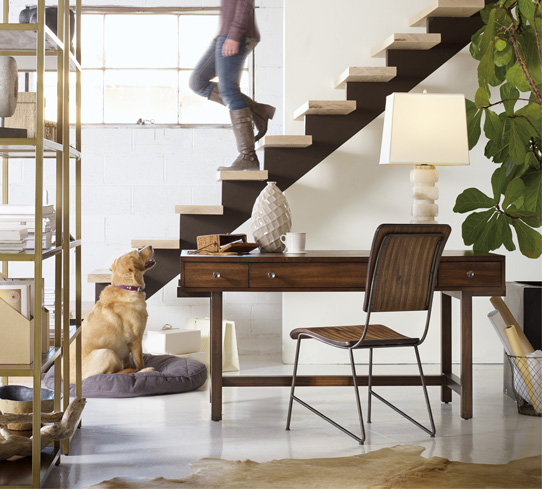
Home Office Collection by Hooker Furniture: The open-air concept was beautifully captured in this urban home office. Minimized lines and greeneries made the scene more fresh-looking.
When Is Air Too Tight?
You can say that your home is airtight if the feeling of the air is stuffy or stale. You could also see condensation dripping down on your windows. This could also mean that the humidifier could be set too high.
Have you noticed that the pilot light for your gas appliance seems to be going out a lot lately? When your burner produces yellow and not the usual blue flame also spells something disastrous that’s cooking up.
The smell of exhaust gases could also be present in your home. Carbon monoxide can’t be smelt but other types of exhaust gases come with odors so be wary of those.
Freshen Up
The best solutions include an air exchange system, direct feed, or merely opening your windows. The air exchange system can be professionally installed. This will exchange the air inside for fresher air outside without heat wastage.
You might also want to consider installing heating appliances and systems that can directly feed of outside air during combustion.
If the situation calls for an immediate answer, then you can look into the most obvious solutions – open your windows! Improving the indoor air quality is sometimes as obvious as just opening the windows that have been shut for the longest time. Plus it is a good habit to open the windows from time to time (if not on a daily basis). You don’t have to wait for the indoor air to become polluted just so you would open the windows. Do it for around 5-10 minutes daily.
You should also open the windows if someone in your home engaged in an activity that would potentially deteriorate the quality of air indoors.
Here are some more tips to create open-air living in your home –
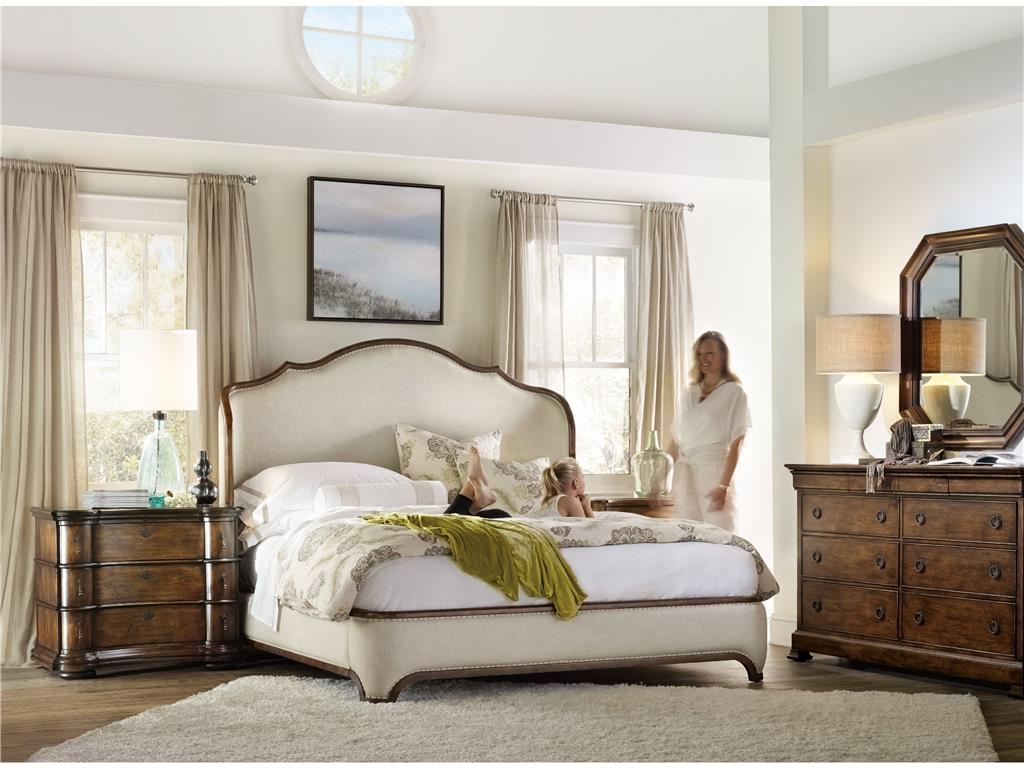
The Archivist Collection by Hooker Furniture features an open-air bedroom with curtains drawn and windows opened to let in sunlight and fresh air.
Tags: brightening up rooms, brightening up your home, McCreery's Furnishings, McCreerys, McCreerys Home Furnishings, open floor layout, open floor plan, open space, open space design, open space theme, open-air interior design, open-air layout, open-air lifestyle, open-air living
Posted in Home Maintenance, Interior Design 101, Interior Design Elements, Interior Design Themes | No Comments »
Monday, January 18th, 2016
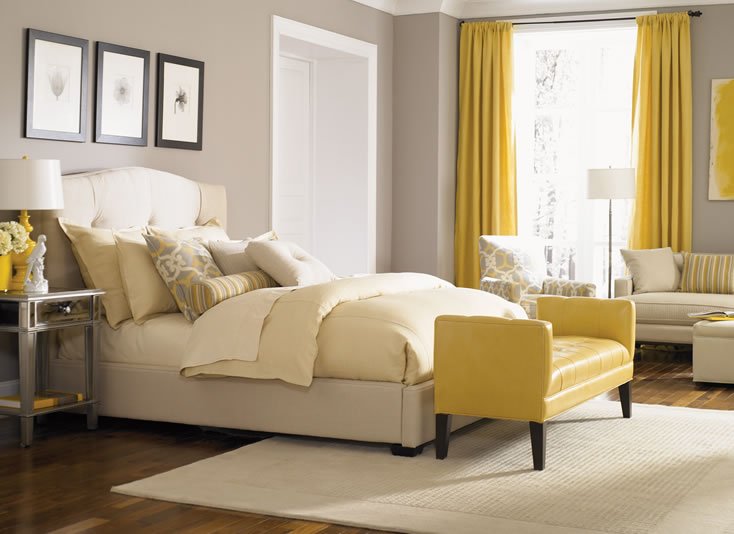
This neutral-colored bed from the Bergman Bedroom Collection of Jonathan Louis is perfect with yellow curtains, that yellow chair at the foot of the bed, and yellow-striped bolster, and other yellow accessories.
The color yellow is a wonderful hue. It is intense, it is bright, and it can even evoke the strongest emotions. Yellow is an attention-grabbing color yet it can also become abrasive should you make the mistake of overusing it. This color can appear bright and warm but in the wrong hands, it can also be visually tiresome.
Yellow can cause eye fatigue because of the high amount of light which it can reflect. The use of this color as a wallpaper on computer monitors can cause eye strain, even vision loss for some. Though this is the case, it can also be used (in moderation) to grab people’s attention. This is why yellow is used mostly in most roadside advertisements.
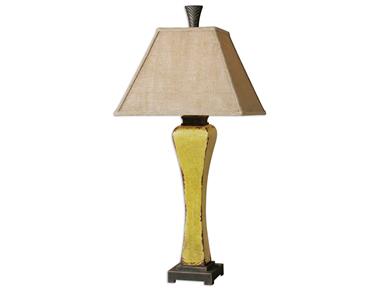
Lamps and Lighting Uttermost Oratino Burnt Yellow Lamp 26476 at McCreerys Home Furnishings. This fascinating lamp comes with a crackled ceramic. You will love the burnt yellow glaze as well as the rust bronze detail.
The Sunny Color
Using yellow in interior design means you are ready to stage warm and happy feelings inside your home.
Color therapy makes use of this color to evoke feelings of happiness in people. In interior design, it creates coziness and feelings of warmth. This is quite a popular color for wall paints.
Splashes of yellow can be used inside your home through golden carpet hues, warm room furniture, and yellow lighting fixtures. Accessories in yellow can also make a rather dull room appear more exciting.
Yellow is a highly recommended color for decorating rooms. This is the color that can brighten up any dark, gloomy room. Painting the walls light yellow, creamy yellow or any yellowish tint on wallpapers is great for small and dark rooms.
Mix decorative items of yellow and colors that match this lovely hue. If you have used yellow as paint or wallpaper, then find a neutral color for your ceiling and floor. This should balance the looks of your interiors while also creating a pleasant atmosphere.
Yellow can be so many things – it can be juicy, subtle, even dimmed. The living room walls can be painted with this juicy shade. If used as a tint, it can be mixed with brown, cream or brick red. Speaking of duos, what could be considered as the marital pair for yellow is the color green. This is a combination that is typically used in kitchens and children’s bedrooms. Bright accessories can be a fusion of two colors: red, coral, blue, orange or turquoise.
If you want to use yellow inside classical interiors, then have it combined with white. This is a great mixture for dining rooms, offices and living rooms. These two colors can make any room look larger, clean and bright. If you used the color combination as a backdrop, then be sure to use moss-colored, terracotta, or burgundy accessories. Wooden oak furniture will also look great inside such interiors.
If, on the other hand, you decide to use yellow and white furniture and accessories, then be sure to have a more exciting ceiling to floor colors such as lilac, green, or shades of blue.
It is also safe to experiment with yellow and chocolate. You will never go wrong with this combination as it offers a warm contrast to the usual sunny feelings that yellow evokes. Mix the same color with red and you will instantly bring life into a room.
Purple is also a great combination for bright yellow. Children’s rooms often come with pastel green with purple accessories. This is never irritating to the eye.
All in all, yellow can be used in different shades and can be easily combined with many different colors. Just learn to put balance these awesome colors by knowing their limits. Just remember this – too much of anything can always annoy.
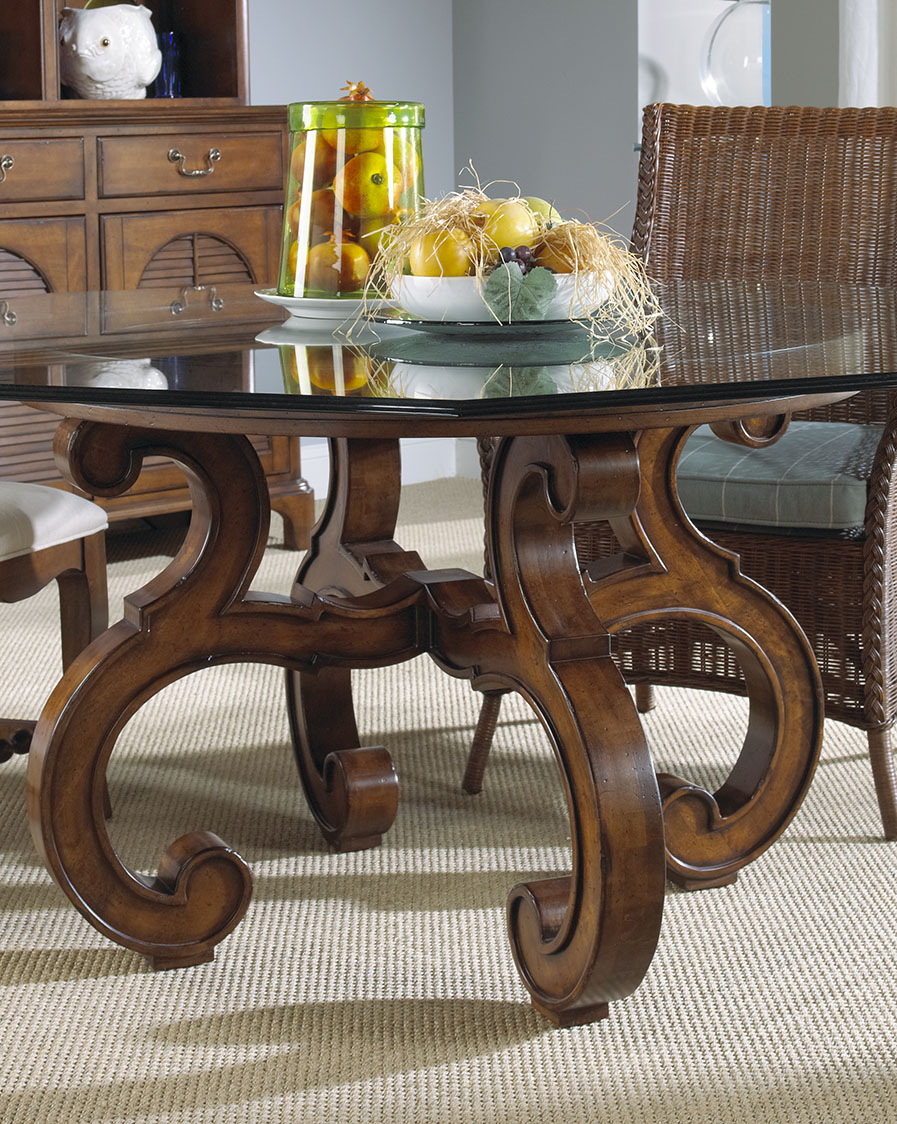
Yellow lemons – in this case oranges – can add a unique tinge of yellow on your dining table. This wooden masterpiece is from FFDM’s Sunset Collection available at McCreerys Home Furnishings.
Tags: bright colors, bright hues, bright paint colors, brightening up rooms, color combination, color fusion, color psychology, contrast, guidelines, McCreerys, McCreerys Home Furnishings, tint, tips, warm colors, yellow, yellow color palette, yellow in interior design, yellow interior design, yellow interiors
Posted in Color Schemes, Interior Design 101, Interior Design Elements, Interior Design Themes | No Comments »
Follow us on our social media


© McCreery's Home Furnishings | All Rights Reserved | Privacy Policy
