- Follow us:


Tuesday, November 6th, 2018
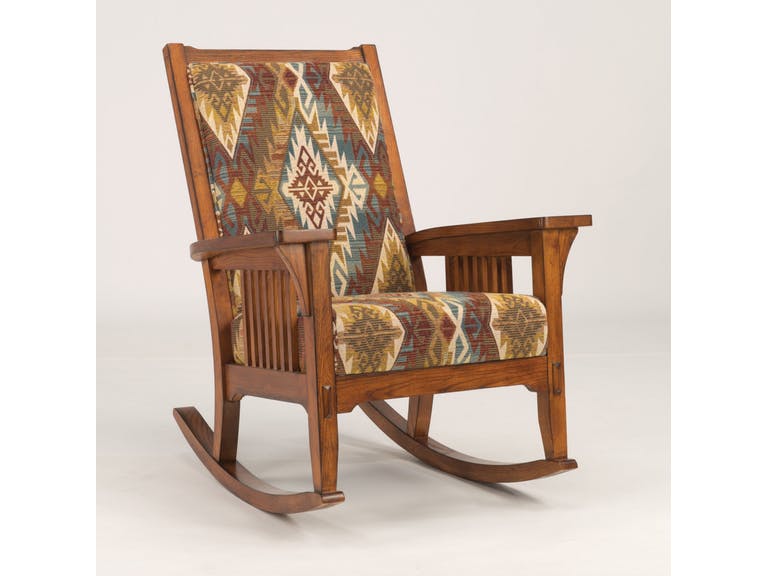
Simple Victorian: Flexsteel Living Room Fabric Rocker 6995-14
Many homeowners today automatically conclude that Victorian interior design is way out of their reach. In reality, you don’t need much to set up a Victorian dwelling by using the simple principles of design. Add a dash of creativity and you should do well.
Looking Back
The Industrial Revolution paved the way for Victorian interior design. The machineries made ornate pieces easy-to-own for middle class families. And with the middle class becoming more affluent, they were motivated to prove their social standing. They did this by improving their homes’ architectural features through the installation of wall sconces, the creation of ceiling panels, and adding tapestries.
Owning many decorative stuff was a sign of good taste for a lot of Victorian households. Fewer furnishings, to them, proved that the dwellers belonged to the lower class.
Victorian Mood Lighting
Entryways and dining rooms are two of the most important rooms in a Victorian home. The lighting for these rooms comes from candles and wall sconces. There are also decorative lamps that prominently illuminate the rest of the house.
Victorian Wall Coverings
What’s typical for Victorian homes is a rich, dark palette. More than the beauty of the rich hues, this characteristic of every Victorian home was done because of the pollution that rampantly stained the light-colored walls at the time.
Deep crimson and bottle green are the go-to colors for this time period. If you can set up a floral wallpaper, then you’re still on the right track. The wallpaper colors of that era were green, blue, red or tan with layers of florals. Later, during the Gothic era, leaf patterns and earth tones became the in thing for wallpapers and tapestries.
Nature scenes were also common as well as faux finishing. If you want to mimic the look, be sure to find the best deals online. You can also add gold paint your wall treatments so that they will have a gilded feel.
Victorian Window Treatments
The curtains for this era were heavy and rich-colored. Most of them were also pleated and were hung over curtain rods with gilding. To make them look more opulent, these curtains were wool or silk-lined.
Victorian Flooring
If you want your flooring to look authentic for this time period, then choose from matting, parquet, drugget, tiles, carpeting, or floor cloth. Don’t forget that the color of the flooring must harmonize with the rest of the design elements so choose well.
Victorian Furniture
The ushering in of the Industrial Revolution back then opened an interesting era of furniture making. Because of the availability of machineries, furniture pieces were massively produced. The prices then dropped and the styles were greatly varied.
The Victorian era was one that enjoyed a lot of embellishments but none of the garish type but more of the elegant beading, lace, and embroidery.
Curved edges were a famous style during the early and the middle Victorian era. During the late part of this period, these pieces were replaced with overstuffed pieces that were greatly inspired by Eastern furniture.
A Fusion of Styles
Since you’re embracing a style of eclecticism of old, you should be ready to use diverse cultural foundations that evolved during that long time. The middle period was the moment of Romanticism while the Arts and Crafts flourished towards the end of the period. If you want the early look of this era, then go for the Gothic Revival look that was darker and richer and more textured.
Mostly, the Victorian period is one that’s associated with wealth and lavishness. Carefully consider the items that would give your home the biggest impact. And see to it that the accent pieces frame the major pieces that you end up choosing.
Tags: McCreerys, McCreerys Home Furnishings, Victorian, Victorian interior design, Victorian interiors, Victorian style
Posted in Interior Design 101, Interior Design Elements, Interior Design Themes | Comments Off on Featured: Victorian Interiors
Wednesday, November 29th, 2017
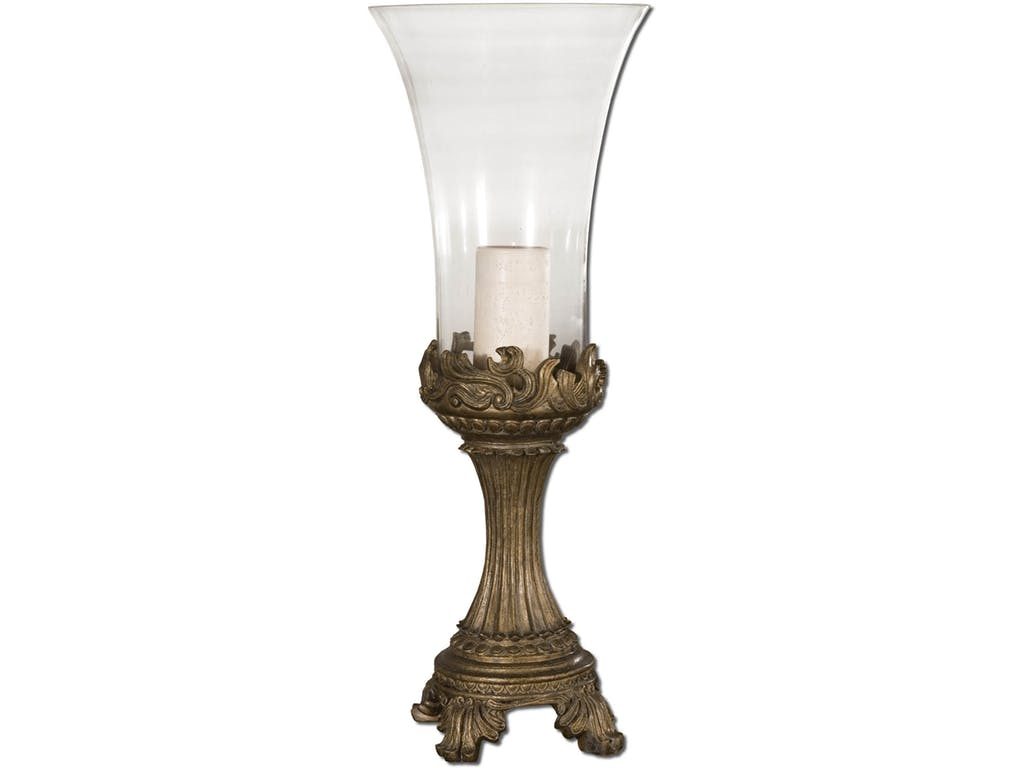
Uttermost Accessories Rococo Golden Hurricane Candleholder 19475
The Victorian Era or period was a time in Great Britain’s history when it had its longest living monarch, Queen Victoria (she reigned from 1837 to 1901). Her name became synonymous with the many positive events that happened during her reign such as political reforms, expansion of Britain’s borders, and social and religious improvements. Even the arts flourished during her era.
Life and lifestyle, in general, have also greatly improved during Queen Victoria’s time. Mortality rates significantly decreased and the population boomed and hit the 30 million mark. It was also during this time that Charles Darwin published his On The Origin of Species and Lewis Carroll penned the infamous Alice’s Adventures in Wonderland.
All in all, Britain became a wonderful place when Queen Victoria was the ruling monarch. Everything was lavish and stylish – remember these two adjectives because these are your guiding principles throughout your Victorian design project.
Victorian Hues
The Victorian period was dominated by three distinct styles – Gothic Revival, Romanticism, and Arts and Crafts. Many designers created frameworks for the elements brought by these three styles eventually bringing about cohesion and balance.
Detail and colors are two crucial elements of the earliest Victorian homes. There were color limitations back then due to technology and locations. Pigments were the hue sources with most of the palettes mainly muted and earthy because painters made use of plant pigments.
Darker shades were used in parlors and other public rooms while the lighter tones were reserved for the utilitarian spaces.
When industrialization quickly spread, paint became available so more elaborate color schemes were born. Multiple colors were already used indoors and outdoors with faux art and stenciling also born.
Flooring in Victorian homes was sponged, wood-grained, spattered or marbleized.
Since the end of the Victorian era signaled also the influx of the Arts and Crafts movement, woodwork became a favored design element, though most were still unpainted.
Victorian Patterns
Victorian design is all about diversity and decorative art. Make use of polychromy (multiple colors) and ornamentation. The color schemes and patterns are heavily influenced by Far Eastern fabrics and exotic tapestries. Even Pompeii and Japan have had their influence on the colorful Victorian homes. To use less than three colors was now a mortal sin since there were so many colors, textiles, ceramics, and wallpapers options to look at.
Now that wallpapers are mentioned, what is a Victorian home without them? The mass production of fabrics and wallpapers opened up a lot of choices to the world of design. Most of these got their inspiration from Gothic tapestries (with damask as a leading choice) and Medieval designs.
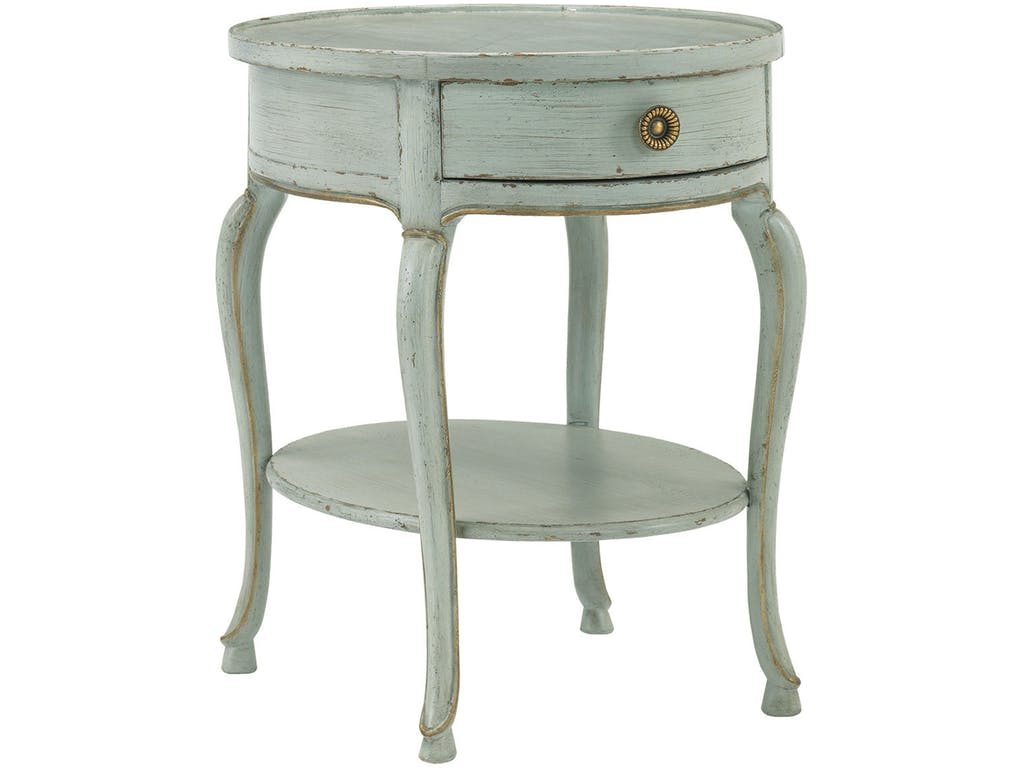
Drexel Living Room Table A La Louis XV – Louis XV Table 311-850
Victorian Architecture
If your home does not have these already, then it’s time to do a little remodeling –
Victorian Furniture
It is easy to see the romantic influences on Victorian pieces. They are sinewy, curvaceous, and the carvings are detailed. These pieces draw inspiration from Rococo, Gothic, and Louis XV pieces with gilding, dark finishes, heavy proportions, and embellishments.
Victorian furniture pieces were the first furniture to be manufactured since the period overlapped with the Industrial Revolution.
These days, the characteristics of Victorian furniture are still reminiscent of the old days but it tries to keep up with what’s current. You will see deep seats, balloon backs, low arms, and even easy chairs without arms.
Coiled springs underneath the seats are also pretty common. Woods used include walnut, oak, rosewood, and mahogany. You are also bound to see ornamentation with lots of Fleur de Lis.
Tags: McCreerys, McCreerys Home Furnishings, Victorian, Victorian fashion, Victorian furnishings, Victorian furniture, Victorian gothic, Victorian interior design, Victorian interiors, Victorian style
Posted in Interior Design 101, Interior Design Elements, Interior Design Themes | Comments Off on Victorian Drama – 4 Characteristics to Embrace This Vivid Style
Wednesday, November 30th, 2016
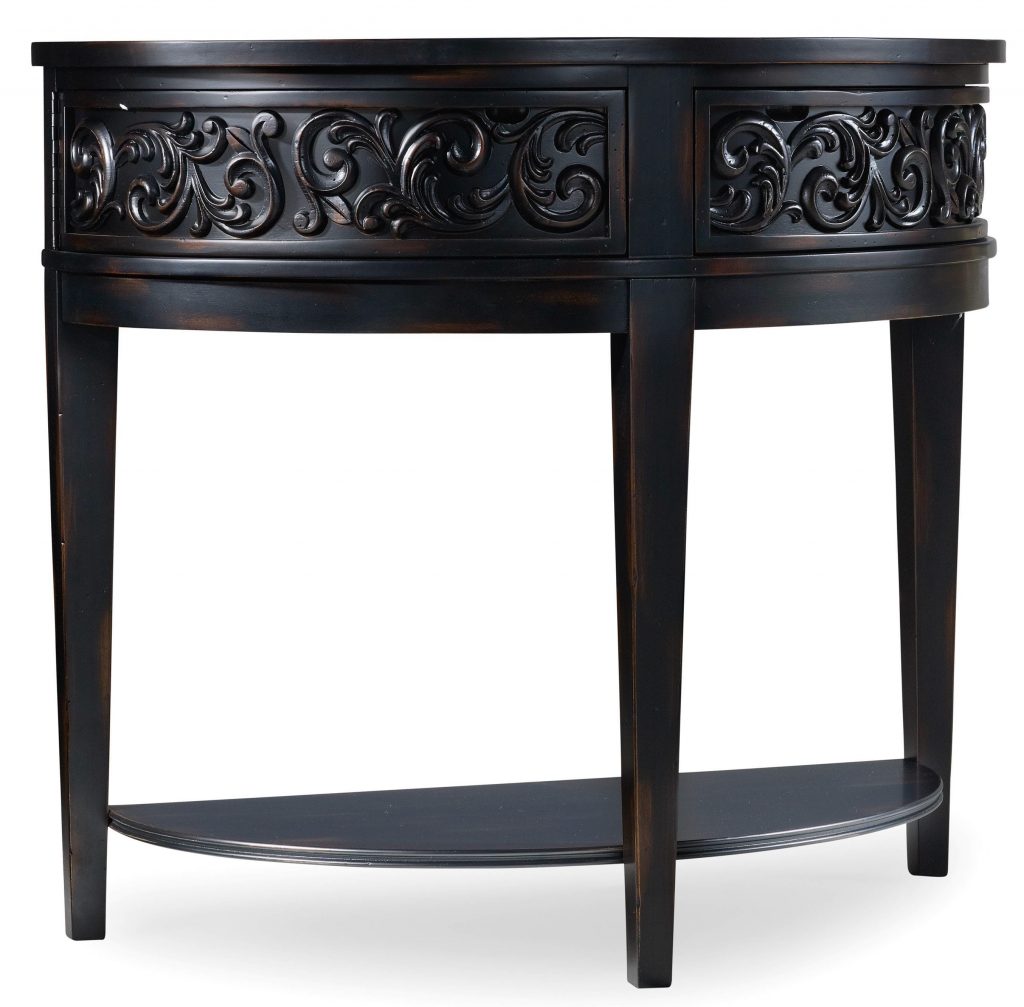
Hooker Furniture Living Room Melange Damasque Demi Console
This may or may not be the first time that you encounter Victorian interior design but, definitely, it is a style that catches attention. There isn’t an easy way to setting up such an interior but with this guide, you should be able to make a charming Victorian interior. There are four basic elements to remember in this kind of design – pattern, color, romance and opulence. You are not creating Victorian out of boring, dull stuff.
So what is Victorian style?
Queen Victoria’s Style
The Victorian interior design is a broad term that is used in reference to the fashion, architecture and home décor features from the late Queen Victoria period. This is approximately from the year 1837 till her demise in 1901.
Victorian style gets its inspiration from geometry, theory and nature. You are free to find from other resources, though. This encompasses other sub-style such as –
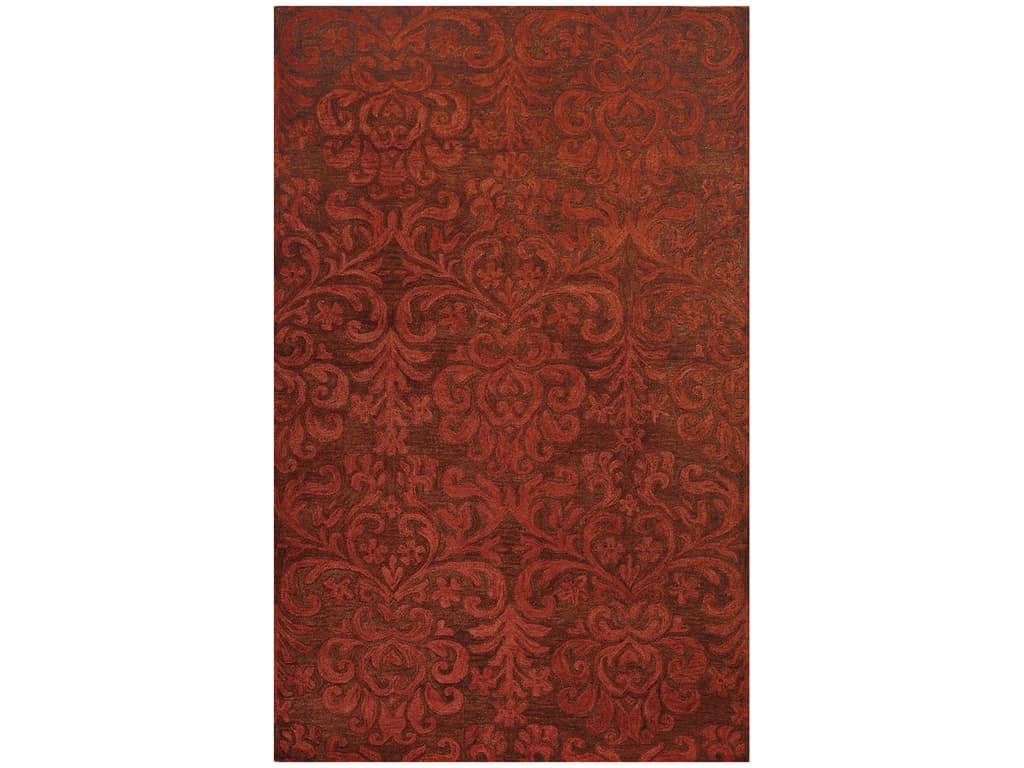
Capel Incorporated Floor Coverings Filigree Rug 9225RS Persimmon
Victorian Elements
Victorian home design means you should be ready to use a sophisticated palette. You must put emphasis on the tertiary colors. These hues are created by mixing primary and secondary colors. Dark colors are often associated with this style so you could go gothic and get away with it.
The earliest Victorian homes showed light-colored walls while the ambience came with rich colors. The libraries and dining rooms were elegant and had deeper tones. The dark, deep tones are used to emphasize the importance of certain rooms.
In urban areas, colors such as dark green, gray and grayish blue are used to minimize the grim effect of the dark surroundings. These hues soften the usual dark backdrop that is truly Victorian. Dark walls – back in the olden times – were used also to deviate the attention from soot and coal dust which come from oil and gas lamps.
In choosing other colors for your Victorian home, you can also look for any subdued and warm color such as cream, mahogany brown or deep, rich walnut. Shades of teal, plum, mustard yellow, aubergine, rust, green, blue and gold are also usable. Colors chosen by modern homeowners often reflect organic colors such as rose ash and subdued lavender.
Complex patterns often cover surfaces of Victorian homes. Use different wallpapers to cover your walls and to make them more fit for this style. Cover everything – from ceiling to walls – then be sure to use luxurious fabrics that have silk tassels, embroideries and trimming. Use rugs that come with intricate weaves such as Persian and Oriental rugs.
Victorian style may be posh but it isn’t supposed to be uncomfortable or excessive. Design with plush fabrics and with damask. Use them on your upholstered furniture and window treatment layering. Layer the rugs, too.
Remember that Victorian is tantamount to flaunting wealth. You can mimic that further by adding fine wood panels on your walls, marble fireplaces, and some mass-produced yet still elegant paintings. Use elaborate furniture and accessories ranging from subtle to massive. Find ornately-designed lace, china, stained glass, busts, flower vases, souvenirs, prints, and accessories.
Use replicas of electric lamps to perfectly accessorize your rooms. The results often vary per home but what are achieved – in the hands of a skillful designer – are complexity, sophistication, refined look, and a romantic setting.
Tags: McCreerys, McCreerys Home Furnishings, Victorian, Victorian gothic, Victorian interior design, Victorian interiors
Posted in Interior Design 101, Interior Design Themes | No Comments »
Wednesday, February 24th, 2016
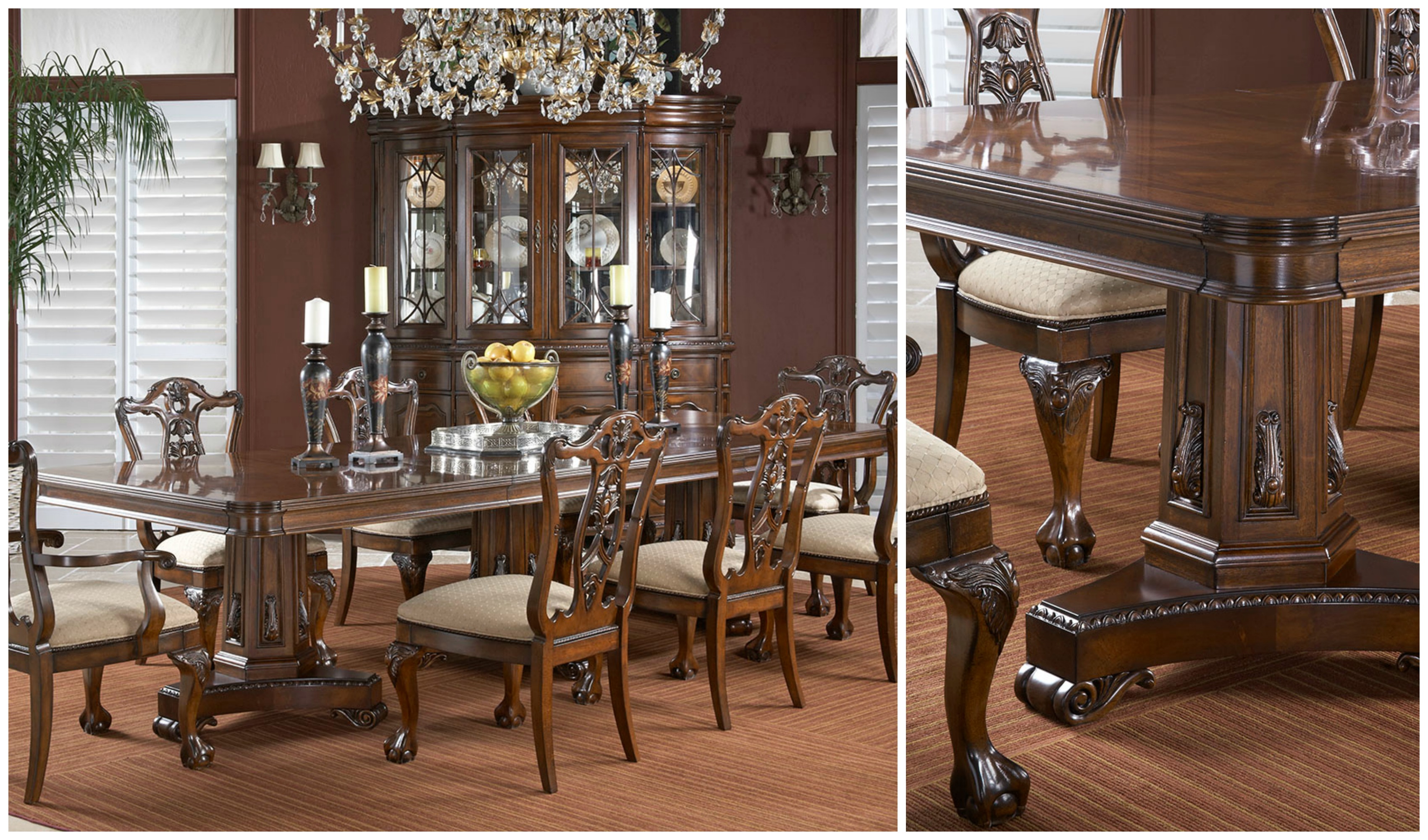
FFDM Antebellum Collection
Owning a Victorian home is not everyone’s privilege. To others, this is just a dream; to you, however, it may not be as dreamy especially when you discover that as ancient as the design are the roofing, wirings and windows. ‘Thinking of remodelling your Victorian home?
Most of the time, remodelling projects is not simple. Revamping an old home can be time consuming. Before you jump into modernizing your beautiful historical home, you may want to speak to some of the preservation societies first.
Owning a Victorian dwelling is intriguing and a lifelong journey for some. Such a home is full of character and works of craftsmen that – even when it’s already old – it can still catch home buyers’ attention.
Victorian Characteristics
Victorian homes were built somewhere between 1837 till 1901. This was the era when Queen Victoria still ruled. There are some people, however, who have also typified Victorian architecture to be Edwardian as well. This is what takes the period all the way to 1910.
Figure 1FFDM’s Vintage Classics
Edwardian and Victorian housing dominate the British suburbs today, for instance, the City Centre Conservation Areas and the Peterborough’s Park. Edwardian homes are seen to be less in value when compared to Victorian though most of their features tend to be similar.
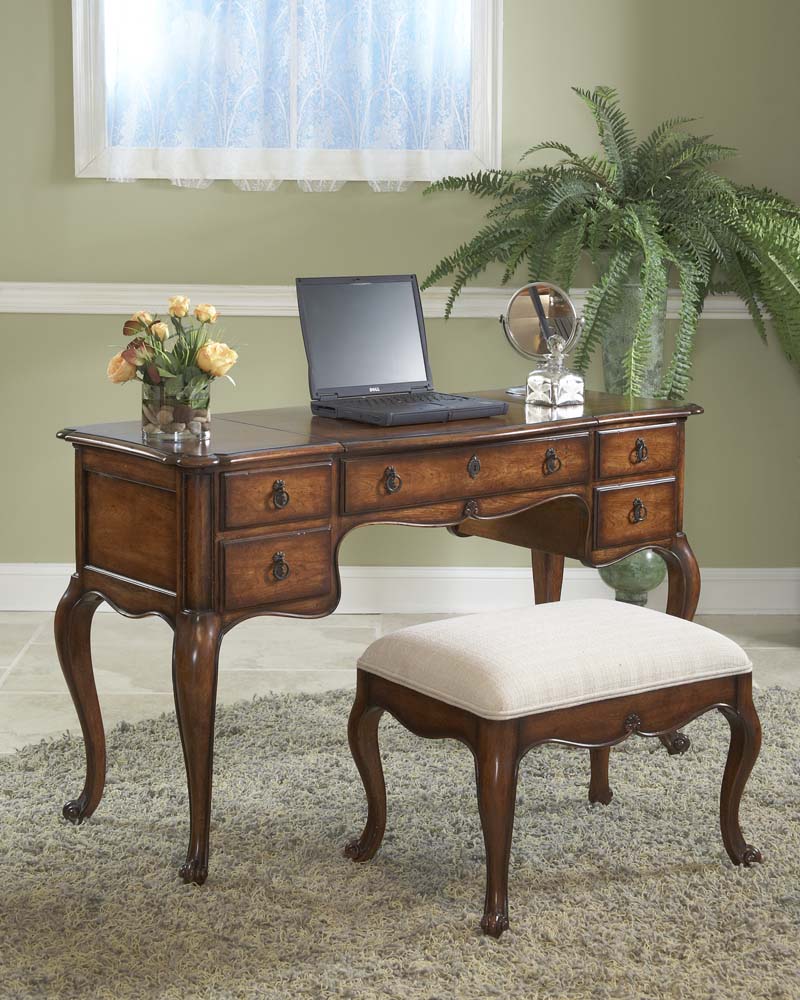
FFDM Vintage Classics Collection
The traits that separate Victorian homes from the rest are –
Terraces. As more and more country people went to the urban areas, Victorian homes were then built in terraces where the kitchen is at the back while the garden is both at the front and rear. There are no garages since Victorian homes were built during those times when there were still no cars. These days, the gardens are often removed in favor of the parking slot.
Patterned bricks. The advent of the railway brought about easier transport for bricks and other such materials. It is because of this that patterned brick became quite popular. The Flemish Brick bond is often used in many Victorian houses. This is characterized by alternating headers or bricks whose ends appear on the face of the house’s wall. Stretchers, on the other hand, are the long sides of bricks appearing on the face of the wall.
Barge boards. These are the decorative wooden panels that are found on the gable ends of buildings. This is that triangular portion of the pitched roof. Look for these sections because they point directly to the Victorian period when such decorative panels were popular.
Bay and sash window. It was in 1832 when the plate glass arrived. This resulted into larger windows with six or four panes and a vertical sliding sash window, a single glazing bar right down the middle.
It was also fashionable to have a three-sided bay window. A ground floor bay window usually had a roof of its own.
Decorated roof line. Slate roofs are quite common among Victorian houses. Thanks to the wonders of the railway, the trains were able to haul slate and deliver at longer distances. Finials are often seen on the ridge and gable ends. Roofs also have ridge tiles that are made of terracotta. Whether it is glazed fired clay or unglazed, the color used is often red.
Stained glass. One of the most exciting design materials is stained glass. It originated from the Gothic revival and was popular during the Victorian period. Mosaic stained glass even replaced painting in many homes. These are often found on top of windows or on doors.
Floor tiles. Most Victorian homes come with geometric terracotta tiles especially on the porch areas. The ground floor is also often made with these materials. These tiles come in natural colors such as brown and red, dark blue, off-white and black.
A fireplace. What is a Victorian home without this? This is used to keep the house warm and is often surrounded by marble, stone or wood. Terracotta chimney pots are also quite common.
Tags: British, classic, classic design, classic home, classic interior design, classic interiors, classic style, classicism, Edwardian, McCreerys, McCreerys Home Furnishings, Victorian, Victorian fashion, Victorian furnishings, Victorian home, Victorian interior design, Victorian interiors, Victorian style
Posted in Interior Design 101, Interior Design Themes | No Comments »
Monday, February 1st, 2016
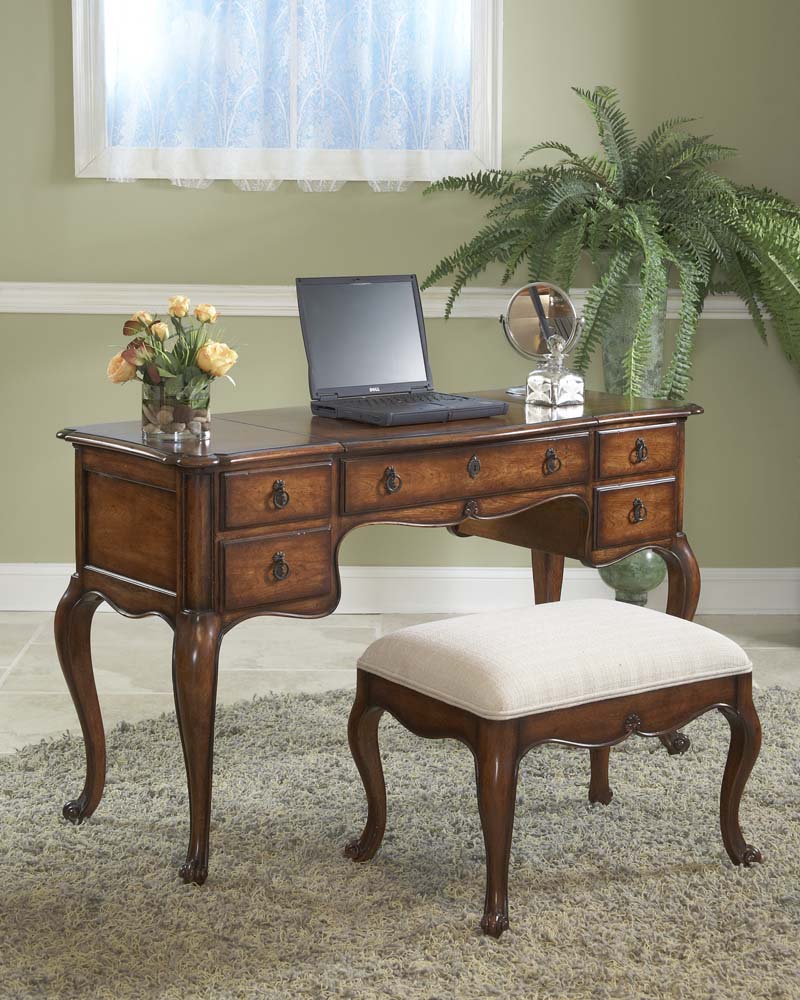
This lovely Hooker Furniture Living Room Melange Gianna Chest 638-50066 fuses the Old World and the New in a seamless manner.
The Tudor monarchs, according to history, were able to bring comparative peace and prosperity throughout England, Ireland and Wales. The wealth of many landowners was invested in buildings. Theirs was a moment of cultural bursts and classical architecture revival for Italian style. The Tudor style is a class of its own.
Europeans had a moment when gothic was at the center of their style. The perpendicular style has broken away from all this. The Tudors were the ones who developed fan vaulting (evident in the Gloucester Cathedral cloisters).
Now let’s go to a dating feature known as the Tudor Rose. This is a red rose badge with a white rose badge within. This signified the union of Henry VII to Edward IV’s daughter. This is now a decorative piece that is used to signify posh and sophistication to the highest levels.
Renaissance features can also be seen inside Tudor dwellings. These features are confined to the wealthy and the elite members of society then. Henry enthusiastically built Italianate motifs.
Then came Elizabethan homes where old homes were torn down only to be built anew. Most homeowners were then yearning for improvement as that was the great period of building. If you have ever seen those narrow yet all townhouses complete with borough walls, then these are the homes of artisans and merchants who built their homes slowly through the years.
Homes of the wealthiest members of the society are often built with huge windows and decorative chimneys. Glass was then used in Elizabethan homes with glittering glazing designs. The most elaborate fireplaces are set up and ceilings were slowly decorated with strapwork.
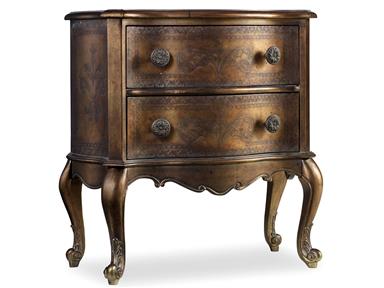
Hooker Furniture Living Room Melange Gianna Chest 638-50066 comes with a feminine pair of cabriole legs but with a masculine Old World design.
Tudor Is Symmetry
Symmetrical plans will always be favored in Tudor settings. Otherwise, Renaissance in classical details appears so then you can find fireplace, doors, and columns. Round-headed arches and niches together with all the other features of Tudor style were revived during the Victorian period.
Tudor may be an old fashioned style but it can become a part of modern living, too. The styles come originally from the UK during the 15th to the 16th centuries and are now a huge part of tourist attractions.
Genuine Tudor design can now be recreated but your place doesn’t have to look like a tourist spot, though. Only a few are lucky to live inside a genuine Tudor dwelling so for the rest of the world, repros are the answers.
Mock Tudor generally refers to black and white semi timbering on the facade of buildings. Interior design, however, is much more distinct. If you are careful enough in making your design decisions, then you can even recreate the Medieval era of trade, arts, crafts and intellectual awakening right inside your home.
There is no architectural detail that is more recognizable under the Tudor style than the iconic half timber structures. The exterior of homes can be laden with stucco, wood or stone. Imitate this same style by exposing the very structure of your home.
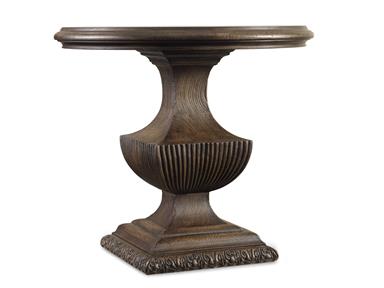
Hooker Furniture Bedroom Rhapsody Urn Pedestal Nightstand 5070-90015 comes with classic designs and a rustic finish.
Gable roofs are also common which give the homes their gingerbread appeal. Modern-day Tudor replicates the genuine Tudor Dynasty through architecture and interior design revivals. If you haven’t yet, you should install tall, narrow windows with small panes. Modern day cladding is acceptable such as flagstone, brick and stucco.
As for the outdoor landscaping, be sure to have manicured hedges, brick walkways, fencing and pool houses. These amenities should set you apart from the neighbors but in a nice way.
The Old World style can also be brought inside the kitchen through wrought iron and wood combinations in furniture pieces. Custom islands and wrought-iron lighting fixtures are also a huge part of Tudor interiors.
Are you ready to take on Tudor design, a unique style right inside your home?
Tags: 16th century, classic, classic design, classic home, classic interior design, classic interiors, classic style, classical design, designing based on culture, designing with glass, European interior design, European interiors, European style, fireplace, glamour, glass, glazing, Italian style, McCreerys, McCreerys Home Furnishings, old home, old homes, revival, symmetry, traditional, traditional interior design, traditional interiors, traditional style, traditional theme, Tudor, Tudor architecture, Tudor design, Tudor furniture, Tudor interior design, Tudor interiors, vaulted ceiling, Victorian, Victorian interiors, Victorian style
Posted in Interior Design 101, Interior Design Elements, Interior Design Themes | No Comments »
Follow us on our social media


© McCreery's Home Furnishings | All Rights Reserved | Privacy Policy
