- Follow us:


Sunday, April 15th, 2018
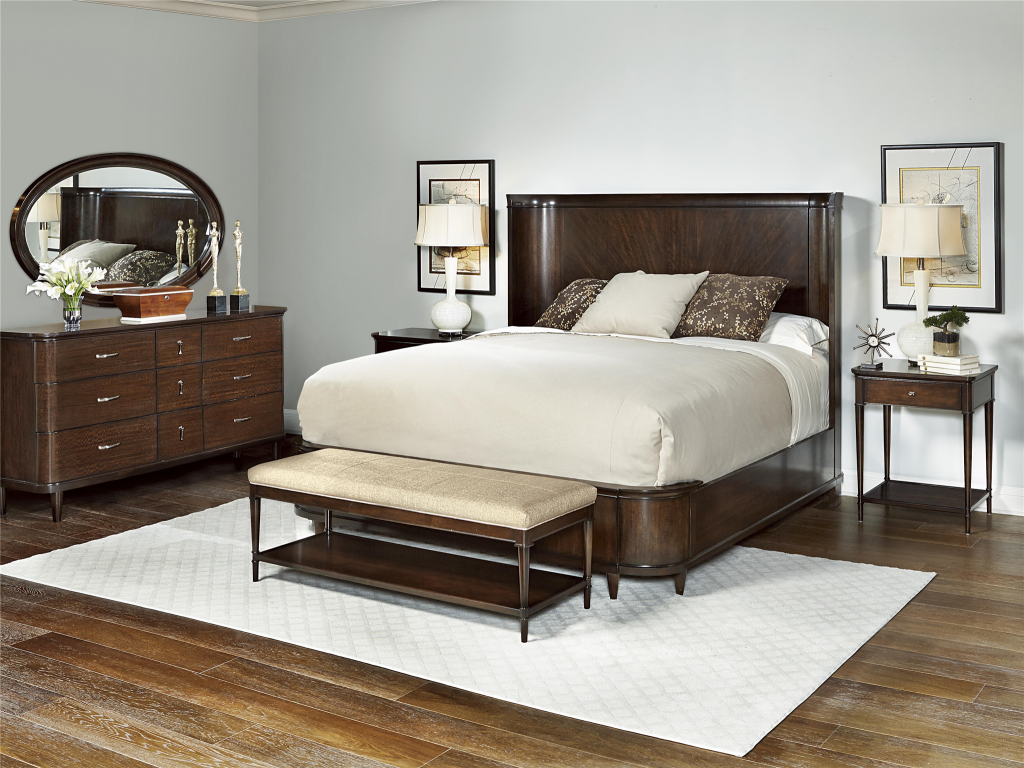
Featured here is the Cadence Collection’s Vivi King Panel Bed. Notice how this piece stands out because of the neutral paint shade that was used.
Face it – choosing the right color for the walls or ceilings of your home is important but it is a task that can be daunting. That shade which you eventually pick to paint your walls with is a huge part of the interior design. This is the color that can also become the anchor element throughout the design.
Choosing the right shade is not easy, though. There are many options to begin with and each one is unique. For a lot of homeowners, this dilemma on color choice is what hampers their design project.
No worries, your design problem is about to end. Here are some tips –
Begin with Textile Purchase
People often think of textiles as the finishing touch of an interior design. You may also think that it is counterintuitive to follow this tip but one of the best ways to ascertain that the paint will fuse with the rest of the design is to buy fabrics and use them as the design inspiration.
Just think of it this way, if you buy the paint first, you could end up with just a few fabric options in the end. Yet if you base the color palette on a fabric, then you are likelier to find coordinating shades to go with it. If you’d take the time, you could even ask home improvement shops to mix a distinctive shade especially for your home.
Begin your design project by building from one piece which can easily catch people’s attention. One of the best options is to use patterned items. These already use different shades which can also become the basis for your eventual color palette.
Anchor on Nearby Spaces
Have you ever walked into a house and felt that the wall color is simply out of place? And when you moved from one room to the next, did it feel like you’re still in the same house or it’s like going from one different dimension to another?
Be able to set up your home in such a way where there is a place where your eyes rest now and then. Don’t be overwhelmed with the need to design. Give every room a distinct look and color but do not forget the element of cohesion.
Paint is your unifying element so before you pick a specific shade, think of how it would look with the current interiors. Every hue must work in harmony but you must also remember how to effectively transition from one room to the next.
Use Correct Lighting
Whether you agree or not, lighting has a huge impact on the way a room generally looks. Every light temperature uses a color undertone, the very reason why rooms look different during the day than during the night.
Since light is so important, be sure to pick a fixture that can help illuminate the room at any time of the day. It would be more helpful if you can have windows or a skylight set up so that more natural light could come in during the day.
Test the color by having a sample made for you at an improvement store. As you go home, paint just some small sections on the walls. Be sure to check the color as the day progresses. If the color makes you happy on both natural and artificial lighting, then that’s the color that you must pick for your wall color.
Consider the Finish
Do not make the mistake of overlooking the finish. Just as important as picking the shade itself, you also need to think how the finished product would eventually look like. Take this into account as you decide.
Your options include eggshell finish, flat, stain, semi-gloss, and high-gloss finish.
Tags: choosing paint, McCreerys, McCreerys Home Furnishings, paint, picking paint color, shopping for paint
Posted in Color Schemes, Interior Design 101, Interior Design Elements | Comments Off on Perfecting Paint Shopping
Wednesday, March 1st, 2017
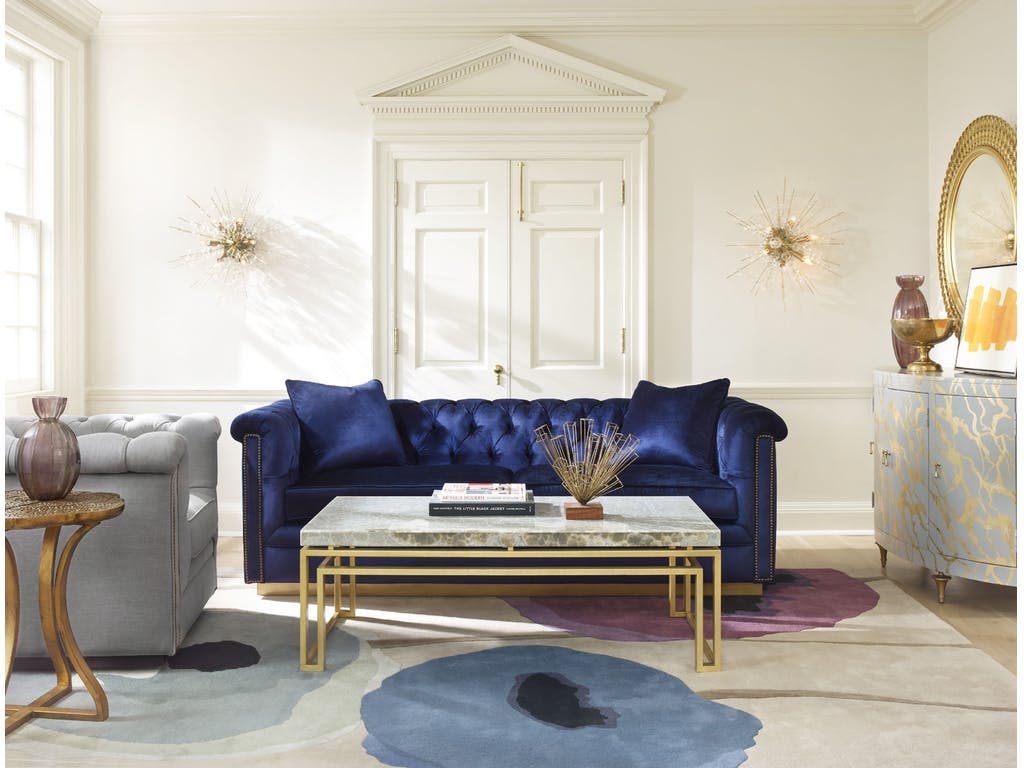
Cynthia Rowley for Hooker Furniture Wallis 2 Cushion Sofa: Here’s that blue couch example with whitewashed walls perfectly framing it.
A lot of people love a good burst of color. Colors are powerful in creating emotions and setting up the right ambience. Yet the idea of being left to pick a paint for the accent wall – let alone the entire house – could be a little too much for some.
Whether you are going to paint an urban space, suburban or a country habitat, the methods are quite the same. When picking colors using paint chips, be sure to choose your favorite. Choose a darker and a lighter shade as well.
Colors can look brighter on walls but not so much when still on a tiny chip. You could get overwhelmed by what your eventual choice would be so be careful in making your decision.
Colors You Wear
If you live in an urban area, it would be wrong to have a wardrobe that does not have white, black and other neutrals. So take a careful look in your closet and find out what colors dominate. If you have loads of denims, then a blue palette would be great in your urbanized home.
If you’re a diverse dresser, then create a palette that equally diverse. Have a color for each occasion or season, even for each mood.
Have a Color Backbone
Just like any sturdy framework, your color palette must also have a backbone. The colors that you choose will support the rest of the design elements. For instance, you can have cream walls framing your pink couch. Or you can have orange accents in a mainly black ambience.
Keep in mind that you can always repaint. You can play with colors and repaint as often as you like. You can have a lovely accent wall one time or have all four walls painted in one hue.
This year, lime green, emerald green, and turquoise are piping hot.
Strategize
When picking a color palette, it pays that you also employ some strategy. Get inspired by stuff that you see in the city. If you live in a rural area, be sure to check out the meadows and landscapes. Let the skies inspire you. Find a photo or a work of art that will help narrow down your color options.
Take a careful look at the paintings that are now hanging on your walls – you will soon notice that there is a particular hue that you have been naturally drawn to.
Cool, light and pale colors regress to make a room appear larger. Deeper and darker colors expand so they tend to make rooms appear smaller. A lot of spaces ask for rich, dark colors so find out what your room requires.
Even huge swatches of paint cannot compare to an actual paint test. Before committing, be sure that you paint on the actual work or you end up doing a lot of guesswork.
Lighting conditions will also affect the color’s eventual appearance. Test the color in shadowy areas as well as under direct light. Observe also how the paint looks like during the day and also at night. Switch to artificial light if natural light does not complement the color of paint that you are going to pick.
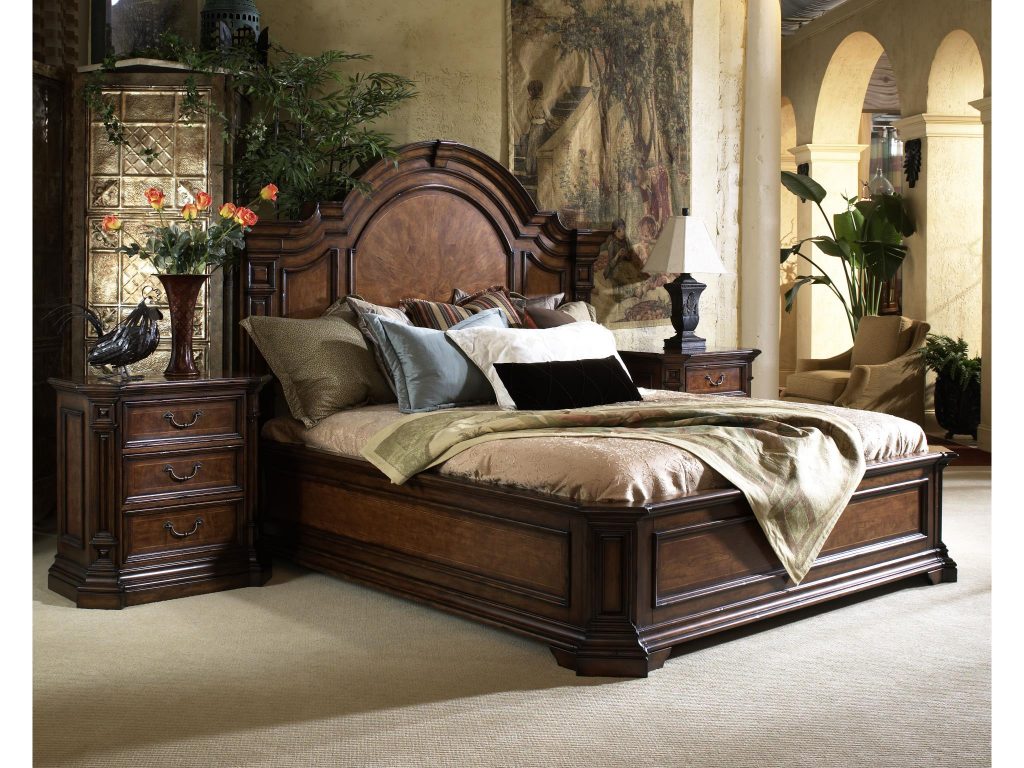
FFDM’s Viniterra Collection shows this King Mantle Bed perfectly nestled in equally neutral walls. You won’t see colors clashing in this lovely bedroom photograph.
Visualize
Another essential step to picking the right color of paint is to plan the color that you want for the rest of your home. Never ever choose a wall color after picking your furnishings. So, if you have fallen in love with a navy blue sofa, there’s no longer any point in painting the room red, is there?
Don’t be anxious that you would be left with zero options because of the many factors that you need to consider. Remember that you have almost every color of the spectrum at your disposal.
Tags: choosing paint, home painting, McCreerys, McCreerys Home Furnishings, paint, painting a home, painting project, painting task, picking paint
Posted in Color Schemes, Interior Design 101, Interior Design Elements | Comments Off on Paint-Picking, Experimenting, and Liking It
Tuesday, May 31st, 2016
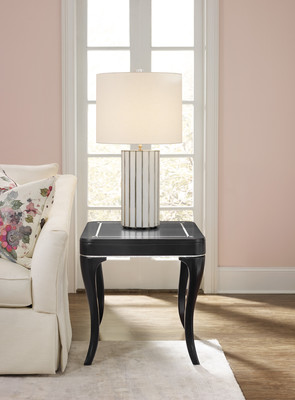
Cynthia Rowley 1586-80113-BLK1 Flirt End Table: The pastel pink walls offer this black table and floral throws a wonderful backdrop.
Have you seen people selecting color swatches before? This sight could go both ways – it could be a lovely sight if the homeowner is having fun choosing the colors or it could be a depressing one for those who do not know what they are looking for. If you don’t want to become the latter, then read through these tips and find out how you should correctly test paint colors –
Paint the Wall
The first step is to just directly paint the wall. This guideline is applicable both for interior and exterior walls. The best way to get a sense of how the color would turn out in your home is to brush a portion of your inner or outer wall with the color that you have chosen.
Some experts say that choosing a board just won’t saturate in the same manner so it is best to paint it directly then find out how the color would really affect the overall look. Boards do not offer the same texture as walls and this could really affect the look eventually.
Should You Hire Painters…
If you have decided to delegate the painting project, see that you will be able to provide sample cans of your preferred colors. A lot of painting contractors prefer it that way. Paints that have been tinted (or mixed) means you will have to take the colors no matter what the result. Sample cans, on the contrary, cost only $3 to $8 so you can experiment with smaller cans at first rather than wasting gallons of tinted paint that you won’t use in the end.
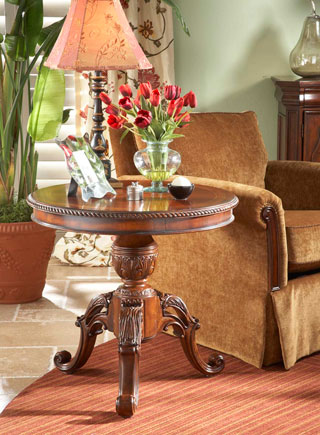
FFDM Antebellum Collection: The burst of colors inside this room renders a lovely rustic yet homey appeal.
Two-Coat Painting
Two coats are the minimum amount of coverage that a wall typically needs. The first coat is often the primer while the second coat makes a huge difference in the way the paint color would register.
The primer is often used for richer or deeper paint colors. There is a small selection of such paint that can be made in connection with specific primers. Make sure that you also paint in large swaths (no less than 1 foot by 1 foot) so you would have a good sense of what the end-result would be.
Paint More Than One Wall
The paint colors that you are testing will register differently also depending on the amount of light that hits the walls. Paint a wall that does not get directly hit with sunlight and one that does. You will soon notice that darker rooms tend to make paint appear darker, too. In essence, the pink paint that you chose for your daughter’s bedroom may not necessarily work with the master bedroom or the bathroom.
Colorful landscaping may also affect the paint color on your walls. Light coming from the garden or front yard could stream through, giving your walls a much different color than you originally imagined. The green trees could cast a different glow in a room that is already painted orange.
Consider also what time of day you would be spending inside the rooms. You would, of course, want the colors to look great when you are inside the room.
Test with Light
This is the simplest way to test how a paint color would look in a room. Have the artificial lighting turned on once you test paint a wall. Make sure that your room’s lighting will complement the colors that you have chosen. Pick a bulb or lamp that will not just look good with the paint color but also be useful. For example, it would be pointless to have a lamp that makes the paint look amazing but won’t allow you to read inside that room.
This makes it necessary to have the lighting already in place when considering your paint colors. Different bulbs offer a different kind of glow at different times of the day and with different kinds of paint colors.
Tags: choosing paint, McCreerys, McCreerys Home Furnishings, paint, paint color search, painting a home, painting advice, painting tips, testing paint
Posted in Color Schemes, Interior Design 101, Interior Design Themes | No Comments »
Monday, March 28th, 2016
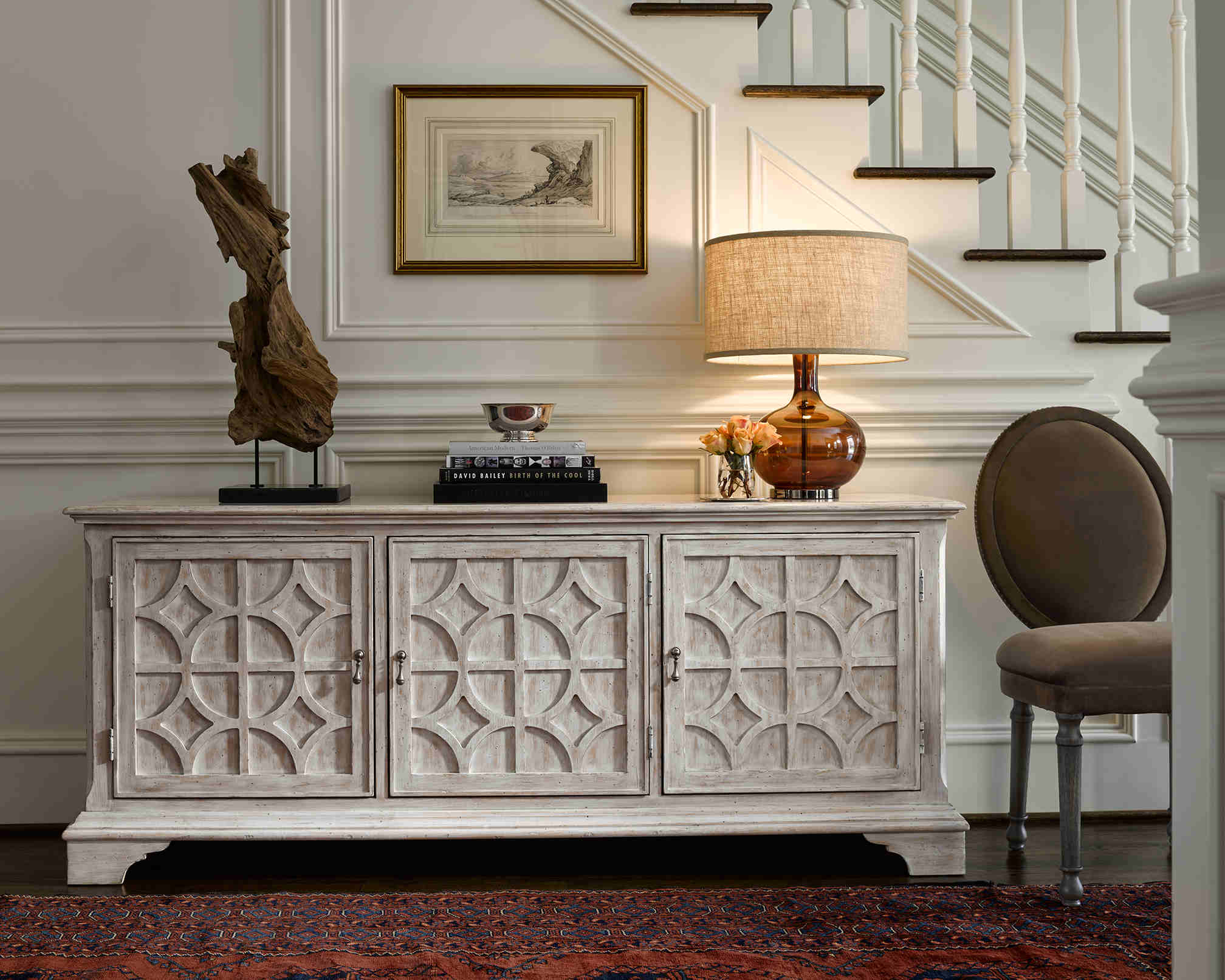
FFDM’s Camden Grove Collection depicts here the perfect harmony of textures, patterns, and colors.
If you’re thinking that interior designers follow a set of rules or that they own a secret book, then you’re in tough luck. There is no one rule that governs all that they do, after all, they are the creative people so they use their imagination, follow their intuition and they even go as far as dreaming and exploring. One could say, perhaps, that they have some rough principles that direct them to the right result. Here are some of the top interior design tips that you can work on –
Pick the Right Paint Color
Some designers say that it is ideal to pick the color of paint last. You may find the logic in this, you may not. What matters at the end of the day is that you pick the right kind of color for your chosen theme, one that is in rhythm with the architectural beauty of your home, and one that functions the way you perceived it to.
Let’s accept this – there are literally thousands of paint colors in different shades, tones and tints. Every single one can look different from one home to the next because there are factors to consider such as the lighting, the overall theme, even the size of the home.
You would want a paint color that complements the artwork, upholstery, lighting fixtures, carpeting, and the furniture sets.

Home Office Uttermost Annileise Bookshelf 24326 is a unique and tasteful way of displaying your books and other collections.
Overcrowd Not
While you may have ample budget to buy every piece of furniture that you want, resist the urge to overcrowd all of your chosen pieces inside one room. Gracious living is tantamount to having enough
You must also know how to arrange furniture on a rug. Here are two techniques –breathing space. Focus on the quality and not the quantity of the furniture. Find the ones that will stand out without being stuffy.
You must also resist the urge to display all of your collectibles. If you really love each piece from your travels, then assign a season for each batch.
Hang Artwork Correctly
You can learn a lot from the museums and galleries that professionally hang artwork. The midline or center of the artwork should be 57” to 60” from the floor. The logic behind this is that the human eye level is often at 57 inches.
In a room where the ceilings are as high as the sky (of course this is an exaggeration), you must hang the artworks at a greater height. Though this is the case, you still need to remind yourself about human scale and not the structural scale.
If you are uncertain about where to hang artworks, then it is best to take a picture first. The photo should be able to reveal what level you can hang the artwork. Photographs often will give you an idea whether it is better to use a smaller or bigger piece of art; or if the spot is just right for a potted tall plant.
Always Have a Focal Point
Just as musicales or any stage production, there are protagonists and antagonists. This concept is also true when it comes to interior design. Choose the best pieces that you would want to highlight or make the star of the show then the rest of the items would just play a secondary role.
In the kitchen, the focal point can be that grand oven you just bought, in the living room it could be an art piece, and in the bedroom it can be the fireplace.
The focal point can also be a single wall. This is also called a statement wall.
Tags: arranging furniture, artwork, artwork on walls, choosing paint, creating a focal point, determining the focal point, displaying artwork, finding the focal point, focal point, furniture arrangement, furniture placement, home paint, home painting, interior design tips, McCreerys, McCreerys Home Furnishings, recognizing a focal point
Posted in Interior Design 101, Interior Design Elements | No Comments »
Wednesday, March 16th, 2016
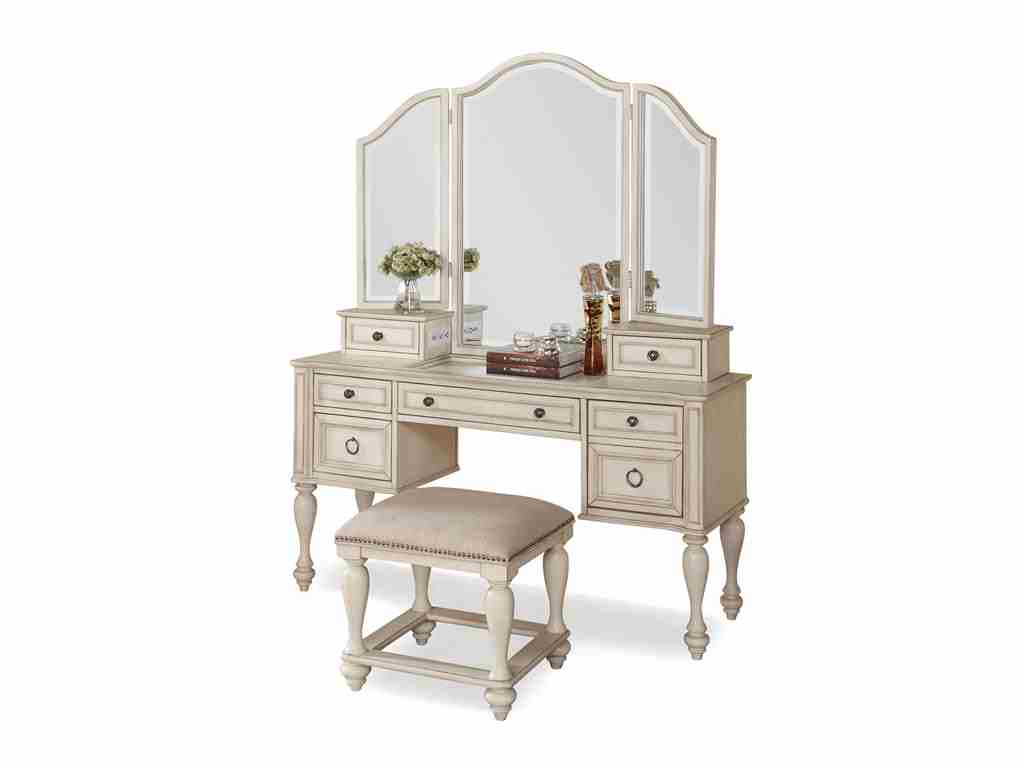
Cap the bathroom makeover with the Flexsteel Bedroom Vanity With Mirror W1861-869. Be sure to place this set in the bathroom area where there’s zero water use.
The bathroom – as opposed to common notion – should be a relaxing room in your home. If you want this to be the case for the bathrooms in your home, then be prepared to begin a makeover project. And what could be more fitting than a bathroom painting project?
Prepping the Bathroom
Preparing the bathroom for a paint job begins by cleaning the walls. There is soap scum and other substances that have surely been embedded to the walls and flooring of the bathroom.
Clean all stains from the walls by using bleach-based cleaning products. Allowing the soap scum to stay will only ruin your project. In the long run, the new paint job could easily peel off and you wouldn’t want that.
Another way to prep the bathroom for the major painting job is to remove the toilet tank. This may seemingly be a useless task to do but its removal will allow for flawless painted walls.
It is actually easy to do. That small space between the tank and the wall is difficult to reach with a brush so instead of settling for a lazy paint job, just have the tank removed and paint the walls with ease.
The seat section won’t come off, what you just need to remove in order to finish the paint job is the toilet tank. You can do this by turning off the water supply first right at the toilet base. Then, expel the water from the tank by flushing the toilet. Remove the tank using old towels all over the floor.
There you go – you’re done.
The Right Paint Color
Your best friends when you are about to paint a small bathroom are light colors. You can say goodbye to the dark colors since they will only make you feel claustrophobic. But don’t automatically resort to the white paint. There are plenty of light colors to choose from. If you wanna play safe, then go for pastels. Light yellow and light blue are also colors that will make the small bathroom appear more spacious.
If light colors are for compact bathrooms, then dark colors are welcome inside spacious bathrooms. Tiles in black, navy blue, maroon and the like would look great inside an expansive bathroom. There are also paint manufacturers that offer these chic colors.
See also if you can find paints that have mold-inhibiting agents in them. These will yield surfaces that are better resistant to moisture.
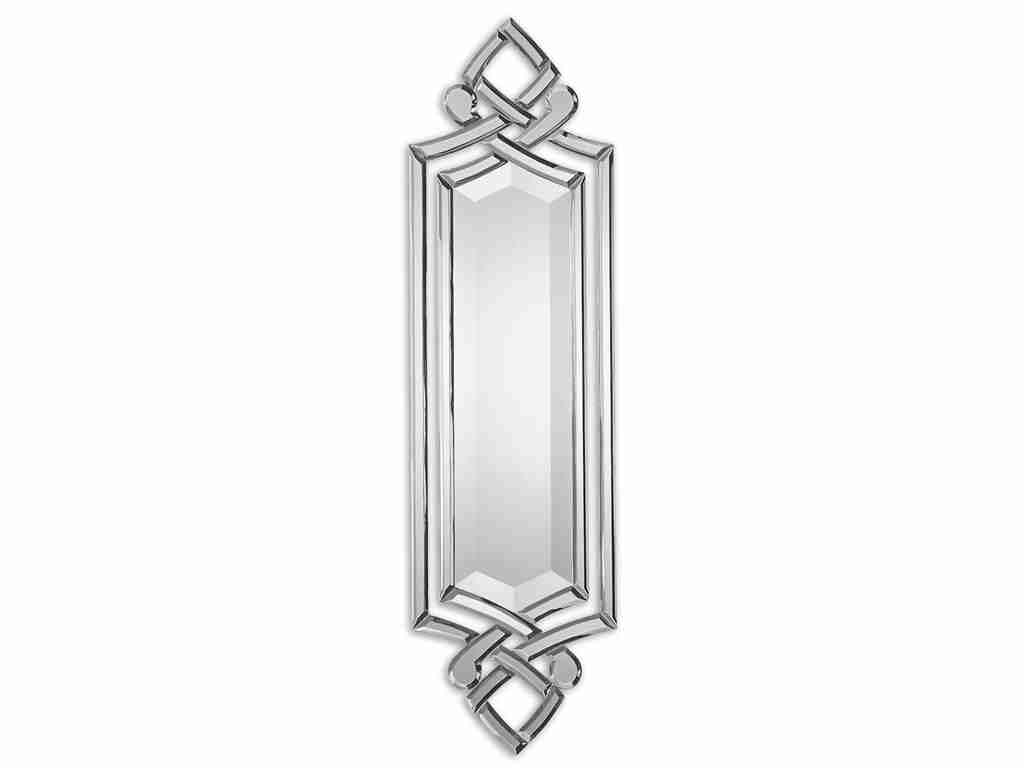
Uttermost Accessories Ginosa Mirror 08074 is a sight to behold inside your newly-painted bathroom.
The Right Sheen
A flat sheen of paint could give you less than stellar results. But if you really have to do it, make sure you use eggshell white – and none else.
Remember the soap scum that you removed earlier? Bathrooms are susceptible to such stains so choosing a flat paint would only make this problem continue.
It’s time to choose a different sheen for your bathroom paint. There are not hi-gloss and semi-gloss paints that can be easily scrubbed.
Gloss Up the Shower
Should you consider painting the shower, then do so with high gloss bathroom paint. You can also tile all the way up to your bathroom ceiling. A gallon of high gloss paint should be more than enough to cover a small shower area.
‘Time to Paint
Begin by painting the ceiling. Use a brush on the edges where the ceiling and the walls meet. Use the roller type of foam brush for the rest of the paint job.
Allow for drying time then apply a second coat of paint, first on the ceiling, then onto the walls.
Do not forget to apply primer on the walls. A dark bathroom would be in need of this especially if you want to transform it into a bright, light-colored one.
Always follow manufacturer instructions for the application and drying time.
Tags: bathroom paint, bathroom remodel, bathroom renovation, bathroom style, bathroom vanity, choosing paint, painting the bathroom, remodeling the bathroom
Posted in Bathroom Design, Color Schemes, Interior Design 101, Interior Design Elements | No Comments »
Follow us on our social media


© McCreery's Home Furnishings | All Rights Reserved | Privacy Policy
