- Follow us:


Monday, November 28th, 2016
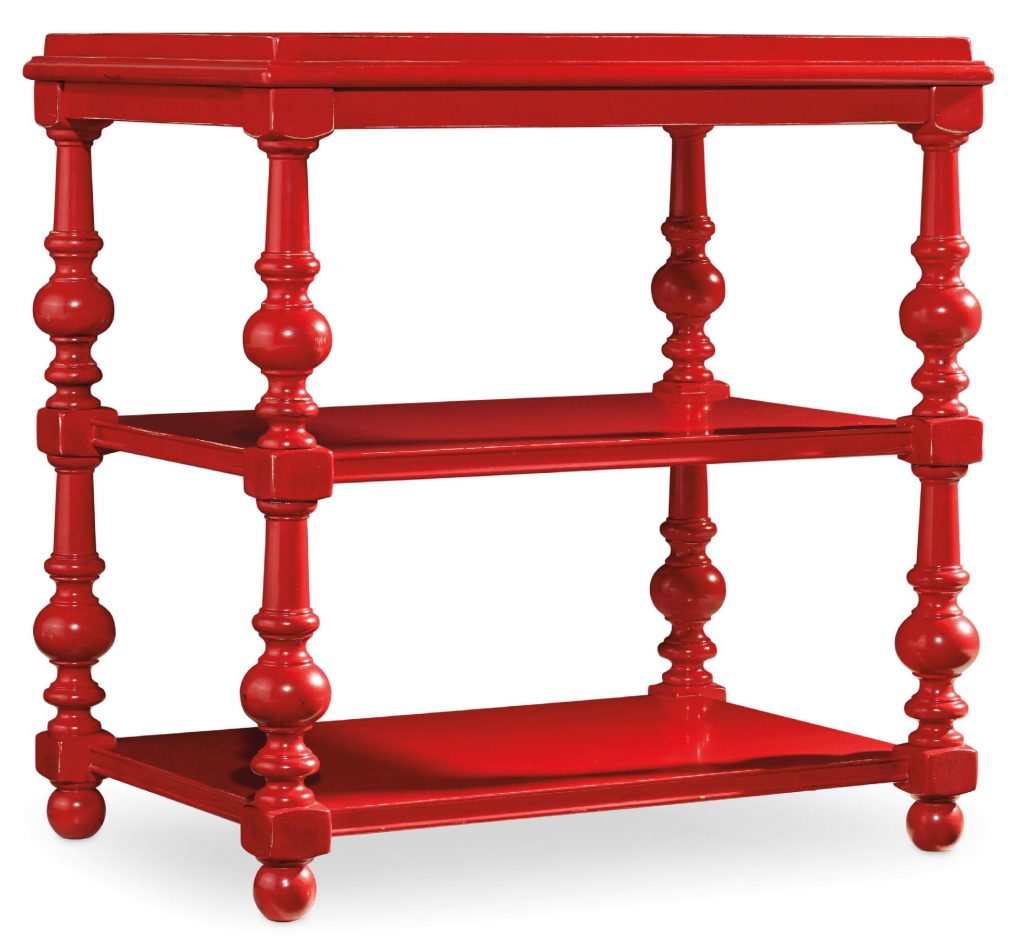
The Hooker Furniture Living Room Sanctuary Chairside Table will sit comfortably in any ’50s-inspired home.
One of the ideas that best captured the look during the 1950s was the 1957 Chevy advertisement. The wide array of beautiful pastels was pretty hard to ignore as well as the angles and long, low designs. Just like the designs of today, there isn’t a single look that could really be categorized as the sole style of the ‘50s. There were several 1950s look that gained popularity during that time. As technology, preferences and social norms evolved, so did the look of interiors.
Economic changes in Europe and America also led to changes inside the household. The economy for both regions grew, as a result, families wanted to widen their habitat, thus, increasing construction of Ranch style houses.
Hipster Interiors
Architectural style focused on industrialization and people were begging to become modern. Homes that were being built during that time were often airy and bright. The rooms were separated with screens instead of the usual walls. These made homes appear more spacious. Sliding glass doors were also common while windows were fashioned from floor to ceiling. It was also imperative to let in a huge amount of natural light.
Home interiors during this era were inviting, homey and bright. The wall colors were often neutral, people loved white or those light wood panels. The homes were pretty colorful despite the homeowner’s choice of wall colors and this was hugely because the flooring, furniture and accessories all popped with bursts of colors.
Wall to wall carpeting using cork, vinyl and concrete was also quite popular and all for the love of low-maintenance interiors. Living areas that used these materials also featured colorful area rugs which softened the floor.
Clean, basic lines were easily contrasted by the most interesting, rounded geometrical shapes. The said shapes were commonly found in furniture pieces, lighting fixtures as well as the decorative pieces spread throughout the home. There were occasional statement pieces but the main stuff was quite low key.
Living areas were generally minimalist insomuch that the windows were even left bare.
Twentieth Century Designers
It would be wrong to leave out the husband and wife designer team of Charles and Ray Earnes. Majority of the Mid-Century pieces were made by them. They also greatly influenced many architectural details in homes during that time. The Earnes, together with other designers, created and mass-produced furniture by using plastic, plexiglass and glass – all new materials at the time. All the items free-floated in rooms with no defined arrangements.
Kitchens: The Star of the Show
Back in the ‘50s, the kitchens were no less than the heart of homes. Turquoise, pink, aqua and other pastel colors were the leading colors used because of the carefree feelings that they evoked. The kitchen is often visited by family members to eat when they don’t want to dine formally inside their dining rooms.
Chrome and Formica dinette sets were common kitchen pieces used for informal family meals.

What is a ’50s concept without artwork? The Uttermost Accessories Blue Waterfall Art 32240 has delicious pastel colors that are most suitable in your living room or bedroom.
Features of ‘50s Homes (That You Mustn’t Do Without)
Tags: 1950s, hipster interior design, hipster interiors, hipster style, McCreerys, McCreerys Home Furnishings
Posted in Interior Design 101, Interior Design Themes | No Comments »
Friday, April 29th, 2016
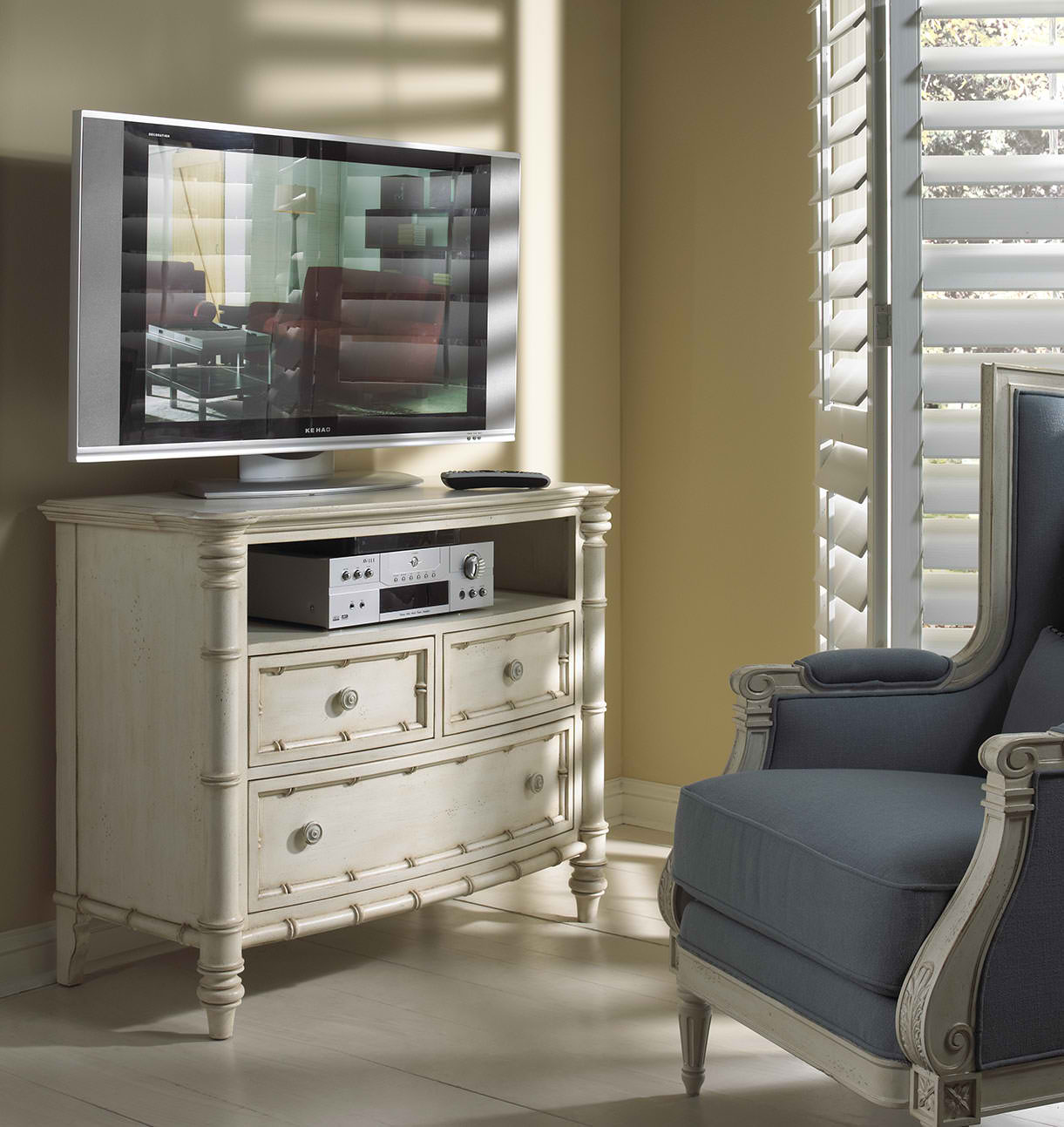
FFDM’S Summer Home Collection is featured in this corner of a home. Foamed furniture such as the chair here is effective in controlling the overflow of sound.
The open floor plan concept in offices came into existence in the 1960s. Since then, hundreds and thousands of companies all over the world, embraced this concept. Some believe this concept is a source of stress, noise and nuisance. If you look at this floor layout, though, you would immediately begin to see the benefits that it offers.
The open floor plan fosters collaboration among employees. This used to be imposed among workers which made it one of the most used layouts in the world today.
In France, alone, individual cubicles exist as a minority. About 34% of employees still work in partitioned workstations according to a 2015 study.
The early 20th century showed that the open offices flourished. Frank Lloyd and the likes of him perceived the partitioned office as a facist, totalitarian trend. Because of this perception, more flexible plans allowed employees to be free from the confines of small work areas.
Right after World War II, the development of the tertiary sectors was accompanied by a new perception on the workplace. The idea of an open workspace originated in the 50s in Germany. Eberhard and Wolfgang Schnelle came up with the idea of an office landscape where partitions are no longer a necessity.
The work areas were decorated with green plants fostering open communication among the workers. By 1964, Herman Miller, an American company, came up with Action Office Series 1. These were modular offices that were created with panels and various workspace heights. These easily adapted to the workers’ various activities. It was observed that their interactions became more regular and their movements, more fluid.
It was in 1968, though, that Robert Probst came up with the cubicle which is an office space with partitions that can be removed.
The Ultimate Family Design
The open floor plan can be the best kind of family or entertainment space but if you bring in the kids and pets to the picture, you would end up with discord.
This is why there is a need to understand your tolerance level if you are choosing to employ the open space layout in your home. You might have started with how you will use the space on hand but you might have forgotten about the possible noise that could come from family members, pets and appliances. This is especially true if the room features audiovisual components.
Always think of sound as something that is liquid. Water will always look for a place to flow to so it can seep through spaces and cracks.
This is also true with sound. You need to plan for an escape route for any kind of noise.
Consider also the shape of the room. Surfaces made of stone, metal or concrete tend to bounce sound at a louder level.
If you want a modern, clean, no-curtain room, then see if you can install rugs that would deaden the sound. Know how to control the noise by lowering the ceiling, having the columns in a room wrapped in wood, or replicating this kind of ceiling along the rooms.
Should noise become an issue, then it is best to break up the rooms by creating doorways in between the living areas. There is no other way to contain the sound without disturbing the flow.
Interior designers know that fabrics can be used to muffle sound. Empty rooms are noisy but once you bring in the furnishings, draperies, especially the carpets, you would soon notice that the room has become a lot quieter.
Use same color on your walls and draperies. Add texture as well as interest without totally closing off the other rooms. Make good use of soft surfaces like upholstered pillows and chairs to manage the sound.
Tags: 1950s, 20th century, homey, homey ambiance, homey ambience, homey interiors, McCreerys, McCreerys Home Furnishings, open floor, open floor layout, open floor plan, open floor planning, open space, open space design, open space layout, open space theme
Posted in Interior Design 101, Interior Design Elements, Interior Design Themes | No Comments »
Monday, February 1st, 2016
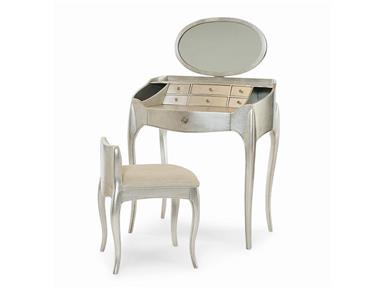
Century Furniture Bedroom Pierre Vanity With Mirror & Vanity Chair MN5608. This vanity with mirror comes in acacia and beech solids. The silver-leaf finish comes with seven drawers, one concealed compartment, and two pigeon holes. The chair’s frame is also made with beech and acacia solids and covered with textured linen.
For many years now, the vanity table has been manufactured and handcrafted in different styles. Each one had the power to complement the era from whence it came. There are different styles of vanity tables that you should know about. These lovely pieces were able to withstand the test of time.
Victorian vanities are the ones that you see to have elaborate designs. Intricate details are common with this type.
Early American vanities were often made of mahogany and rounded cabriole legs. Others have been made of solid walnut on claw feet.
The Arts and Crafts movement during the early parts of the 1900s showed the emergence of the mission oak vanity table. This was characterized by straight lines. In the 1920s, though, it developed into pieces that easily became the focal pieces in many bedrooms.
Hollywood vanities were born.
You might think that the Depression era should have dampened the spirits of furniture makers. On the contrary, the vanity table was constructed using different materials ranging from walnut veneers to the ever reliable mahogany. The elaborate veneers dominated the 1920’s till the 1940’s.
The Waterfall furniture collection was one of the most prominent designs to come out during the 1930’s. Every piece in this collection had rounded and smooth edges and the tables were already mounted with big round mirrors. A few of them had been installed with electric lights.
The metal types came out, too, but the 40’s and the 50’s paved the way for the stylish hardwood vanity tables. The look may have become easier on the eye but hardwoods offered a durability that can last hundreds of years (with proper care).
There are also accessories which are especially made to be paired with vanities. These delightful pieces include vintage perfume bottles, talcum shakers, and porcelain items.
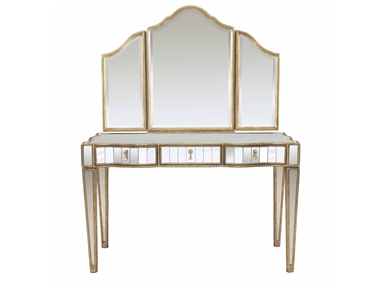
Drexel Heritage Living Room Dylan Vanity 588-910
Other Kinds of Vanities
If you have limited your idea of vanity to those that are used inside the bedroom, then you missed out on a lot of things.
Say goodbye to bland bathroom cabinets and pedestal sinks. The newest look is vintage yet fresh. There is no need to repurpose old, dying, and damaged furniture. The antiqued or distressed look can now be achieved by artisans.
Vanity in the bathroom can come in the form of basin type. The basin option could be dictated by your choice of furniture. Be careful in doing both as not all basin type vanities harmonize well.
Choose from undermount, overmount, furniture or countertop basins.
Never stick to tables alone when searching for the right bathroom vanity. Desks, dressers, sideboards, even sewing machines can be used for this purpose. Always think outside of the box while you search for that one great piece.
Never forget to be practical, though. The bathroom is not a good place for antiques or heirloom pieces. The pieces can be altered as moisture starts to saturate the room.
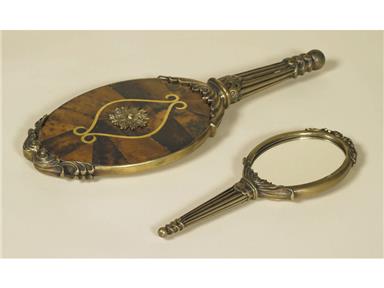
These Maitland-Smith Bathroom Set Of Two Vanity Mirrors 1253-484 are perfect decorative pieces atop an antiqued vanity table.
The crucial factor to always consider is the size. Height and width always matter. The standard bathroom vanity contains a set-in or the undermount sink. This should be at least 34 inches from the floor.
As for the countertop basin (also called as a vessel basin), this rule changes; the idea is to keep the top of the basin at a standard height. The measurement should not begin at the countertop beneath.
Consider other aspects in owning bathroom vanity. Ask yourself whether you can comfortably brush and gargle in front of the vanity. Also, can you see your face when the mirror is set? Who are the persons that will use the bathroom apart from you?
It can get difficult to find the right vanity but we are more than willing to help you. Choose from our wide variety of vanity tables to satiate your bedroom or bathroom design requirements.
Tags: 1920s, 1940s, 1950s, bathroom style, bathroom vanity, bedroom essentials, bedroom furnishings, bedroom furniture, bedroom vanity, decorating a vanity, designer bathroom, girls' bedroom, makeup vanity, McCreerys, McCreerys Home Furnishings, spa bathroom, spa-like bathroom, vanities, vanity, vanity table, vanity tables, Victorian, Victorian furnishings, Victorian furniture, vintage, vintage furniture
Posted in Bathroom Design, Bedroom Design, Furniture, Interior Design 101, Interior Design Elements | No Comments »
Follow us on our social media


© McCreery's Home Furnishings | All Rights Reserved | Privacy Policy
