- Follow us:


Monday, October 22nd, 2018
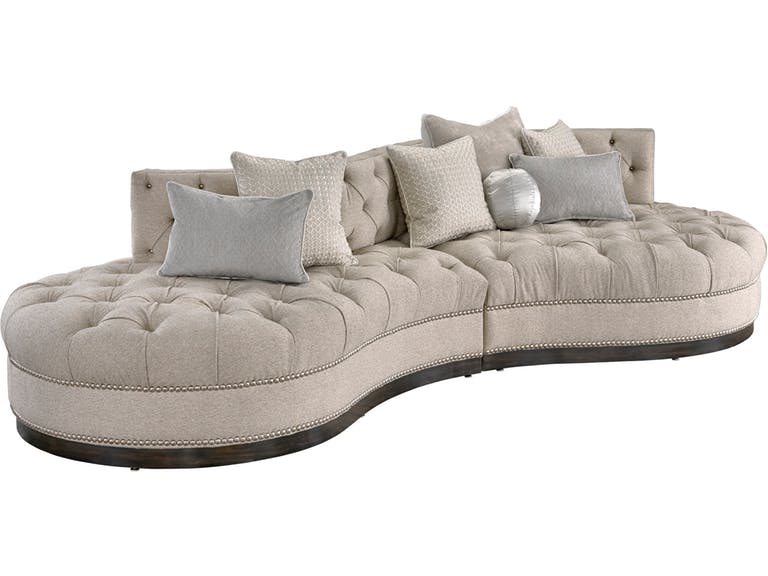
Marge Carson Living Room Zen Sectional
We all live in a stressful world. This lack of genuine tranquility in people’s lives is one of the reasons why more and more homeowners want to create a habitat that does not need an airfare to go to. The Zen interior design has principles that have increasingly been used by many homeowners.
Why could this be?
The word Zen, itself, is in reference to meditation. The Japanese use this term when they are also referring to relaxation, balance, and harmony.
Zen may not be a widely recognized interior design but it does have its own audience. There are also rules to follow with this sort of style. This is also a style that is linked with purity, minimalism, and living a simplistic life.
If you fancy having a Zen home, then here are some rules to commit to memory –
Earthy Hues Only Please
The Zen-inspired style is all about the use of natural hues and soft tones. Use a lot of grays, white, shades of beige, a touch of pink beige, and other such soft hues. These colors are soft enough to induce calmness.
It is important to consider chromatic harmony between all the design elements. Be careful also in establishing visual seamlessness especially between the furniture, flooring, and the walls.
You also need to fuse a dominant color with textured fabrics like moleskin, for instance. Don’t be afraid to create diversity by fusing two matching hues. Play also with a degradation of your favored color.
Lots of Natural Light
If you want to set up a truly relaxing home, then discard all the harsh lights that are currently displayed. Have these replaced with the most calming lights such as candles or nature-inspired lighting fixtures.
Set up various sources of light so that you can control the amount of intensity on different areas. Never project a direct light from your ceiling. Be sure to take advantage of wide windows in letting in ample sunlight.
Bare Furniture
Straight, simple lines characterize Zen furnishings. These pieces do not come with excessive ornamentation but each has a high quality. The materials that were used to manufacture these pieces are all natural. This also brings a sense of relaxation and warmth to your Zen home.
As for the storage pieces such as the cupboards, closets, and drawers, these can look livelier when they match the color of the interior.
The Zen Bedroom
Since the bedroom is the most naturally Zen among all the rooms in your home, you should concentrate in designing this. Begin by placing the bed closest to the natural source of light but never place it right in front of a passage area.
The bed’s height must be one that you’re comfortable with, although, higher beds tend to feel more comfy. Choose upholstered or leather.
Never over decorate your bedroom. You may use fleece, wool or mohair as covers. Throws are allowed but remember not to exaggerate. Find pillows with different sizes.
Be sure to invest on an armchair if your reading nook is also in your bedroom. This has to be a super comfy seating unit that still comes with the simple lines that are the ultimate requirement to every Zen home.
Few Ornaments
For your wall décor, the rule is also the same – keep it simple. Never create a gallery of paintings or framed photographs when you can just actually hang a single piece. If you can, cover your book collection with monochromatic paper.
Add Scents
You can also enhance the Zen feel in your home by enhancing each room with natural scents. Ylang Ylang and Lavender are popular calming scents.
Tags: Japanese style, McCreerys, McCreerys Home Furnishings, Zen, Zen interior, Zen interior design, Zen interiors, Zen style
Posted in Interior Design 101, Interior Design Elements, Interior Design Themes | Comments Off on Zen In and Out
Friday, March 25th, 2016
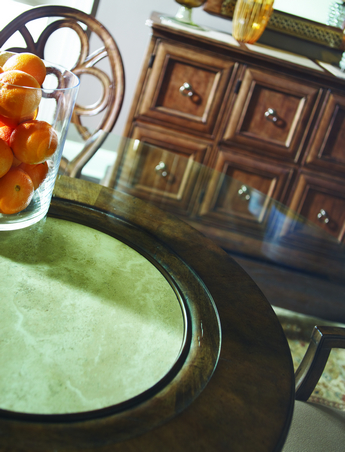
FFDM Sunset Canyon Collection: The colorful oranges provide a necessary deviation from the warmth of the wood and the neutral tabletop.
Using the Zen theme in your home means you have to understand the principles behind it. You can begin with shibumi which is an ideal. Its definition is not clear in Japanese but it can be used for experiences and objects that exemplify both everything and nothingness. Based on this, a Zen theme spells elegance and simplicity. It is an understatement and it is also excellent.
Shibumi, as spoken by James Michener in his novel Iberia, can be understood in the context of writing, art, or of any true work of art.
Shibumi has seven principles – austerity, simplicity, naturalness, subtlety, asymmetry, breaking from routine, and tranquility.
Austerity: Koko
This focuses on omission, exclusion or restraint. This means that you should not add any interior design aspect that was not necessary to begin with.
Simplicity: Kanso
This emphasizes the beauty and downplays utility or anything that is fanciful. The effects are neatness, freshness and cleanliness. The lesson here is that you should eliminate anything that does not have any use; instead, you should make room for ideas that work.
Naturalness: Shizen
This means you can use interior design concepts that are one with nature yet divergent from it. The essence of shizen can be captured in furniture that aims to recreate the sunset, light filtering through the beautiful trees, or the shadows of various passing clouds.
Use naturally occurring patterns in nature, as well as rhythms into your interior design.
Subtlety: Yugen
This principle explains that anything that’s finite is an enemy of nature. This implies the loss or stagnation of life. People’s curiosity is piqued when they see an interesting object just once. The world hypes everything from products to services yet when silence counters the usual hype, the former almost always wins.
Asymmetry: Fukinsei
The natural world is symmetrical but this symmetry can also be achieved in imperfect renderings. The viewer then tends to supply the absent symmetry then participates in the art of creation. This means that interior design does not have to depend on you all of the time. You can also seek the help of friends or relatives to co-create with you. You must be open for ideas that can produce necessary innovations.
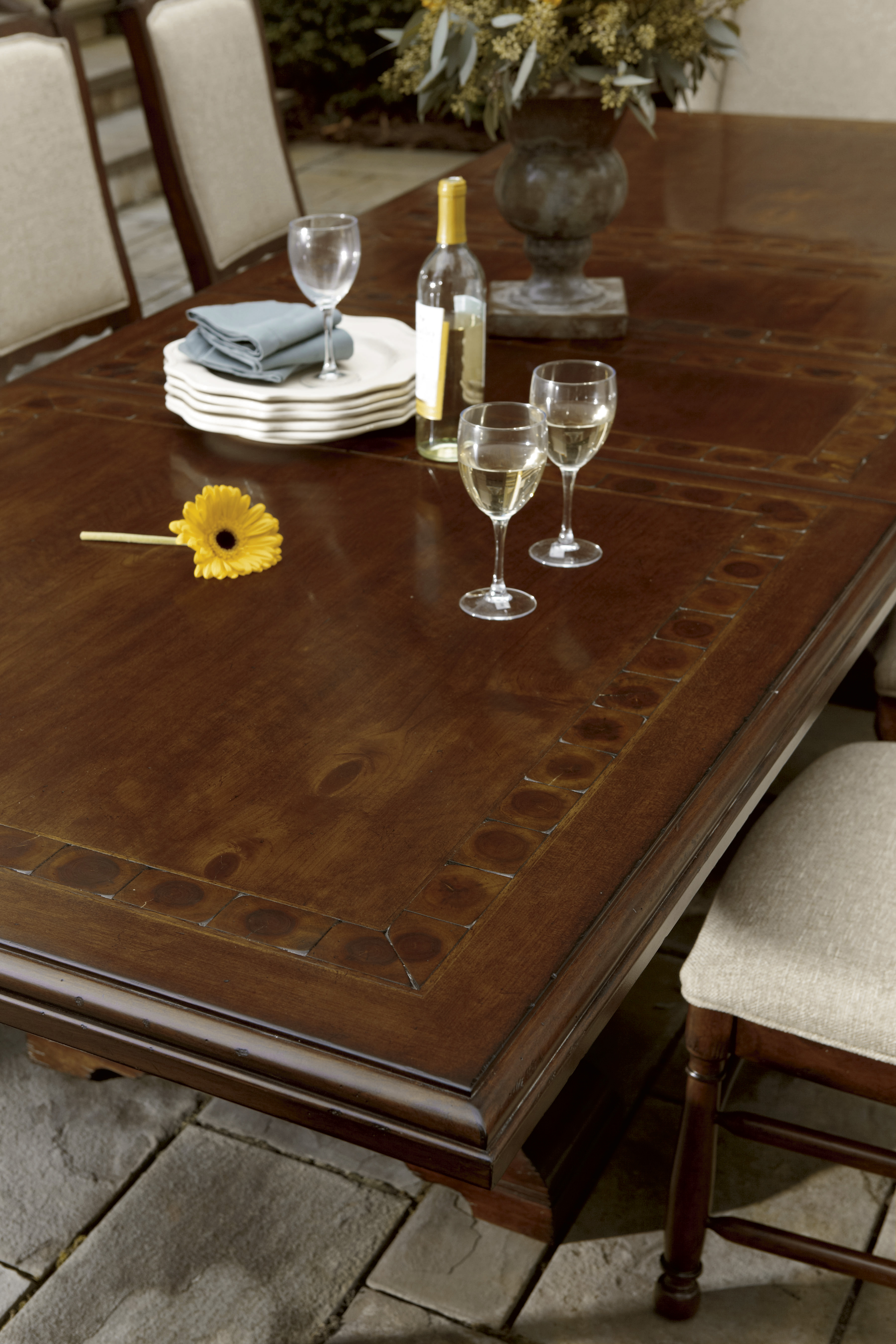
FFDM Harbor Spring Collection: Flower arrangements in vases give character and a sense of serenity in a traditional dining room.
Breaking from Routine: Datsuzoku
This principle implies rest from convention. Patterns that worked in the past that have been used by different designers can – and should – take a rest, too. This interruptive break can work well in your interior design if you give it a chance.
Tranquility: Seijaku
Lastly, there’s stillness or tranquility. Those who practice Zen living know that the state of calmness or quietude is the very state where energy is created. This is the meditation phase which can up one’s self-awareness and focus.
The lesson here is that you should do something than left doing nothing.
Your home should be the first place in the whole wide world where you feel most calm and peaceful. There is nothing better than a Zen-inspired home to promote these positive feelings of serenity. If you still have no idea how this looks like, just picture the Zen Gardens in Japanese websites, magazines or photos.
Going Zen does not automatically mean that you have to resort to traditional style, though. Zen could also be contemporary with the right elements. For instance, Zen is epitomized in a room where floor cushions are scattered all around a low table. This can serve as an Oriental dining area, a unique place to enjoy meals with your family. The dark contrast of a table against a warm cream setting should be enough to evoke feelings of balance and stillness.
Tags: asymmetry, balance, designing with nature, McCreerys, McCreerys Home Furnishings, nature, nature in interior design, nature-inspired design, nature-inspired home, Zen design, Zen home, Zen interior, Zen interiors, Zen living, Zen style, Zen-inspired home
Posted in Interior Design 101, Interior Design Elements, Interior Design Themes | No Comments »
Follow us on our social media


© McCreery's Home Furnishings | All Rights Reserved | Privacy Policy
