- Follow us:


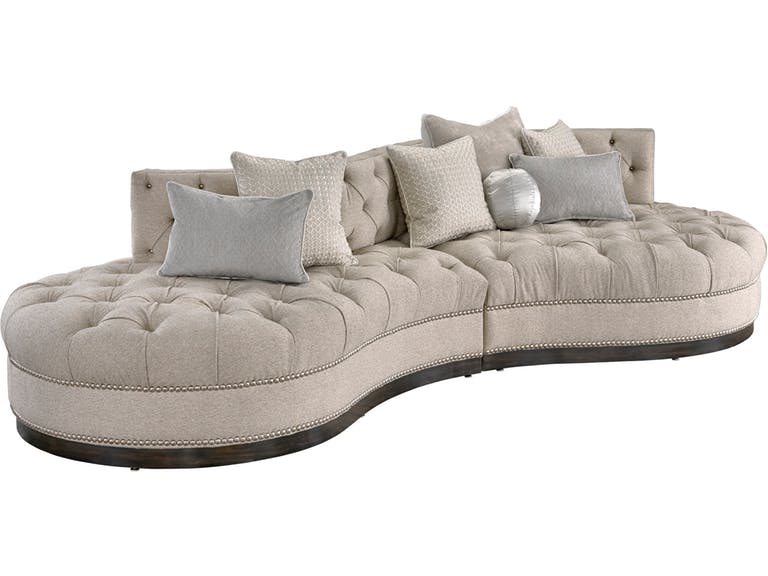
Marge Carson Living Room Zen Sectional
We all live in a stressful world. This lack of genuine tranquility in people’s lives is one of the reasons why more and more homeowners want to create a habitat that does not need an airfare to go to. The Zen interior design has principles that have increasingly been used by many homeowners.
Why could this be?
The word Zen, itself, is in reference to meditation. The Japanese use this term when they are also referring to relaxation, balance, and harmony.
Zen may not be a widely recognized interior design but it does have its own audience. There are also rules to follow with this sort of style. This is also a style that is linked with purity, minimalism, and living a simplistic life.
If you fancy having a Zen home, then here are some rules to commit to memory –
Earthy Hues Only Please
The Zen-inspired style is all about the use of natural hues and soft tones. Use a lot of grays, white, shades of beige, a touch of pink beige, and other such soft hues. These colors are soft enough to induce calmness.
It is important to consider chromatic harmony between all the design elements. Be careful also in establishing visual seamlessness especially between the furniture, flooring, and the walls.
You also need to fuse a dominant color with textured fabrics like moleskin, for instance. Don’t be afraid to create diversity by fusing two matching hues. Play also with a degradation of your favored color.
Lots of Natural Light
If you want to set up a truly relaxing home, then discard all the harsh lights that are currently displayed. Have these replaced with the most calming lights such as candles or nature-inspired lighting fixtures.
Set up various sources of light so that you can control the amount of intensity on different areas. Never project a direct light from your ceiling. Be sure to take advantage of wide windows in letting in ample sunlight.
Bare Furniture
Straight, simple lines characterize Zen furnishings. These pieces do not come with excessive ornamentation but each has a high quality. The materials that were used to manufacture these pieces are all natural. This also brings a sense of relaxation and warmth to your Zen home.
As for the storage pieces such as the cupboards, closets, and drawers, these can look livelier when they match the color of the interior.
The Zen Bedroom
Since the bedroom is the most naturally Zen among all the rooms in your home, you should concentrate in designing this. Begin by placing the bed closest to the natural source of light but never place it right in front of a passage area.
The bed’s height must be one that you’re comfortable with, although, higher beds tend to feel more comfy. Choose upholstered or leather.
Never over decorate your bedroom. You may use fleece, wool or mohair as covers. Throws are allowed but remember not to exaggerate. Find pillows with different sizes.
Be sure to invest on an armchair if your reading nook is also in your bedroom. This has to be a super comfy seating unit that still comes with the simple lines that are the ultimate requirement to every Zen home.
Few Ornaments
For your wall décor, the rule is also the same – keep it simple. Never create a gallery of paintings or framed photographs when you can just actually hang a single piece. If you can, cover your book collection with monochromatic paper.
Add Scents
You can also enhance the Zen feel in your home by enhancing each room with natural scents. Ylang Ylang and Lavender are popular calming scents.
Follow us on our social media


© McCreery's Home Furnishings | All Rights Reserved | Privacy Policy
