- Follow us:


Friday, November 11th, 2016
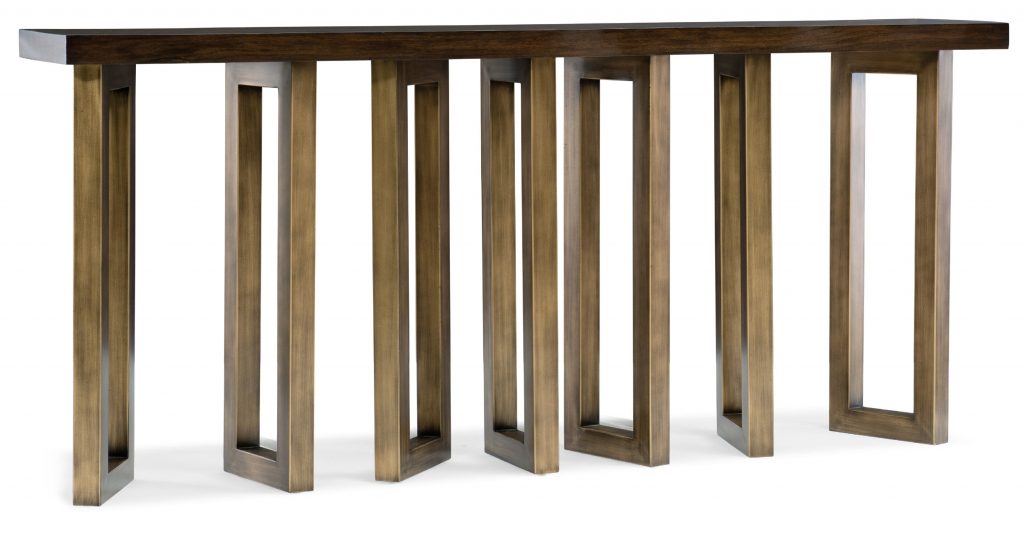
Hooker Furniture Living Room Melange Connelly Hall Console
Everything that people do comes with a reason. This reason is not something that’s appealing all the time, though. Each person has his or her own taste and preferences, design and styles, even their own life spheres.
A Rad Movement
The field of art had a movement called Eclecticism. This is still an unrecognized style on its own despite the movement’s success. For many this is still seen as a distinct movement. The term eclectic was first brought to the public’s attention by Joha Joachim Winckelmann. This was a term used by Carracci when painted and fused traditional and Renaissance pieces.
There’s a wonderful story behind this art movement. Eclectic style means the combination of elements or styles coming from different eras or periods. These then become a single project despite their varied origins.
Balance Is Key
Don’t think that eclecticism is all about putting in different styles and praying that they would work. On the contrary, there is a beautiful harmony that is happening in every eclectic piece. Let eclectic style into your home by adding different pieces of furniture coming from various unique places. Think also of all the elements that you could add to make the entire design look like a whole, willed piece.
Achieving Eclecticism
The eclectic style is very easy to love. While this is so, it is not easy to achieve. If you want your next design project to center on this style, then you need to outline and do’s and don’ts. Here are the DO’s –
Do remember the layout. When you are planning the space for an eclectic space, you might get caught up on what textures, colors or patterns you need to bring together that you forget about proper placement.
The layout is one of the fundamental things that you need to consider when setting up a room. The furniture layout is equally important. This is what would give you comfort and aesthetics. So before you begin purchasing the things that you will bring in, check out the furniture options. You might end up realizing that you don’t actually have ample space to welcome a sectional.
Consider utility as well. Remember always that the room is meant to be lived in, eventually, so let utility lead the decorations. Utility is a wonderful decorator. Allow it to make the decision for your fabrics and colors. Consider bookshelves, baskets, card tables and drink trays. These provide a lived-in look to any home.
As for the don’ts, let’s begin with don’t forget the focal point. As you arrange your layout, while you are combining different pieces from different eras, you must still remember to have a focused look. This means that some of the pieces will serve as accessories while one significant piece should serve as the focal point.
Be consistent. The nature of the style that you chose is varied so every room – while being different – must still complement the others. Have eclecticism throughout your home but create a flow that’s obviously there.
Always make sure as well that you’d pick one dominant color. This will serve as the unifying factor for the rest of the design elements. Color is also a great equalizer so you need it to create an overall look. While color is quite powerful, make sure that you do not compare hues. Don’t go sampling on all available paints for your wall. The trick is to make a decision then create a lineup of colors that are a shade or two lighter and darker than your chosen color. Don’t confuse yourself into lining up so many different colors that you end up feeling nauseated.
Tags: balance, eclectic, eclectic design, eclectic interior design, eclecticism, McCreerys, McCreerys Home Furnishings, symmetry, unique interior design
Posted in Interior Design 101, Interior Design Themes | No Comments »
Friday, March 25th, 2016
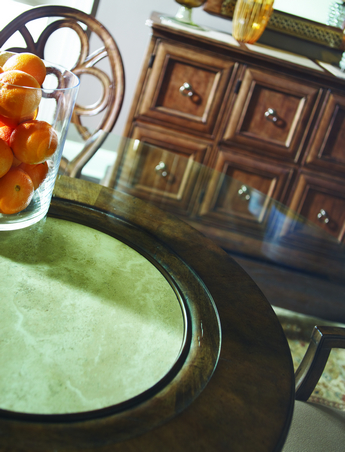
FFDM Sunset Canyon Collection: The colorful oranges provide a necessary deviation from the warmth of the wood and the neutral tabletop.
Using the Zen theme in your home means you have to understand the principles behind it. You can begin with shibumi which is an ideal. Its definition is not clear in Japanese but it can be used for experiences and objects that exemplify both everything and nothingness. Based on this, a Zen theme spells elegance and simplicity. It is an understatement and it is also excellent.
Shibumi, as spoken by James Michener in his novel Iberia, can be understood in the context of writing, art, or of any true work of art.
Shibumi has seven principles – austerity, simplicity, naturalness, subtlety, asymmetry, breaking from routine, and tranquility.
Austerity: Koko
This focuses on omission, exclusion or restraint. This means that you should not add any interior design aspect that was not necessary to begin with.
Simplicity: Kanso
This emphasizes the beauty and downplays utility or anything that is fanciful. The effects are neatness, freshness and cleanliness. The lesson here is that you should eliminate anything that does not have any use; instead, you should make room for ideas that work.
Naturalness: Shizen
This means you can use interior design concepts that are one with nature yet divergent from it. The essence of shizen can be captured in furniture that aims to recreate the sunset, light filtering through the beautiful trees, or the shadows of various passing clouds.
Use naturally occurring patterns in nature, as well as rhythms into your interior design.
Subtlety: Yugen
This principle explains that anything that’s finite is an enemy of nature. This implies the loss or stagnation of life. People’s curiosity is piqued when they see an interesting object just once. The world hypes everything from products to services yet when silence counters the usual hype, the former almost always wins.
Asymmetry: Fukinsei
The natural world is symmetrical but this symmetry can also be achieved in imperfect renderings. The viewer then tends to supply the absent symmetry then participates in the art of creation. This means that interior design does not have to depend on you all of the time. You can also seek the help of friends or relatives to co-create with you. You must be open for ideas that can produce necessary innovations.
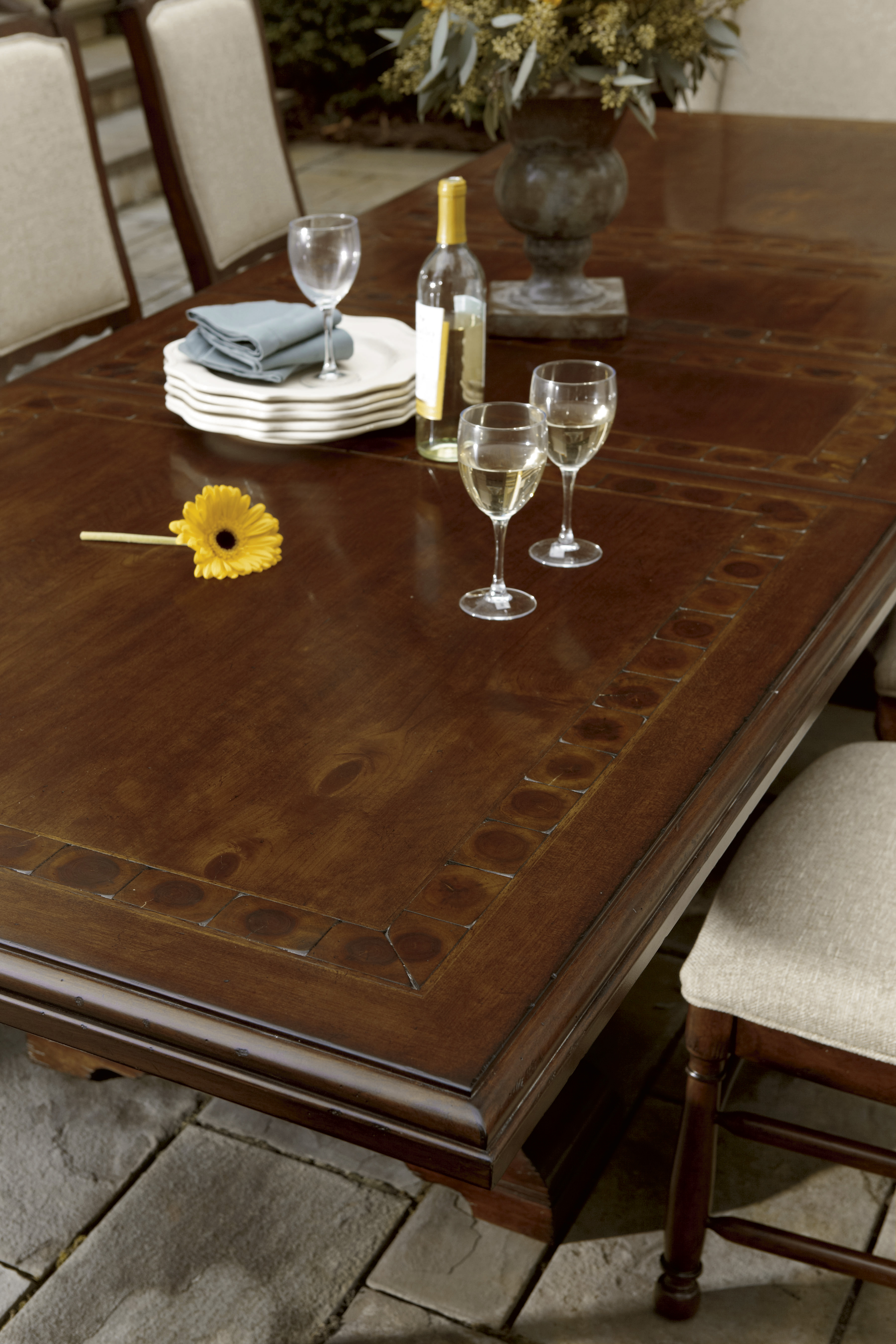
FFDM Harbor Spring Collection: Flower arrangements in vases give character and a sense of serenity in a traditional dining room.
Breaking from Routine: Datsuzoku
This principle implies rest from convention. Patterns that worked in the past that have been used by different designers can – and should – take a rest, too. This interruptive break can work well in your interior design if you give it a chance.
Tranquility: Seijaku
Lastly, there’s stillness or tranquility. Those who practice Zen living know that the state of calmness or quietude is the very state where energy is created. This is the meditation phase which can up one’s self-awareness and focus.
The lesson here is that you should do something than left doing nothing.
Your home should be the first place in the whole wide world where you feel most calm and peaceful. There is nothing better than a Zen-inspired home to promote these positive feelings of serenity. If you still have no idea how this looks like, just picture the Zen Gardens in Japanese websites, magazines or photos.
Going Zen does not automatically mean that you have to resort to traditional style, though. Zen could also be contemporary with the right elements. For instance, Zen is epitomized in a room where floor cushions are scattered all around a low table. This can serve as an Oriental dining area, a unique place to enjoy meals with your family. The dark contrast of a table against a warm cream setting should be enough to evoke feelings of balance and stillness.
Tags: asymmetry, balance, designing with nature, McCreerys, McCreerys Home Furnishings, nature, nature in interior design, nature-inspired design, nature-inspired home, Zen design, Zen home, Zen interior, Zen interiors, Zen living, Zen style, Zen-inspired home
Posted in Interior Design 101, Interior Design Elements, Interior Design Themes | No Comments »
Follow us on our social media


© McCreery's Home Furnishings | All Rights Reserved | Privacy Policy
