- Follow us:


Thursday, April 20th, 2017
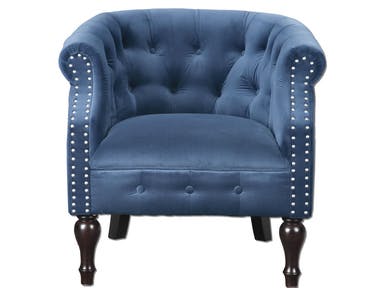
Uttermost Living Room Aviana Blue Velvet Armchair 23257
Velvet is very much like silk and it is one of the most grandiose fabrics that you can use to show elegance in your home. This fabric has always been associated with the monarchs because it feels soft, looks shiny and dazzling to look at. Add to this the fact that velvet was also worn by the rich and was quite expensive.
Velvet History
Velvet, during the Renaissance age, was an economic marvel that made money for Lucca and Florence, cities in Italy. It was associated with being chic and luxurious, and it never ceased to be popular since that day – that’s 4,000 years of rich velvet history.
Velvet is also known for its warmth and beauty, which is why it is suitable for colder climates such as that in Europe and North America.
There are many different theories about the origins of velvet. A lot of people agree that it came from the Far East. Velvet was believed to have come along the Silk route taken by the Arabs on their way to Europe.
Velvet soon reached Italy where Sicily along with Florence and Lucca showed the biggest production from the 12th till the 18th centuries.
Back then, velvet contained linen or cotton with silk pile. It was also made with other fibers such as synthetic silk or rayon acetate.
Technological and innovative advances have made it possible for manufacturers to come up with cheaper versions of velvet. Velour is one of these. It has a stretchy property along with the rich appearance of velvet.
Manufacturing Velvet
Velvet is a compact silk pile fabric. It is woven as a type of double cloth, one with a set of filling thread and dual wrap thread sets. The two wrap heads are then woven into dual pieces of cloth in special looms. The wrap is then cut by blades. When these two pieces are separated, they are then rolled out individually. This is what’s known as pile cloth.
The pile cloth ends are sticking and they eventually form a soft pile. Velvet was once made from silk (which was quite expensive), but is now manufactured from other fabrics.
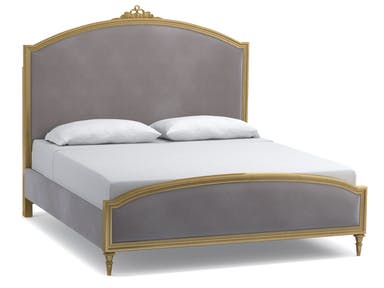
Cynthia Rowley for Hooker Furniture Bedroom Antoinette California King Gilded Upholstered Bed 1586-90260-GLD1
Should Velvet be Washed?
Having kids or pets in your home should not stop you from owning a velvet couch or velvet draperies.
Before you set out to clean your velvet piece, make sure that you know the cleaning code for it. Velvet is normally a code S, meaning, it should be cleaned with solvents. This means that you generally have to dry clean it.
Washing velvet is not an easy task. It is not like washing normal fabric. What you need to do is to have it dry cleaned. If you see small stains, then gently remove these with the use of damp cloth. Wet this cloth with warm water then rub it on the stains.
Make sure that you do not rub too hard or you may end up totally damaging the cloth. Dab the fabric till it becomes dry. If the stains remain, then just repeat the process. If the stains are too large, then it is best to have them dry cleaned.
There is also a homemade recipe for stain remover for your velvet piece. Here are the things that you will need –
Procedure
Tags: McCreerys, McCreerys Home Furnishings, velvet, velvet care, velvet design, velvet furniture, velvet in interior design, velvet pieces
Posted in Furniture, Interior Design 101, Interior Design Elements | Comments Off on The Perennially Distinctive Velvet
Thursday, July 21st, 2016
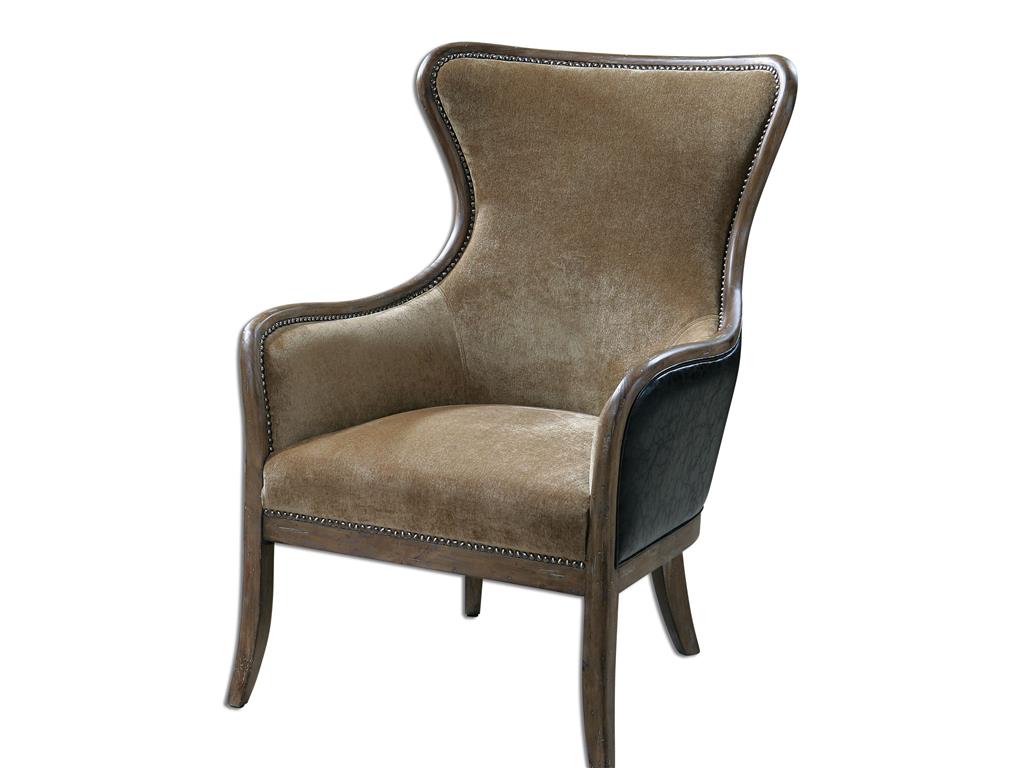
Living Room Uttermost Snowden Tan Wing Chair 23158
There is an ever-growing trend on velvet interiors lately. There are many beautifully-designed places – some are even featured in interior design magazines – where this lovely material is used. Using velvet as a replacement for any other material can surely be considered an upgrade. Before you set out and find furniture pieces clothes in this classy material, you might as well learn its history to appreciate it more.
Velvet and Its Rich History
Velvet, believe it or not, has been around for thousands of years. Different nations have used it for different cultural reasons, through the centuries. Velvet is a highly-valued material that was equated to power, wealth and royalty.
The modern world now has manufacturing methods that made velvet available to everyone. Thanks to the expertise of Englishman Edmund Cartwright who made the power loom in 1785. In our day, velvet is known to be more versatile than the type that ancient people used.
What’s great about this textile is that it will never go out of style. Imagine this material lasting through the early Renaissance, to the early Asian palace dwellers, all the way to Belgium which became a major producer of velvet during the 1500s.
Silk Velvet
This kind of velvet has a signature sheen and it is also soft to touch. One touch and you know you’re feeling a luxurious material. Use this material in areas that have light traffic only. Take note of this as it is keen on revealing the pressures that it goes through. Highly-exposed silk velvet will end up with a lot of marks and creases so limit it to rooms such as the bedroom.
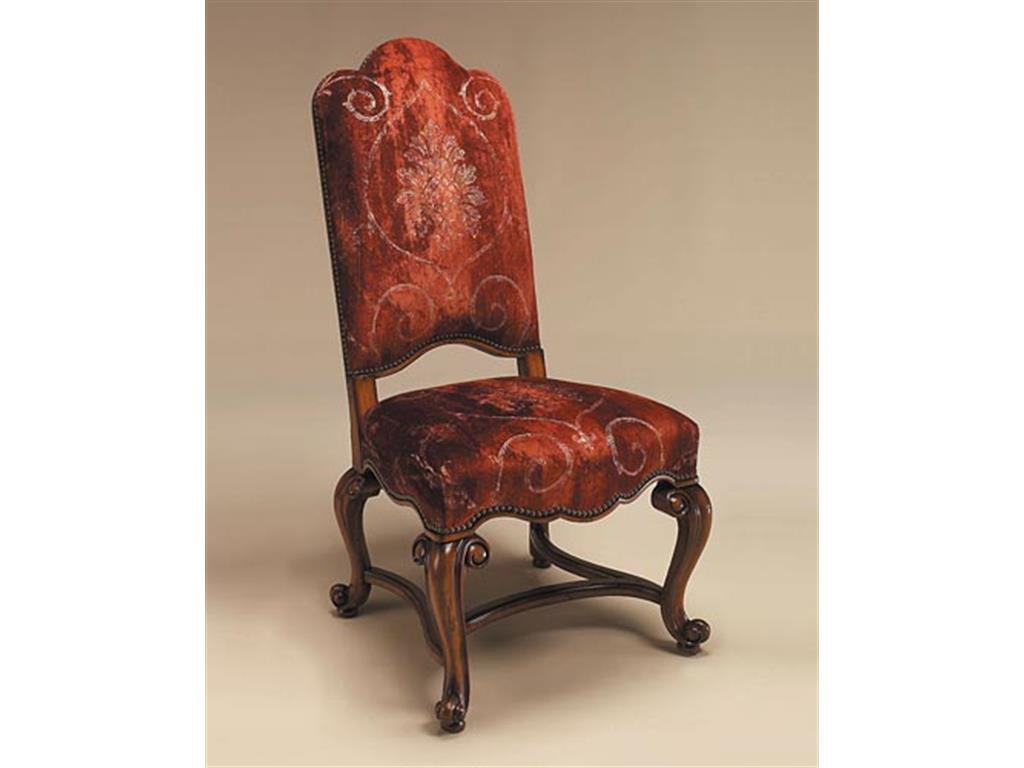
Maitland-Smith Dining Room Hand Carved Side Chair 4030-621
Linen Velvet
In contrast to the first type, linen velvet is more matte, hence, it has a shorter pile. It even feels drier when you touch it. It is easy to detect this kind of velvet; just look for that subtle strie and you know you’ve found one. This is not a defect, rather, a natural result of not being able to spin uniform-gauge yarn.
Here’s a tip, if you want to know the fiber content of a fabric, then be sure to read the showroom tags. The first item is often the face fiber while the second one is the ground fiber.
Cotton Velvet
This is considered as a tufted fabric. It is plain-woven with the pile and has about three millimeters of surface fiber length.
Cotton velvet may not be easy to clean, it even absorbs dyes well, but it is a thing of beauty if you know how to take care of it.
Nowadays, modern cotton velvet contains polyester fibers which make the fabric more resistant to wearing and tearing.
There may be dye-lot issues so ask for the showroom staff to order you swatches of the present dye lot. You would be surprised that velvet color may look different in the store than when you bring the actual swatches in your home.
Wool Velvet
Coziness and warmth are two of the elements that make velvet stunning. Wool velvet is a durable upholstery for those wintry months. This will feel hot during the summer season, though, so use a slipcover during the warmer seasons. Just make sure that the slipcover is loose, though, as it may ruin the nap if it’s too tight.
Mohair Velvet
This is a kind of wooly, soft fabric made from the silky hair of an Angora goat. And, nope, this is not the same as the Angora rabbit wool. If you want to cover your headboard or sofa with mohair, then be sure that you are really decided. This material could last for a very, very long time.
Tags: design textures, history, McCreerys, McCreerys Home Furnishings, texture in interior design, textures, tips, velvet, velvet design, velvet designs, velvet furniture, velvet history, velvet in interior design, velvet pieces, velvet styles
Posted in Accents, Interior Design 101, Interior Design Elements | No Comments »
Follow us on our social media


© McCreery's Home Furnishings | All Rights Reserved | Privacy Policy
