- Follow us:


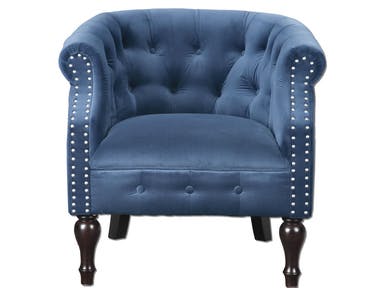
Uttermost Living Room Aviana Blue Velvet Armchair 23257
Velvet is very much like silk and it is one of the most grandiose fabrics that you can use to show elegance in your home. This fabric has always been associated with the monarchs because it feels soft, looks shiny and dazzling to look at. Add to this the fact that velvet was also worn by the rich and was quite expensive.
Velvet History
Velvet, during the Renaissance age, was an economic marvel that made money for Lucca and Florence, cities in Italy. It was associated with being chic and luxurious, and it never ceased to be popular since that day – that’s 4,000 years of rich velvet history.
Velvet is also known for its warmth and beauty, which is why it is suitable for colder climates such as that in Europe and North America.
There are many different theories about the origins of velvet. A lot of people agree that it came from the Far East. Velvet was believed to have come along the Silk route taken by the Arabs on their way to Europe.
Velvet soon reached Italy where Sicily along with Florence and Lucca showed the biggest production from the 12th till the 18th centuries.
Back then, velvet contained linen or cotton with silk pile. It was also made with other fibers such as synthetic silk or rayon acetate.
Technological and innovative advances have made it possible for manufacturers to come up with cheaper versions of velvet. Velour is one of these. It has a stretchy property along with the rich appearance of velvet.
Manufacturing Velvet
Velvet is a compact silk pile fabric. It is woven as a type of double cloth, one with a set of filling thread and dual wrap thread sets. The two wrap heads are then woven into dual pieces of cloth in special looms. The wrap is then cut by blades. When these two pieces are separated, they are then rolled out individually. This is what’s known as pile cloth.
The pile cloth ends are sticking and they eventually form a soft pile. Velvet was once made from silk (which was quite expensive), but is now manufactured from other fabrics.
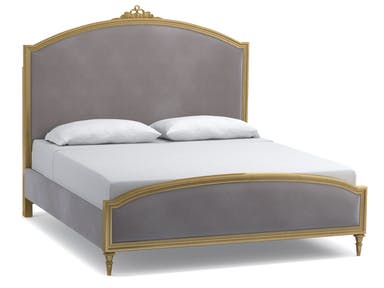
Cynthia Rowley for Hooker Furniture Bedroom Antoinette California King Gilded Upholstered Bed 1586-90260-GLD1
Should Velvet be Washed?
Having kids or pets in your home should not stop you from owning a velvet couch or velvet draperies.
Before you set out to clean your velvet piece, make sure that you know the cleaning code for it. Velvet is normally a code S, meaning, it should be cleaned with solvents. This means that you generally have to dry clean it.
Washing velvet is not an easy task. It is not like washing normal fabric. What you need to do is to have it dry cleaned. If you see small stains, then gently remove these with the use of damp cloth. Wet this cloth with warm water then rub it on the stains.
Make sure that you do not rub too hard or you may end up totally damaging the cloth. Dab the fabric till it becomes dry. If the stains remain, then just repeat the process. If the stains are too large, then it is best to have them dry cleaned.
There is also a homemade recipe for stain remover for your velvet piece. Here are the things that you will need –
Procedure
Follow us on our social media


© McCreery's Home Furnishings | All Rights Reserved | Privacy Policy
