- Follow us:


Thursday, April 18th, 2019
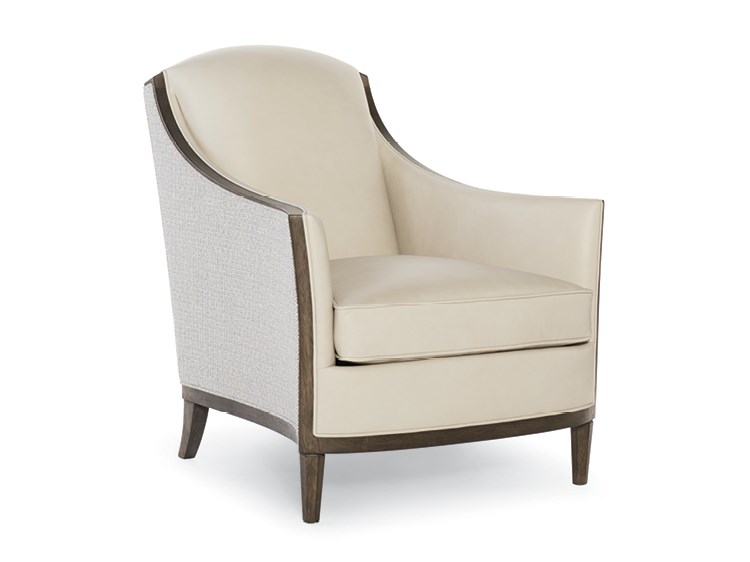
The Bliss Leather Chair from Protégé Upholstery is simple yet stylish.
Even since man started valuing commodities, leather has become one of the most sought-after materials. The simplest and earliest furniture pieces were probably made of animal skins so that man would be kept warm and comfortable.
Leather is a big testament to the resourcefulness as well as the ingenuity of man. And whether it did play an important part in the development of civilization, it is still a valued material even to this day. Leather has become an enduring piece of fashion and design.
So, is it a must to have leather in your home?
A Little Leather History
Let’s walk down memory lane for a bit. The benefits of using dried animal skins in the prehistoric times are still the same benefits that man enjoys today. Leather has been used for shelter and clothing and all these are there to keep harsh conditions from harming man.
The earliest known leather artifacts were crafted in 1300 BC. This was the time that man began to appreciate and use animal hides for their protection. Suddenly, leather is born and animal skins are no longer just a food by-product.
Ancient Greeks also crafted leather garments and sandals in 1200 BC and during the Homeric era. Leather prevailed and even spread all the way to Egypt where royalty almost revered it.
And as we now live in a society that’s increasingly developing and becoming more sophisticated with each year, innovations keep coming even for an enduring material such as leather.
Leather craftsmen and tanners are still in demand even as they were during the Middle Ages. What’s better today is that, there is now an alternative method that’s been invented for vegetable tanning.
Chrome tanning makes use of chemicals which make leather manufacturing a lot easier. About 80-90% of leather tanning worldwide is now done in this manner.
Leather is not just associated with clothing and bags nowadays but also in the bookbinding industry. The Victorian era began this with novels such as those of Charles Dickens being preserved because of the durability of leather.
Leather Today
These days, leather is still highly valued and renowned. While there are now more options on synthetic fabrics and materials, leather remains one of the leading choices for furniture and accessories.
There are many reasons why leather endures even till these days. First, very few materials can beat leather when it comes to quality. Furniture made of leather are believed to be top-of-the-line and, therefore, premier pieces.
Have you ever been invited to a spacious office where you were welcomed to a lobby filled with leather furniture pieces? What was your impression of that office? Surely, you thought of the adjectives classy or sophisticated. And with modern tanning process now available, leather is now more resistant to sagging, cracking or even peeling.
Leather is also a material that offers comfort. And compared to fabric couches which tend to fade, leather is more enduring. They are less likely to lose their shape. In fact, as true leather becomes more worn out, it becomes even more inviting to one’s sight.
Leather is breathable so it allows heat to dissipate more quickly. No matter what the weather, you are sure to feel comfort as you sit each time in your leather couch.
Speak of durability, leather is also known to last four more times compared to fabric upholstery. It is a tough material although it is also flexible. Because it is all-natural, it is also resistant to dirt and spills. Just wipe it with a clean cloth and you’re done cleaning.
Lastly, leather is so stylish more so when it is dyed. Its unique grain, markings and look shows just how refined you are with your furniture choices
Tags: history of leather, leather, leather furniture, leather history, McCreerys, McCreerys Home Furnishings
Posted in Furniture, Home Office Design, Interior Design 101, Interior Design Elements, Living Room Design | Comments Off on Leather: From Then Till Now
Tuesday, January 3rd, 2017
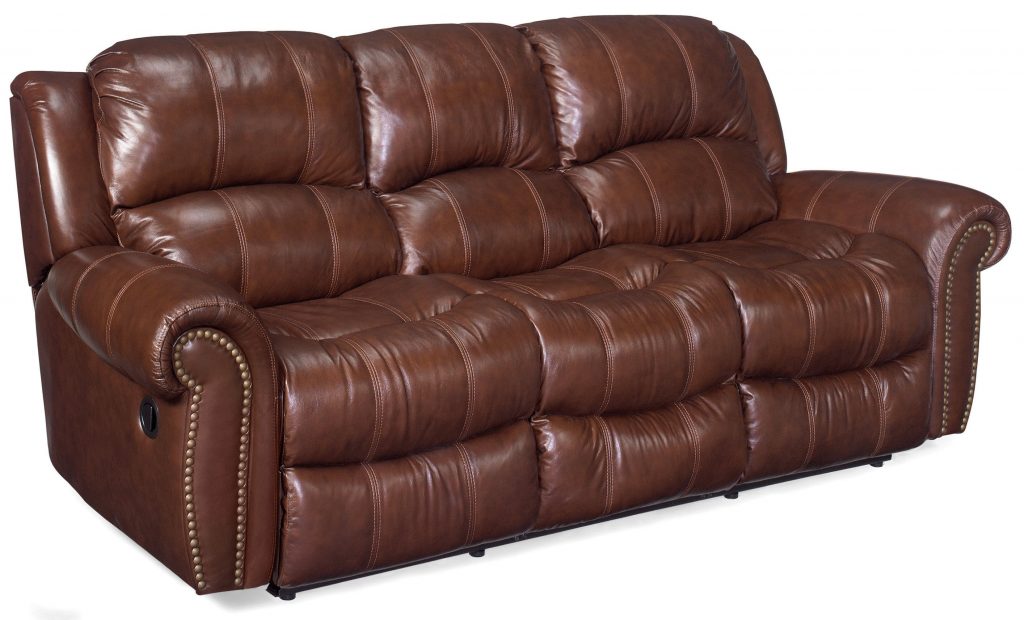
Hooker Furniture Living Room Sebastian Sofa (with 2 Recliners)
Upholstered furniture go through the same rigors as cabinetry and other pieces of furniture. The only difference is that you may not always notice the dust that settles on upholstered pieces. Brushing or vacuuming every week in order to remove dust as well as avoid colors becoming dull is one of the many effective ways of caring for leather and upholstered pieces.
Why Care for Leather?
In the first place, why? Leather is a beautiful, natural product. This is one of the few materials that allows the piece to breathe while delivering warm and unique characteristics.
Leather beautifully displays traces of where it came from – the scars, brands, growth and creases show it all. These add character to the couch and do not affect the overall quality of the furniture piece.
Leather is resilient, durable and has a patina that develops over time which increases its appeal.
Tips in Leather Care
Begin by protecting your leather couch from direct sunlight. It is best to use leather pieces indoors or any area that would allow them to sit without being touched by the rays of sunlight.
Dust can be removed from semi-aniline, protected or pigmented leather through vacuuming. You can then follow this process by wiping them with a slightly damp piece of cloth. You can also use mild soap if grease has accidentally touched your leather piece.
Follow up with buffing using a soft, dry cloth. Avoid rubbing or wetting excessively.
Next, it is common for leather to have natural oils and perspiration coming from the hair and skin. These can have an effect on the leather couch’s finish. The degree of this said effect can vary from one person to the next. Cleaning is best done where the bare hands, arms and heads usually rest. Do this a couple of times each week.
You can also use leather protection cream to better protect your leather couch. Apply it to both new and used leather from two to four times every year. There are also soft leather cleaners which can be used more often as needed. When cleaning, make sure that you don’t rub the cleaner, instead, use a soft, wiping motion.
Another problem with leather couch ownership is when ink marks stain the lovely piece. Find a ball point pen ink remover that could penetrate more deeply than the usual cleaners. When the stain is a tad more serious, it may require you to ask for professional help.
When it comes to hide food, here’s a word of caution – do not use it to polish your leather couch. Instead, use the usual leather creams and cleaning solutions.
Nubuck, suede, and aniline leathers ask for specific care since they all lack protective coating. Find products that were specifically manufactured for these kinds of leather finish. Make sure that you follow the cleaning instructions thoroughly. Be sure to test on an unseen part of the couch before you begin the cleaning process.
Another warning when it comes to owning leather furniture is to keep it away from any heat source. Keep a distance of 30 cm from the leather couch and the radiator (or any other heat source).
As for liquids, quickly find some absorbent paper towels then dab the area where there was a spillage. Use clean towels to completely dry the area afterwards.
Plump the back and arm cushions as well as the seats and fixed pads so that they maintain their shape for years. Should you notice any crease especially on the seat area, be sure to smooth them out so that it won’t become a permanent problem.
Lastly, just be gentle when sitting on your leather couch so that it will be with you for a long, long time.
Tags: caring for leather, leather care, leather couch, leather furniture, leather furniture care, leather maintenance, McCreerys, McCreerys Home Furnishings
Posted in Furniture, Home Maintenance, Interior Design 101, Interior Design Elements | Comments Off on Caring for That Leather Couch
Thursday, October 6th, 2016
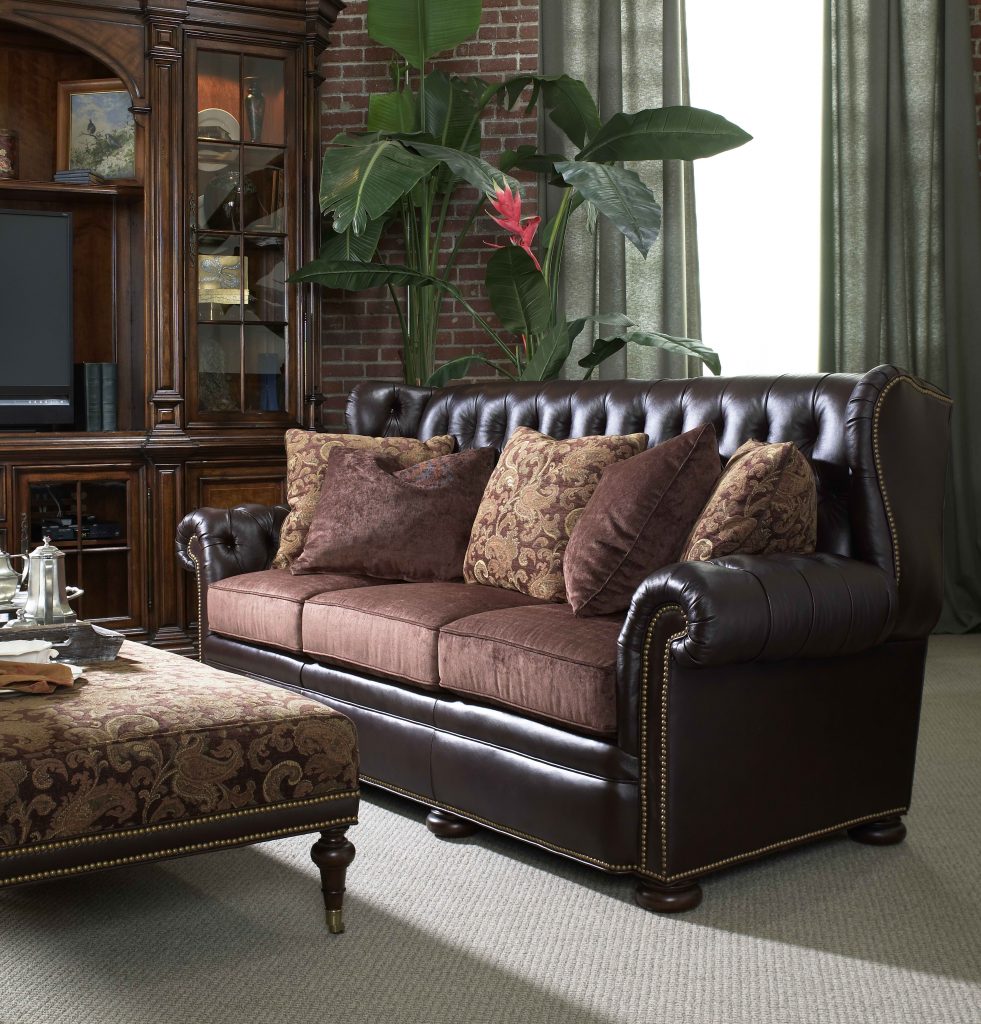
FFDM Viniterra Collection offers an interesting fusion of leather and fabric.
Cleaning any leather furniture is a process that asks for a huge deal of expertise and care. This is one of those materials that can be easily damaged when treated improperly. While most homeowners opt to do this task on their own, there are professionals who have been certified to address this kind of maintenance. They are the right people to call who have the right kind of cleaning materials and equipment.
Leather is preserved animal skin so it is wise that it should be treated in that manner. Any substance that can keep it moistened is the kind that could provide longevity to it.
Leather Prepping
Before you or an expert would begin to clean the leather furniture, make sure that the furniture piece has been vacuumed properly. This process may be simple but it can prevent waste materials from damaging the furniture.
Preserved animal skin is very fragile so you wouldn’t want dust or any waste to get stuck to it. Any kind of debris should be removed from it. You may use saddle soap or just about any gentle cleaning solution that can also treat the leather.
Veer away from strong chemicals as these can cause permanent staining on your leather couch, chair, recliner, or ottoman.
Leather Cleaning
As soon as you have vacuumed and prepped the gentle soap that you’ll use, be sure to apply the solution with a damp cloth. Use just a little pressure to apply and reapply the solution. Rinse the soap suds with clean water, again, using the damp cloth.
Dry the material right after it is rinsed. Use a dry cloth this time, using just a little amount of pressure.
Leather + Toothpaste?
There are stains that are deemed permanent which can actually be removed easily using toothpaste. Scrubbing will only damage the leather so it is best to make the tough stain come out using a cloth and toothpaste. If the stain remains, then have a professional take a look at your leather furniture. These experts have the safest equipment and solutions to use to remove the stain.
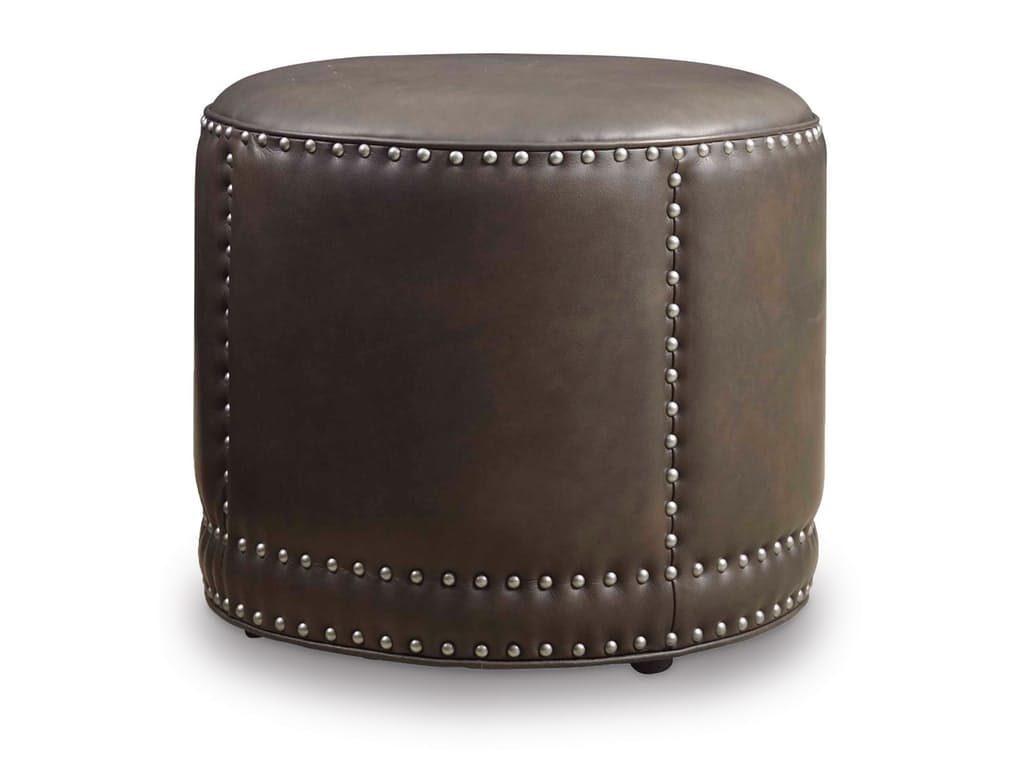
Hooker Furniture Living Room Aspen Durant Round Cocktail Ottoman: Who says leather furniture always has to be a sofa?
Leather After Stain Removal
After the stains have been removed, leather can be conditioned and treated. This must be done once to twice a year depending on how much exposure under the sunlight the leather furniture receives. Don’t think that simple silicone or oils can be used to clean leather because they have been known to stick and become permanent residues.
There are leather technicians who can expertly handle leather by erasing stains and other problems that are common to this material.
Choosing the Right Leather Caretaker
With a lot of leather cleaning companies to choose from, you might be wondering how you would end up with the best. To properly discern the best, be sure to do some research. Look for personal reviews of past clients, work samples, and their certifications. Among these three, it is important to check the last one. Certifications ensure that the business is competent enough to handle leather concerns. Certificates ascertain that the team has ample fundamental knowledge as well as the latest techniques to handle any leather situation.
So what sort of certificate should you be looking for?
Look for the Institute of Inspection, Cleaning & Restoration Certificate. This is also known as the IICRC which is proof of their continued evaluation. Professionals who hold this certificate know how to repair, deodorize, maintain and even restore leather furniture.
Cleaning technicians also know the various fabric categories so they will be able to identify different fibers, sanitation chemistry, techniques of leather protection, and are even able to forecast a problem before it even happens.
Tags: caring for leather, genuine leather, leather, leather care, leather design, leather furniture, leather maintenance, leather upholstery, McCreerys, McCreerys Home Furnishings, tips
Posted in Furniture, Home Maintenance, Interior Design 101 | No Comments »
Tuesday, February 9th, 2016
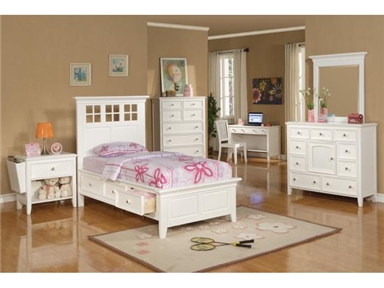
Scandinavian theme can be used as well in the kids’ bedroom (Winners Only Bedroom Del Mar White Twin Storage Bed BDP1001TS).
What do Iceland, Denmark, Sweden, Finland and Norway have in common? All these countries showcase perfect homes. Spaces featuring Scandinavian design are super stylish but not in an ornate kind of way. Also known as the Nordic design, Scandinavian design is all about keeping most design elements subdued. More often than not, such homes sport a stark white backdrop which is the best canvas for anyone’s artistic flair.
Scandinavian Design: A History
Simplicity and function are the foremost design principles for all of Nordic Europe. The homes in these places are airy, bright, and mostly serene. Natural elements are effectively used, with neutral color palettes taking centerstage.
The world had its first glimpse of this style during the 1947 edition of a design exhibit in Milan. Triennale de Milano specifically featured home accessories and glassware coming from the Nordic nations. It was a rage and pretty soon, Canada and the U.S. capitalized on its popularity. The years 1954 through 1957 made Scandinavian design the star of the interior design industry. It was a timely break from the designs enjoyed by Europeans during that time. Europeans generally favored ornate designs and opulent settings. Nordic design changed all these.
Function over embellishments became the new trend.
The design’s popularity declined during the 80s but upped again in the next decade.
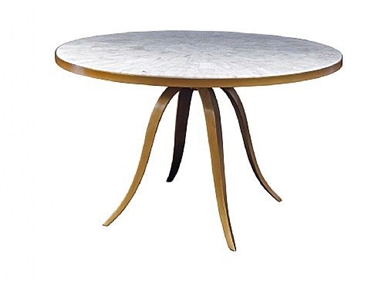
Artistica Dining Room Crystal Stone Round Dining Table 373-100.
The Scandinavian Textures
It is important to play with textures when you are designing your home with a bare white environment. The colors can still participate in the whole picture but they should be muted. Rich textures must be seen on the furniture pieces, lamps, the accent rug, textiles, the bed and the couch. The secret is to keep things exciting.
Mix rich textures with a little shimmer or a touch of nature (as simple as a flower arrangement inside the living room will do wonders). A bit of black will also look nice as it will provide a striking contrast to the white background.
Colors can be added one bit at a time. Abstract paintings are a nice addition; they will surely pop in a mainly neutral space.
The flooring does not have to be white, too. If you do not want the flooring to appear sterile or too cold, then you may install wooden flooring. If you love dark colors, then don’t worry. You can still use such colors without making the room look gloomier. Begin with an accent wall then work the rest of the design from there.
Scandinavian Furniture
Wood is a primary feature of many Scandinavian homes. Life in that region of the world has long winters and just a few hours of daylight. Since this is so, people often stayed indoors for a long stretch of the wintry season. Small houses featured wooden furniture pieces that were masterfully crafted by artistic hands.
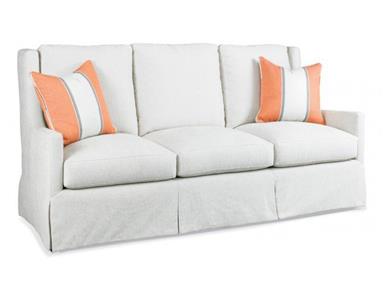
The Hickory White Living Room Sofa 5104-05 has throws that make a colorful and interesting contrast to the all-white fabric.
Scandinavians love organic materials such as natural wood, metal, leather and natural textiles such as cotton and linen.
Statement pieces such as tables and chairs do not even have to match. You have the leeway to mix and match different pieces to make the dining space look more interesting. Natural materials like oak, suede, leather, linen and cotton comprise many Scandinavian furniture pieces.
Leather furniture is also welcome in a Scandinavian setting since it can effectively add warmth and texture. To complete the elegant look brought about by the wooden and leather furniture, see if you can have a fireplace in your living room. A column fireplace can be used as a focal point in a huge living room or in a family room. More often than not, the fireplace is just a bunch of columns located in a corner of the room.
Tags: leather, leather furniture, McCreerys, McCreerys Home Furnishings, Nordic design, Nordic interior design, Nordic interiors, Scandinavian design, Scandinavian interior design, Scandinavian interiors, white, white color palette, white furnishings, white in interior design, white interior design, wooden, wooden furniture, wooden materials
Posted in Interior Design Themes | No Comments »
Saturday, January 30th, 2016
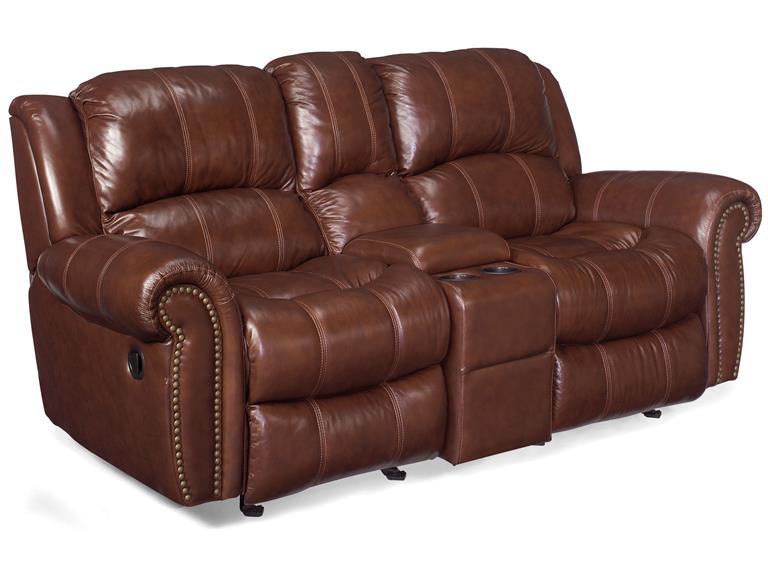
Hooker Furniture Living Room Cognac Entertainment Sofa with 2 Glider Recliner-Stg Console
For hundreds of years now, cattle hide was used to cover books, even to bind them. Cowboys from the West also used this material as a huge part of their outfit. Later on, leather became a luxurious addition to pricey car interiors. Today, it has dominated the world of fashion and interior design.
Many people just dream of owning a leather sofa situated inside their spacious family room. The smooth Italian leather can be used on a long sectional or that cute ottoman.
Leather can be mixed and matched or you can just pick a piece to balance the fabrics in a room.
Leather furniture pieces have the capacity to stand on their own in terms of aesthetic appeal and quality. Mix it with other fabrics or use it as base for fabric or silk covered cushions. It can also add a twist to your home if you use it on architectural detailing or finishing.
Leather has gone a long way from being a cowboy hat or boot. It is now the star of many furniture shops. McCreery’s Home Furnishings offers the best leather sofas and chairs. If you want to go beyond furniture pieces in utilizing this wonderful material, then have it installed as a part of your flooring or walls.
Wood wainscoting may be a lovely design idea but you can surprise everyone by using leather tiles. What you will get is a unique and sophisticated look. You will be amazed on how this wall finishing can make a bland place appear more elegant if not sophisticated.
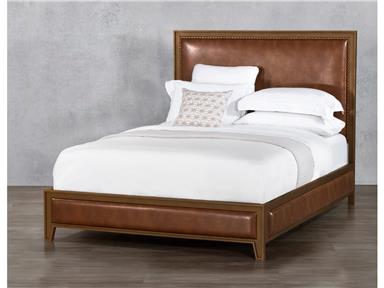
Wesley Allen Bedroom Headboard with Surround HB1231. Who says leather should only be installed on sofas?
As to interior decor, there isn’t a material out there that can be more adaptable than the good old leather. It is versatile, meaning, you have the leeway to use it in modern settings or on timeless dwellings.
This is a wonderful neutral piece that should be used sparingly. It can be easily mixed and matched with different furniture groups which consist of upholstered pieces. Remember that too much leather can also make a room appear daunting and cold. Avoid this result by including just a single leather furniture as a feature piece. You can finish off with colorful accent pillows.
Leather also gets better with age so you won’t have to worry about replacing it soon. Leather furniture bought today will look amazingly wonderful two decades from now.
Shopping for Leather Furniture
Not all leather items come with the same standard. Some leather grades have a higher quality than the rest that are being sold in the market so it is up to you to distinguish which ones you will take home.
Identifying genuine leather is a matter of getting used to the touch and appearance of this material.
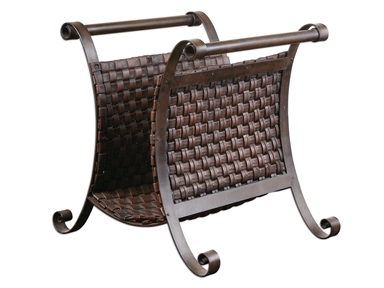
Uttermost Accessories Brunella, Magazine Holder 19543. This living room piece depicts class and elegance
Full grain leather is the la creme dela creme of all leathers. This is also the toughest kind. A basic way to find out full grain leather is to search for scars and other small imperfections. If nothing has been done to hide such, then these natural imperfections will point to the genuineness of the material.
Top grain, on the other hand, is a notch below full grain. The split layer is taken off from the layer of the top grain. Majority of the imperfections have been removed, thus, making the piece look a tad like plastic.
Corrected grain leather is manufactured hides that contain bite marks, scars and many imperfections. Such imperfections are unsuitable for sofas, hence, they were removed through buffing and pigmentation.
Lastly, faux leather can also be a great alternative but your concerted effort should be centered on inspecting edges, examining the pores, and touching the skin. Real leather can have a course feel and it has a distinct smell that can never be replicated in any manufacturing shop.
Tags: genuine leather, history, history of leather, leather, leather couch, leather design, leather furniture, leather shopping, leather sofa, leather upholstery, McCreerys, McCreerys Home Furnishings
Posted in Interior Design Elements, Interior Design Themes | No Comments »
Follow us on our social media


© McCreery's Home Furnishings | All Rights Reserved | Privacy Policy
