- Follow us:


Monday, October 30th, 2017
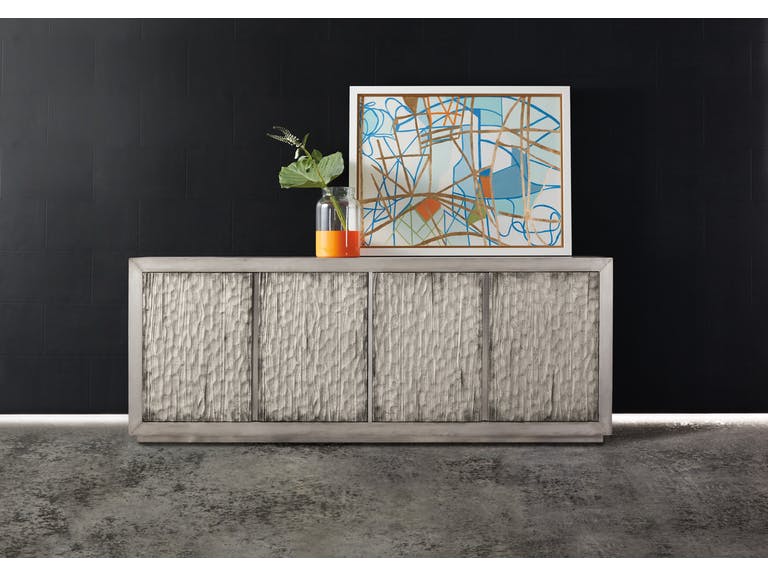
The Hooker Furniture Living Room Melange Claydon Credenza is the right backdrop for the stunning, colorful work of art.
Now more than ever, art is within everyone’s reach. The Internet has made it possible to own the loveliest pieces with just a single mouse click. But once you have the pieces, do you really know what to do with them? Or are you – just like countless others – wondering where to place these beauties?
Gallery Wall
If you want to create a professional-looking gallery wall, be sure to know how to make a statement. This is your chance to put a message across. Mix photographs and paintings. Use black and white pieces together with colored ones.
Don’t forget to have fun while you’re doing this special wall. Be sure to plan the layouts. To do this, you can begin by putting the artworks on the floor and arranging them. Use painter’s tape to create an outline on your intended gallery wall. This blue tape will also help you visualize.
If you’re still uncertain, you can always begin with one or two anchor pieces. Place these at the center of the wall then slowly build from there. Keep in mind that every piece of art has to be seen at eye level.
Don’t forget about placement more so when you’re designing over a piece of furniture such as a sofa or a credenza that is going to be placed against the wall.
Establish a Color Scheme
In showcasing art, you will also need to consider the different kinds of shades that you will use. Will you be highlighting a pretty colorful display or will you show a simpler palette?
Specify your color palette from the outset.
Create a Story
An art gallery wall is also an opportunity to not only document what art you prefer but also a chance to tell a certain story of your experiences and travels. Include photographs of your recent or past trips or artworks that you collected as you traveled.
Frame Your Art
The gallery wall is not all about showing the world your art. It is also a wall that will show just how well you thought this project through. For instance, what sort of art or picture frames should go with your chosen art pieces?
Find unique frames that have the power to draw the eyes towards the art pieces. Look for something that has an Old World vibe if you have embraced the traditional look. If you’re a contemporary homeowner, then there are always frames that come with straight, non-busy lines.
It’s Not Always Aligned
It is wrong to think that gallery walls are supposed to be lined with framed art in straight lines. This may be the ideal setup for most people but for someone who wants to show that he or she is different, there are many other ways to display artwork.
For a less formal gallery, you can have the pieces hang at the left or right side of the center instead of the usual dead center. It also pays to mix up the pieces. You can have paintings mixed up with sketches or photographs with mosaics.
Let Yourself Go
At least your creative side, that is. Remember that creating a gallery wall is also art in itself. Since there is no single formula that points to a great display that will surely be appreciated, you can go ahead and experiment.
Just jump in and let go.
The Don’ts
If you have learned the do’s of hanging wall art, there are also some things that you need to veer away from –
Hanging art takes time but, don’t worry, you will soon enjoy the fruits of your hard work and enjoy a vision that everyone will also appreciate.
Tags: art, displaying art, displaying artwork, displaying works of art, hanging wall art, McCreerys, McCreerys Home Furnishings
Posted in Accents, Accessories, Interior Design 101, Interior Design Elements | Comments Off on How to Display Artworks at Home
Monday, August 29th, 2016
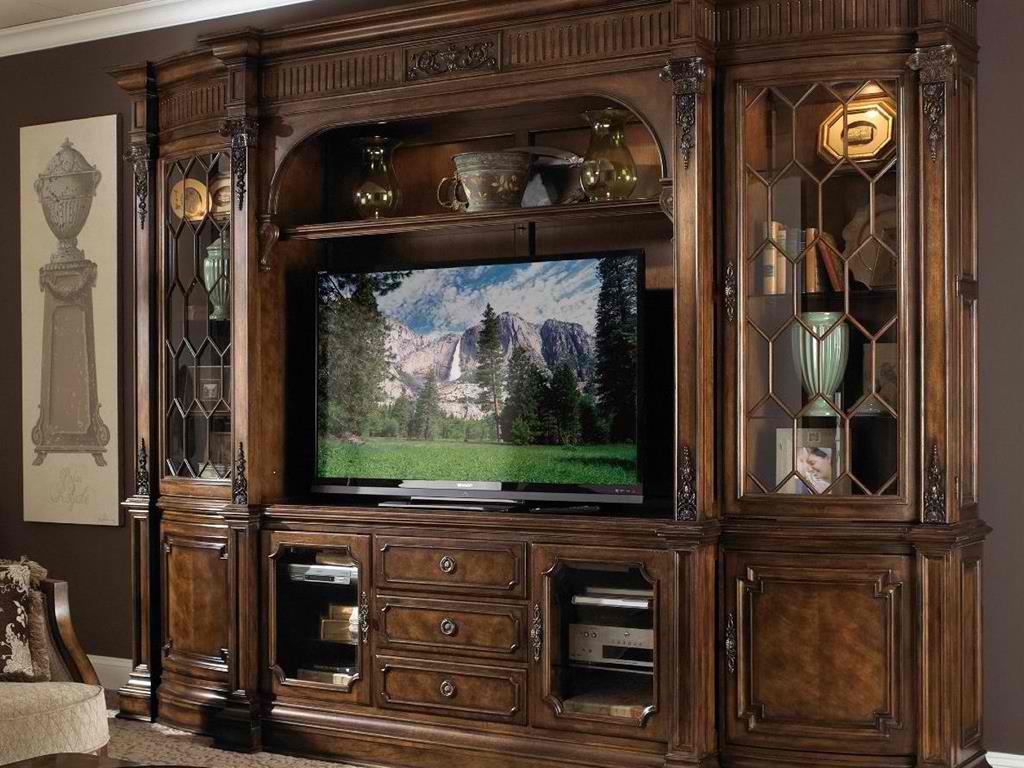
Fine Furniture Design Home Entertainment Entertainment Wall Unit Base, Left 1150-692BL
If you ever stayed or lived in an apartment where you weren’t allowed to paint walls, then you do understand how difficult it can get to become creative. You could only dream of personality and warmth for the room because a painting job simply can’t happen.
If you’re faced with this dilemma, then you have to think of creative ways to cover the walls. Sure, decorating minus paint can be a real challenge but you should not default straightaway to sterile, cold colors like white or beige. Never allow the no-paint rule to make your home look pale or stark.
Here are some tips that can help you decorate the walls with style –
Wall Graphics
These are fantastic things that can aid in your customization of the walls. They are quite easy to apply and remove. No matter what your style is, you will find that wall graphics can make plain walls appear seemingly intricately painted. You can also create the look of a mural.
The great news about wall graphics is that they are not just limited to bare walls in living rooms. You can also spruce up your kitchen cabinets or make the lampshade more exciting. This means that you can use wall graphics if your taste is contemporary, country, or practically anything else. You can even use them if you love everything that’s Zen.
Wall graphics are also available as blackboards which are quite in these days especially inside kitchens.
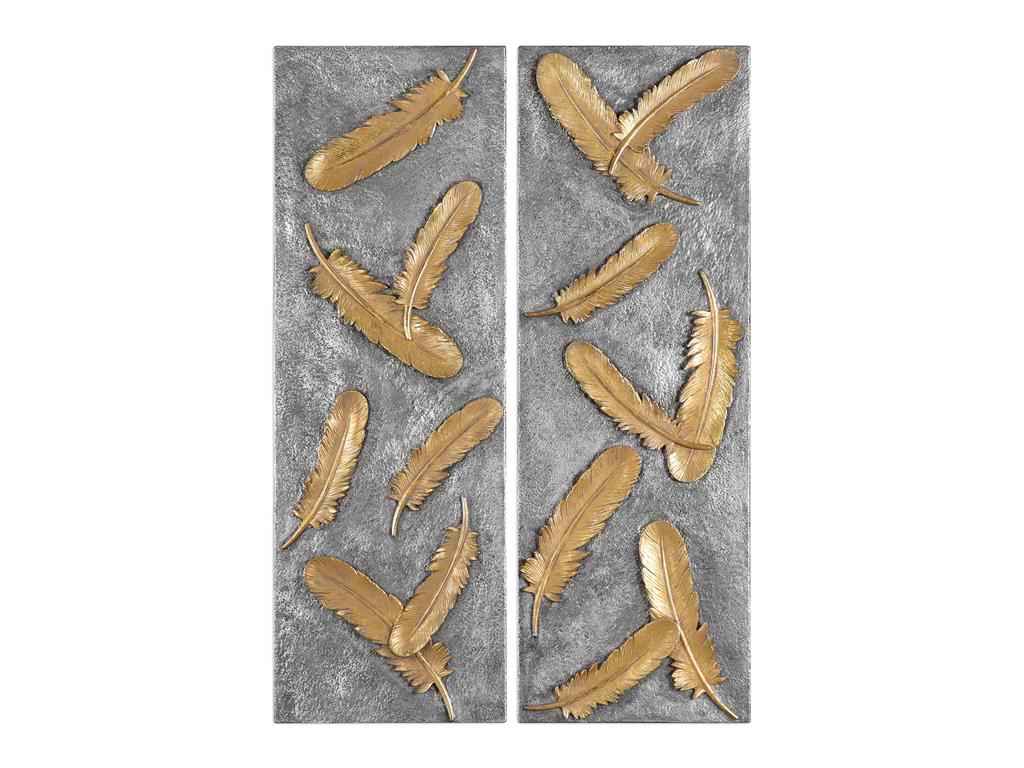
Uttermost Accessories Falling Feathers Gold Wall Art Set2 04073
Temp Wallpaper
This is also referred to as the peelable or strippable wallpaper. It is a decorative accent that works pretty much like the usual wallpaper but the only difference is that it peels away easily and it won’t even leave any residue.
Temporary wallpaper is available in DIY shops and stores and home depots. It is also available in paint shops and online sites. The downside is that they are a bit more expensive. You have to pay about $100 for every eight foot tall, 25-inch width of temporary wallpaper. You can cut down on the cost if you use this wallpaper on an accent wall instead of covering the entire room.
Peel and Stick Tiles
Adding a temporary color to the kitchen is as easy as buying peel and stick tiles. Do this if you’re tired of your kitchen’s current backsplash. These tiles are available in many colors and styles. You can buy them from home improvement shops.
Use scissors or a utility knife to cut them up. They can be easily cleaned using a soft cloth. They also peel off easily and don’t leave any residue once you decide to redecorate or move out.
Curtains
Having curtains doesn’t automatically mean that there should be a window behind it. Use an ordinary curtain rod and attach it to the wall right near the ceiling. Hang the coolest fabric that you can find, the type that reaches down to the floor to achieve an illusion of height.
Fabric
There are two options for fabric – this can be stretched right over the wall or it can be secured using small nails or thumbtacks. You can also buy foam boards that are as high as the walls. Have them covered with fabric then attach the boards onto the walls.
Whichever you end up choosing, adding splashes of colors on the walls is easy without you altering anything permanently.
Hang Art (Whether Yours or Another’s)
It’s time to get creative. Invest in huge canvasses then paint! You can also buy inexpensive pictures from stores and make a collage. This is a surefire way to decorate the walls and make them look unique. Hang the heavier artworks on a stud and not directly on the drywall.
Tags: art, artwork, artwork on walls, blank wall, blank wall designs, curtain, decorating with curtains, decorating with wallpaper, displaying artwork, displaying works of art, dressing up blank walls, fabric, McCreerys, McCreerys Home Furnishings, temporary wall covering, tips, wall covering, wall decor, wall design, wallpaper, wallpapering
Posted in Accents, Accessories, Interior Design 101, Interior Design Elements, Wall Design | No Comments »
Tuesday, January 26th, 2016
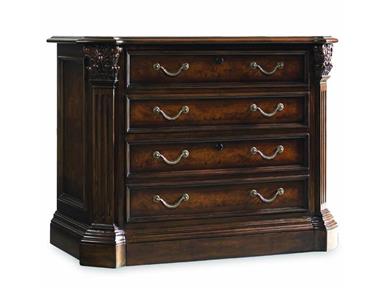
ITALIAN RENAISSANCE. Hooker Furniture Home Office European Renaissance II 39.5 Lateral File 374-10-466.
Renaissance style came into existence because of the emergence of architecture and art in ancient Rome. Though people think of the greatness of Rome when it comes to the beauty of this style, it goes without saying that it was truly born in Italy during the 14th century.
English designers embraced the motifs that they read in Renaissance books. Artisans who were in London were also influenced by this style.
Grotesque, Moresque, Myths, etc.
Grotesque is a kind of decor which has its foundations in Ancient Rome’s wall paintings. In the 15th century, many of these works of art were discovered; they featured scrolling plants, mystical creatures, figures, vases and masks.
Strapwork, on the other hand, is like the leather strips. These are daring shapes that come in three dimensions. English designs, especially during the 16th century, are laden with this style. This style is especially useful in framing motifs and architectural forms.
Moresque, on the other hand, is called such because of its link to the North African and Spanish Moors. If you see those interwoven leaves, stems or tendril patterns, then you have a pretty good idea of what moresque is.
Romans and Greeks are known for their busts. The Renaissance style is also quite popular with what’s known as the roundrel. This is a decorative motif which originated from the Roman coins.
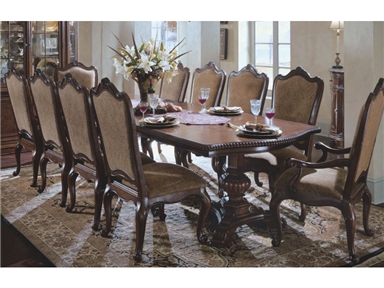
This Universal Furniture Dining Room Double Pedestal Table 409658-C spells royalty.
But what are Greeks and Romans without their myths? The Renaissance culture in England spurred a revitalized interest in classical mythology. Paintings and prints featured these mythical characters as the motifs.
The beauty of the Renaissance style does not end with the Romans. When Henry VIII became king, he inspired the rest of Europe as he became a patron of the arts. People marvelled at his court and the many luxurious objects in his kingdom. It was because of his love for the arts why he also commissioned foreign artists to design more than 50 of his royal palaces. The beauty and splendour of his court proved just how powerful and intimidating looks can be.
One of Henry’s favorite palaces is the Hampton Court Palace located in Surrey. He did not spare any expense in developing this traditional style palace. The ornaments that were used here are indicative o the strong influence of the Renaissance. This building’s Great Hall still stands today.
Going back to its home, Renaissance style was further developed with the help of Italian architect Sebastiano Serlio. Serlio published a series of books discussing architecture and the Renaissance. Buildings of antiquity were recorded in those books, thus, promoting classical style for both the interior and exterior features.
Fireplaces and ceilings became canvasses of sorts to many patterns, textures and works of art.
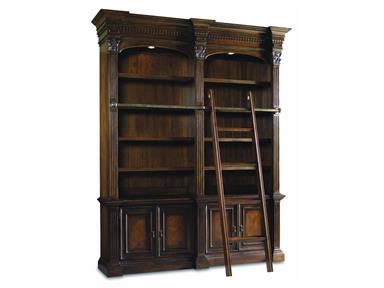
Hooker Furniture Home Office European Renaissance II Double Bookcase with ladder & rail 374 10 225. Learning was also a huge part of the Renaissance so to depict this on your style, take home this bookcase and start displaying your most treasured books.
Styles that are related to the Renaissance is the Neo classical style. It was during the 16th century that books containing decorative motifs offered inspiration to many British designers and artists. The Classical as well as Renaissance Revival during the 19th century became quite popular as archaeological discoveries were being made in Greece and Italy.
Renaissance and Your Home
You do not need to have a degree in interior design just to use this classic style in your home. Do not feel intimidated. Just remember as you start putting the elements together that the chairs, tables, cabinets and drawers have to be ornate, luxurious yet still comfortable. Choose oak, Remember to overlay but not overdo. Say yes to a lot of brocades, candelabra, tapestries, Oriental rugs, embroidered items, and velvet.
There is still a huge difference between mess and a concoction of different arts, elaborate walls, decorative pieces and the most inspiring furniture so take it easy in designing a Renaissance-inspired home.
Tags: African, art, artwork, classic, classic design, classic interior design, classic interiors, classical design, classicism, displaying works of art, fireplace, Grotesque, history, McCreerys, McCreerys Home Furnishings, Moresque, patterns, Renaissance, Renaissance design, Renaissance interior design, Renaissance Revival, Renaissance style, Spanish, textures, timeless, timeless design, timeless interior design, timeless interiors, tips
Posted in Interior Design 101, Interior Design Themes | No Comments »
Monday, January 18th, 2016
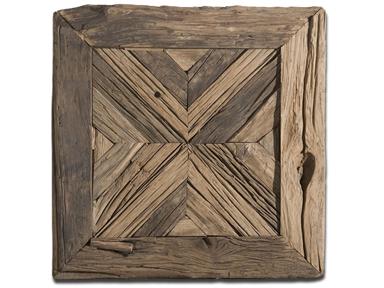
Uttermost Accessories Rennick Metal Wall Art 04014 at McCreerys Home Furnishings. Reclaimed pine wood was used in the creation of this unique wall art.
Artists are fully aware that the term art deco came from the Exposition Internationale des Arts Decoratifs Industriels et Modernes in 1925, held in Paris, France. French artists then collaborated to come up with the show. Emile Decour, Hector Guimard, Eugene Grasset, Paul Follot, Raoul Lachenal and Maurice Dufrene were previously into Art Nouveau before they came up with the new show. Art deco was not that popular till Bevis Hillier, an art historian and critic, mentioned it in her book entitled Art Deco of the 20s and 30s in 1968.
Enough with art deco history; of course you would want to know how you can set up a purely decorative theme in your home.
Art Deco Features and Materials
The use of new building materials that were altered to other styles is what separated art deco from Art Nouveau. This kind of architecture showed scientific progress, technology, speed and the rise of commerce.
Combine these revolutionary characteristics with opulent, modern style and what you have is art deco in its purest form. To further picture what this style is all about, try to visualize the lavish interiors and architecture of cinemas, U.S. train stations and ocean liners like the Queen Mary. The simplicity of their designs is what made them endure even the Great Depression. This only means that your choice is a design that is timeless.
Art deco structure is fundamentally about geometric shapes from the Greco-Roman Classicism. You can also find the multi-faceted architecture of Assyria, Babylon, Aztec Mexico and Ancient Egypt. Think of monumental structures and skyscrapers, music halls, find trapezoids, triangles, zigzags, sweeping curves, and chevron patterns.
It is also not surprising to find new materials like stainless steel, aluminum, plastics, inlaid wood and lacquer. You can find these new materials fused with horn, moulded glass, ivory, and exotic stuff like zebra or shark skin.
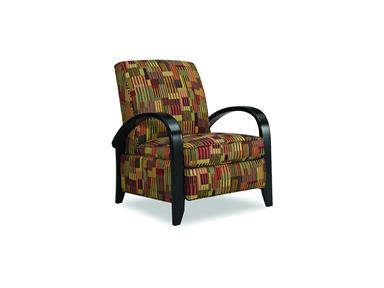
Sam Moore Living Room Steamer Recliner 5560 features sleek arm rests yet an artistic fabric. This fine fusion of simplicity and artistry is what makes this living room furniture a must-have piece.
Art Deco Applications
Art deco is commonly seen in poster art, jewelry textiles, fashion, furniture, architecture and interior design. This style is also applied in graphics and painting.
Art deco design are now adopted by so many architects all over the world ranging from Australia, Romania, Argentina, India, the Philippines, the United Kingdom, Brazil, Cuba, to Spain. American art deco is evident in structures such as the Chrysler Building, News Building, Rockefeller Center, The Empire State Building, and the Chanin Building.
If you love the reappearance of art deco in interiors, then you are not alone. Many homeowners now embrace this style by using bold, geometric patterns. Curvilinear and rectilinear forms are also iconic forms used in art deco interiors. These can make any room come alive almost instantly.
Travel and tourism were quite popular in the 1930s, hence, the addition of African safaris and other exotic finishes to art deco was inevitable. So go ahead and use shiny fabrics, glass, mirrors and metallic paints in your home.

The Accessories Uttermost Bonjour Wall Art 13857 is an awesome replica of the 1800s French correspondence letter. It is perfectly framed in an antique mirror and a distressed dark-colored frame.
And what is art deco without artwork and sculptures? As the name of this style suggests, you should showcase the arts and the world of entertainment. Use sculptural lamps, the boldest oil paintings that you can find, and ornate bedroom furniture. Detailed furniture will surely bring in the art deco elements that you need for your home.
Using the term bold is surely an understatement when talking about the high contrast colors used in art deco. In your kitchen or bathroom, use finishes and tiles that revive the artistic vibe. Monochromatic black combined with white, deep brown or bright reds will surely look gorgeous.
Bring in some high gloss porcelain and ceramic tiles, bold fabrics, to finish off with a dramatic art deco flair.
Tags: art, art deco, artwork, bold, bold statement, displaying artwork, displaying works of art, geometric, geometric design, geometric elements, geometric furniture, geometric patterns, McCreerys, McCreerys Home Furnishings, metals, patterns, textiles, tips, wood
Posted in Furniture, Interior Design 101, Interior Design Elements, Interior Design Themes | No Comments »
Follow us on our social media


© McCreery's Home Furnishings | All Rights Reserved | Privacy Policy
