- Follow us:


Friday, November 11th, 2016
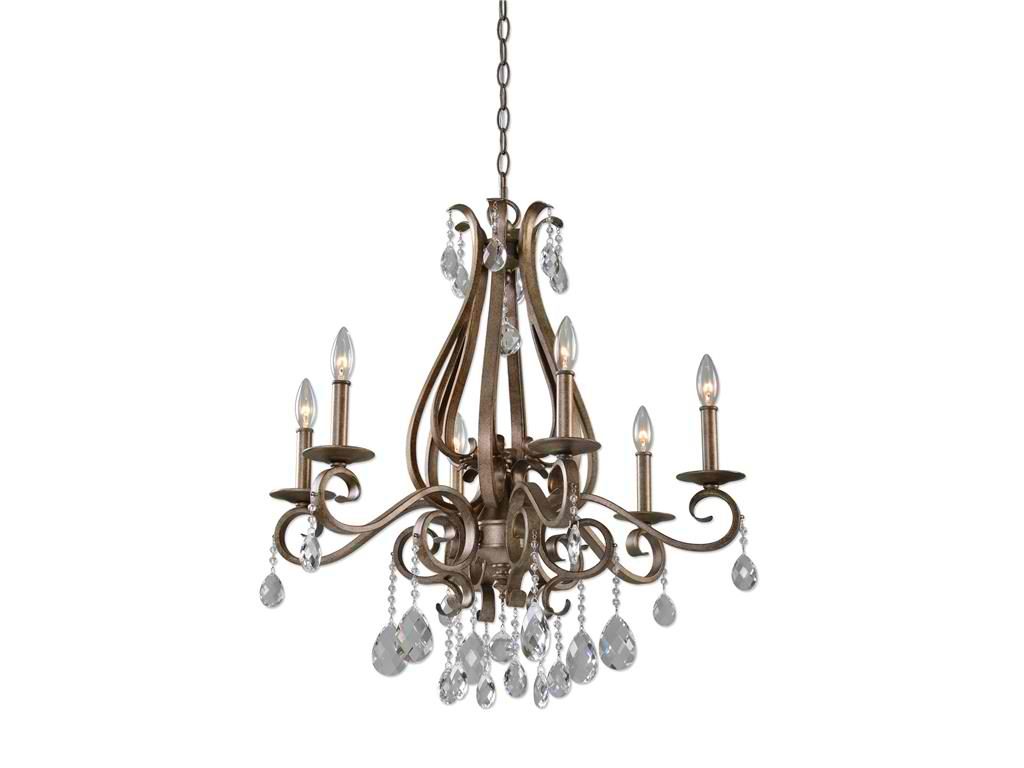
Lamps and Lighting Uttermost Siobhan 6 Light Crystal Chandelier 21289
Drinking wine, champagne or any alcoholic beverage is a custom that’s practiced during special occasions and celebrations. It is also customary to bring out crystal or wine glasses to raise a toast to whatever it is that is being celebrated. People toast for successful work projects, weddings, finishing college, and new beginnings. But, hey, are you able to distinguish crystal from ordinary glass? Because, you see, you should be toasting from the real deal.
A lot of people look at a crystal and glass and they would say that they are practically the same. There are subtle differences which are not easily discerned by many. The chemical composition of each is different as well as their thickness, cut, clarity, sound, refraction, and weight. Know each of these factors so that you can find genuine crystal which you will eventually hang as a lighting fixture in your kitchen.
Glass vs. Crystal
Prior to delving into the glass and crystal differences, you should first define each according to what the popular culture thinks about them. For instance, a lot of people do not know that crystal is a term used for lead glass.
Glasses are made of glass and they are often used as containers. This is also a term used for drinkware that may have handles or without. Glass, in essence, is a raw material that is made of soda-lime. This is what 90% of glasses are made of these days.
Soda-lime, on the other hand, is made from soda, lime and silica. This is also typical in the manufacture of tableware, windows, bulbs and figurines. This is inexpensive compared to borosilicate glass (Pyrex) or fused quartz.
Crystal is made of silica, soda or potash, and lead oxide plus other additives. Lead crystals are durable and beautiful at the same time. They are great as decorative pieces.
Lead crystal was shortened to crystal because of the Italian word cristallo referring to Murano imitations. Wine glasses are often made of lead crystal as well as many decorative elements in many homes.
Apart from chemical composition, there are other ways to point out crystal from glass. Based on thickness, fine crystal is a lot thinner than glass. It also tends to be more decorative because it has a lead content. The lead makes it easy for the sculptor to do his magic. Crystal is more fragile, though.
When it comes to clarity, glasses are cloudy when held up against any kind of light. Crystal is famous for its clarity and for its refractive quality.
Now here’s the real tester – sound. Crystal has a rich pinging sound when you clink it. Glasses produce a thud.
The Crystal Chandelier
Would you like your dining room or kitchen to stand out? A crystal chandelier will immediately pull the attention of the beholder right into the middle of the room. Imagine a crystal chandelier in the middle of your kitchen and surrounded by rich materials such as quartz countertops, brick backsplash and the best copper pots and pans – now that’s a sight to behold.
You can also fuse soft and hard by hanging a crystal chandelier in the middle of a mainly masculine setting. Add some accent cabinets to accompany the beauty of your lighting fixture. White cabinetry is quite a common choice for crystal chandelier owners.
The kitchen island can also be complemented with this lighting beauty.
Prep yourself in buying crystal chandelier. They are huge and grand but they do not have a one-size-fits-all option. Find a fixture that’s not too big or too minute for your kitchen. This room is often fitted with a chandelier often when it also doubles as a dining area so make a wise decision.
The secret here is to look at the bigger picture. Remember these simple numbers –
For a room that sits 4-6 people, the crystal chandelier width should be 20-24 inches; with 6-8 people, the width should be 25-29; and for 8-10 people, the width should be 30-36 inches.
Tags: chandelier, chandeliers, designing with chandeliers, McCreerys, McCreerys Home Furnishings, use of chandeliers
Posted in Interior Design 101, Interior Design Elements, Lighting | No Comments »
Monday, October 31st, 2016
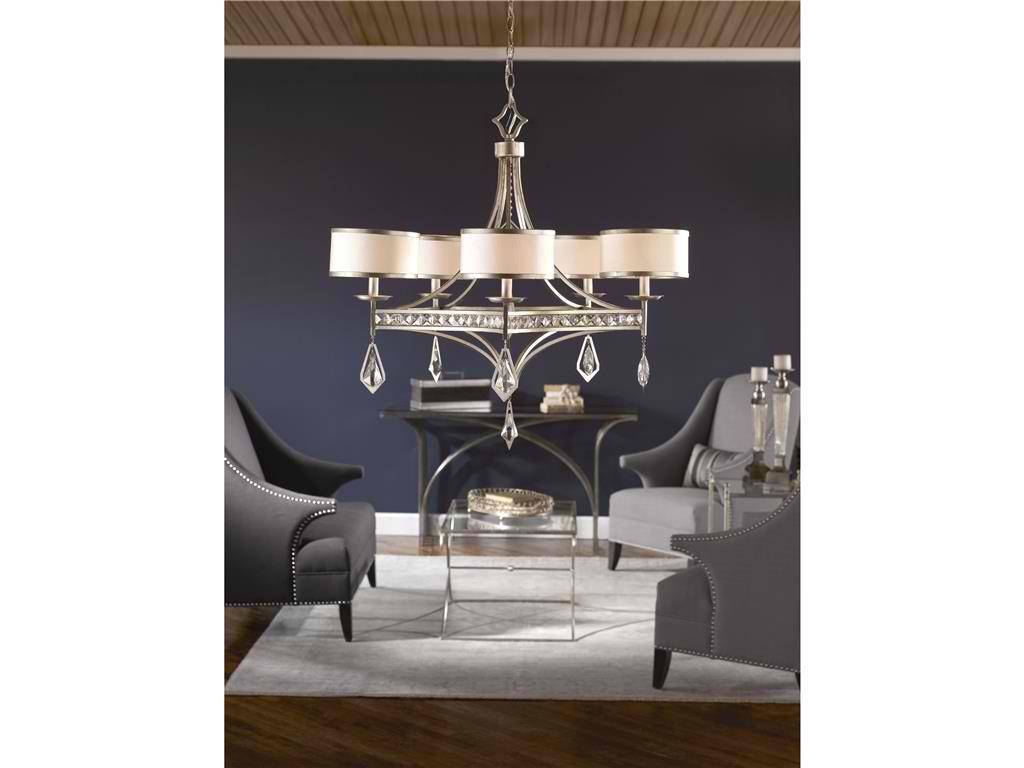
Lamps and Lighting Uttermost Tamworth 5 Light Silver Champagne Chandelier 21268
The chandelier is a lighting fixture that has two or more branches that bear lights. Gone are those days when it was a mere wooden cross beam complete with metal spikes to hold the lighted candles. Nowadays you won’t see chandeliers hoisted up with a rope or chains. These lovely lighting fixtures have evolved into charming pieces with different designs.
Chandeliers, these days, are not just used for lighting but also for aesthetic purposes.
Adding Ambience with Chandeliers
Needless to say, this lighting fixture that’s designed to float inside a room is a great design element. This can easily serve as a centerpiece in any space.
If you’ve seen the film What A Girl Wants, you would find one of the characters there boasting of his lovely chandelier to his guests. It’s not just a conversation catalyst but also something that he got accustomed to being arrogant about.
Chandeliers can also spell luxury in so many ways. They are unequalled when it comes to lighting elegance.
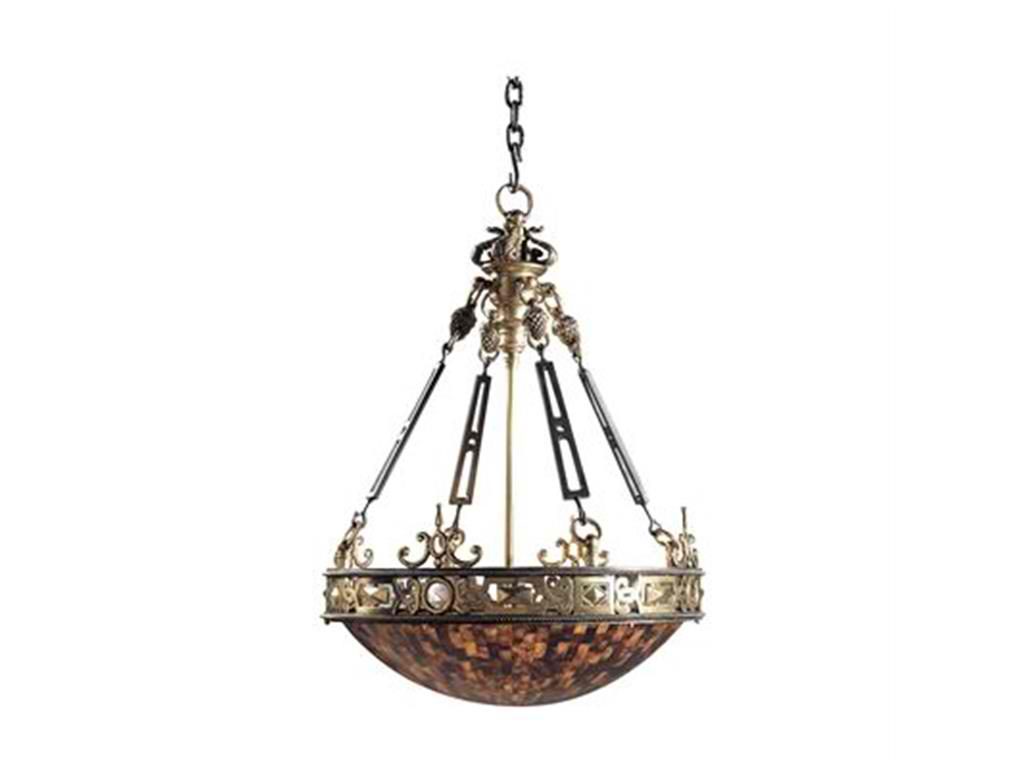
Maitland-Smith Lamps and Lighting Finely Cast Brass, Iron And Penshell Empire Chandelier 1954-010
Picking the Right Chandelier
There are many things that you need to consider when purchasing your first chandelier. Think of materials, different sizes, and light emission when you are out to determine the best chandelier for your room.
There are horizontal and vertical sizes. Know that buying a large fixture could mean an overwhelmed space. Purchasing one that’s too small, though, means it could look insignificant if not unremarkable.
The size and design of the chandelier will also eventually affect the way the fixture will be hung. If you want an elaborate chandelier that would be hung inside a spacious dining room, for instance, then be sure to take the time to do some measurements.
Hold a tape measure to a height that you think would work for your chosen chandelier. Here are some general guidelines –
The length by which a chandelier must hang is dependent on the height of the ceiling. The bottom part of the fixture must not hang more than seven inches from off the floor. If there are windows, then be sure to put the chandelier at the center where it can be seen from the outside.
The Correct Chandelier Materials
Since chandeliers easily become the focal points in room, then you must know what sort of materials would enhance the room. Candle and crystal combinations make the most nostalgic visions. Glass and crystal, on the other hand, are quite popular in the creation of romantic settings. They are also indicative of wealth and luxury.
The use of antler chandeliers brings to mind those days past when life was simple and lighting was as basic. The rustic design that these offer are perfect for log cabins and those rural lodges; they are also great for a more antiqued look.
You can also invest in metal chandeliers. These come in wrought iron, brass, steel and silver. Add some stones, shells, beads and Capiz and you’d have achieved a fancy lighting piece. Metal chandeliers often look great in modern and contemporary homes. The less ornaments used, the more fitting the lighting fixture is for a modern setting.
Be careful in choosing the colors of your chandeliers. The most famous finishes now are black, gold, silver and brushed bronze. There are also neutral-colored pieces that would easily suit your design scheme.
Tags: accent light, accent lighting, ambient light, ambient lighting, chandelier, chandeliers, designing with chandeliers, home lighting, lighting fixture, lighting interiors, McCreerys, McCreerys Home Furnishings, use of chandeliers
Posted in Interior Design 101, Interior Design Elements, Lighting | No Comments »
Friday, September 16th, 2016
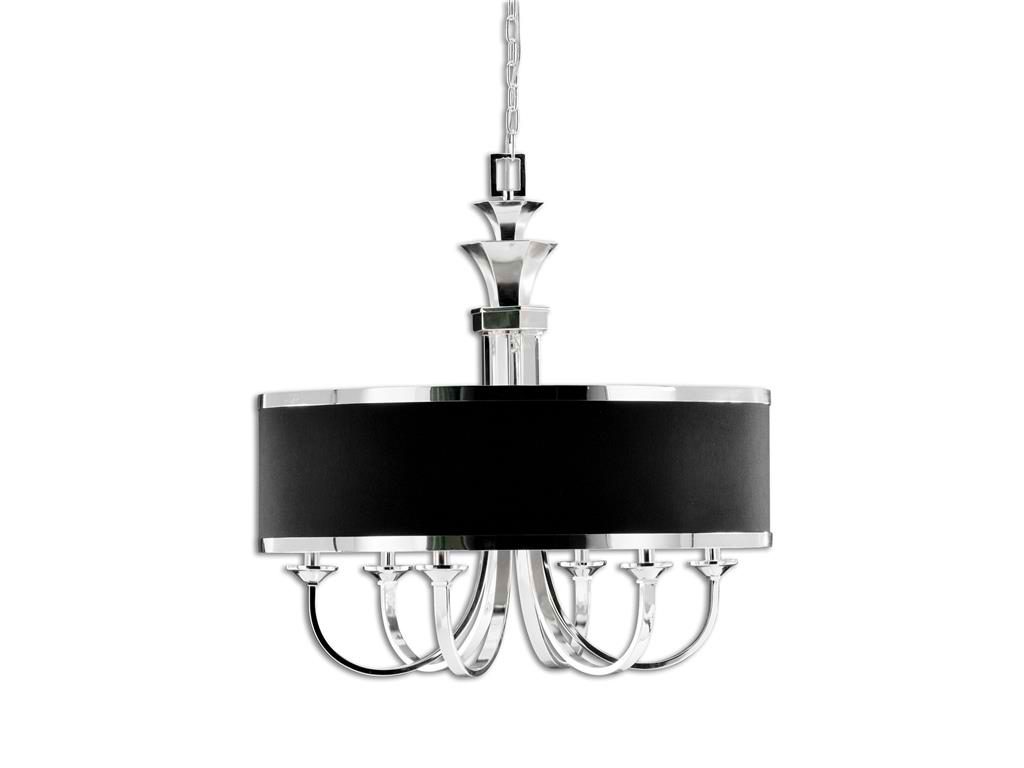
Uttermost Lamps and Lighting Tuxedo, 6-Lt Single Shade Chandelier 21130
The mere mention of the term chandelier makes one think of class and sophistication. This is that ornate lighting fixture which is just as much decoration as it is a lighting source. Most of the ideas from the ancient times still haven’t changed although those that did were marvelously welcomed.
The word chandelier originated from a French term, chandelle, which literally means candle holder. In the beginning that was the original function of this lighting fixture. Historically speaking, the first batch of chandeliers appeared on the 14th century. There were no frills during that time, design-wise. In fact, the chandeliers then were so simple that all it took to design them were two wooden beams that formed a cross. This cross had a spike at its end that held candles.
Structures that needed chandeliers back then were abbeys, churches and other large gathering areas. The cost of chandeliers could only be afforded by the wealthy. These were the only people who were able to buy and maintain such pieces.
After the candle era of the chandelier, it welcomed gas lighting which led to the birth of gasoliers. It was during this time that chandeliers were slowly converted into gas holders rather than candles. This trend continued till the advent of electrical lighting.
But those days are long gone.
Chandelier History Continued
As production and materials greatly improved over time, so did the look and ornate nature of chandeliers. Materials were no longer limited to metal or wood; other options now include glass, crystals, etc. These lighting fixtures are now even considered as art. They are also status symbols; with the more intricate ones seen to be more sophisticated.
Interestingly, chandeliers are now bigger and more extravagant. Most of the time, the emphasis is no longer just on illumination anymore. Lighting designs have become so artistic that form has taken over function many times.
But, once again, those days are slowly coming to an end.
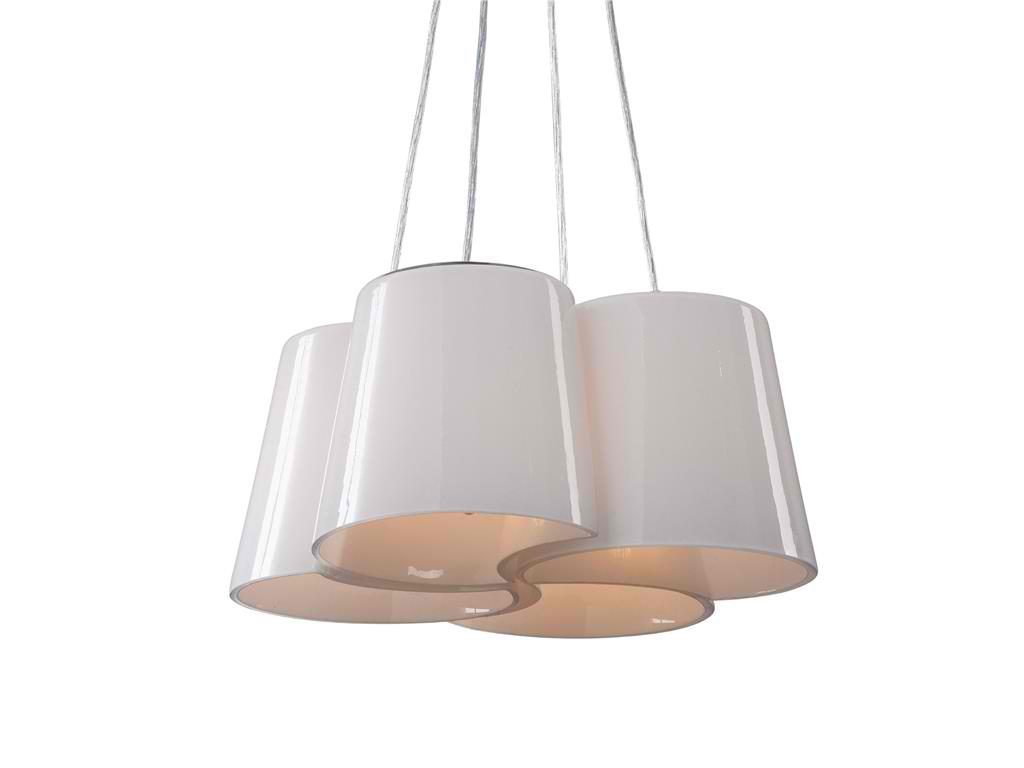
Lamps and Lighting Uttermost Botanic 4 Light Milk Glass Chandelier 21271
Modern Chandeliers
These days, the function over form concept is, once again, being embraced. Rooms are made extra special not solely because of the chandelier’s beauty but more of its achieved function. Modern chandeliers come with the needed lighting for dining rooms, living rooms, even bedrooms. They also still come with that wonderful glow that adds an extra appeal and character in those rooms.
One of the major characteristics of chandeliers these days is versatility. Wherever you place them, they are out to beautify and fulfill their lighting duties.
Modern chandeliers come in different colors, shapes, sizes, styles and patterns. There is also a wide array of materials that you could choose from. Crystals may be the most common design pattern nowadays but one cannot discredit the beauty of glass and metal chandeliers. There are even those that come with faux candles and other such interesting designs.
Home lighting has never been this interesting but just make sure that you get the proper one for your home. Get one that’s too small and it would look like an eye sore there, one that’s totally out of place. Buy a humongous one and you’re left with an overpowering lighting fixture.
Proper sizing is a crucial factor if you don’t want to commit these mistakes. Take the time to measure the height of the ceiling down to the floor. See also if the chandelier is going to be placed above the dining table or the center table in the living room. Make sure that you leave enough room between the furnishings and the chandelier.
Balance is the key to handling the modernized chandelier so be very careful in making your choice.
Tags: accent lighting, ambient lighting, chandelier, designing with chandeliers, general lighting, history, history of chandeliers, home lighting, improving home lighting, interior lighting, lighting types, McCreerys, McCreerys Home Furnishings, tips, types of chandeliers, use of chandeliers
Posted in Interior Design 101, Interior Design Elements, Lighting | No Comments »
Sunday, June 19th, 2016
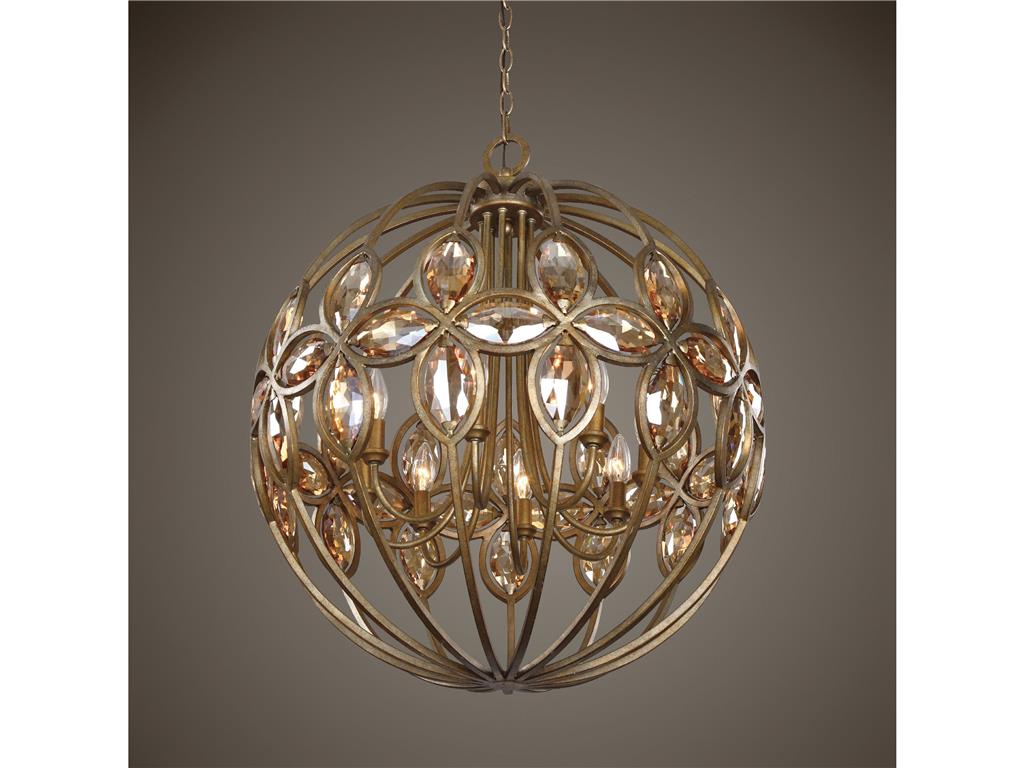
Lamps and Lighting Uttermost Ambre 8 Light Gold Sphere Chandelier 21269
One of the chief elements in a well-designed space is lighting. How you light the space in your home reflects how you and other people perceive it. Since lighting is that important, then it just makes sense that you should put ample time in deciding what sort of light you would have for your home. When you mulled over what you want, has your mind ever come across the decorative chandelier? Or are you, just like the others, afraid of using it?
A Design Element of Its Own
The chandelier might just be the right finishing touch that you are waiting to have. It can be rustic, modern, Mid-Century, and just about anything. If you want a timeless look, nothing beats the classic glass or crystal chandelier.
The chandelier can be a scene stealer. They are a great addition to any room but if you don’t know how to handle this decorative lighting’s strong presence, your space might end up looking pretentious.
First, know the size of the chandelier that would fit inside the room. This can present a few setbacks but measuring can eliminate future problems. The right size of chandelier can be computed by adding the room’s dimensions (in feet) and then converting the sum into inches. Your answer should be the same diameter that you would use for the fixture (e.g. a 10’x 15’ room measurement should equate to 25” in diameter.
Consider also the size of the dining table (if you are placing your chandelier inside the dining room). The dining room fixtures’ diameter must be approximately ½ to 2/3 the table’s width. This could be about a oot less than the table’s width (at its widest part).
It is also advisable to use a large chandelier even in a small dining room. Should the fixture appear too large, then be sure to hang it closer to the dining room ceiling. This is so it won’t overwhelm.
Now that you’ve recognized the Do’s, it’s time to find out what the don’ts are. First, no furniture should come close to the chandelier. The minimum amount of distance between the lighting fixture and the furniture should be 48 inches.
Remember also that the chandelier has visual weight. This means that visually heavy chandeliers can be light when carried but the smaller ones could be a tad heavier. Just to save you from measuring the room size all over again, here are the standard measurements –
Whether your taste is mainly traditional or contemporary, there is a chandelier that would suit your needs. You just have to learn the general rules above plus some hanging procedures.
The rule of thumb in hanging chandeliers for dining rooms is that the bottom part of the lighting fixture should hang at 30” to 36” from the tabletop. This is assuming that your home has an 8’ ceiling.
There are designers who recommend that every additional foot on height for the ceiling should be an additional 3” to the chandelier’s suspension height. Not all designers agree, though. There are also those who feel that the height of the ceiling should not, in any way, affect the fixture’s distance from the tabletop. Should you choose to follow the second case, then the best thing to be certain about the chandelier that you’re going to buy is to move it up and down as you prep to install it. You and one other family member can go about with this simple project. Just move the chandelier up or down till you reach the height that you feel is perfect.
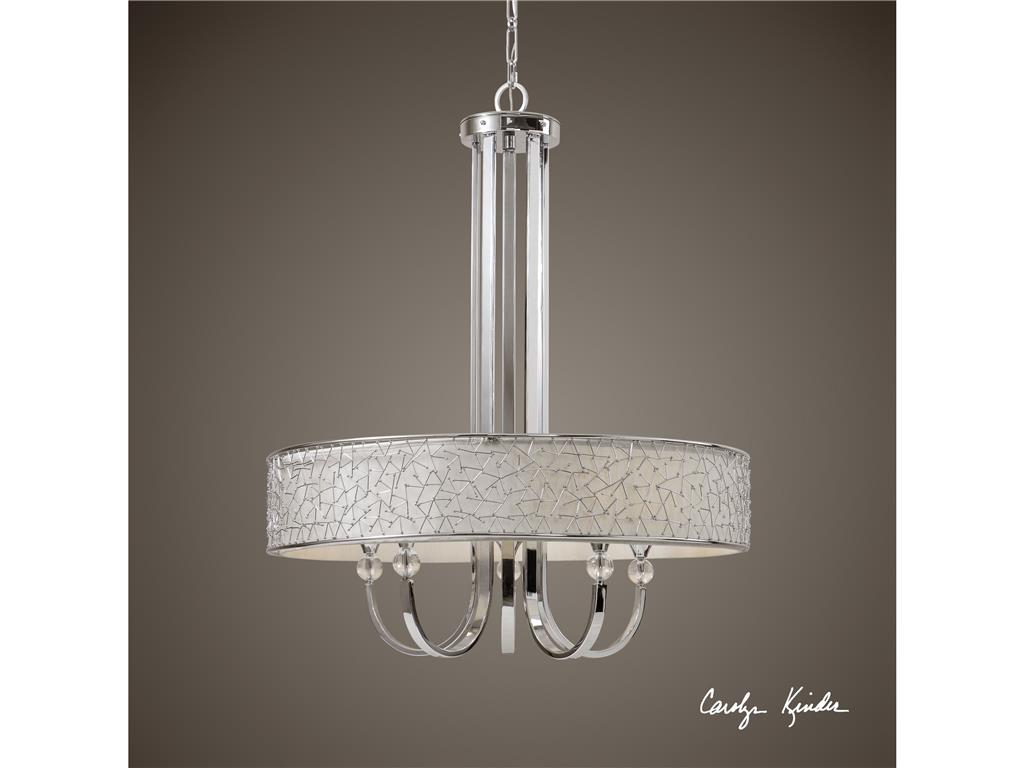
Uttermost Lamps and Lighting Brandon, 5 Lt Single Shade Chandelier 21233
Tags: chandelier, designing with chandeliers, installing chandeliers, McCreerys, McCreerys Home Furnishings, use of chandeliers
Posted in Interior Design 101, Interior Design Elements, Lighting | No Comments »
Follow us on our social media


© McCreery's Home Furnishings | All Rights Reserved | Privacy Policy
