- Follow us:


Friday, April 20th, 2018
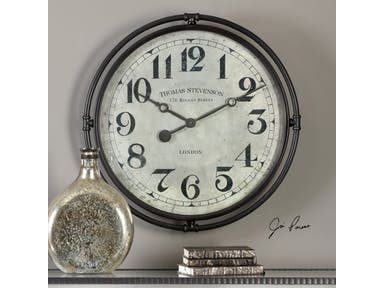
Accessorize with this industrial Uttermost Accessories Nakul Industrial Wall Clock 06449.
Industrial design rooted from the need to have safety and efficiency in terms of architecture. Just recently, this style has become iconic insomuch that people rushed to search for old buildings such as warehouses and factories. This sudden demand for industrial spaces welcomed the trend for industrial chic.
The first industrial structures, these days, are many sought-after locations for weddings, company events, and other such occasions. These structures were, of course, originally meant to protect workers and house machines. Yet people are not deterred by the aging columns, distressed walls, and old pipes; each buyer seems to be able to see the stories that are represented by the imperfect buildings.
A Short History
The late 1700s were the years when the first industrial structures were built. These were meant to be utilized as working structures. But with the advances in electricity, engineering, and architecture, these have long since been used for more than their utilitarian value.
Industrial structures originally have zero frills. These were, after all, buildings that are supposed to facilitate work. Fear of fire became prevalent during those years, too, that flat roofs were recommended and owners were discouraged from constructing attics.
This unfinished, raw look is what now characterizes the beautiful industrial chic homes of our time. Exposed bricks, ductwork, and pipes are all but common features in industrial chic homes.
By the 1900s, bigger spaces were needed because of the advent of new energy sources. Steel and concrete then became the new go-to materials for industrial buildings. These structures are now more in line with what you see as an industrial home today.
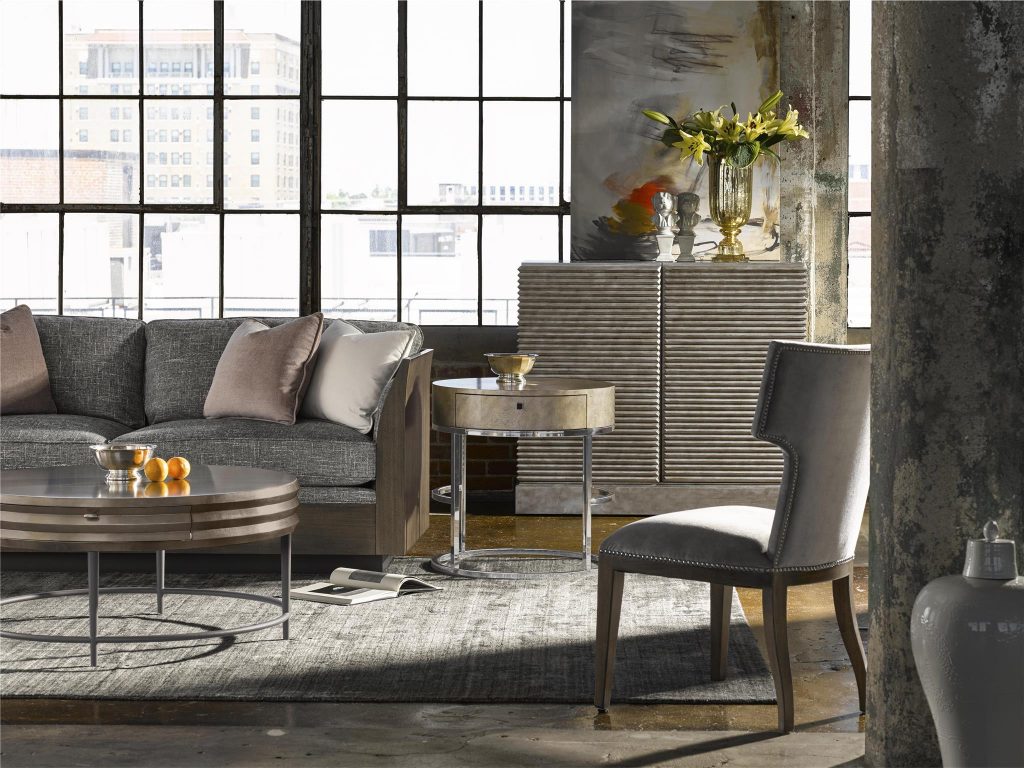
Fine Furniture Design’s Cachet Collection sits perfectly in this industrial building.
Old Factories, New Homes
Majority of industrial buildings have no walls to block natural light. These are, therefore, easily repurposed as Lower Manhattan and New England homes. It was during the late ‘60s and ‘70s when these spaces were renewed and were reclaimed by artists due to their abundant lighting.
Interior designers have long since caught up. They have successfully glamorized industrial chic because of its renewing and reusing characteristics. The defining features of such homes are now the open lofts as well as the exposed structural details.
Industrial chic is one of the few designs that can perfectly blend with any style. It can be traditional, modern, rustic or elegant. Industrial chic is not cold but neither is it too warm. This is the right style that effortlessly strikes a balance.
Remember to include elements such as metal, bricks, and reclaimed wood in your industrial chic home. The very building which your home is was made to celebrate perfect lighting, open floor layout, and accommodate large social hubs.
Industrial chic can also be masculine once the steel, concrete, and bricks are not softened. The steady rise in industrial chic space demands has risen up with the ever-rising concerns for gender neutrality. It is now easy to see neutral elements such as Edison bulbs, reclaimed wood flooring, ceremony altars, factory windows, and doors.
Other Industrial Chic Key Traits
Industrial chic is all about proudly displaying the building materials that were used to construct the building. Loft apartments, commercial spaces, and modern homes make use of these past utilitarian spaces.
The warehouse look proudly shows the exposed ducts and pipes and other such raw elements. It is also common to see metals on walls as a feature of an industrial chic home. Those who long for this look may also incorporate metallic furnishings. Polished metals as shelves, as well as feature metal brackets, are features that you can also use.
It is also okay to combine metal with wood surfaces. You can see a plethora of this fusion throughout the more subtle industrial chic homes.
Tags: industrial, industrial chic, industrial design, industrial interior design, industrial structures, industrial style, McCreerys, McCreerys Home Furnishings
Posted in Interior Design 101, Interior Design Elements, Interior Design Themes | Comments Off on From Building to Industrial Chic Home
Friday, December 1st, 2017
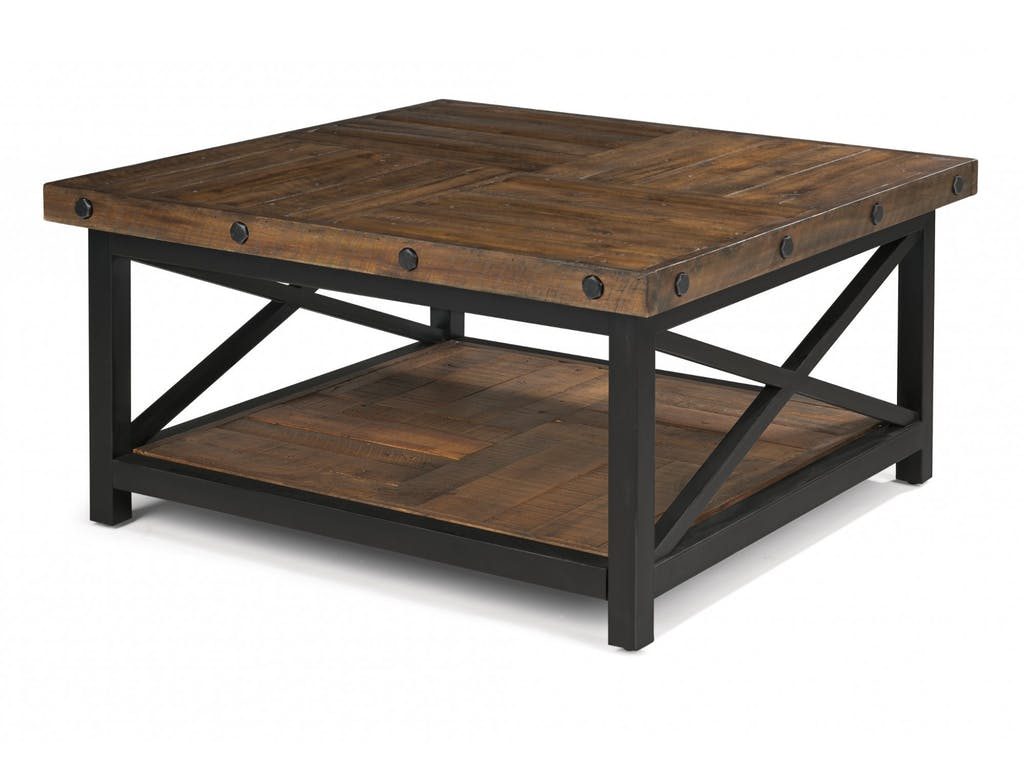
The Flexsteel Living Room Square Coffee Table 6722-032 mirrors the exposed beams as well as the sturdy steel parts of an industrial structure.
There are two words that you need to remember when wishing to create industrial chic style – safety and efficiency. The word industrial, after all, exudes functionality and something of an icon. While it may constitute abandoned or forgotten warehouses and factories, all these structures still show stability and durability.
Lately, industrial spaces have slowly been becoming the most in-demand locations for events and modern dwellers. While you may have just encountered the term industrial chic, it was not born last month, in fact, it’s been around for years.
These days, industrial buildings are famous locations for the biggest parties, social events, and special occasions such as weddings. Since these structures were originally made to house the biggest types of machinery and hundreds if not thousands of workers, turning these spaces into a social hub has been a natural thing.
Communities today even want to appreciate the rich history of each industrial structure. It’s alright to see distressed walls, worn flooring, and aged pipes. These are all the scars of a decaying structure yet they have grown to be loved by a new breed of dwellers.
Industrial Architecture History
Industrial buildings were first created in the late 1700s. These were utilitarian by nature. Back then, large windows were built so that natural light could flow in. Of course, electricity was not discovered till the late 1800s so the use of natural light was indispensable.
Safety soon had a major influence on the architecture of that time more particularly the mill factories. Fire was prevalent which led to the actions made to reduce the dangers of such occurrences.
Insurance companies began to fashion safer industrial structures. Attics were finally discouraged and flat roofs took their place.
Reclaiming Old Warehouses and Factories
You can expect few to zero walls inside industrial buildings. And since there is an abundance of windows, you will also receive a lot of natural lighting.
In the late ‘60s till the ‘70s, these structures were slowly being renewed. The spaces in Lower Manhattan and New England were especially targeted by artists and unique homeowners. While these were initially reclaimed as studio spaces, such open structures soon caught the attention of interior designers.
Not long after, industrial chic was born. Each of these spaces was finally renewed, recycled, and repurposed into open-space lofts that offer exposed details. These characteristics were the very things that made industrial buildings famous and sought-after.
Industrial chic is also oozing with style. It can blend perfectly with traditional or modern designs. The bold features, as well as the clean lines that come with the structures, act as the needed contrast to whatever needs a counterpoint.
Industrial chic is welcoming yet it is not too cozy. There is a perfect balance in this kind of interior design.
Expect to find a lot of metal, bricks, and wood which would glamorize the interiors of this structure.
Industrial Chic: Moving Forward
Now that you know the rich history and the current following that industrial chic has, it is no surprise that this style has more to offer.
Industrial spaces continue to dominate the scene during birthdays and weddings. The open floor plans are perfect for the many guests and the long tables. And who would be able to resist the masculinity of the bricks, steel, and concrete as they blend beautifully with the femininity of the lace, ribbons, candles, chandeliers, and ornate furnishings during such occasions?
If you like to borrow this look into your home, then prepare to use bricks, concrete, metals, and exposed wood beams.
Just highlight the simplicity and reliability of the design then soften these with your personal touch. The warm yet welcoming look is easy to achieve if you mix the contemporary with the industrial elements.
Tags: industrial, industrial chic, industrial chic interior design, industrial chic interiors, McCreerys, McCreerys Home Furnishings
Posted in Interior Design 101, Interior Design Elements, Interior Design Themes | Comments Off on Uniquely Industrial Chic
Follow us on our social media


© McCreery's Home Furnishings | All Rights Reserved | Privacy Policy
