- Follow us:


Thursday, February 28th, 2019
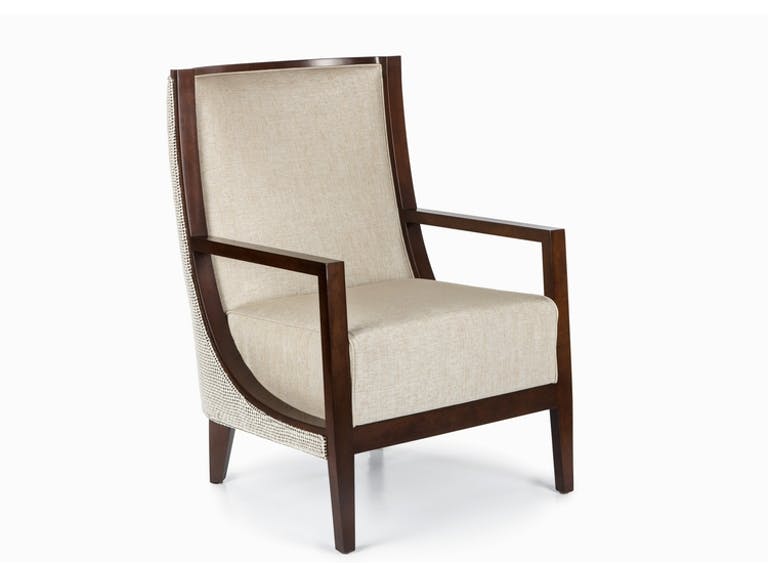
Add the Hancock and Moore Living Room Window Chair for an even more appealing window setup.
The room’s ambiance can greatly improve with the window treatments that you use in your home. Adding light or downplaying it can also add to the formality or casual look of the space.
Sheer Curtains
You should primarily ask yourself whether you need light control or privacy. If you are dressing up a bedroom window then you might want to look for semi-sheer curtains. During daytime, this should provide you with enough shade from the heat of the sun while, at night, it can give you your needed privacy.
As early as 3100 BC up to 3rd BC, Egyptians used curtains made from animal hides. These were hung on doorways using hooks. Through the years, these curtains became spun textiles (made of linen or flax, then silk, wool and cotton).
During the Renaissance era, curtains brought color and life to the lives of everyday people. While the functions of curtains then was also to provide privacy, they did not look anywhere near the designs of curtains that we have today.
Roman Shades
If you have a view that’s not so attractive but you are in dire need of natural light, you could invest in roman shades that you could install to distract from the awful view. This, however, will allow ample light to still pass through.
But did you ever wonder why Roman shades aren’t just referred to as mere shades?
Its origins point all the way to the Roman times when households hung wet cloth over the windows to keep the dust, dirt, and debris from entering their homes. Nearby, the Roman Colosseum was then being constructed.
Pretty soon, they began decorating ornate clothes with lovely patterns to provide a stylish look to their bare windows. Even after the construction of the architectural wonder, the window treatment already stuck.
Solar Shades
These are referred to as the window sunglasses because of their opaque look. Using solar shades allow you to maintain the beauty of the outside view while offering ample light control.
The openness factors range from 3% to 14%. You can pick the higher percentage if you want to have more light to come in.
Wood Blinds
We go back again to the Egyptians who strung reeds to create blinds; the Chinese, on the other hand, picked bamboo. The Persians were the ones who introduced the blinds to the city of Venice, hence, from there, the Venetian blinds became renowned.
It was Edward Bevan who got the first patent for these blinds. Thomas Jefferson was also believed to have a spot for these window treatments. He loved them so much that he included them in this last will and testament.
It is not difficult to figure out why wood blinds continue to appeal to homeowners all over the globe. There are now aluminum blinds, vinyl blinds, motorized blinds, and solar shades. There are even mini blinds for the tiny windows that you have at home.
Woven Shades
There are also window treatments that are made of woven wood. The variety of materials include reeds, grasses, and bamboo. These are beautiful because they come with delicious textures.
These add a natural, casual feel to any space. You can easily add liners if you want to keep the privacy in a room. You can also customize the woven wood according to your preference.
Pleated Shades
This type of shades are made using one piece of fabric. Pleats are then added which easily stack and collapse as you slowly raise the shades. The slats provide your home with a semi-sheer and casual look which brings in ample light but in a filtered way that won’t hurt your eyes.
Tags: McCreerys, McCreerys Home Furnishings, types of window treatments, window treatment, window treatments
Posted in Accents, Interior Design 101, Interior Design Elements, Window Design | Comments Off on What’s Your Choice of Window Treatment?
Tuesday, December 26th, 2017
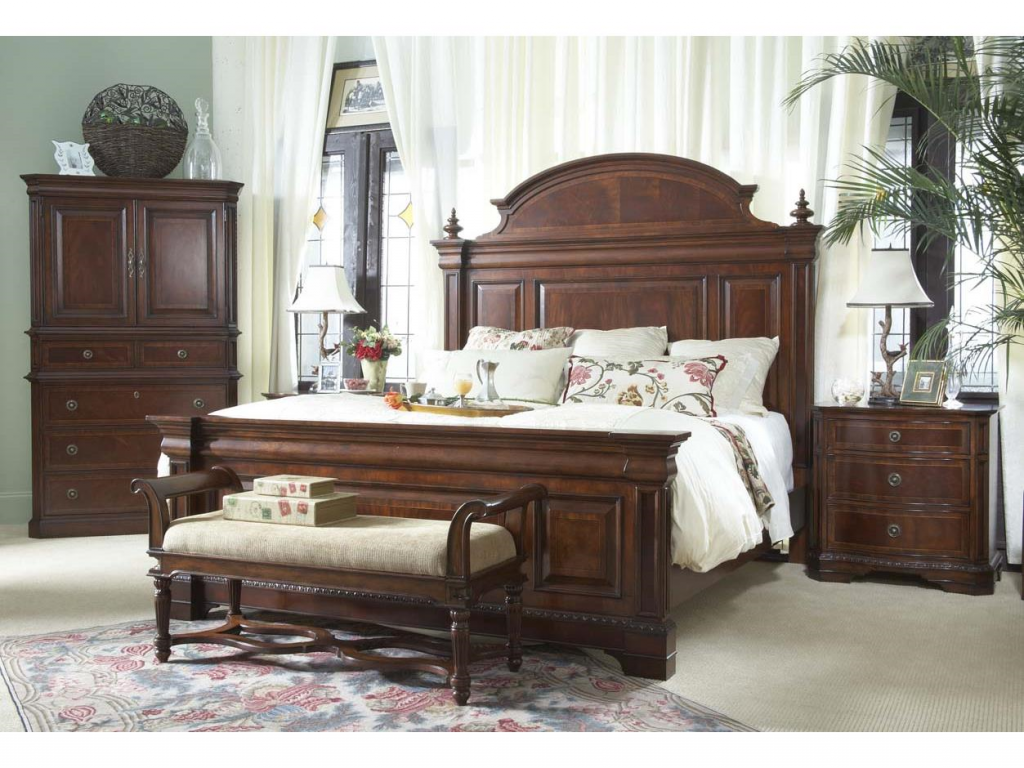
The choice of window treatment for this bedroom is sheer and flowy. You just got to love this King Mansion bed from Fine Furniture Design’s Antebellum Collection.
Window treatments often come last in a homeowner’s design project. Yet they have functions that no other furnishing will be able to replace. Drapes also have a way of tying together a room as their prints and patterns draw the eyes whether to emphasize vertically or horizontally.
But do you know how to begin dressing up your windows?
Now, don’t think of styles or themes for a moment. Remember their function and you will be able to limit your options. If you want drapes, for instance, that provide darkness or privacy, then you will be in need of lined curtains.
If you want to have a little light filtering into the room then you simply need curtains that are decorative and unlined.
Lining comes at a cost but it also comes with greater advantages. This can shield the fabric from being damaged by the sun. Its purpose is to make your curtains last a long time.
The lining is also there to add heft so that you are protected from drafts while having the curtain flow more luxuriously.
There are also curtains with interlining. These are those layers of flannel-like fabrics that are sewn in between the front part of the curtain and the lining itself.
Choosing the Color and Fabric
First, think about the mood that you would want to evoke in the room. If you want a more formal space, then you would need materials like velvet or silk. Both can be dry cleaned.
If you want the washable options because they are more practical, then you can always go for the silky rayon blends as well as the cotton sateen.
For a more casual atmosphere, there are billowy linens and the crushed velvet. Cotton blends and cotton can work with any kind of décor. These can bring a neat look. Wool and wool blends do the same, too.
You now would need to decide if you want the window treatments to blend with the rest of your decorative element or if you would want them to become the center of attention.
If you want to blend, then find curtains that come with the same tone as the walls but just a few shades darker. You can also pick a non-dominant hue which comes from other elements in the room such as an area rug.
Now here’s a simple rule to remember when it comes to patterns and prints – if you have patterned furniture pieces or bedding, then you must go for solid-colored curtains. If, on the other hand, you have solid furniture, then you can choose curtains with interesting patterns such as paisley.
Choosing the Length
The best way to go is to have floor-length curtains. Of course, if a radiator is on the way, you have to consider that, too. There are ready to use panels that come in 63 to 144-inch lengths. Be sure to measure from the floor up to the point where you will hang the rod.
Your curtains can always be hemmed when needed. Remember that short curtains look off or nerdy. For a more classic look, go for curtains that hit the sill or floor.
Panels that reach the floor by 1-3 inches are stylish also. They are more relaxed, though, compared to the traditional floor-length curtains. If your floors are uneven and you’re worried about the accuracy of your measurements, then this style can be more forgiving.
Choosing the Width
The key is to have panels that look filled or ample. The drapes must also be drapey. The combined width should be about 2 to 2.5 times the window’s width. The only exception is when you’re hanging curtains that are there to frame the windows and you have no intentions of shutting them.
If you’re installing pleated panels then consider that they come with built-in fullness so their width should be sufficient to fill the entire span that you intend to cover.
Tags: curtain, curtain design, curtain styles, curtains, McCreerys, McCreerys Home Furnishings, window treatment, window treatments
Posted in Accessories, Interior Design 101, Interior Design Elements, Window Design | Comments Off on What Are Drapes For?
Wednesday, June 14th, 2017
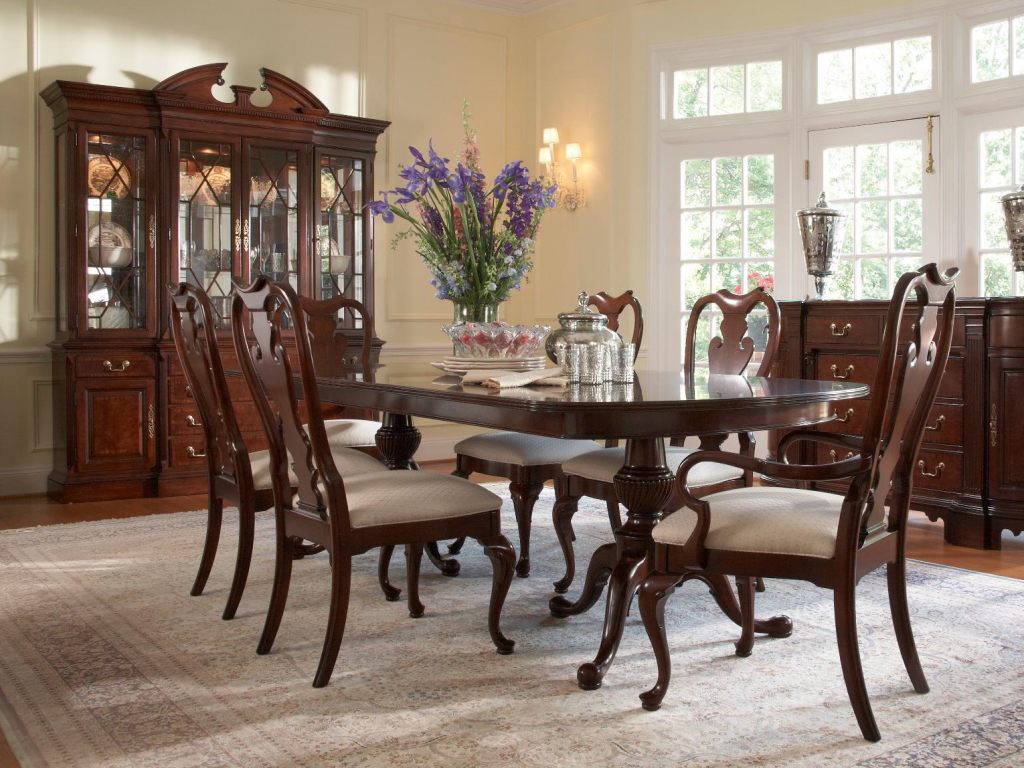
American Cherry Collection: How would you prefer to dress up these windows? Or, just like this setup, would you like ’em bare?
There are different kinds of windows in every home. Windows are architectural elements that allow natural light to come into the rooms during the morning till the afternoon (well, this depends on what side of the house the window has been placed). Windows also allow air to circulate freely, hence, your home feels and smells fresher and drier.
But do you know what kind of windows you have in your home?
Transom Windows
This is a narrow window that is either stationary (non-operating or operates to let in air. This is often installed above another window or a door.
To dress this kind of window, install tension rods that recess to the frames along the top and bottom parts of the window. Use sheer curtains specifically measured to the size of your transom window.
The Double-Hung Windows
This kind of window comes with two sashes which slide up and down. This can be opened wide either from the top or bottom. The sashes remain in the frame so they do not jut outdoors or in your home.
Use blinds, draperies or curtains according to your room requirements but make sure to open the windows during the day. This should allow more light and fresh air to come into your home. Even a window film would work to create a more customized look.
A single-hung window opens up at the bottom part only.
The Picture Windows
There is a wide variety of stationary windows that let in a huge amount of views and light coming from the outdoors. This is typically made of a single pane of glass and is often installed in the living room. Many modern homes, though, have used this kind of window in their bedrooms. Remember those bedroom windows in Twilight the movie?
Okay, you don’t have to be a vampire and not be able to sleep just so you can enjoy this sort of window. You just have to know how to properly decorate it so that you would be able to sleep when it is time for some shuteye.
Since this window is made of glass, you can have some blinds set up. For a softer touch, use Roman shades.
The Awning Windows
Awning windows are hinged at the top part and they open outward. This is so air is allowed to come in either at the right, left or bottom part of the window. These can be installed below, above or alongside an operating or stationary window.
Whatever window treatment you use for the stationary or operating windows, then that’s the same one that you also use for your awning windows.
The Casement Windows
These are hinged windows that open up when you turn a crank. These can be hinged either to the left or the right. They also open outwards.
The Slider Windows
These, as their name suggests, glide along a track. They are used in many contemporary or modern homes.
Leave this kind of window bare as its main purpose is to let in some light. For a little privacy, you can use sheer curtains especially during the summer.
The Stationary Windows
These never open but they can be made in any shape or angle that you require. These are also common in many contemporary and modern homes.
Since this kind of window – just like the slider window – almost always allows in some light, then it is best to leave it bare. If they come alongside operating windows, then have some light curtains installed.
The Bow or Bay Windows
These windows generally allow more interior space since they protrude outwards. They are a fusion of windows often with one stationary window right in the middle. The negative space in this kind of window can be used as a secret storage area.
This is the classic type of window that best displays thick draperies.
Tags: decorating windows, McCreerys, McCreerys Home Furnishings, types of windows, window treatment, window treatments, window types
Posted in Architectural Elements, Interior Design 101 | Comments Off on Accessorizing the 8 Window Types
Tuesday, October 4th, 2016

Accessories Uttermost Rogero Squares Wall Art, S.6 04027
How many times have you marveled at a beautiful architectural detail? This could be from elegant chapels or rustic museums, or it could be from a colleague’s home; no matter where you saw that architectural detail, it left you with an awe-inspiring vision that’s hard to ignore.
The most common architectural details that you notice are ceiling beams, custom cabinetry, wall paneling, arched doorways and mantels. Any home that has one or more of these architectural details look instantly grand yet amazingly cozy at the same time.
The most beautiful architectural elements are interesting as well as beautiful to look at. Instead of going through labor-intensive interior design projects, why not try to achieve these architectural changes first?
Hang Draperies High, Very High
Don’t call that painter just yet. One way to literally change the look of your home is just to hang draperies way, way up. Hang the drapery rods high above the windows, right below the ceiling line. This should immediately draw the eyes towards the upper part of your home; doing this will render windows that are seemingly grander.
Window Casings Before Crown Molding
If you have rooms that do not have casings or those moldings all around the windows, then make sure to have them made. Prioritize these window casings over crown moldings. The latter are great but it won’t solve every design problem that you are craving to solve. Crown molding may be the go-to solution of most homeowners but this shouldn’t be so. If these casings are non-existent in your home, then it’s time for an upgrade. Remember that the windows fall just on your line of vision so it is a crucial part of your living space more than the ceiling line.
Home depots can help you with the sawing and precise measurements. One alternative is to have a professional do the work for you.
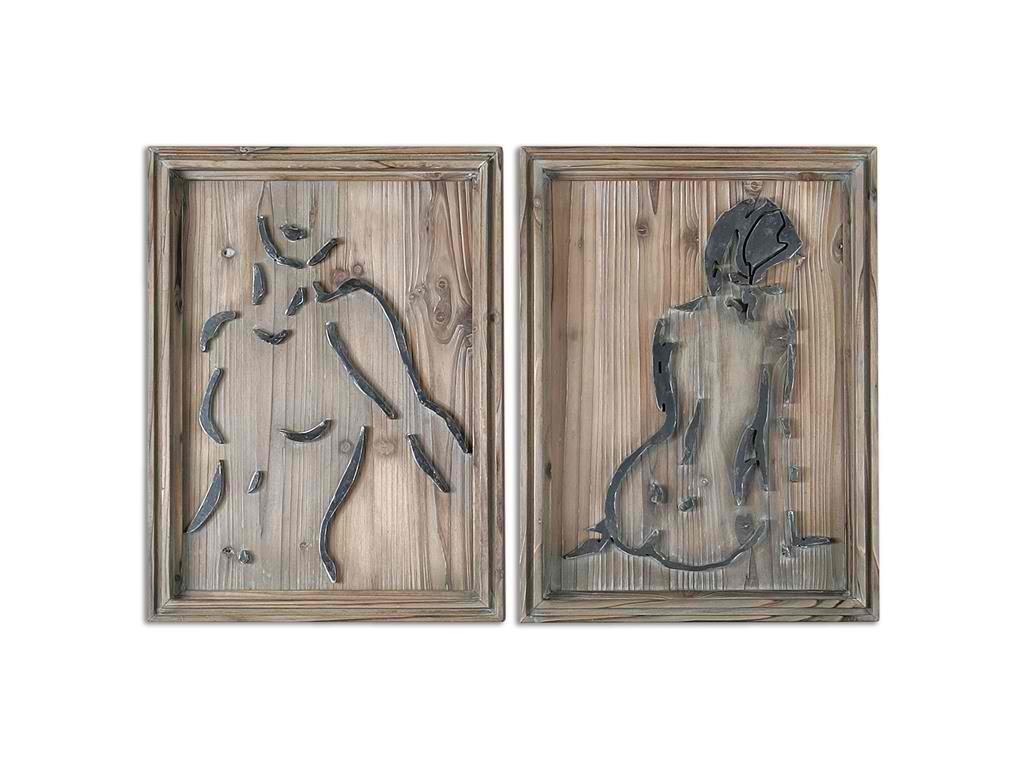
Accessories Uttermost Silhouettes Wood Wall Art S2 07690
Install a Faux Wainscot
This is a method that gives a plain wall a tad of visual interest. Measure then choose a flat, chair rail molding. Apply this at about a third of the wall from off the floor. You can then proceed to paint the rail molding using the same color as the top or bottom part of the wall. Use a contrasting color at the opposing top or bottom.
Don’t make this look like an amateur’s work, though. Just keep the design simple and make sure to begin with a small room such as the hallway or the dining room. Use any neutral color palette. Don’t make the mistake that others make by picking a color that’s too bright.
Hang Wall Art
Using simple frames around artworks or photos offers the kind of visual interest that is often seen on doorways as well as windows. Amp your wall art by creating interesting groupings on huge walls. Mix and match different frame styles but make sure that they coincide with the theme that you chose whether that’s traditional, ornate or modern.
Use Faux Brick Panels
What could be more fun than architectural brick panels? You would do well to have them in your home. There are faux versions that are now being sold in the market, which means, you can now convince your visitors that you have installed brick panels in your home. Apply a coat of paint to make the brick look more convincing. Installing these panels on a single wall can take about one hour plus the needed paint time.
‘Hope these tips in adding architectural details to your home were of help. Again, always keep your designs simple so that you would do less cutting, painting, and finishing.
Tags: art, McCreerys, McCreerys Home Furnishings, tips, window treatment
Posted in Architectural Elements, Interior Design 101, Interior Design Elements | No Comments »
Wednesday, June 22nd, 2016
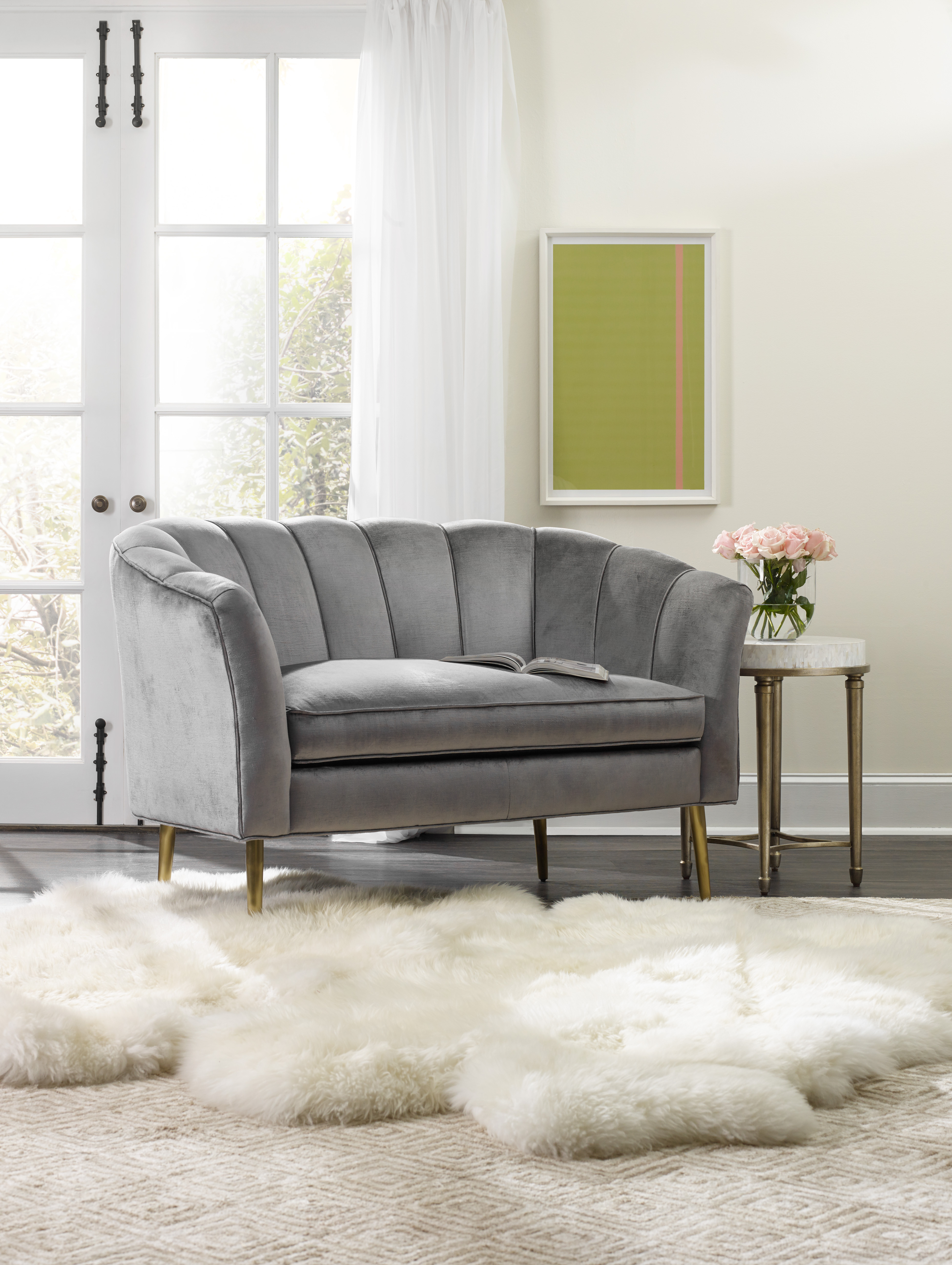
6002CR Gigi Settee 1586-80116-MULTI Aura Round Accent Table with Shell Top: The white, sheer curtains let natural light stream in, making the room appear airier and brighter.
Would you want to boost the look of your home? Most of the time, homeowners look into having walls torn down or painting an entire room but, at times, changing the look in your home is as easy as putting the right window treatments. Be inspired by beautiful drapes, valances, shades and curtains. Experiment also with other kinds of window treatments by learning about other terms such as Roman shades, balloon shade, box-pleat valance, and more.
Did you know that the kind of fabric used in a window treatment is just as crucial as the design of the treatment itself? Window treatments come in all sorts of materials from sheer, to bamboo panels, and silk. They also have different functions though, primarily, they are used to dress up the windows and provide a little (or a lot of) privacy.
Okay, now that you know the basics, your priority is to choose a window treatment that would provide the function that you require. Would you want to have some privacy but still have ample light during the day? Or would you want to have a decent shuteye and have the window treatments drawn while you take a rest?
Semi-Sheer Window Treatments
Family rooms and living rooms almost always require a good amount of privacy. The kind of window treatment that you use also hugely depends on the number of windows that a room has.
Natural light brightens a room during the day so you can make use of a semi-sheer curtain to allow the light into the room. Be sure to choose the thickness of the fabric well. Find one that allows light to pass. If semi-sheer still doesn’t work for you, then find an ultra-sheer one.
Draperies
A bedroom that is situated on the ground floor requires less privacy than the ones upstairs. Both types of bedroom require natural lighting, though. What you need to cover these rooms are draperies. This floor-to-ceiling window treatment offers ample privacy and enough shade if you don’t want the light streaming in.
‘Want some light again? Then just have the draperies drawn and – voila – you can enjoy the sunshine once more.
Use a track for floor-to-ceiling draperies or find a rod that suits the style of your bedroom.
Cellular Shades
A lot of bathrooms, especially the ones on the first floor, require utmost privacy. A cellular shade is a kind of shade that allows anyone to walk around unseen while still allowing a lot of light in. This kind of window treatment is manufactured with a honeycomb design so that heat stays in while the cold stays out.
Roller Shades
This kind of shade can give you the needed privacy from closely-situated neighbors. It is an easy-to-install type of window treatment that comes with perforation so that light is allowed to filter through.
Roller shades can also be hardwired so you can manipulate it using a remote control. This is most useful in hard to reach areas such as when you are in the tub.
Shutters
These are what you would want if you require a complete light block out. This is a window treatment that can blend seamlessly to the creative atmosphere that you have already set up. Have it installed with solid center panels so you can block out light. These will come in handy when your guests require total relaxation even after the sun comes up.
Stained Glass
Having a lot of windows around the front door can be an aesthetic blessing especially when you decide to install stained glass instead. This kind of window treatment will instantly become a focal point while keeping your home free from the prying eyes of passersby.
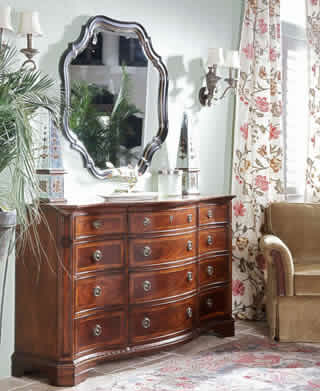
FFDM’s Antebellum Collection: The floral curtains give the perfect balance to the earthy, grounded look inside the room.
Tags: decorating windows, how to use window treatments, McCreerys, McCreerys Home Furnishings, types of window treatments, window treatment, window treatments
Posted in Accents, Interior Design 101, Interior Design Elements, Window Design | No Comments »
Follow us on our social media


© McCreery's Home Furnishings | All Rights Reserved | Privacy Policy
