- Follow us:


Wednesday, February 6th, 2019
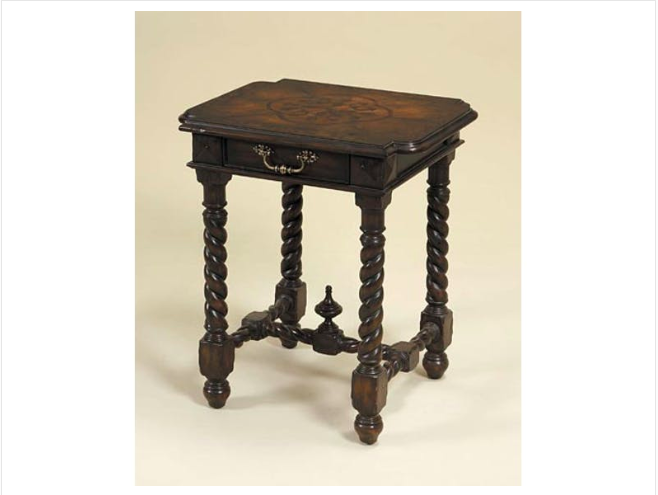
Maitland-Smith Living Room Ant Spanish Mahogany Occ Table 8136-30
There are certain things that are unique to a country or region. Spain is one country that’s so unique that it’s easy to tell when a design element comes from there. Just think of their cuisine, architecture, music, and art and you’ve only tapped a third of their uniqueness.
Of course you’ve heard of the siesta, right? This is that 2-3 hour nap in the afternoon that’s practice by farmers so that they do not labor during the hottest hours in the afternoon. Modern Spain has abandoned this practice, though.
When it comes to dance, who hasn’t heard of the Flamenco? This originates from the Eastern European gypsy music. It is a unique to Extremadura, Andalucia, and Murcia where guitar, singing, hand clapping and dancing are forged into one.
If you’re a lover of Spanish art, then you wouldn’t wanna miss on a Pablo Picasso piece. Picasso was an influential artist who hand-painted, made sculptures, and shaped ceramics.
Cubism came from his artistic mind and he even co-invented the collage.
All these beautiful things about Spain make it an amazing style resource.
Spanish Style Fundamentals
Spanish interior design has many common elements with the Mediterranean styles. Just look at the architecture and crafts in Morocco, Greece and France, and you’ll sense a deep influence from these equally unique styles.
So what are the basics of Spanish design?
Since its influences come from its neighboring Mediterranean region, Spanish style showcases a color palette that highlights the coastline colors of green, blue, browns, and whites.
Terracotta reds and shades of oranges give the needed warmth to the chiefly cool palette. Just take a look at the Spanish roofs and floors and you’ll commonly see terracotta tiles.
Stone and ceramic elements are also quite common as are wrought-iron pieces, pottery, iron pieces, carved wooden panel, and candelabra. It is also common to see copper accents as a part of the design.
Spanish style wall finishes come with heavy textures of plaster or stucco. It’s easy to establish visual depth with these features. Used in conjunction with these walls are the soft neutral glazes. Together, they create color and more definition.
The wall décor for Spanish homes include wrought-iron grilles, woven tapestries and others that add an elegant, rustic touch. Keep the accessories to a bare minimum but make sure that the highlighted items such as vases, urns, pots, and planters are big enough to catch people’s attention.
Spanish Colonial
Spanish colonial and Native American cultures merged in the Spanish Colonial style. Also referred to as the Mission style, it got its name from the mission churches that were built within the region.
The architecture for this style is emphasized by tile rooftops, courtyards, stucco walls, and arches. The landscape in the surrounding southwestern region shows the influence of deep yellows, beige, purple, red, white, and pink.
Furniture and accessories in this style are rustically down-to-earth. It is common to find solid woods like oak. Very little ornamentation is seen. Other features include freestanding cabinets; corner, bell-shaped fireplaces; and wall benches. The earthy ceramic, stone or rock floors make these features even more striking.
Spanish Revival
The 1920’s was the era of Spanish Revival homes in California. These were built to satiate the demand for Spanish architectural styles. It is a hybrid style that showcases Spanish elements of stucco walls, wooden beams, adobe bricks, terracotta roofing, and carved entryways. The gates are almost always wrought-iron as are the window grilles, railings, and banisters.
Modern Spanish
You can get inspiration from these Spanish styles. Don’t forget the textured walls with faux finishes in apricot, off white, gold and burnt sienna. Be sure to use solid wood banisters or have metal versions installed. The stairs must also feature tiles and natural woodwork.
Other essentials are exposed beams bare floors, and terracotta accents.
Tags: McCreerys, McCreerys Home Furnishings, Spanish interior design, Spanish style
Posted in Interior Design 101, Interior Design Elements, Interior Design Themes | Comments Off on Iconic and Spanish
Thursday, June 21st, 2018
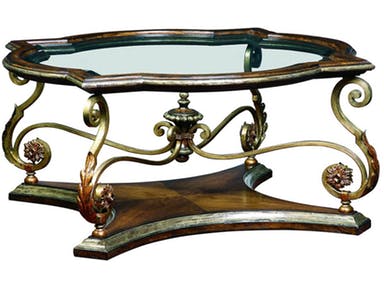
The Marge Carson Living Room Seville Cocktail Table shows how effective it is to merge a metal framework with wood and glass surfaces.
The Spanish interiors are observed to have many features that are similar to the Mediterranean homes. These share architectural looks as well as craftsmanship. For centuries, Spanish homes are also sometimes interchanged with Tuscan homes, French Country homes, and even the Moroccan style. But what makes Spanish style stand out?
Spanish Design Basics
Without a doubt, Spanish interior design is greatly influenced by the Mediterranean region. It is typical to find coastline palettes of green, blues, browns and whites. You will also generally find terracotta shades of red and oranges and these are apparently because of the use of terracotta tiling on the roofs as well as on the flooring.
It is typical to find ceramic and stone elements alongside wrought-iron pieces, pottery, candelabra, and carved wood panels. Copper and other metal accents are also an important part of this cultural design.
Now take a look at the wall finishes on Spanish interiors. These are heavily-textured complete with plaster or stucco to create visual interest. The neutral glazes are easy on the eyes because they are often used with textured walls.
Do you like hanging woven tapestries especially on wrought-iron grilles? Then you have a taste for Spanish style. Just keep your accessories to a bare minimum such as interesting displays of pots, urns, planters and vases. These are enough to make the rooms more interesting.
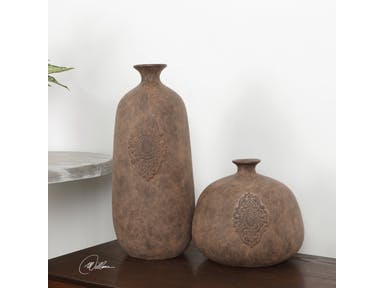
Uttermost Accessories Frederico Rustic Vases
The Colonial Style
The Southwestern states show a fusion, ironically, of Native American and Spanish colonial cultures. This is referred to only as the Spanish Colonial style. To others, this could be what’s referred to as the Mission style because of the infusion of mission churches on the design.
Other common elements of the Spanish Colonial design are corner fireplaces, wall benches, cabinets, and earthy floors. You could easily use ceramic, stone or rock flooring and accessorize with metal accents, pottery, stained glass as well as wall hangings. Are you tempted to display an image of a saint in the living room?
You’re welcome to do so.
The Revival Style
This Spanish design is called the Spanish Revival style because, in the 1920s, tourism to the southern part of Spain demanded for their architecture to be set up in California. Here, the Spanish Revival homes were set up and they became hybrid structures complete with adobe bricks, terracotta roofing, shutters, wood ceiling beams, and entry doors with carvings.
You will also notice the liberal use of railings, wrought-iron gates, banisters and lots of window grilles.
The Spanish Revival interiors housed many wood furniture. The typical species used were pine and oak. You will also marvel at the details on the carvings, inlays, and even the paint finishes. It was common to find furniture completed with nailhead trim and leather.
Modern Spanish
You could always go traditional Spanish and choose the elements that were already listed or you could go with a touch of modernism. A lot of Spanish style structures come with stucco walls, especially in the kitchen. This texture can be recreated by faux finishes in apricot, off-white, bold or burnt sienna.
Remember to use a natural, dark wood finish on the trims, wood works and molding. The contrast would be the rich-colored walls, giving your home a warm, welcoming feel.
As for the stairs and banisters, say goodbye to solid wooden banisters. Use wrought-iron whenever you can as this contrasts well with tiles and woodworks. Add some terracotta risers to otherwise bare stairs.
As for the ceiling, keep up with the exposed wood beam trend. As for the accents, add hand-glazed tiles all around the fireplace and on the kitchen backsplash. Go for heavy, hand-carved furniture pieces and steel lamps.
Don’t forget to show your personality with the colors that you experiment with.
Tags: McCreerys, McCreerys Home Furnishings, Spanish interior design, Spanish interiors, Spanish style
Posted in Interior Design 101, Interior Design Elements, Interior Design Themes | Comments Off on Satiating the Hispanophile in You: How to Make Spanish Interior Design Work
Follow us on our social media


© McCreery's Home Furnishings | All Rights Reserved | Privacy Policy
