- Follow us:


Thursday, August 17th, 2017
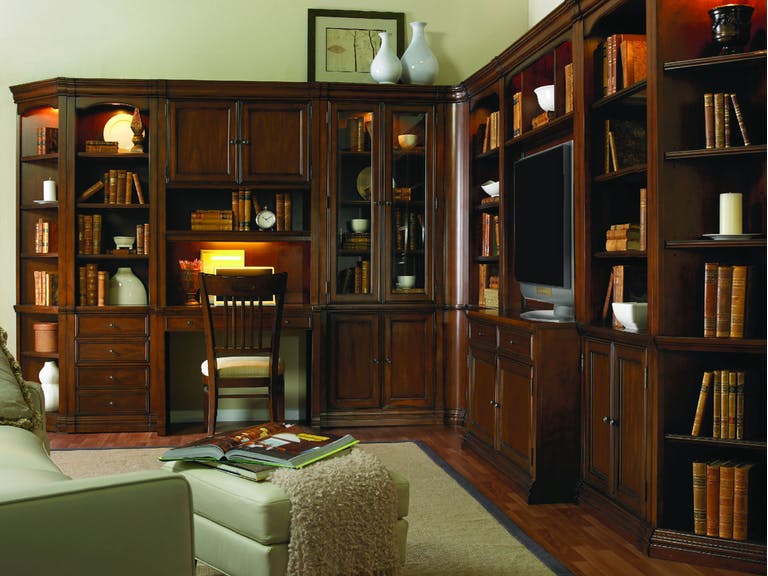
Hooker Furniture’s Cherry Modular Group is perfect for the homeowner who’s serious in building a comprehensive home library.
Jojen once said, “A reader lives a thousand lives before he dies. The man who never reads lives only one.” Only a bibliophile will be able to relate to this lovely quote. A personal library or even a small reading nook is an amazing draw not just for its visual display but also its ability to convey a sense of relaxation.
Many designers are now being commissioned to build mini libraries in homes. These dream libraries are built either to blend with the background or to play a major role in the whole design. If you are thinking of creating your personal library, here are some tips that you should consider –
Build on the Context
The materials that you will use in your personal library will have to reflect the overall design of your home. It cannot and should not have an industrialist vibe when the rest of your design shows the opulence of the Victorian era.
You can increase the accessibility of the library by opening it up instead of enclosing it in a room. This kind of library will even help you save on your expenses since all you will need are open shelves or glass case cabinets to house your book collections.
Just make sure that you are ready to share your collection with other people or you would end up being the cranky one who’d constantly look if anyone’s dog-eared any of the pages yet.
You can go classic with your home library. Have it set by the Victorian fireplace then embellish the space with thick curtains.
You can also do a Mid-century style by having wool tartan for your seating upholstery while your book collections sit on modular shelves right behind you.
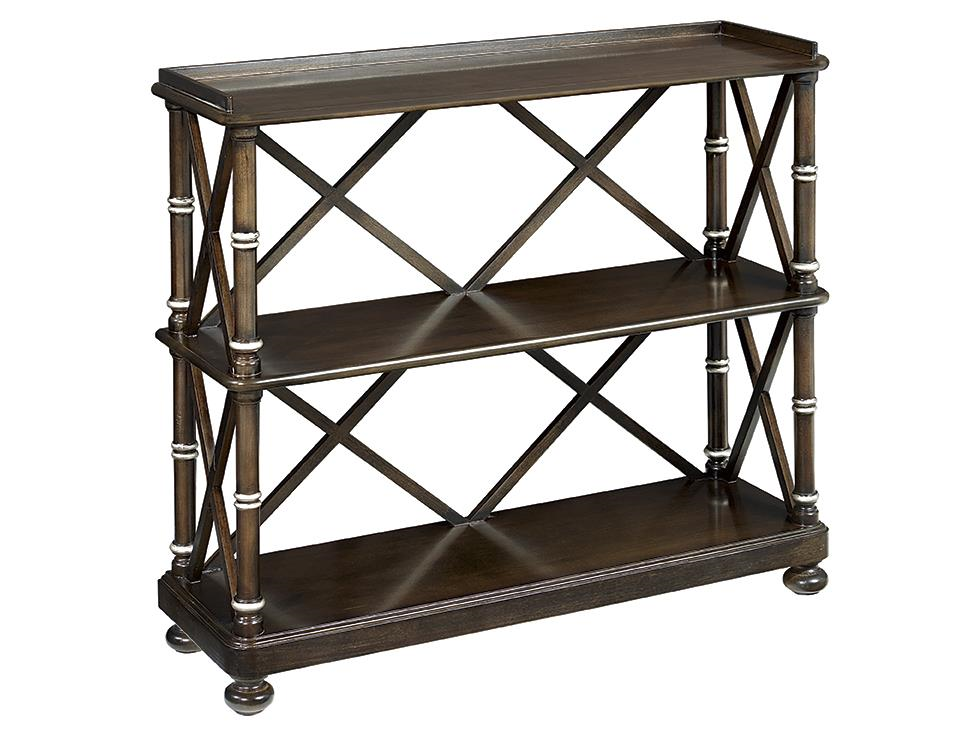
Or you can go simple with this Cachet Bookshelf from FFDM.
Integrate Modern Media
You can now integrate screens onto the shelves. These will even serve as eye-catchers for your visitors. Make the screens interactive so that your library visitors will have something interesting to do apart from reading.
The home libraries of the future should not forget to include technology in their design.
Organize
Because it is a library, after all. There is a need to keep the balance and structure inside this room in your home. The heavier, bigger books should be grouped at the bottom where they are easier to access while the lighter paperbacks should go on top.
For homes that lack space, you might consider setting up a reading nook instead. Here are a few tips –
Know the Reading Nook Essentials
What is a reading nook without these stuff?
First, an interesting book collection (but, of course). Next, you should know what space you would dedicate to reading. This can be a corner in your living room or bedroom. Sometimes, all you will need is a single, comfy chair righty by a large window and you’re all set. This brings us to our next most important reading nook piece – the chair.
Consider the material used on your reading nook chair. Does it have a breathable fabric? Is it going to be a back-breaking reading session at all times? Think of all the elements that would make your reading comfortable and worthwhile.
And just like you would on a full-scale home library, you also need a storage for your books. Depending on your mood or personality, you can organize your books according to color, titles or authors. Have a shelf right beside your chair and a small table.
Table space must also be considered. There are many moments, after all, when you would want to enjoy a good book while drinking a mug of hot chocolate. Oh, just imagine all those cold, wintry nights as you read To Kill a Mockingbird. The picture is simply sublime.
Tags: home library, home library design, McCreerys, McCreerys Home Furnishings, reading corner, reading nook
Posted in Furniture, Interior Design 101, Interior Design Elements, Special Rooms In Your Home | Comments Off on A Bibliophile’s Haven
Wednesday, August 16th, 2017
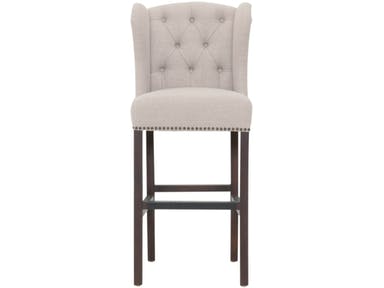
Orient Express Furniture Bar and Game Room Maison Barstool 7102-BSUP.BIR
These days, haven’t you noticed that more and more professional, single men and women are looking into settling in a studio apartment? With just one person to live inside this space, it can be everything that one would need, space-wise. It may be limited but designing the space properly should help one live comfortably.
Study type homes are cozy if you know how to design them. Of course, you wouldn’t want a home that is chaotic or crowded, so you need to design and transform this space into an area that will suit your personality as well as your lifestyle.
Now let’s get down to business. Put on your creative thinking hat then let’s try to figure out how you can use one space for your living room, bedroom, dining room and kitchen requirements. Now that you have enumerated the rooms in your mind, you might instantly think that it’s an impossible task but hold your horses. Don’t quit just yet.
Plan Your Design
It is also important to know the right kind of design for your studio apartment. Consider the proper sections and where they should be laid out. Designate the adjacent rooms such as the dining space to your kitchen area.
Important Stuff Only
Make it a point to choose just the things that you will really need. Unused items will just become clutter and will crowd many areas that you can still put into good use. As you pick the things that you need, make sure that you won’t forget one important aspect, though – aesthetics.
Yes to Ample Storage
A studio apartment needs sufficient storage units. There is no other way to conceal some of your stuff since you have limited space. You can also invest in furniture that has double roles – one as a seating unit that doubles as a chest perhaps. There are also dining tables that can be used as a home office desk.
These pieces are also known as smart furniture. These are the pieces that have multiple functions that would conveniently provide different uses to address your different needs.
Remember that studio apartment living is all about organization so consider these.
Use Glass and Mirrors
Installing mirrors inside a room can make it look brighter and larger. There are now a variety of mirrors to choose from. You should also look for cabinets with glass doors. Basically, anything that has a glass element on it will be helpful in visually opening up space in your new studio apartment.
Sheer Coverings for Windows
There is nothing else that would do. Draperies and blinds are a no-no. These thick window coverings will definitely make the room look dark.
To go with your sheer curtains, be sure to pick only the light-colored materials. If you can, you can also leave your windows bare. Adding a valance to a bare window should make it look dolled up.
As for divisions in your home, you can also use partitions though be ready to have a smaller-looking place. If you really have to have divisions, then be sure to have the foldable type of partition. Draw curtains can also be used.
The Focal Point Necessity
Yes. You would need to create one focal point to anchor the rest of your design elements. Your TV could play the role well. Or you can have the fireplace take on its natural part in the whole design.
Use a Single Theme
No need to explain this. With a small space and just one room at that, it makes sense that you just stick to one design theme. Many studio apartments use the industrial or minimalist theme. These make good use of space with what very little furniture pieces that owner has on hand.
Tags: designing small spaces, McCreerys, McCreerys Home Furnishings, single-room design, small space design, studio apartment living
Posted in Apartment Living, Condo Living, Interior Design 101, Interior Design Elements, Interior Design Themes | Comments Off on The Single-Room-Lifestyle
Tuesday, August 15th, 2017
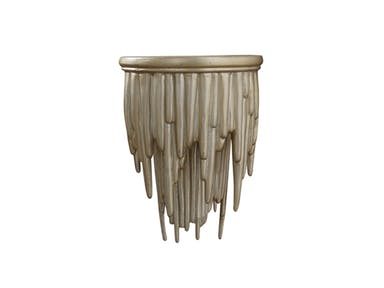
The Maitland-Smith Accessories Silver Gilded Cast Resin Wall Bracket Wall Decor 1443-249 comes to mind when speaking of brutalistic roughness.
Le Corbusier, a modernist architect, is the one who’s prominently attributed to the birth of an architectural and interior design theme that is now known as brutalism. This style was immediately loved by many British architects.
Looking at it then (and, yes, even now), it was a look that was strange especially since modern architecture was not immediately popular in Britain. Brutalism sort of unintentionally replaced modern architecture when it was not assimilated into modernist structures.
Brutalism can be defined as an alternative to modern architecture but in a more animated and noticeable manner. There are even some who would argue that it is a fusion of architectural Modernism and Postmodernism.
Not Totally Le Corbusier
Yet it would be unfair to attribute brutalism totally to just one professional. There are many versions of this story which makes it difficult to pinpoint its exact birth and who its real creator was.
Please don’t think of brutality as the basis for brutalism as it was not intended to be ascribed to this term. It could have come from béton-brut, a French term which means raw concrete. It could also have been the creation of Hans Asplund, a Swedish architect, who concocted the term – New Brutalism.
Do you now see the whole point of this style? It has no exact origin or well-defined precursors. A third version of brutalism’s history is that Brutus decided the movement’s name. Brutus was, of course, the renowned architect Peter Smithson.
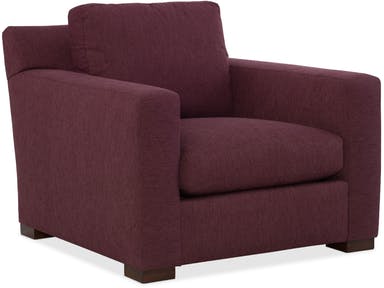
As solid and fortress-like as the brutalistic structures are, so is the Sam Moore Living Room Sage Chair SM10-005.
So What Really Is Brutalism?
Villa Goth, previously linked to brutalism, is a house in the city of Uppsala in Sweden. While it was originally thought to represent brutalism, today, it is considered not a representation of this style.
Peter Smithson and his wife Alison were the leading brutalism figures in Great Britain as was Emo Goldfinger, a Hungarian architect. The latter designed the famed Balfron and Trellick Towers which are famed for their representation of the brutalist movement.
If there’s one thing that’s constant in all brutalist forms or structures, this would have to be the use of concrete. This material is basic and pliable. It can provide any form that you would want it to become. Yet, again, there is more to this style than merely using a constructive material. It needs a mold so it can be the shape that you require of it.
Brutalist ideology is also all about honesty and bare essence, hence, concrete is used on building’s façades. Before there was brutalism, concrete was used elsewhere – where it cannot be seen. More often than not, it is encased in glass or steel.
Well, no more hiding behind the mask. In the ‘60s and the ‘70s, brutalistic architecture flourished. Communist nations with their concrete suburban blocks housed many individuals. Tall buildings were then made and most were linked with futurism.
Brutalism Today
Brutalism is not just Le Corbusier neither is it just concrete. It is not ugly yet neither is it instantly beautiful to the beholder. In any case, today’s generation can now see past the monstrous blocks and the solid hues that often represent brutalism. Concrete has been used to show its innate qualities, one of straightforwardness.
Maybe we can say that the world was not ready for the brutalist design back in the day but, today, everyone is more than ready. Owen Hatherley, a British writer, even quoted Park Hill (a building complex) in Sheffield. This was supposed to be demolished but was saved from this fate.
Instead, Park Hill was revitalized and it represented the beauty of brutalism – it brought back the personality, vision and optimism to that place.
Brutalist furniture, in case you’re wondering, are the pieces that are rough around the edges yet they present a seemingly fortress-like look. If you’re ready for these pieces, then be sure to have the rest of the design is strong enough to support ‘em.
Tags: brutalism, brutalistic furniture, brutalistic structures, McCreerys, McCreerys Home Furnishings
Posted in Architectural Elements, Furniture, Interior Design 101, Interior Design Themes | Comments Off on Brutalism Explained
Thursday, August 10th, 2017
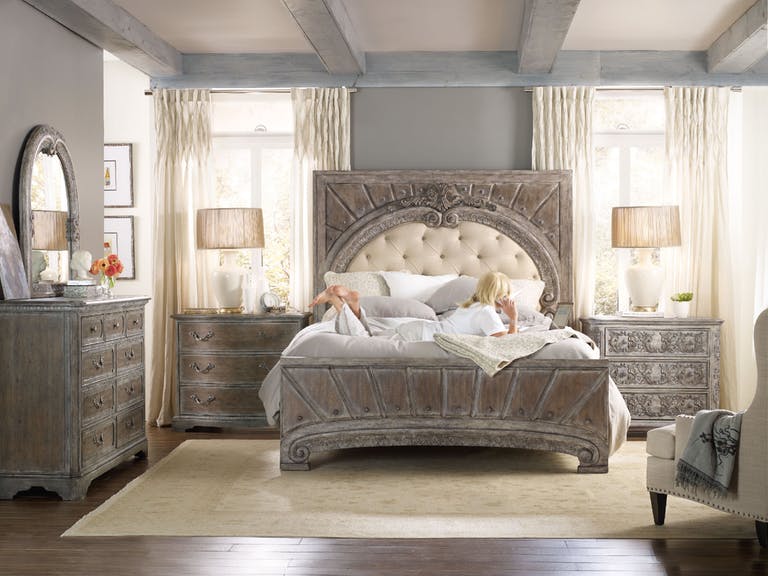
Notice how the traffic flows freely around the Hooker Furniture Bedroom True Vintage King Upholstered Panel Bed?
When you were designing the layout of your furnishings, it is important to consider the wall and door locations. Knowing these things from the outset will tell you the traffic patterns that you will establish later.
A traffic pattern of every room refers to the movement that people will make through that space. They do this as they pass and live in this area. Generally, traffic patterns begin at the entryway of a space. This will then continue to the secondary door or the entry to the adjacent room.
Good traffic should allow a room to be used optimally. Every room in your home deserves to have the right kind of traffic pattern. In order to choose the right pattern for your home, be sure to plan ahead. Here’s how –
Measurements Mean a Lot
You can begin planning by knowing the exact measurements of each room. Of course, you also have to define the function of the room.
Have the floor area measured. Do this starting from one corner to the next. A room that has more than four walls also asks for this same method of measurement. This only means that anyone can do this project without difficulty.
Another measurement that you have to make is to measure all the openings in a room (windows, doorways, and doors). Measure also the width of the door opening.
Consider also the permanent structures such as a wet bar, fireplace, or built-ins. Another important measurement is the height of the room. This can be done by measuring from the ceiling down to the floor.
Measure and write down also the distance between the window sills and the floor.
These measurements have to be done accurately more so when you only have a limited amount of space to work on. In essence, the smaller the room and the more windows, doors, and structures, the more that you have to religiously measure.
Draw
You need to draw for your interior design floor plan. Use a simple graph paper. Set your legend at one-quarter inch for every foot. Use markings along the outer walls, taking careful note of all the doors, windows, doorways and fireplaces. Again, note door swings.
You don’t have to draw like a pro. For as long as you can understand your drawing, you should be fine.
Take note also of all the natural traffic patterns through the rooms. These are the paths which can be marked using broken lines. Minimize these natural paths as much as possible. Also, do not disrupt these natural traffic patterns.
Small Townhouse Traffic Flow
Let’s have a townhouse as the example for a small dwelling place. Since space is limited, a homeowner needs to maximize the seating arrangement, especially in the living room. Storage must also be carefully planned or the place would be at risk for being cramped later.
Keep in mind to have the traffic flow, well, flowing smoothly. Have the seats grouped around the fireplace (if there is one).
As you come from the front door, be sure to keep an open traffic flow to the adjacent room. Oftentimes, this is the dining room. If there’s a patio, then more often than not, this comes next to your dining room.
A flight of stairs can be effectively placed in the kitchen. This can lead to the bedrooms upstairs.
Where you only have a single entry point as is the case with most bedrooms, it becomes doubly important to establish a feasible traffic pattern. The master bedroom should have a traffic flow that openly approaches the cabinet and the bed. There must be no furniture lying right next to the bed except the two nightstands.
Tags: interior design traffic flow, McCreerys, McCreerys Home Furnishings, traffic pattern in interior design
Posted in Interior Design 101 | Comments Off on Interior Design Traffic Flow: Maximizing Furniture Layout
Wednesday, August 9th, 2017
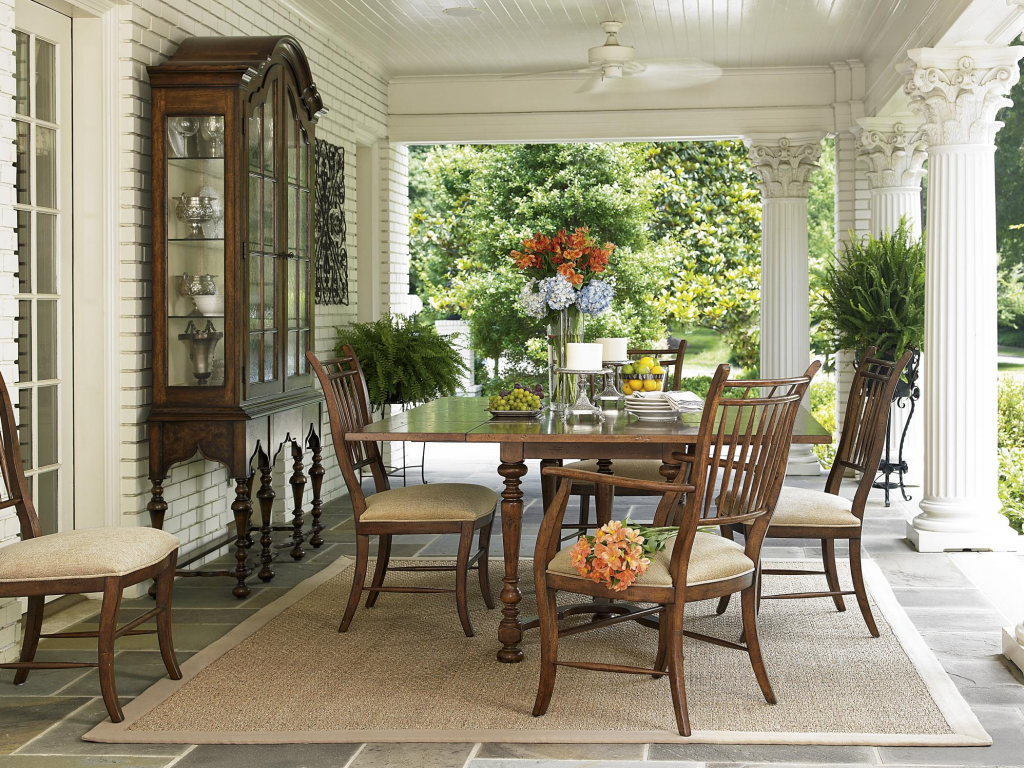
Fine Furniture Design Biltmore Collection : Dining Al Fresco has never been this stylish.
What comes to your mind when you see people dining outdoors? Especially when you see candelabra, elegant chinaware, crystal glasses, and silver cutlery, there is nothing that can prevent you from thinking elegance, right?
If you’re not a huge fan of casual dining then an al fresco setting is perfect for you. As soon as spring and summer come up, you should seriously think about bringing your family outdoors to enjoy a little breeze and a view of the stars as you laugh and dine.
Take the time to research about al fresco dining and you would actually be surprised that more customers prefer to reserve outdoor tables. Some even wait as long as half an hour just to get an outdoor setting.
Taking advantage of skyline views, sunset, waterfront sceneries, and people talking means you’re ready to drink in a little energy even while you’re relaxing and dining with your loved ones or a special someone.
Al Fresco Dining Factors
There are inevitable factors to consider when you want to dine outdoors. First off, the weather. Imagine enjoying your well done steak only to be soaked in torrential rains later. There’s nothing cool about that (al fresco is the borrowed Italian term for in the cool air).
Another thing that you should look into are the things that you companions want. There are people who do not feel comfortable eating al fresco. Though there may be amazing views, the noise level might get to them or the wait time could bother them. Still, there are those who want to have a TV screen in front of them while they’re dining. Consider these things when you want to set up al fresco dining.
Functional and Stylish Al Fresco Dining Area
Just as you would decorate the interiors of your home, you should also consider what theme to use outdoors. Set up a Mediterranean courtyard by having a stucco fireplace as the focal point. Have the dining table in front of this lovely fireplace – be sure to put it dead center – then create classic symmetry by having the chairs arranged around the table.
You can also go for the Victorian look by adding some historic details such as some gray arbor frames. Put these by the fireplace to create an interesting focal point. After dining, you could even invite your guests to tour the rest of your garden.
An Asian-inspired pergola can also be designed for this special dining area. Create a balanced look with mismatched chairs painted white. Find cushions that can be used to unify the look. If you want, you can even mix old and new stuff to achieve an eclectic design.
If colors make you gaga, then you can also set up a colorful yet simple al fresh dining space. Dress up a round dining table with patterned tablecloth. Use a good number of equally colorful throw pillows and a fundamental centerpiece.
You can also go neutral by adding a simple dining set and decorating with potted plants. Create this setup on your porch. If not, you can also have a white dining table paired with crystal candlesticks, white walls and white furnishings.
When you’re feeling all romantic, you can also dine al fresco. Just add a basket weave canopy over the dining area, create subtle lighting, and use mismatched, wooden furniture pieces. This rustic look should create an elegant vibe.
Conclusion
Now that the clouds have cleared, it’s time to go out and enjoy the views. You don’t just do this with hiking excursions or camping trips. Now, even when you’re home, you can set up a dining area on the porch or right on the garden and get fortified with Vitamin D and have your mood boosted.
Tags: al fresco dining, dining al fresco, dining outdoors, McCreerys, McCreerys Home Furnishings
Posted in Dining Room Design, Furniture, Interior Design 101, Interior Design Elements | Comments Off on Dining Al Fresco: Making Dining Outdoors a Success
Tuesday, August 8th, 2017
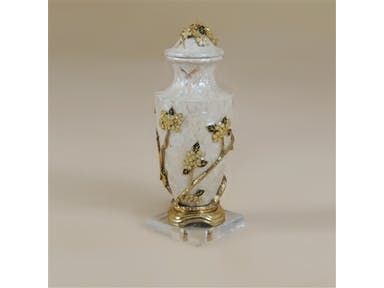
Maitland-Smith Accessories White Hammer Shell Inlaid Lidded Vase, Floral Brass Decor With Shell Accents 2100-472: No need to decorate this one. It’s a beauty on its own.
It’s impossible to think of vases and not have Greek culture conjured into that thought as well. It was the Greeks that first developed pottery. Greek vases survived in more numbers compared to the number of other historical ceramic pieces.
It was during 550 to 480 BC that Athenian potters were viewed as accomplished artists. They were able to perfect the infamous black figure then introduced the red figure method. The mid-6th-century welcomed the addition of vase surface décor. This was done by painting on a potash, clay and iron mixture.
If you have seen the red-figure style on the Disney movie Hercules, then you would know what vases during that time looked like. Scenes were also painted on these vases, as are mythical heroes, and satyrs.
Vases Mean Practicality
Greek vases are practical design elements because they are made with standard shapes but each one having a specific purpose. Some vases, back in the day, were used to store wine. Some were used for storing olive oil. Still, others are used to store liquids to cool or heat them.
Vase Materials
The most common materials used in manufacturing vases are terracotta, glass, and ceramics. Nowadays, other materials are also being used such as bronze, aluminum, bronze and much more.
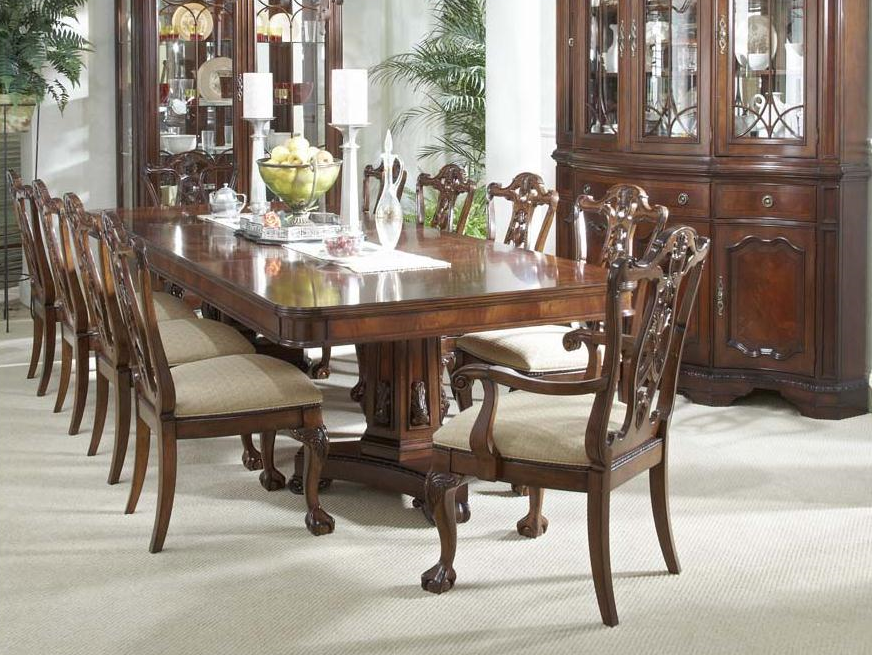
The Antebellum Double Pedestal Table becomes doubly beautiful when donned with the citrus-filled glass vase.
Decorating Vases
If you have an empty vase in your hand, then it’s time to bring out your creative side. As you do so, don’t forget to have fun, okay?
Now, remember that vases are no longer just there as vessels for flowers. They can also be spruced up for a different function. If you want to get really artistic about this project, then you can begin by using colored and patterned masking tape.
Get some masking tape from your local craft outlet (the colorful types) then create. Conjure the funkiest designs or do something simple. You don’t need to be a real artist just so you can make your vase look amazing.
Do you have some balls or unused yarn in your home? Rather than have these become cat toys, why not have the plain vases wrapped? Choose any color – there’s no limit to this – and create texture as well as an unexpected pop of color in any room.
If the yarn doesn’t work for you, then go with ribbons. This is even an easier project compared to the yarn-covered vase. To achieve, overlap different hues of ribbons and use the finished product inside the kitchen, craft room or the home office.
You can also use clay in creating petal or flower appliques for any plain vase. This should give any room a feminine touch.
There are many other methods of decorating a glass vase. A simple driftwood can make a huge difference when you arrange it together with some flowers, fresh leaves, and clear water. If you’re more of a fruit person, then use fruit wheels to decorate your glass vase. Get the look by adding water to the vase then adding some sliced lemons or oranges. If you want, you can still add flowers to this arrangement.
If you’re the minimalist type, then you can fill cylindrical glass vases with water then place a big frond inside. Be sure to have it firmly set so that it won’t float away. The green tone will surely add the needed pop of color in your space.
If you’re running out of ideas, don’t fret. Even Monstera leaves can be used to add impact. In fact, these have been used by a lot of interior designers and florists to cover stems inside the glass vase. You can then add fresh leaves to complete the green ensemble.
Tags: decorating vases, how to decorate a vase, McCreerys, McCreerys Home Furnishings, vase, vase decor, vases
Posted in Accents, Accessories, Interior Design 101, Interior Design Elements | Comments Off on Getting Creative with Vases
Monday, August 7th, 2017
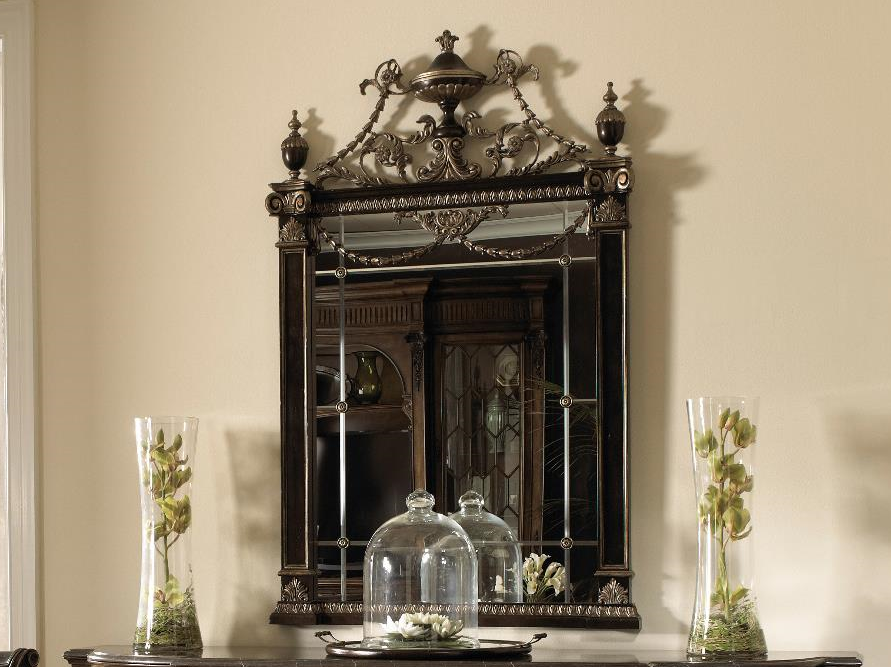
Now let’s practice. Where do your eyes go when you see this picture? The Cachet mirror is difficult to miss, isn’t it?
When talking about focal points in terms of photographic composition, you are looking at the site right where the parallel light rays converge. This same concept can be said when talking about interior design. Every focal point has a tremendous effect on the appreciation and reading of a given scenario.
Pièce De Résistance and Aesthetics
As you walk into a room, what is the first thing that catches your attention? That is definitely the room’s focal point. This is an attractive feature, it can be a view of the garden outdoors that’s carefully framed by the large window or it can also be the fireplace in the living room.
This focal point will have a huge influence on the eventual furniture arrangement. Your role now is to decorate the room based on the focal point. Energize your space by taking the attention right to the chosen focal point.
In the bedroom, more often than not, this is the bed. Inside the sunroom, the eyes have to go to that interesting reading nook that’s furnished with a comfy chair and a small side table.
Identify the Focal Points
Generally, every room has a designated focal point. You don’t have to think that you have to default to these features, though. So, this means that the living room can have the sectional as the star of the show rather than the fireplace. Yup, you can downplay the fireplace and have the center of attention shifted to the seating unit.
As to the usual focal points, a group of windows or even just a single window does not just let in an awesome amount of light in but could also serve as a pièce de résistance. A skyline or an outdoor element, even an amazing landscape could also do the trick.
Look for the strongest architectural detail inside the room and that should be the focal point.
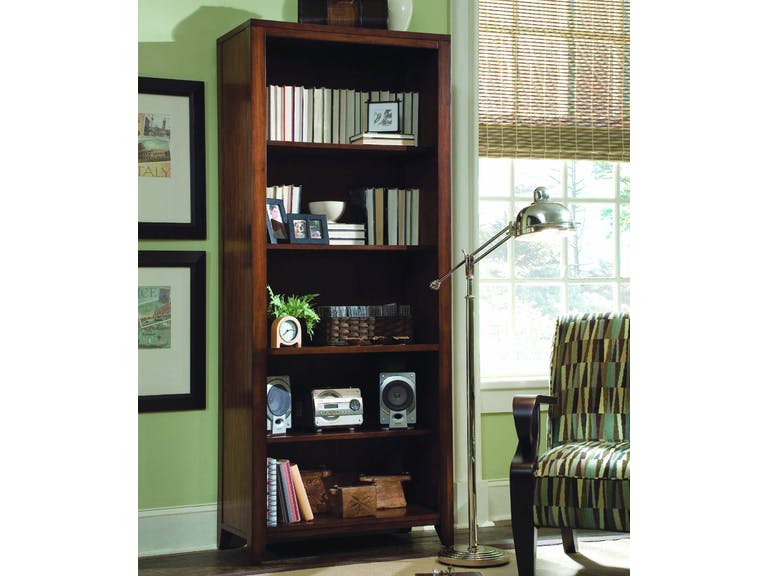
Hooker Furniture Home Office Danforth Tall Bookcase: Bookcases are a natural focal point because they often hold the most interesting books and memorabilia.
Set Up the Focal Points
If you don’t have an existing focal point in the room, then you can create one. The creation of a focal point isn’t difficult to do. Find the largest wall in the room. Create a feature wall by having this decorated and set apart from the rest of the walls.
You can also cover unsightly windows with floral or other bold-patterned curtains. These can also act as the best feature in your room.
A furniture piece that is brightly-colored can easily become the focal point. Imagine a sectional covered with fabric that has the most interesting geometric patterns. Now picture that in a sea of white – it becomes even more amazing, right?
Do you have collections of books or knickknacks? These can also be organized in a lovely shelf and would instantly serve as the focal point in the living room, bedroom or the dining room.
Even large mirrors can be used as focal points, as are groups of artwork, or woven baskets filled with collectibles.
Be Bold
Defining the focal point means you should be ready to be bold. Imagine having the ceiling painted in bright red and then frame it with dark-colored molding. This combination should add an interesting focal point to what could have been a bland-looking room.
The ever reliable accent wall can also be created in this manner. This feature wall adds a strong feature to any room. Be sure to group the furniture around the focal wall. If you’re not ready to create an ensemble, then just balance the horizontal elements throughout.
Dual Focal Points
Can a photograph have two focal points?
Why not?
Going back to photography, would you waste the wonderful redness of the apple all because you chose to highlight the succulent lemon? Why not have both?
When you do this, be careful that you’re not emphasizing the lesser element with the better one. For instance, more people would like to see the outdoors more than the fireplace.
Choose two wonderful architectural features, a combination of one architectural feature and furniture piece, or two interesting furniture pieces – your options are limitless.
Tags: focal point, focal points, McCreerys, McCreerys Home Furnishings, piece de resistance
Posted in Interior Design 101, Interior Design Elements | Comments Off on Pièce De Résistance: The Significance of Focal Points in Interior Design
Friday, August 4th, 2017
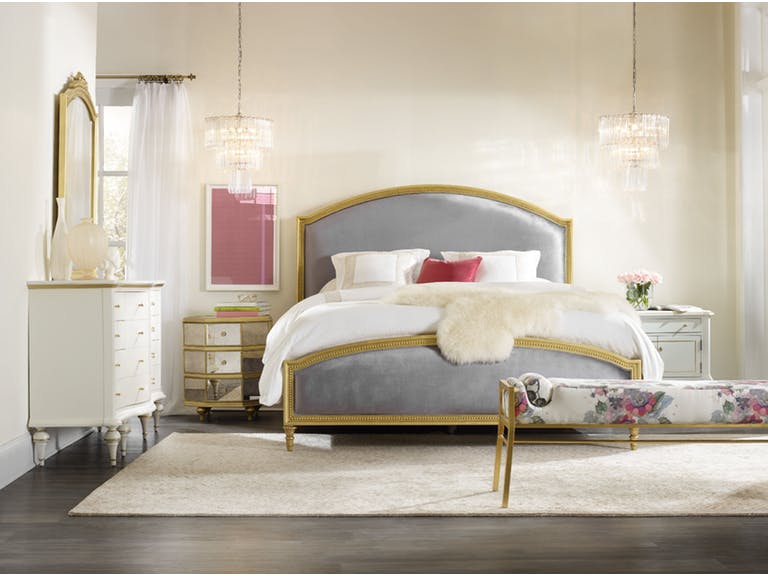
While the bed is equally stunning, where do you eyes go when you look inside this room? You gotta love the Cynthia Rowley for Hooker Furniture Bedroom Fleur de Glee Bench.
There are many proven scientific benefits of flowers. Just look at the face of the recipient of a bouquet of flowers and you’d know the many positive effects of these floral beauties. A floral gift could go a long way in bringing about a semblance of sanity inside a home. Flowers are known to impact people’s level of happiness, satisfaction, and intimacy. Would these same feelings be true to using florals in interior design?
Spring and summer are the perfect homes for florals. There is more to this design element than meets the eye. You can have it in pretty pastels or the surprisingly bold patterns and textures.
Here are some ideas that you can mull over –
Fresh Flowers
Nothing could go wrong with fresh flower arrangements. There is no surprise that interior designers and home depots now offer fresh flower prints. Choose from statement features to subtle accents. Use layering or clash with other prints.
You can go bold with fresh flowers. Nothing can be more botanically daring.
Flower Layers
If you cannot understand the concept of minimalism, then that’s fine. The floral trend is right for you, in fact, it can even become your go-to concept.
Floral prints need to be layered, take note. The key to this is to mix with other contrasting elements like giddy florals go with the more flamboyant flower patterns.
Retro Shower Curtains
There were only a few homeowners who did not rip down their floral shower curtains when there was an era that begged for the sleeker and shinier types of shower screens. Now’s the time to revive the beauty of these amazing flower shower curtains.
Nope, you don’t have to worry about your bathroom looking like your grandma’s as there are now a lot of options for the floral shower curtain. Use this against a claw-and-foot free-standing bath in porcelain white or beige.
One can say that the floral shower curtain is back in interior design with a vengeance.
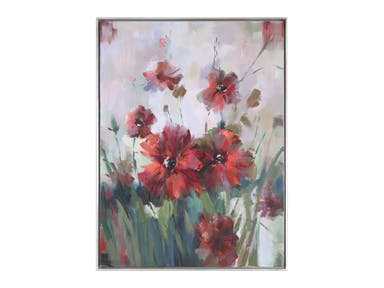
Uttermost Accessories Blooming Red Floral Art 38200: Go fresh or visual art.
Petals Everywhere
Creating a unique look for your home is as easy as adding vintage charm. Nothing achieves this more effectively than floral upholstery. As you make your decision to use floral upholstery, know which design elements would also go with it.
Basic graphic prints on area rugs can still work with a bold floral sofa. Have everything else in white and you’re day is done.
If you’re willing to go further, then pull the room together by pulling a color scheme from the floral pattern itself. Use the background hue as the basis for your wall color.
Animal prints also work surprisingly well with florals. An example is an animal print ottoman paired with a floral area rug.
Leather: The Floral-Grounding Element
Leather is wonderful in adding a little weight to the airiness offered by floral prints. This is like pairing a beautiful floral sundress with a leather cowboy hat. Now that is one down-to-earth visual delight.
Floral Repetition
Go for bigger contrasts in scale. An example is when you pair small scale florals with an area rug with huge blooms. This repetition is hard to ignore but it won’t overwhelm the beholder.
Don’t think that floral motif can only be completed by textile. You can also hang floral paintings or photography.
Go Wild
Nothing’s stopping you from going all out when it comes to floral interior design. Layer floral prints on upholstery, on your floral artwork, and on floral rugs. This isn’t for the faint-hearted, though, as it takes a lot of spunk to be able to pull this off.
As you do this, be sure to keep the rest of the elements simple.
Tags: floral, floral interior design, floral interiors, floral style, McCreerys, McCreerys Home Furnishings
Posted in Interior Design 101, Interior Design Elements, Interior Design Themes | Comments Off on In Full Bloom: Florals on Summer Interior Design
Thursday, August 3rd, 2017
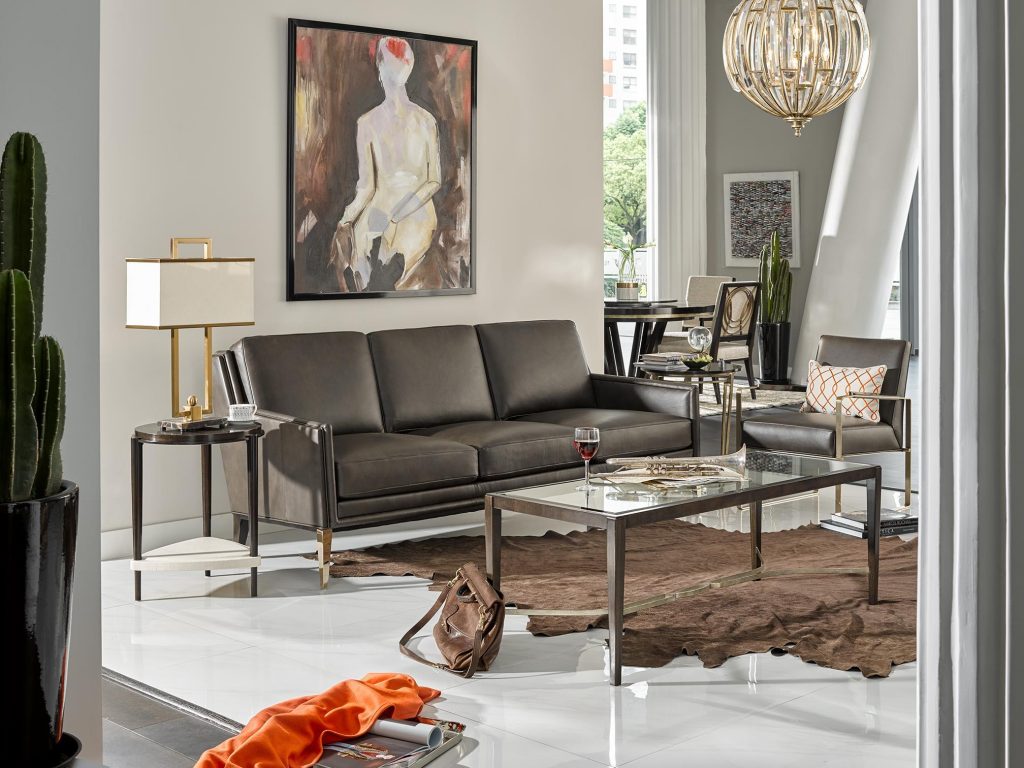
FFDM Deco Collection offers the Transparencies Glass Top Cocktail Table that transports you back to that time when arts and crafts were revered.
When asked to define Art Deco, will you be able to give an apt meaning for it? Will you also be able to distinguish like types of this decorative art?
Art Deco is often recognized intuitively, meaning, upon seeing a piece, you could pinpoint that it is Art Deco but when asked to describe the elements involved, the circumstance becomes a tad more complex.
Primarily, there are different varieties of Art Deco. This is the pastiche for styles and is also an eclectic fusion of materials, influences, and shapes. These are the reasons that make recognition of Art Deco more complicated.
Just think about this, if Art Deco were to be placed side-by-side with Art Moderne, Art Nouveau or Bauhaus, would you be able to tell the difference?
An Influential Decorative Style
Art Deco is an influential decorative style during the first half of the 20th-century. It made its first appearance in the 1920’s in France. It also took its name from the 1925 Exposition Internationale des Arts Decoratifs et Industriels Modernes.
In no time, it spread quickly throughout the world as it also drew inspiration from other sources and disciplines.
Art Deco was deemed most popular during the two World Wars. While it is not distinguished as an art movement on its own till the sixties, this style did not fail in terms of beautifying homes. These days, artists are still fighting for Art Deco to be recognized as a distinct art on its own.
Art Deco and Other Similar Styles
Art Deco makes use of a lot of geometric forms. There is also use for symmetry as well as the fusion of crafts and arts. These are the elements that made Art Deco similar to the Bauhaus design. These two movements are placed at the opposite ends of the modernist spectrum.
Art Deco is also often compared to Art Nouveau. The latter is its forerunner. Both are strongly influenced by the traditional fine arts. Both are also filled with lavish ornaments and an interesting treatment of lines and shapes.
Art Deco was also strongly influenced by the technical and industrialization progress. With these, geometrical patterns were arranged in symmetry.
Art Deco in Architecture and Visual Arts
Art Deco effectively combined arts and craftsmanship in the field of interior design, architecture, fashion, textiles and furnishings. When it comes to visual arts, especially on sculpture, paintings, and graphic designs, Art Deco was also deemed phenomenal.
Art Deco Nowadays
Though this style was most popular during the World Wars, it hasn’t stopped making homes beautiful even on our era. Art Deco was revived during the 1960s especially during the rise of consumerism.
Art Deco is now global as it responds well to mass production requirements. Its influence is strongly felt in visual art, architecture, fashion and interior design.
Art Deco in Interior Design
When using Art Deco in your home, it would be safe to say that you need a lot of rectangular, blocky shapes. Use these in interesting geometric patterns then be sure to break them up with curves.
The employment of new building materials is necessary in this interior design style. Veer away from the fluidity of Art Nouveau as this is a more scientific approach in design.
Art Deco is more modern and opulent which makes it a suitable style for many cinemas and ocean liners.
Nod yes to mathematically-inclined geometric forms that look Roman, Greek or Greco-Roman classicist.
New materials such as stainless steel, aluminum, lacquer, plastics and inlaid wood are welcome. While you can still continue using high-end Art Nouveau materials like horn, moulded glass and ivory, you can throw in some zebra lines and shark skin exotics anytime.
Tags: art deco, Deco, McCreerys, McCreerys Home Furnishings
Posted in Interior Design 101, Interior Design Elements, Interior Design Themes | Comments Off on Art Deco: 20th Century Style in Your 21st Century Home
Wednesday, August 2nd, 2017
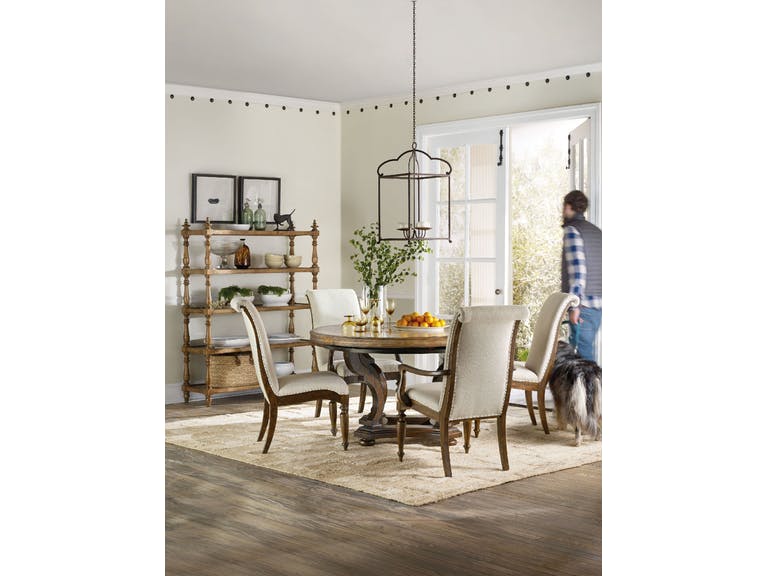
The Hooker Furniture Dining Room Archivist 54in Round Dining Table with 1-18in Leaf sits comfortably inside this mainly beige dining room.
Brown is no less than the earth’s color and as complex as Mother Earth herself, this hue has many associated colors as well as meanings. Brown is linked to other earth colors such as green, yellow, red, orange, black, gray, white, pink, silver, turquoise, gold and the other brown-looking hue, beige.
Brown is not just the color of the earth but also the color of stone and wood. When it comes to characteristics, it pertains to elegance, reliability, stability, healing, security, grounding, honesty, and warmth. It is also a neutral color so you can safely work with this hue in your home.
Benefits of Brown
Brown is a warm hue that can effectively stimulate one’s appetite. When not used correctly, though, be warned as it can appear dull.
Brown also represents simplicity, steadfastness, dependability, friendliness, and health. All shades of brown represent the very color of the soil so it is organic and all natural. It is a nurturing and comforting hue.
Brown can also effectively affect the body and the mind by evoking feelings of peace and wholesomeness. It can also create feelings of connection, organization, warmth, and relaxation.
Brown is all about wholesomeness because of its connection to the earth. It is always grounded, one that would make you feel that you belong.
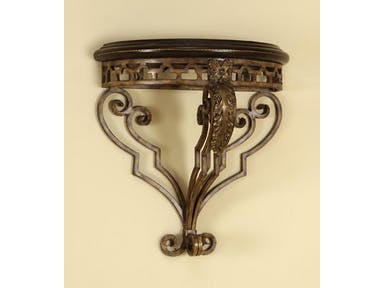
Maitland-Smith Accessories Iron And Antique Brown Leather Wall Bracket, Brass Accents Wall Decor 1451-003H
Classic Brown
Think of dark wooden cabinets, off-white tiles, and brushed nickel. Combine these and you create the perfect link between traditional and modern interior designs. Add a creative flair by putting some vintage-looking stools in your space.
Clerestory windows can help in bringing in more natural light. Don’t be afraid to mix the old and the new so that you achieve a stunning look.
Enhanced Features
You can also use brown to improve the architectural details in your home. Remember how plain white walls can make a room look dull? You can improve the look by adding a wedge bookcase, a red cushioned chair, and some accessories that have an interesting punch of color.
Soothing Brown
An ideal color palette for workspaces is no less than neutrals. These offer a relaxing vibe that is difficult to match.
Palettes of taupes, tans and lighter browns will also work on home office furnishings and accessories. Layer the browns for added interest. As you layer, don’t forget to put a punch of any interesting color elsewhere. Green is a notable hue to consider.
Brown Is Warmth
Brown is the go-to hue when designing for warmth. In a sitting area, for instance, you can have a lounge chair outfitted with the contrasting colors of chocolate and cream. This duo would work well in creating high-style furniture.
Brown Mosaic Backsplash
One of the boldest kitchen backsplashes that you can use is the brown glass mosaic tiling. This same concept can be used with ceramic tiles which you can use between countertops and cabinetry. As you do this, remember to incorporate your personal touch in the kitchen.
Brown Is Calm
Different shades of brown offer an aura of calm especially inside the bedroom. A canopy style bed can have a brown duvet with throw pillows in a lighter shade of this same color.
You can also add a wave of calm as you layer on visual interest. You can unify the ensemble through color, patterns, solids and a mixture of stripes. Don’t focus on just one element, learn to understand how each work with all the others.
Cinnamon Is Also Brown
Try finding a furniture fabric that will fit the brown home challenge. Neutrals are a wonderful option in seating areas. Imagine a cinnamon-colored couch that would contrast with the light yellow walls, oversized artwork on walls, and the floor lamps.
Tags: brown, brown color palette, brown interiors, browns, decorating with brown, McCreerys, McCreerys Home Furnishings, shades of brown
Posted in Color Schemes, Interior Design 101, Interior Design Elements | Comments Off on Shades of Brown – Creative Use of This Composite Color
Follow us on our social media


© McCreery's Home Furnishings | All Rights Reserved | Privacy Policy
