- Follow us:


Sunday, March 24th, 2019

Traditional fireplaces will look more stylish with these Uttermost Accessories Daymeion Metal Fireplace Tools.
Thousands of years ago, ancient fire pits were already in existence. These were the predecessors of the modern-day fireplaces that we now enjoy and these are a far cry from the fires that were placed inside dwelling places.
Beginning in 500 AD, in the Medieval era, houses with different luxurious levels were made and along came fireplaces with fitted chimneys. Materials used were bricks or stones and the typical fireplace contained different parts including the flue or chimney, smoke box, fire box or the fireplace itself, and the hearth.
The English peasants who lived in tiny huts used a central pit for their warmth and cooking. The smoke exited through a hole on their roofs. By 1066 AD, these fire pits became fireplaces which were moved to the outside walls. It then became possible to place a fire in every room.
By the 1700s, there was a scarcity of timber so it was during this period when coal became a necessity. This was during the time of Ebenezer Scrooge in the Charles Dickens’ novella A Christmas Carol.
By 1741, the Franklin stove came into existence. It was a free-standing stove that was made of iron. It was often situated at the center of a room and looked very much like an inverted siphon. The Franklin stove was able to radiate two times the heat with just 25% of fuel used.
In the late 1700s, Count Rumsford came up with the shallower and smaller fireplace. This is what we now have in our modern-day homes. And with the advent of central heating in the 1900s, the fireplace became less of a source of warmth. It became more of a focal point that’s decorative in nature.
Parts of a Contemporary Fireplace
The vent, back in the day, was used to channel up the smoke outside of the building. It was not until the 11th century when the chimney was invested. This paved the way for different fires to be placed in different rooms. Fumes and smokes were no longer a problem.
The next part is the smoke-box. This is the chamber found at the bottom of a chimney pipe. It is there as a buffer from downdrafts. The fireplace is right under this box and this is where the fire is lit.
Another part is the hearth which is the brick or stone platform where the chimney and firebox are both built. This could sometimes go outside the fire-box then into the room. It offers that added protection from any rolling logs.
The convection chamber for fireplaces was inveted in the 18th century. It was Benjamin Franklin who came up with the concept which led to the creation of more efficient fireplaces and stoves.
The first design for modern fireplaces, made by Count Rumford, drew the smoke out of the structures. Because of his design, the fireplace is no longer where cooking and warmth are done and sought respectively. The fireplace has become an attractive part of a room.
Make Your Choice
Many homeowners of today want to have a traditional fireplace in their habitats. They want to replicate the look of wood-burning fires. The warm ambiance that flickering and cackling fires create are just difficult to surpass.
There is one other option that is also becoming more popular each year – the contemporary fireplaces.
These gas fireplaces are styled with colored glass encasing the flames. Shiny metal is also often used as a material to decorate the fireplace. Just like traditional fireplaces, these versions, offer the same benefits but with a different style or look.
Modern or contemporary fireplaces now have unique designs which push the boundaries in terms of poshness. Choose from panoramic angles, black onyx, flickering flames in unison, and other such features. The contemporary ones have become a piece of art to many homeowners.
Tags: fireplace, fireplace design, fireplace elements, fireplace history, fireplace parts, McCreerys, McCreerys Home Furnishings
Posted in Architectural Elements, Decorative Elements, Interior Design 101, Interior Design Elements | Comments Off on Traditional or Contemporary Fireplace?
Thursday, January 26th, 2017
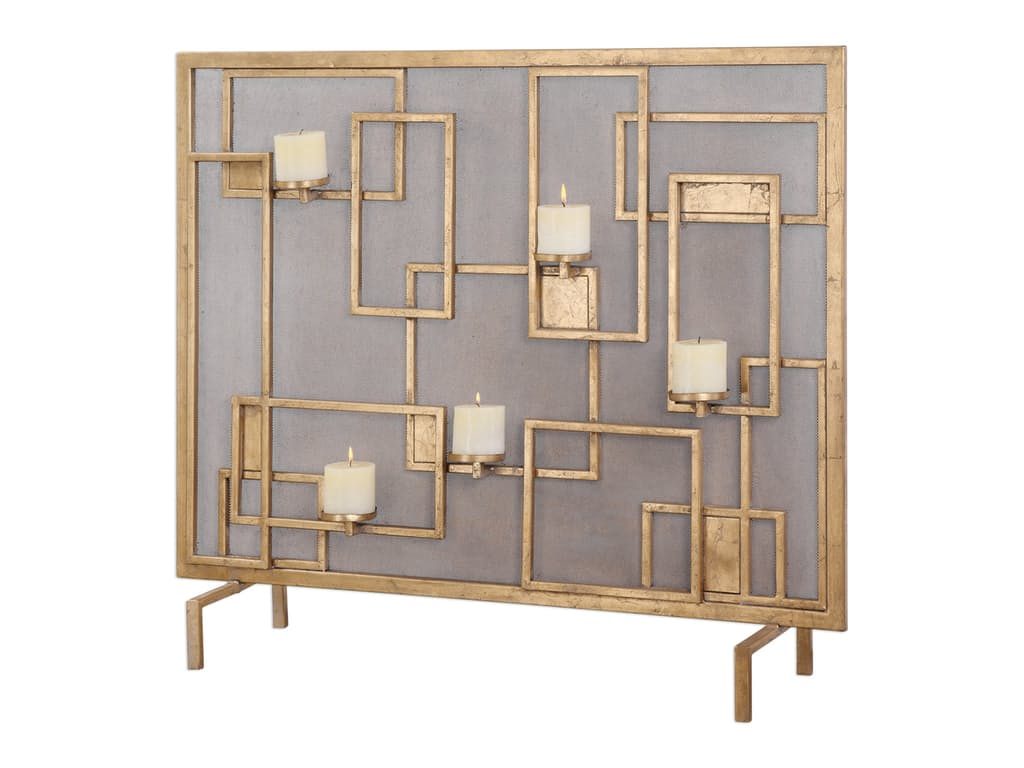
Uttermost Dining Room Mara Fireplace Screen Candleholder 20179
A fashionably designed mantel is one of the most crucial interior design aspects in a living space. This has the power to draw the eye when a guest enters the room. Much like the rest of your home, the way that you decorate the mantel shows how stylish you really are.
If you’re thinking of updating the mantel in the living room or dining room, then you probably have no idea where to begin. These tips should help you get started –
Learn Balance
An important element of decorating any mantel is balance. This is all about balancing the objects in a space. Make sure that the objects you bring to decorate that space are symmetrical. For homes that have a more conservative and classic look should follow the rules of symmetry to a T. For a more modern approach, though, you can just put in accessories that best fit your personality.
You would also want to pay attention to another element of design – scale. Remember this so that your design pieces will not overwhelm the space. Experiment with different textures, shapes and colors. You might be surprised at how much you would like a bold color or a lofty statement piece.
Layering Is In
In the South, it is common to see stylized fireplace mantels. With more layers that are added, the prettier the finished look becomes.
A famous mantel decorating idea in that area is to layer different sizes of unframed or framed art. These adorn the mantel. Don’t get the idea that all you can do is hanging. You can either hang or you don’t.
If you have to hang a framed piece of art or a photograph, make sure that you don’t do it above eye level. Just hang it a few inches above the mantel as this is the ideal height. Local artwork is a more meaningful mantel accessory. Imagine having a locally painted scene of your city or town hung above your living room mantel. It will surely be a conversation catalyst.
Mirror, Mirror on the Mantel
Another wonderful fireplace mantel designing tip is to hang various shapes and sizes of mirrors instead of the usual one piece. Either way, whether you use a statement piece or a group of mirrors, be sure to make the mantel frame the decorative element.
An antique-looking mirror will surely draw the eye to any impressive living room mantel. Add a more modern approach by installing a metal-framed piece.
Mirrors also help in brightening up a living or dining room.
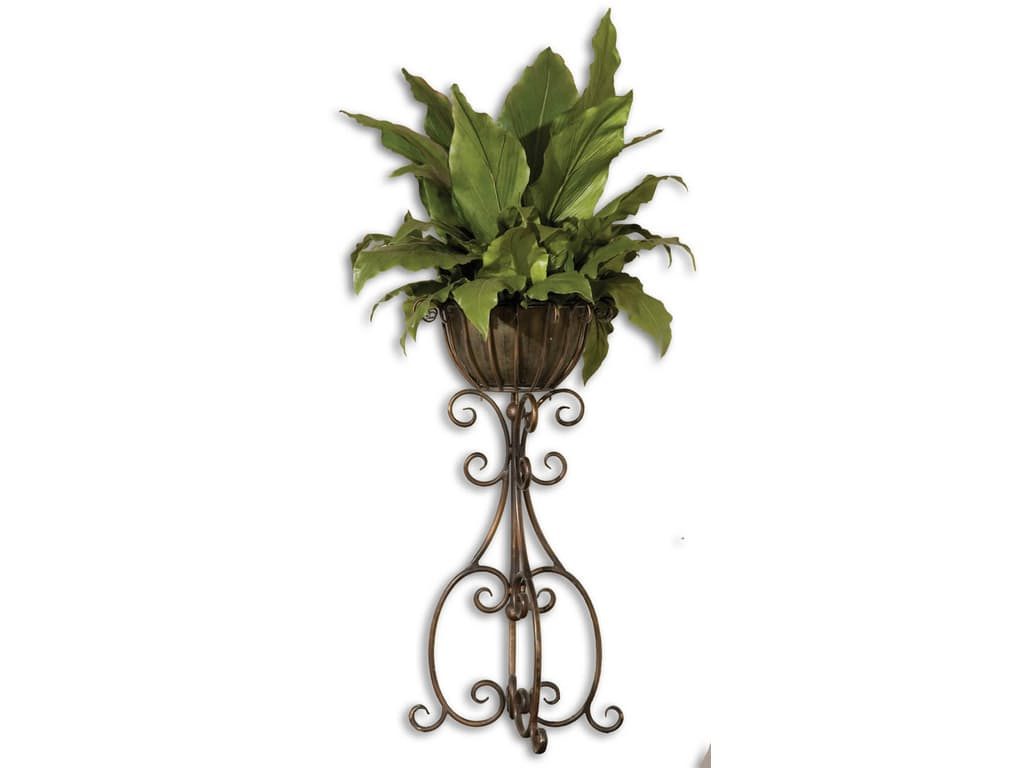
Uttermost Accessories Costa Del Sol, Potted Greenery Botanicals 60090
Greenery for 2017
A fireplace is often made of hard and heavy materials like stones or bricks so they tend to weigh down a room especially if they are not dressed properly. To break the monotony and dry look that these materials project, then you have to soften them with fluid lines. And what better and easier way to do this than to bring in some potted plants?
Having a pop of green can complement a wide array of designs. Floral arrangements, on the other hand, add a more feminine look.
Artistry Is the Key
Whether you are an art connoisseur or just an admirer of works that are visually pleasing, having an art display is the way to go. You can settle for the gallery wall or you can just have one piece sit atop the mantel. Alternatively, you can also make a strong statement by using a single piece of art which reflects your taste.
Switch Like the Seasons
The mantel can also reflect the current season. Embrace the season by adding flowers when it’s spring and putting a bowl of pinecones during fall.
Remember that the hearth is the focal point of a room so consider which among these decorative elements you will soon put to good use.
Tags: decorating fireplace, decorating fireplaces, fireplace, fireplace decor, fireplace design, McCreerys, McCreerys Home Furnishings
Posted in Dining Room Design, Interior Design 101, Living Room Design | Comments Off on Fireplace Cozies and How to Make ‘Em
Tuesday, December 27th, 2016
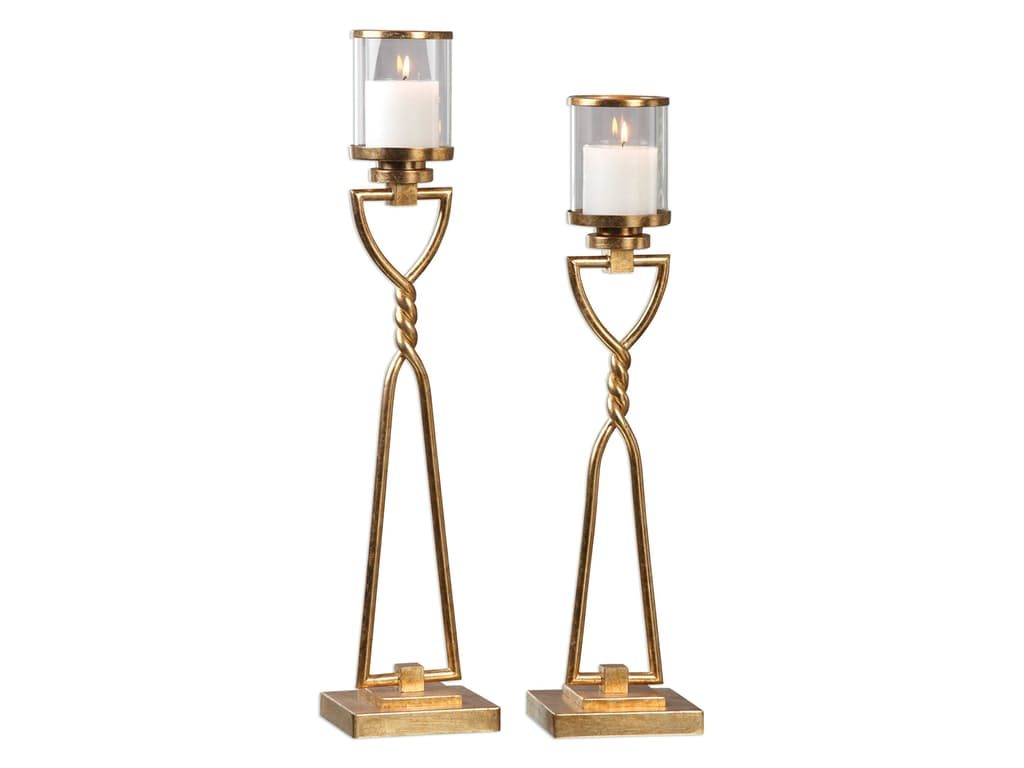
Uttermost Accessories Susana, Candleholders, S2 20182 are a great substitute for traditional flames.
Cultures and humans all over the world have used and loved fireplaces for many centuries. They have traditional uses especially back in the day when they have been literally used to cook food. They are mainly built to give warmth to people during the coldest winter day or night.
A fireplace can also be used as a gathering place for people or relatives who want to bond in the warmth of its glowing light.
So which among these reasons prodded you to research about fireplaces today?
Fireplaces of Antiquity
The ancient fire pit is believed to be the predecessor of modern fireplaces. It sits in the middle of ancient rooms and is used as a meeting place where people also gather to warm themselves. A hole up top provides the needed draft though which smoke escaped.
This ancient fireplace was used for thousands of years but when the two-story architecture became common, another design was needed to accommodate the change. The fireplace was then moved on the walls outside. It was a lot easier to put it there as well as the chimney right off the side of the housing structure.
Prince Rupert, in 1678, designed an improved grate where firewood is supposed to sit. The air could then easily get underneath the pile of fuel. In the 1700s, it was Benjamin Franklin’s turn to improve the fireplace. He called this the Franklin stove. The stove was moved to the center of the home in order to produce more heat. This was made of cast iron, therefore, it radiated heat even long after the fire’s put out.
In 1796, Count Rumsford came up with exciting new design. It was a shallow, tall firebox complete with streamlined throats for an improved way of drawing smoke out. The fireplace was then incorporated as a part of the walls of homes rather than something that’s built outside.
In the 1950s, ranch houses that have central heating turned the fireplace into a decorative part rather than a cooking or heating device.
In the ‘70s, prefabricated fireplaces were manufactured and homeowners rushed to purchase these cheaper versions.
In the ‘80s till the present day, homeowners started to search for wood burners and pellet appliances.
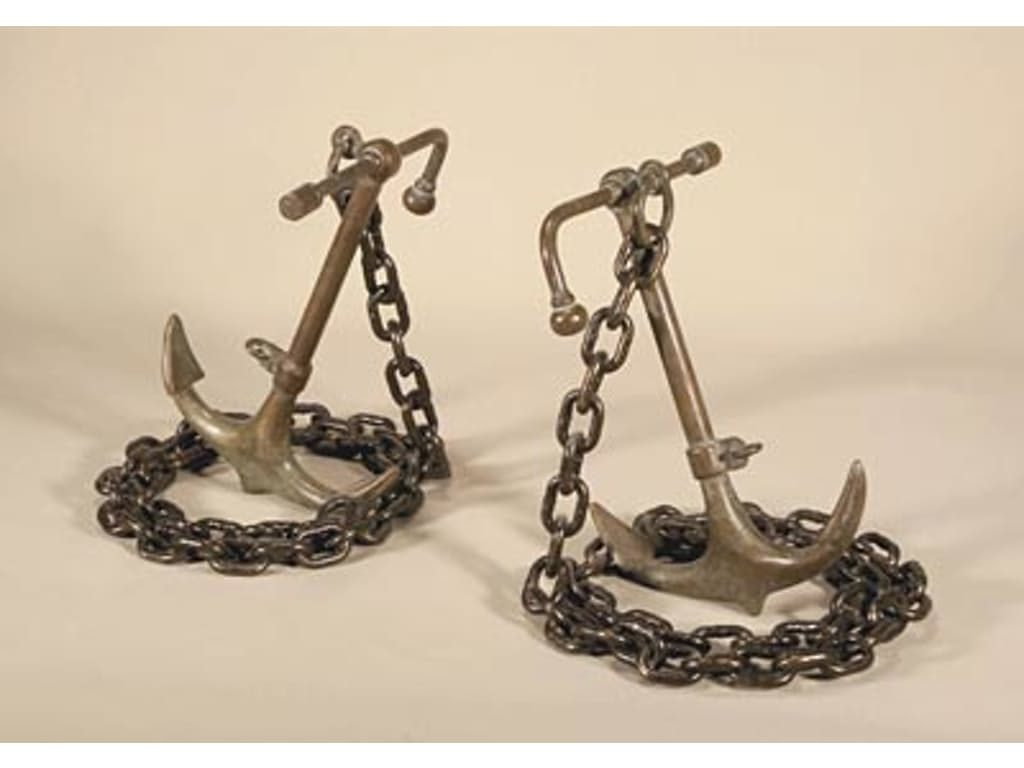
Maitland-Smith Accessories Pair Of Iron Anchor Bookends 1253-456 will make an interesting addition to your new and unique fireplace library.
Your Fireplace: The Center of Attention in Your Home
Visualize your fireplace as a stage where you should showcase your style. Be creative, be bold, and with the right supplies, you should be able to turn even an unused fireplace from being an eyesore to the room’s focal point.
Before you set out to decorate the mantel, be sure to check for broken bricks or cracks. The average cost for repairing a fireplace is around $380. Clean away the ashes and grime.
Your fireplace is the best place to display every little thing from flowers to art. You could also have your personal collection perched on the mantel.
The mantel actually says a lot about your style – whether you’re a minimalist or a lover of ornate things.
The mantel should be considered as a separate piece of furniture. It is similar to the console which can be easily set up as the focal point of a room. Don’t be stuck with the idea that fireplaces are a part of your home’s architecture. Think of it as the possible star of your interior design instead.
A classic way to decorate an unused fireplace is to mimic the look of a working one. Use candles and candle holders in different shapes and sizes. Use a riser to hold the candles above ground. Just be sure to follow fire safety protocol when decorating with candles.
Another decorative option is to put a mirror in that empty space. This should help spread the light in the room. ‘Remember the candle idea? Just add a mirror behind the set candles for a replicated effect.
‘Running out of ideas? Then gather all the books that you collect and have them arranged inside the fireplace. These will surely liven up the room.
Tags: decorating fireplace, decorating fireplaces, designing a fireplace, fireplace, fireplace decor, fireplace design, McCreerys, McCreerys Home Furnishings
Posted in Architectural Elements, Interior Design 101, Interior Design Elements | Comments Off on Fireplaces: Decorative or Merely Functional?
Sunday, April 17th, 2016
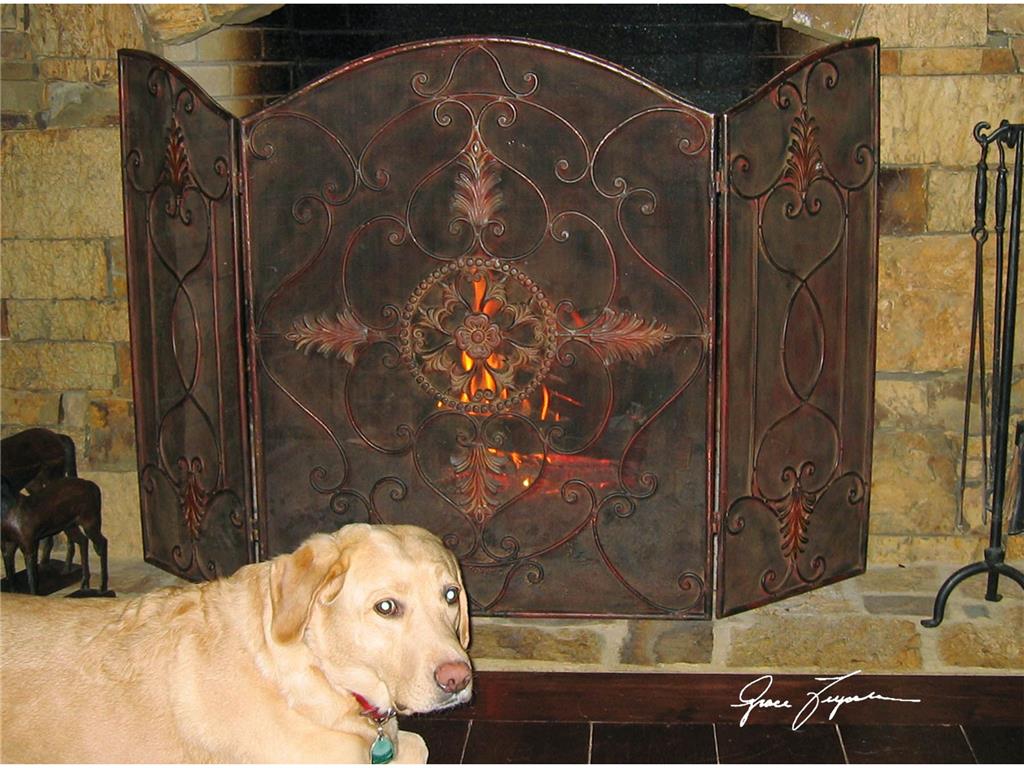
Uttermost Accessories Egan, Screen 20508
Have you ever looked at a fireplace and considered it to be a huge design opportunity? Not a lot of homeowners consider fireplaces to be more than a mere firebox. Most outdated fireplaces remain blackened and are surrounded with ashen tools. If you are looking for a way to return your home’s fireplace into its glorious days, then you need to cook up something to make it the focal point that it should be. There are a lot of options from cutting edge to traditional.
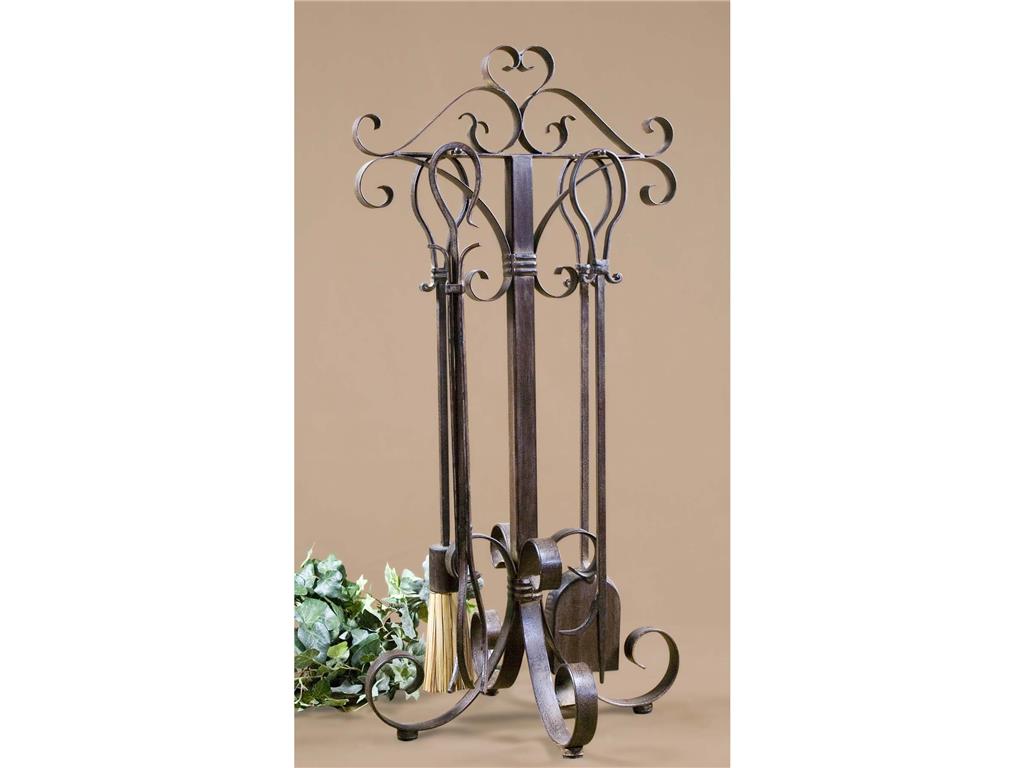
Uttermost Accessories Daymeion, Tools, S.5 20338 is a decorative set of tools for the fireplace. Each is hand-forged metal with distressed cocoa brown color and a light tan glaze.
Think Out of the Box
You have to find a way to look beyond straight lines and the box in front of you. Have the open fire pit design so that the chimney will double as an industrial sculpture right in your home.
You can also have the fireplace backlit by onyx if you have a contemporary living room setup. Adding an accent wall will make the fireplace literally pop. It will become a vibrant mosaic that will emphasize the beauty that is your fireplace.
If you have a more minimalist taste, you can simply add texture by installing colorful tiles that match the color of the walls. This is a great avant-garde move to unleash your more artistic side.
Transform your fireplace by having it surrounded with equally beautiful elements. There are decorative rocks and driftwood that you can combine to come up with a natural motif.
Do you want this project to be more personal for you? Then go to the nearest river to pick out shiny pebbles, stones and round rocks. You can then have those turned into a craft project. If not, a craftsman can also assemble them for you.
You can also set up shelves atop the fireplace. These can house your most beautiful book collections. Imagine having those rare books seated atop the beautiful fireplace complete with lovely surround. And what if the fireplace surround is even honed Brazilian slate? What a sight it would be!
You can now give the walls surrounding the fireplace a renewed purpose. They can now be great storage areas for collectibles and other decorative items.
A unique fireplace does not have to be bright or supersized in order to make a huge impact. Even a traditional but well-kept fireplace will still stand out depending on the design.
Don’t you just get tired of seeing the usual bricks as the expected surround? Replace them with fieldstone in order to add a surprising texture, color tone and variety.
You can also play with the usual fireplace elements. Ceramic tiles may be common as they can resemble brick but when they are vertically oriented, then what you achieve is the unexpected.
Always pay attention to what’s inside the firebox. Less can be more. A white surround can effortlessly draw the eyes into the firebox more so when there are one-of-a-kind firestones in there.
Now veer your attention towards your living room fireplace. You can make that uninteresting sight a tad more exciting if you include panelled walls and marble surround. This should provide a classic tone in your home.
Always keep the look of your fireplace a fresh one. Add graphic fabrics such as zebra print if you want the area to stand out. Adding a two-sided insert means you can enjoy the fireplace in both the family room and the living room.
The simplest changes can transform even the dullest, unused, un-maintained, outdated fireplace. Sometimes, all that the fireplace needs is a fresh coat of white paint and tile hearth. You can also revolve your art collections and antiques. If white paint doesn’t work, then go for black. What matters is that it will reflect your personality as it will become a tangible showcase of the individual that you are.
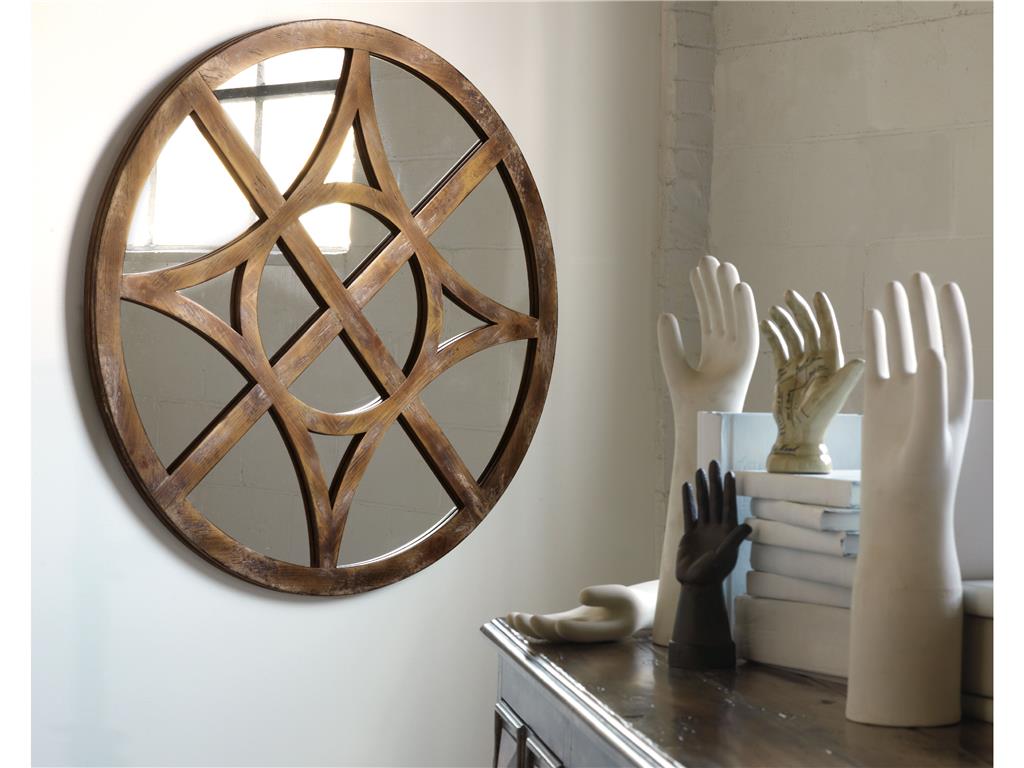
Hooker Furniture Accents Melange Rafferty Mirror is also perfect atop the remodelled fireplace.
Tags: designing a fireplace, fireplace, fireplace decor, fireplace design, fireplace elements, McCreerys, McCreerys Home Furnishings
Posted in Accents, Architectural Elements, Interior Design 101, Interior Design Elements | No Comments »
Thursday, February 11th, 2016
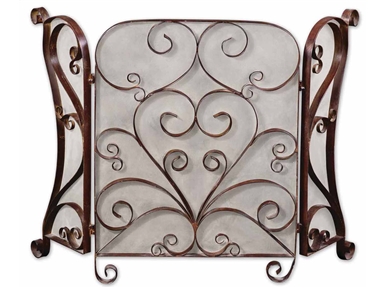
Uttermost Accessories Daymeion, Screen 20278
Fire is known to be an essential element to man. It is primal but is key to man’s survival. Fire can be used to describe passion, deep love or hatred, even vengeance. Fire is essential in shaping the world. To come into existence, it needs three elements – air, fuel and heat. The fireplace is a great way to bring in the lovely flames into your home. If you have a fireplace in your home, have you ever wondered how to dress it up?
Fireplace in the Middle of the Living Room
Having an open fire right in the middle of a room can have its benefits as well as disadvantages. The biggest advantage is that you won’t have to worry about heating up the living room. With fire comes smoke, though. While others love the smell of smoke because of its tanginess, others do not want the hazardous smell to emanate inside their home.
In order to control the smoke, or if you want to clear it out of your home, the simple solution is to cut through the roof. The smoke will automatically go up there. The hole will allow the smoke to escape but, of course, you do not want a simple hole to become a part of your home. While the smoke would waft up there, that hole is not at all appealing.
Now say hello to the chimney. The fireplace and the chimney are companions that always go hand-in-hand. This union was invented in the 12th century. These features were considered as part of castles and homes of noblemen.
Extra care was taken in making brick or stone fireplaces. By the 1500s and the 1600s, the fireplace had become a regular addition to people’s homes.
Beginning during the Medieval Period, homes in varying grandeur were built with fireplaces and chimneys. These were also built with brick or stone. The brick pipe, long stone or vent channelled the smoke out of the houses. The smoke box which is the chamber down the chimney pipe is used as a buffer against any downdraft. The firebox is just below the smoke box and is where you should start the fire. The hearth is the brick or stone platform where the firebox and chimney are both built. These sometimes extend out of the firebox to the room, to offer protect from rolling logs.
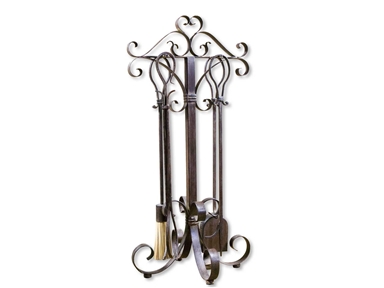
Uttermost Accessories Daymeion, Tools, S5 20338
Fireplace Advantages
Fireplaces are lovely parts of a home. They offer numerous advantages. This means living in a home where the fire is now safely contained inside a room. There is also the stone chute to make the smoke disappear from the room. These are big improvements from just that single hole on the roof.
In smaller residences, the fireplace can serve as a heater as well as a place where food can be cooked. Fire can keep the house warm while providing a place to heat pots or pans of scrumptious dishes.
While the fireplace became more renown, it has become a part of many homes. A totally new industry sprung up, aiming to supply accessories and equipment used in fireplaces.
The fireplace grate was invented long ago (1600s) and were a development from the andirons. Andirons can hold huge logs, even chunks of firewood but the fireplace grate contains the fire, charcoal, kindling and fuel (wood). Grates vary in sizes from the smaller grates to the larger wood-burning fireplace grates.
Fenders can be made of iron or brass and are used as fireguard. These prevent ash or rolling logs from burning that beautiful carpet right in front of your fireplace.
Add the dust bin, bellows, fireback, fire screen and other tools and you’re ready to start enjoying the crackling flames in your living room.
Tags: designing a fireplace, fireplace, fireplace design, fireplace elements, homey, homey ambiance, homey ambience, homey atmosphere, homey interiors, living room accent, living room accents, McCreerys, McCreerys Home Furnishings
Posted in Accents, Bedroom Design, Interior Design 101, Interior Design Elements, Living Room Design | No Comments »
Follow us on our social media


© McCreery's Home Furnishings | All Rights Reserved | Privacy Policy
