- Follow us:


Tuesday, August 1st, 2017
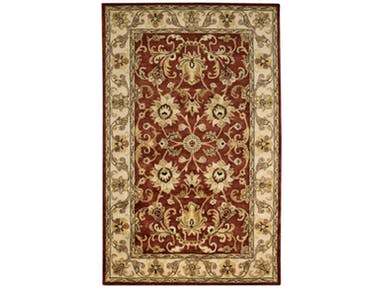
Capel Incorporated Floor Coverings Eloquent Garden Rug 9205NS02000800560: What is an Arabian home without a carpet?
If you see a home that has Persian rugs, ornate prints, silk fabrics, luscious lamp shades, and valances, then most likely, you’re looking at an Arabian-inspired home. The Arabian interior design is a style that highlights things that are opulent, lush, and even Bohemian.
There isn’t one rule that is strictly Arabian. This can vary from Bedouin style to rustic, lavish, and the most exaggerated interiors.
Arabian Hues
The most popular colors that are used in the Arabian interior design are indigo, blues, terracotta pink, green and dark browns. Other options include white spaces but with some colorful and bright accessories.
Pan-Arab colors are red, white, green and black. Individually, these hues represent one Arab dynasty. Red was the color of the flag that was held by the Hashemites and Khawarij. White was the color used by the Umayyad Caliphate; green flew proudly on the flag of the Fatimid Caliphate; while black was used on Muhammad’s banner, and even the Rashidun Caliphate.
These same colors can also be infused to your Arabian-inspired home.
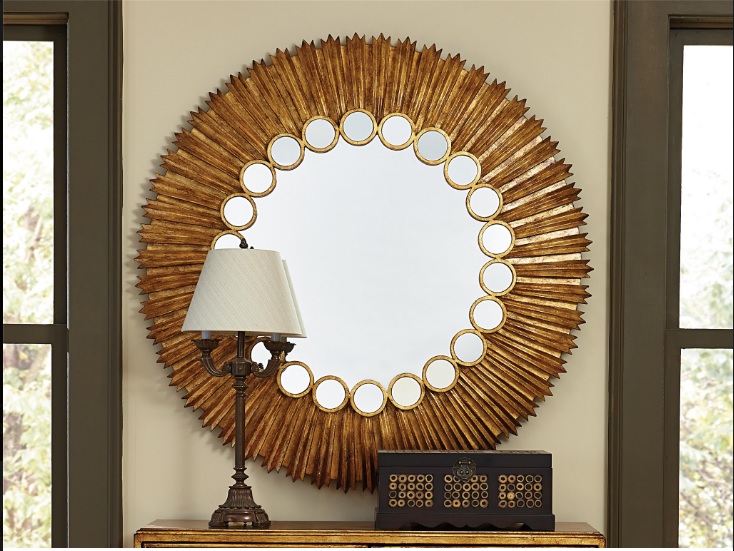
Or this lovely Key Largo Round Mirror from FFDM’s Cachet Collection?
Arabian Patterns
Arabic interiors are not Arabic if they do not contain Oriental, intricate patterns. These are noticeable in their colorful mosaics, textiles, flooring, and walls. They even have carvings on their wooden windows and shutters.
Wikipedia discusses Islamic decoration to be filled with figurative images. These make use of geometric patterns which evolved and became even more beautiful as centuries passed.
Islamic art is very much a part of many Arabian patterns. These are often repeated circles and squares which are either interlaced, overlapped or formed to create the most intricate designs.
Our nation, as well as other Western nations, are correct to be interested in Arabian geometric patterns. Artists and craftsmen including Maurits Cornelis Escher, a Dutch graphic artist. There is something truly interesting about this patterns because they seem to have a mathematical logic.
Escher drew as he became inspired by nature – he used landscapes, buildings, lichens, and insects – all patterns that are not impossible to be included in Arabian patterns.
Arabian Furniture
The wooden furniture pieces in authentic Arabian interiors are often embellished with carvings and mother of pearl inlays or precious woods. You won’t be served on tables when you are offered coffee and tea. What you will be presented with are huge brass trays.
As you go to the living room, you will see the biggest sofas with a lot of colorful cushions. It is also common to find room dividers which are made of wood with intricate patterns.
Remember that when it comes to Arabian seating, you have to feature the art of mosaic. You also have to show the beauty of Arabic calligraphy. Use potteries, metals, wood crafts, lots of marble and ivories.
Arabian Lighting
This is the finishing touch to your Arabic interiors. Pick the lighting fixtures that can produce diffused, soft light. Invest in Moroccan lanterns, copper or brass pendant lighting. Have you seen lovely henna lamps? Oh, you just gotta have those.
The Purpose in Arabian Style
The proposed viewers of Arabian style are supposed to understand the underlying realism in the architectural details or furnishings. Much of Arabian culture whether on books, textiles, ceramics or the art of decorating, all lean toward transformation.
The Arabs from the Western Atlantic Ocean to the eastern Arabian Sea and the Mediterranean Sea are the very places where this style is born. The Arab world and culture are now subdivided into the Al-Mudun (urban culture), the Ar-Reef (rural culture), and the Al-Badow (nomad culture).
Elegance with sizable drama are the keys to decorating in Arabian style. The interiors must have a unique aura filled with the elements mentioned above plus some decorative flowers and plants.
Tags: Arabian design elements, Arabian homes, Arabian interior design, Arabian interiors, Arabian-inspired designs, McCreerys, McCreerys Home Furnishings
Posted in Interior Design 101, Interior Design Elements, Interior Design Themes | Comments Off on Arabian Interior Design – How to Get the Look
Wednesday, February 22nd, 2017
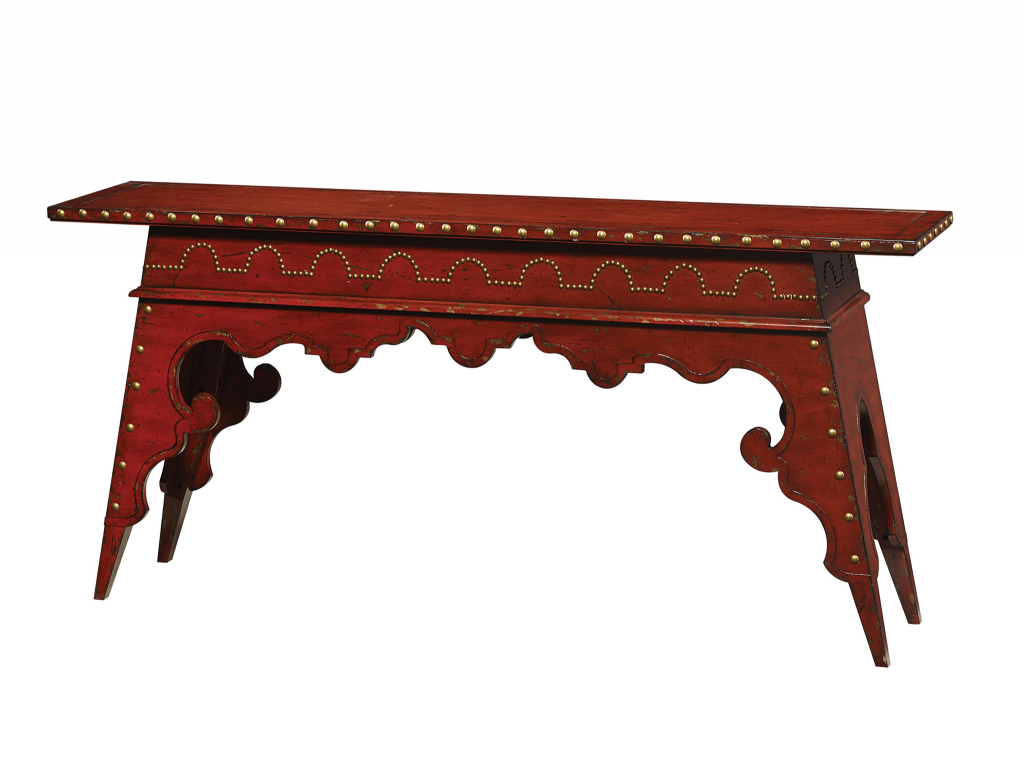
BEAUTIFUL FRIENDSHIP MOROCCAN CONSOLE TABLE comes from the Humphrey Bogart collection of FFDM.
Arabian style makes one think of hot summer nights with colorful and ornamental features. These are definitely different from bare monochromes. This style is found throughout Europe and more so in Southeast Asia because this has a lot to do with the Muslims conquering both territories during the 7th and 8th centuries.
These days, Arabian style is still going strong.
The Arabic style is known to be luxurious and rich. There are fundamental elements in Arabic interiors such as windows that are closed by bars as well as carvings made of wood or plaster.
Arabian homes are also packed with repetitions and graphic tiles. Such repetitions are done to signify the infinite power of the Muslim god Allah.
Humans and animal forms are barely seen inside Arabian homes because the Muslims teach that Allah’s work is impossible to replicate.
Foliage is seen a lot with a lot of patterns. Though there are patterns everywhere, there is still the need to simplify.
Arabian Ornaments
Arabian windows create a gentle light effect inside a room. Double or single window openings overlap through the arches. They are also generally located on the upper part of walls. Bottom parts of walls form panels and are coated with some ornamentation.
Arabian ornaments are referred to as arabesque and they all form an obvious grid. These have geometric as well as stylized plant character plus labels. There are also some canonized handwritings since human images were banned by the Muslim religion.
Arabian Architecture
Arabian architecture is what’s referred to as architecture of the veil. This is because the beauty is often seen within the interiors. Amazing courtyards complete with pools and fountains cool the inner rooms. All these are concealed from the outdoors.
Arabic architecture makes use of decorative elements such as alabaster, stucco, wood carvings, marble, figured bricks, tiles, cut stones, glass or marble mosaic, wood or ivory inlay, and paintings.
If you observe more closely, you will see that carved wood wares have already reached perfection. The Arabs have perfected the use of valuable species of wood especially in the creation of mosaics. Ivory has also been used to show lovely mosaics.
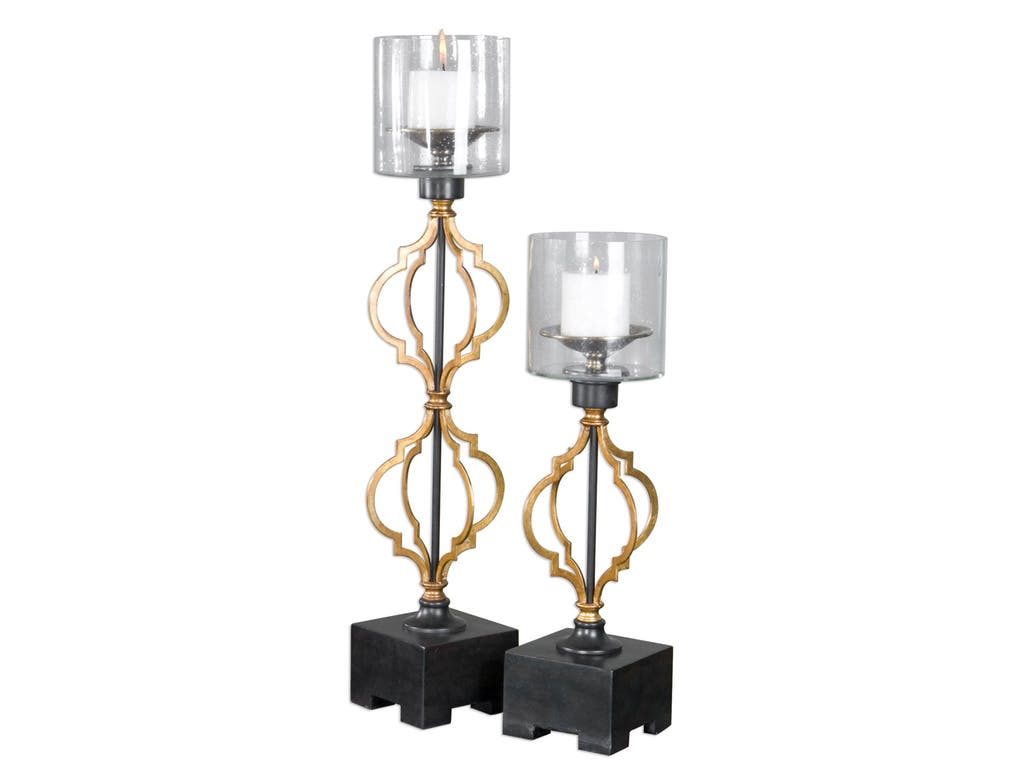
Accessories Uttermost Gilberto Moroccan Candleholders S2 20099
Arabian Furnishings
If you’re into numerous furnishings, then Arabian style isn’t for you. The chief decorations inside Arabian dwellings are ottomans and wooden sofas. Add some carpets and fluffy pillows, a low coffee table and form them into a hexagon or octagon and you’re done.
Arabian furniture is all about wooden backs, legs and arm rests. Geometric ornaments are common in Arabic culture so go ahead use them on your storage shelves, chests and screens. Use ornate wardrobes and wall niche with doors.
Carpets must also be used in ornamentation. Use dishes, pitchers, bowls and other metallic or ceramic wares.
It is also common to find a lot of low seats or even just some pillows all over the floor. This can be attributed to an era when Arabs lived a nomadic lifestyle. During those times, families had to sit inside their tents, hence, the low seating areas.
Touches of bronze and gold, even silver, are another feature of the Arabian style. Give importance to colors like indigo and deep reds.
Add a lantern or two that are made of filigree metals. This will allow the light to shine through while still providing interesting shadow patterns on your ceilings and walls.
Arabian Characteristics: In a Nutshell
Tags: Arabian interior design, Arabian interiors, Arabian style, McCreerys, McCreerys Home Furnishings
Posted in Interior Design 101, Interior Design Themes | Comments Off on Arabian Interiors: Ornamentally Rich and Luxurious
Follow us on our social media


© McCreery's Home Furnishings | All Rights Reserved | Privacy Policy
