- Follow us:


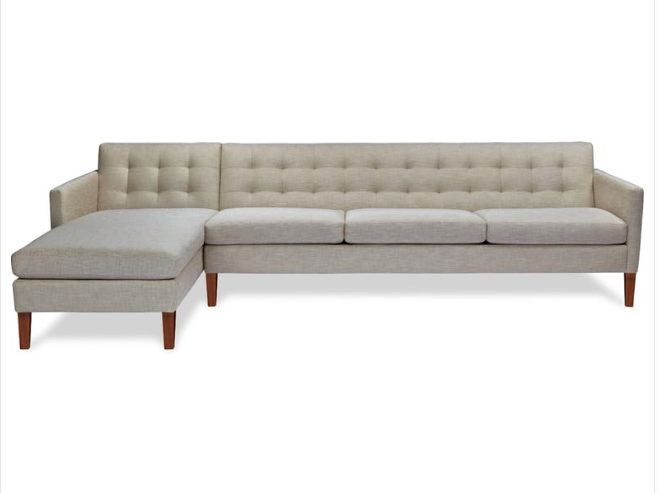
The American Leather Living Room Ainsley-Sectional may not feature the bold retro colors but its sleek legs and slim look are retro necessities.
The American Leather Living Room Ainsley-Sectional may not feature the bold retro colors but its sleek legs and slim look are retro necessities.
Retro style covers many design decades. This term was used in the past as a means to describe styles and trends that were in. If this were to be the basis, then every style eventually becomes retro. At this time, styles that are from the ‘50s, ‘60s and ‘70s are considered vintage, therefore, retro.
If you’re willing to cross over to any of these interior designs, then it’s time to go retro. Always think of bright hues, bold designs, and an awesome flair. You have to be daring because retro requires a certain set of personalities. It is far from laidback or casual; it’s busy, even bordering funky.
Retro Hues
To be truly retro means you have to pick retro colors. Don’t worry, this is not difficult to do.
Begin with avocado green. This is the retro hue of choice followed closely by mustard and fusions of black, brown, red, and white. Hot pink and purple are also amazing additions to your retro style home.
You can place a little of everything and mixes of green, blue, indigo, orange (the bright type), and sunshiny yellow. Checkered patterns are also welcome as are tie-dyed fabrics and paisleys.
Retro Textures
Texture is an element that you must never ignore when it comes to retro designing. Here, in fact, it’s okay to go overboard. Use soft vinyl, shag carpets and crushed velvet. Keep in mind that you have to be bold about everything so go ahead and use a lot of textures.
Retro Accent and Flooring
Here’s another easy thing about retro – you don’t have to limit your use of accessories and accents. Retro pieces include door beads, rugs, lava lamps, stools, and skate tables. Sculptures and art are often unique and bold, could also be abstract.
As for the flooring, your options are these three – shag carpeting, tiles patterned like checkerboard, and natural wood.
Retro Lighting
Every retro style home must have its floor or desk lamps. You can also opt for a multi-colored chandelier.
Retro Furniture
Now this is one design element that we have to focus on when it comes to retro style. The pieces that you choose are crucial in creating the retro feel in your home. Get the wrong furniture and you’re looking at a totally different or awkward era.
Broad and long sofas are a must. These must also be decorated with different-colored pillows for the needed burst of color. Chrome barstools are also a wonderful addition (especially the ones that have a red seat) to the kitchen or the bar. Puzzle piece ottomans offer a unique seating option for your guests.
It’s no surprise that retro furniture is still much wanted nowadays because its simple base constructions and wooden structures with metal feet are difficult to ignore.
If you’ve seen the Bauhaus style, then you’d know where retro style gets its influence. With this style, quality is a must for each furniture piece while still not steeply priced. Add in the element of comfort and you’ve arrived, style-wise.
Just imagine the milling techniques back in the 1960s till the 1970s and you know that you should include a bit of the perforated hole design and the metal fronts. Filigree legs provided the light and comfortable look that’s a recipe for the perfect retro home.
Going further on your furniture choices, use tables and side tables with a metal or solid wood construction. A gilding of metal is also a great addition. For the cloth covers, use sea green, musty yellow, brown or beige. Muted orange also appeared during the ’50 till the ‘60s so that’s also an option.
Don’t be afraid to mix different materials so you can say that you’ve truly jumped into the retro bandwagon.
Follow us on our social media


© McCreery's Home Furnishings | All Rights Reserved | Privacy Policy
