- Follow us:


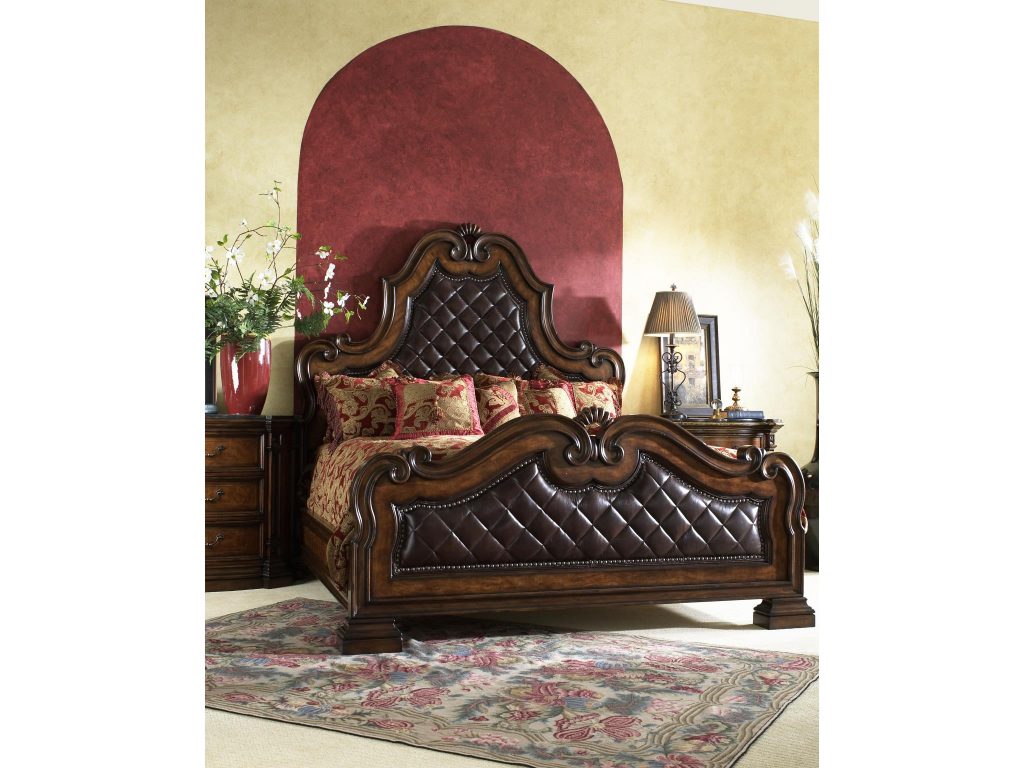
Viniterra Collection’s King Leather Panel Bed represents both sensuality and sturdy charm.
Have you ever given the history of leather a deep thought? Leather-making is such an interesting process that it deserves to be told and retold to people especially those that have a good many pieces of the said stuff.
The Leather Story
A long, long time ago, primitive man hunted food by going after animals. He then removed the skins and hides from the dead animals and used them as clothing, footwear, even tents. The earliest recorded use of leather was in the Paleolithic period where cave paintings showed the primitive man’s use of leather clothing.
The Paleolithic sites also showed a lot of bones that were used in scraping skins and hides for the removal of hair.
Not long after, man discovered leather preservation through smoke. He also discovered leather treatment when he infused tannin in leaves, barks, twigs and fruits of a few plants and trees.
Much later, earth salts and alum were finally used as tanning agents. These then produced softer and white leather. These were also dyed using different plant dyes.
Leather manufacturing was introduced in Britain by the religious and Roman invaders. Most of the monks from these places were leather experts especially in using it for writing. The Britons had a lot of uses for leather from clothing, shoes, bags and even some warfare articles.
Throughout the centuries, leather creation expanded and grew steadily over the medieval times. So it’s no surprise that you would see period films featuring leather tanneries during the medieval era.
Real or Faux?
So, do you really have to smell or touch leather in order to recognize its authenticity?
Genuine leather, keep in mind, is made from animal skin. These are skins of cattle, pigs, sheep and goats. There are various kinds of leather. The three types are aniline, semi-aniline and the pigmented kind.
When picking the type of leather that you would use, consider how it would eventually look and the foot traffic in the room where it is going to be placed.
Aniline leather is the top-grain, quality leather that does not come with any protective treatment. It is a natural-looking leather because it comes complete with markings. It is susceptible to surface scratches, though.
Semi-aniline, on the other hand, is still pure aniline but it comes with a coating of clear finish or pigment. This makes the leather more durable as it protects it from spills and stains. The coating also gives the assurance that the color will be consistent throughout the entire surface.
Lastly, the pigmented kind is still a top-grain leather but this one is coated with a clear top pigment or layer. The pigments are either shiny or bright-colored. It appears less natural, of course, as the colors are often used to hide the imperfections on the leather.
This is the kind of leather that is often found in many auto upholstery and furniture shops.
The leading differences between real and fake lather are the following –
Smelling also will help you tell that the leather is real. There is a distinct smell to a leather object that can never be replicated by furniture makers.
Follow us on our social media


© McCreery's Home Furnishings | All Rights Reserved | Privacy Policy
