- Follow us:


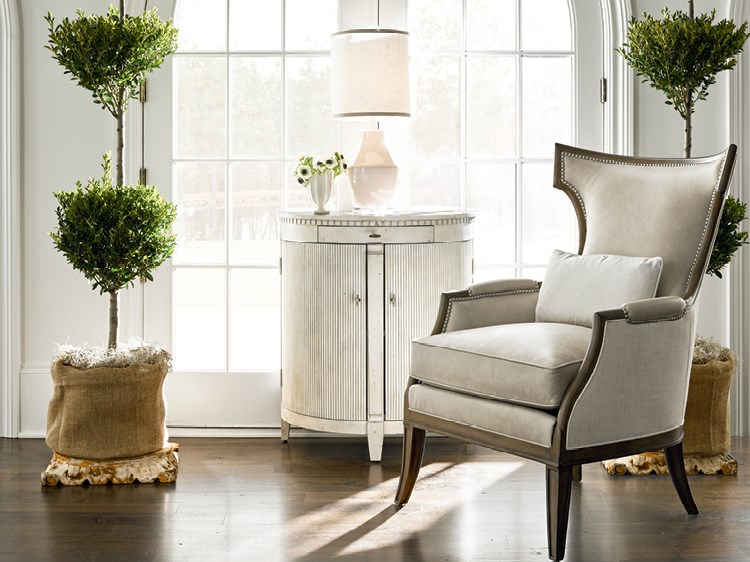
Fine Furniture Veranda Collection
You’ve all probably heard of color psychology and how one can feel blue during rainy days and green with envy on the next. There really are moods and emotions associated with colors that it’s difficult to separate one from the other. There are also universal truths about colors, for instance, the most favored color is saturated blue, and this is according to Professor emeritus Steve Palmer from the University of California in Berkeley.
Other than this shade of blue, the preferences for other colors are already subjective and highly dependent on values, moods or emotions.
Humans from all cultures and ages have their own preference when it comes to colors. Veering towards one hue can be driven by one’s instinct. Or it can be as simple as the association of a color to unpleasant things such as the case of the greenish-brown which tends to conjure images of feces, rotting vegetation or snot.
One’s affiliation to an organization could also affect the way colors are perceived. Take the case of the Berkeley students who detest the Stanford white and red, while the Stanford students also hate the gold and blue colors of Berkeley.
This could also mean that people can adapt to liking the colors that they perceive. This adaptation can take place in just a few hours or days.
People love to associate objects with certain colors as they also link pleasant experiences to certain hues. Many people love red because it represents red lips, cherries or strawberries. And this vibrant color can also effectively move people to action such as which stuff to buy or what food to consume.
Color Perception Backed by Science
There have been many studies – both published and unpublished – about the significance of colors in consumerism. Food and beverage companies understand the importance of hues in influencing their customers.
Coca-cola and McDonald’s, for instance, veer towards red and the latter, red and yellow, because these are the very colors that stimulate people to buy or even to feel hungry. Color consultants are constantly being hired by companies with regard to their logos and packaging colors. These companies know the crucial role that colors have in ascertaining increased productivity and sales.
It is said that DNA or genetics might have very little or nothing to do with the way a person perceives colors. Companies and designers keep studying color preferences because it tends to evolve. What could be the in color from the ‘50s is now retro hype while the clashing hues of the ‘80s just might not make the cut in terms of being fashionable.
The Color Basics
Using colors, effectively, in interior design means you have to learn to use the color wheel. The color wheel is a visual representation of the hues that you could blend together. In essence, you will be eliminating a lot of guesswork when you learn from the outset about analogous or split complementary colors. You can also alter the colors by adding white (tint) or black (shade). You can also create different tones by adding gray.
Learning about the color wheel also means you know what color temperature is. Warm colors are more welcoming while cool tones could leave a room feeling stark (unless you do something to offset that).
Designing with Colors
Again with the color wheel. Get that visual tool so you won’t go wrong with the colors that match. As for the base color that you would use in your home, make sure that you pick the one that excites you the most.
So go ahead, pick any color, yes, any color at all, get to work and then build around that hue.
Follow us on our social media


© McCreery's Home Furnishings | All Rights Reserved | Privacy Policy
