- Follow us:


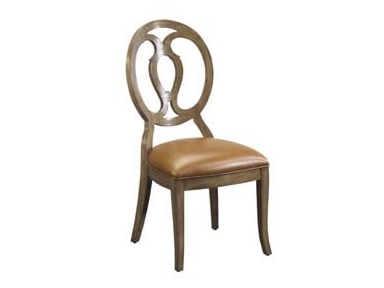
Artistica Dining Room Axiom Wood Back Side Chair 560-021
While baroque may have a certain characteristic that is entirely its own, it has different versions to offer from Europe to Latin America. While they have a slightly different look for every country, there is a reason why only a single term is used to describe them. All come from a common aesthetic beginning.
Baroque, in Spain, originally referred to an oddly-shaped pearl. In Italy, this term is used to describe a sophistic argument with little dialectic worth. It soon became known in every European language and most used it to define anything unusual, extravagant, irregular, even absurd.
A Little Baroque History
During the second half of the 19th century, Heinrich Wolfflin together with his followers brought a whole new meaning to the term baroque. This Swiss critic used the term to define more specific features such as movements (e.g. a curving on the wall or a water feature showing different water patterns).
Baroque could also be used to represent infinity. So this could be used to define the whole horizon or a trick of mirrors which can alter optical perspectives.
In Renaissance architecture, baroque is the right term to use when describing churches and palaces. These could be royal palaces, cathedrals, parish churches, monastic buildings, country mansions, etc.
The Baroque Building
A structure can be given form in various ways. It can be a piece of sculpture in the middle of a building. It can also be a mere box which is given definition by regular-shaped walls. As a skeletal framework, it is what architects see as a mass that needs to be worked on.
Churches during the Baroque period were always built with vaulted ceilings, hence, the term cathedral ceilings.
Manipulation of Light
The light that focuses a certain point in a physical structure may vary but the effect that it renders will always be the same. So imagine using the same kind of lighting on a brick wall and a smooth, granite one. Baroque architects used this fact to give emphasis to texture and proportion. The difference now lies on the level of appreciation that the spectator shows for each rendition.
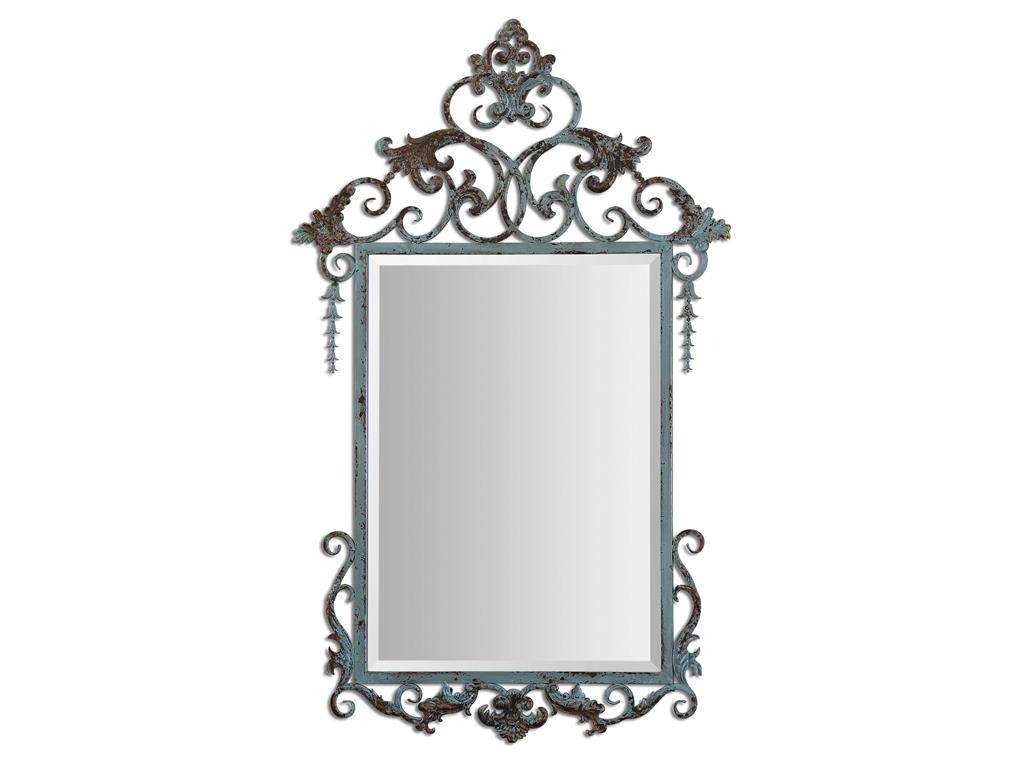
Accessories Uttermost Beatriz Baroque Mirror 07673
A Touch of French
The greatest look that the French were able to contribute when it comes to the baroque style could not be found in architecture. You will appreciate French baroque if you take a careful look at beautiful landscape gardening. Baroque gardens have always been Italian in nature with small parks, flower beds and plants. It wasn’t until Andre Le Notre, a landscape architect that a new perspective for garden landscape was born. The French garden often stood at the center of the palace with gravel-filled carriage areas, gates, and the drive all around it. The French-inspired baroque style was the inspiration for The Netherlands and Belgium architecture.
Urban Baroque
Grand staircases are reminiscent of the aristocratic buildings during the 17th century. Having these in your home would be a good way to let people know that you mean to use the baroque style.
Baroque, more often than not, is a kind of art illusion. There are scenery paintings and other false perspectives, sculptures abound, ornaments everywhere.
For a more modern baroque style, try to use a lot of white. The elegance of marble is most welcome, as are opulent moldings, curvaceous lines, jewel tones, and gilded finishes.
You can also mix eras to create a result that is surprisingly baroque. An example is installing metallic wallpaper, and mixing it with a painting of a raven on the wall, a glass chandelier, and a modular credenza.
To cap the baroque design, make sure that you create a focal point that is sure to catch everyone’s attention. A well-placed chandelier or a wooden sculpture will do the trick.
Follow us on our social media


© McCreery's Home Furnishings | All Rights Reserved | Privacy Policy
