- Follow us:


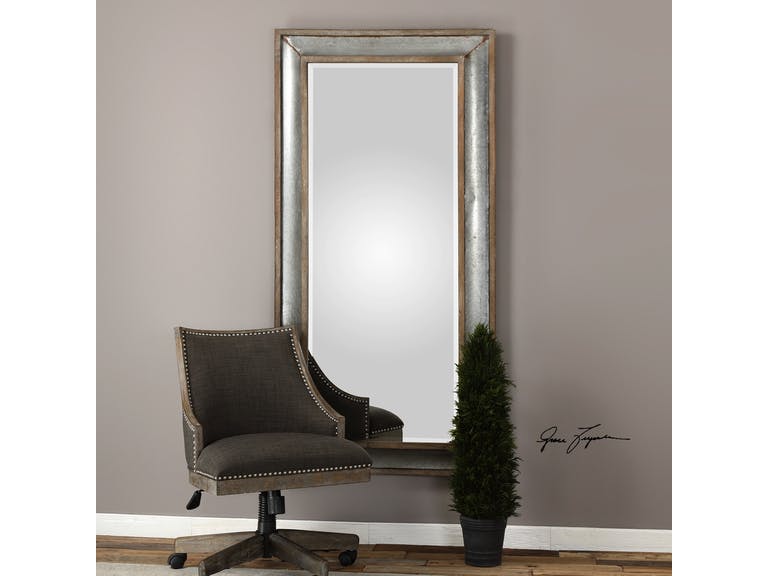
Uttermost Accessories Texoma Galvanized Tin Mirror 09314
Tin is a chemical element; it’s a silvery metal when it is refined. It is known for being able to resist corrosion. It is also being used to coat other metals and as a plating on steel sheets. It is also the main material for cans.
Tin can also be combined with copper and the resulting metal is a kind of bronze. Fuse it with lead and what you form is solder. A tin compound is also a common ingredient for toothpastes as it is effective in tooth decay prevention.
A Little Tin History
The earliest records of tin dates all the way back to 3500 B.C. in what’s now Turkey. It was there that tin was first mined and then processed. The ancient metal workers used it together with soft copper which led to a more durable form of bronze. This metal was then used to create weapons and tools because they were much more durable and were able to stay sharp for a long time.
The discovery of this kind of bronze spurred the beginning of Bronze Age. This era lasted for about 2,000 years. After this, tin deposits – lots of them – were dug up in England and the traders eventually brought it to Mediterranean countries. Their source was kept secret, though, and it was not until 310 B.C. that Pytheas disovered the mines’ locations.
The Chinese and South African peoples used tin as did the metal workers of Thailand who also mixed tin with copper. By 1600 BC, bronze plows were already being utilized in Vietnam.
Fast forward to the early 1800s, Pierre Durand from France patented his method of food preservation. This was sealing food in tinplate cans. Bottles were quickly replaced by the mid-1800s and by the 1830s, alloy bearings were already being used in high-speed machinery and transport developments.
These days, tin is widely produced in Australia, Bolivia, England, Indonesia, Malaysia, Nigeria, and Thailand. The United States has no known major tin deposits.
Tin in Interior Design
Metallics are widely used in interior design for the last years. Gold, brass, silver, and chrome are shining supremely in homes as they are mixed and matched with every possible interior design element.
Metallics have made it to the elite in terms of style. Tin as made it to this circle as it is now one of the trends for 2019. Pinterest was bold enough to declare that tin will be big this year. The searches for this metallic material has risen to 563% each year.
It has definitely captured the hearts of many homeowners and interior designers. Touches of tin can effectively add personality and spunk in different spaces throughout your home.
If you want to use tin in the bedroom, then have it as an accent wall. Use patterns and textures to make this metal even more interesting. Create an industrial look effortlessly with this material.
Consider adding complementary materials like pewter, silver, chrome, copper, and even ceramic tiles.
If you’ve decided to use tin on the ceiling, then you can do this in your dining room or kitchen. Pick a shiny kind of tin so that light could be reflected throughout the room. This could brighten up the space as you cook food or serve the meals to your family.
Tin is an instant urban accent. It can be your corrugated, focal wall in the living room. add pops of bold hues such as orange to make the room even more interesting.
If you’re not ready to commit, full-time, to the installation of tin or any metallic sheets, then that’s fine. You could begin with the tin headboard or a tin planter outdoors. There are also tin-colored wallpapers to try first so you can have a feel of how tin will beautify your home.
Follow us on our social media


© McCreery's Home Furnishings | All Rights Reserved | Privacy Policy
