- Follow us:


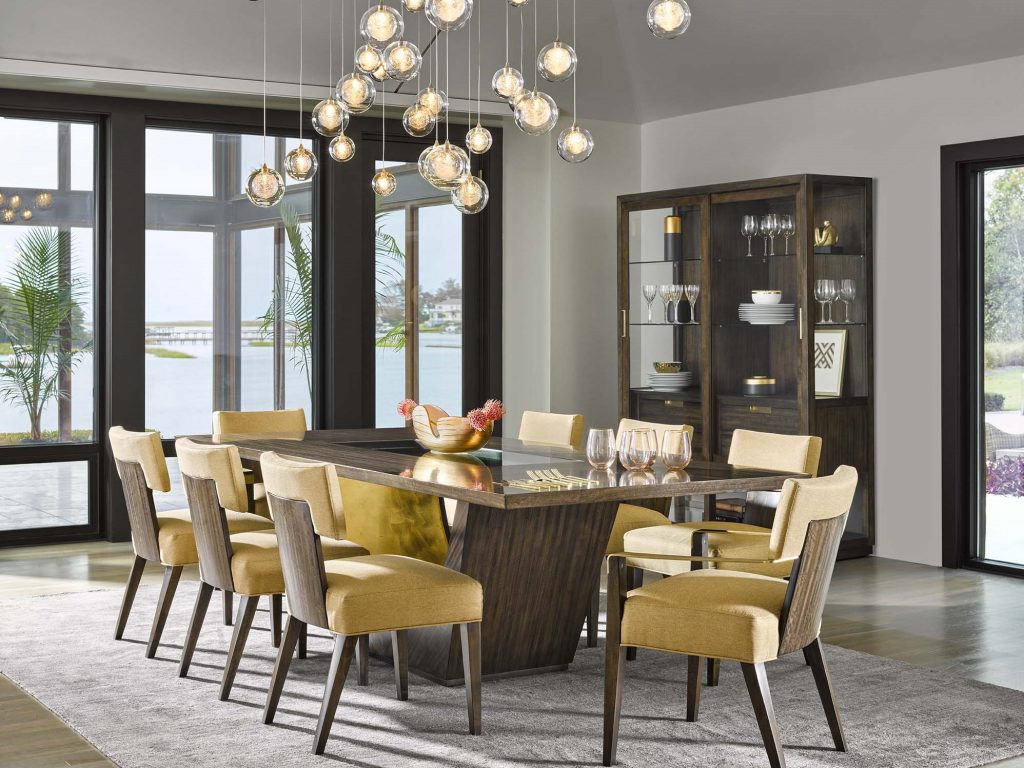
Fine Furniture Runway Collection: How many lighting fixtures do you think this dining room has?
Indoor and outdoor lighting design must be focused on energy efficiency. If you’re about to construct your dream home, then you should take ample time designing the lighting fixtures that you will install.
Designing the Indoor Lights
When you’re designing the indoor lighting and you want to optimize energy efficiency, you should consider adding more light. The quantity that you bring in also counts just as much as light quality.
Install LED or fluorescent lighting on the ceilings and walls. Take time design the light in key areas such as the living room, kitchen, bathrooms, the hallway and other high-traffic areas.
You can also use portable LEDs and CFLs that are going to be used for two hours each day. Be sure to find the Energy Star labeled lights. Invest also in occupancy sensors that would automatically turn your lights on or off.
Consider the light walls because these will minimize the need to use artificial lights. If you’re thinking of using recessed lights on your ceilings, use UL or Underwriters Lab approved fixtures only. These are airtight so they meet all ASTM (formerly the American Society for Testing and Materials) requirements.
Measure the ceiling height so you will know how to properly hang the lighting fixtures. There are lights that already come with adjustable rods or cables but there are also those that don’t so be sure to do your measurements.
The rule of thumb is, the bottom of your lighting fixtures must hang at about 12-20 inches below an eight-foot ceiling.
When you’re hanging a light over a kitchen island or a dining table, take note that the recommended distance is 28-34 inches from the lighting fixture’s bottom to the table surface. Note the size of your lighting fixture, though.
A smaller light may be hung lower while a bigger one can be placed higher.
When adding new pendant lights, consider if you can use cord swags. These can provide an industrial feel to the kitchen.
Light the stair risers so that no one would trip when he or she goes up or down the stairs.
Play with colors. A bright, colorful light in a neutral room will surely be interesting to see. Decorative lighting can also help in adding mood to the space.
Design for Outdoor Lighting
When you’re designing outdoor lights, you should consider aesthetics, utility and security.
For aesthetic lighting, make sure that the exteriors of your home are properly illuminated giving emphasis to areas such as a plot of garden or a beautiful landscape.
As for utility, be sure to put ample lighting on the driveway and the porch. These lights will help the people navigate around the house. Security-wise, the grounds must also be illuminated whether on the driveway or all around the house.
Energy efficient outdoor lighting needn’t be bright. Use fluorescent or LED lighting for energy efficiency. Think if you can have a few floodlights installed. Combine these with motion and photo sensors.
Check also that the outdoor lighting fixtures come with reflectors, covers or deflectors. Any of these will help reduce light pollution outdoors. Make good use of controls and timers so that decorative lighting can also be turned on and off.
Some of the lights that are commonly used to improve the outdoor setting are –
Lighting, as cliché as it may sound, can make or break the design of your home. Lighting can increase the ambiance as well as the mood of any space whether you’re illuminating outdoors or indoors. If you get it correctly, you get the assurance that your home will look at its best.
Follow us on our social media


© McCreery's Home Furnishings | All Rights Reserved | Privacy Policy
