- Follow us:


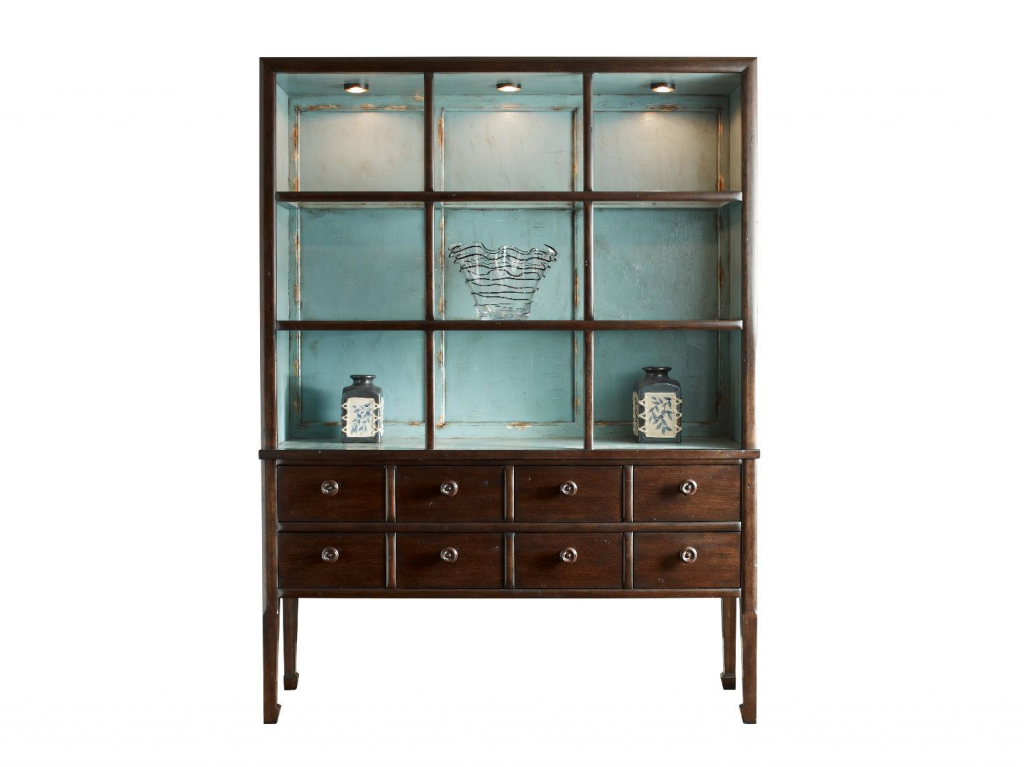
Deck and Base from the FFDM Cachet Collection
Have you noticed how Mid-century modernism is practically everywhere these days? When you take the time to think about the lighting from that era, you would picture sharp corners and lines and those atom-inspired pendant lighting. You would also picture – on default – the geometric and minimalist lamps that are scattered throughout. Modernism also spurred lower ceilings and bare spaces.
Commercial shops often lit their buildings with glass pendants that were stained, and some with ornate chandeliers. These hung from the tallest ceilings and often paired with Art Décor or Art Nouveau crafts.
Mid-century modernism paved the way for a different kind of lighting. Opulent lamps were soon replaced by glass bowl-like lamps that encased an incandescent bulb. Pretty soon, recessed lamps were born.
Recessed lighting allowed adequate lighting plus the ability to save space. One could observe how it efficiently aided in keeping the spaces distraction-free.
Apart from a few stylish adaptations, these recessed lamps haven’t evolved much. It wasn’t until the 1980s when the light was recessed fully in the ceiling. At that time, they saw that there was no need for the light diffuser that often encased the bulb.
With no fallen insects and distorted light color, brighter light emanated from these recessed lamps and soon they became a staple in kitchen lighting. Around this time, too, downlights were born which highlighted specific elements in a space.
Today’s Recessed Lighting
Another 20 years down the line, we all know how hot recessed lighting already is. LED lamps have also emerged, hence, smaller sizes of recessed lights were also born. These lights look great in rooms with low ceilings.
Each recessed light has three chief components namely – the housing, its trim and light bulb or the lamp. The housing is the light fixture itself. It is the one that sits right inside the ceiling which also holds the trim as well as the light bulb.
New construction housing is the one that’s used for new homes or when adding some rooms in your current home. The remodel housing is utilized in installing recessed lighting to an already existent ceiling. The IC or non-insulation contact rated housing is used so that the surrounding insulation will not be disturbed.
Airtight housing, on the other hand, is the one that decreases the airflow between the upper space – which is often the attic – and the room right below. Shallow ceiling housing is the housing that’s used on ceilings with two-inch by six-inch joists. Lastly, the slope ceiling housing allows light angling on sloped ceilings.
The trim is the part of the recessed light that fits right into the housing then extends and forms the outer ring. The baffle trim comes with a ribbed interior and is generally the most utilized kind of trim.
Another kind of trim is the eyeball trim which allows you to focus the light right where you need it. This is used for accent lighting or when you want some wall wash light. There is also a wall wash trim that comes with shield on the other half of the light. This allows for a more focused light directly highlighting a feature such as an artwork or the fireplace.
The shower trim comes with tempered glass for safety. These are wet-rated so they can be used even inside shower rooms.
Recessed lighting can also be used inside the living room, home office, the kitchen, and just about any part of a home.
The Recessed Lighting Finish
Your cue should be the kind of finishes that you already have in your home. If there are many brushed nickel door handles and hardware, then this should also be the recessed lighting finish that you should use.
Popular finishes are white, nickel, black, bronze and bronze and frosted glass.
Follow us on our social media


© McCreery's Home Furnishings | All Rights Reserved | Privacy Policy
