- Follow us:


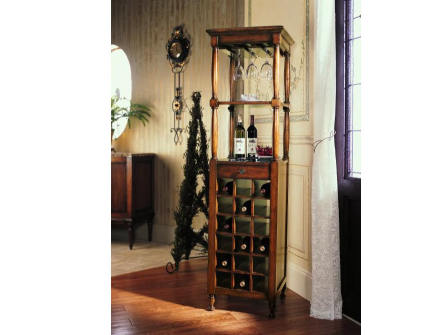
FFDM’s RayLen Wine Cabinet satisfies both vertical and horizontal bottle storage.
Alright, so you have bottles of wines that you’re not planning on drinking straightaway. What are you planning to do with them? Before you begin setting up a wine cellar of your own, it is crucial to know that not all fine wines can be stored for aging. Majority of wines in the market should be consumed within just a few years that they were made. If you want to collect wines that you would want to mature, then you should consider investing in a professional-grade storage equipment.
For someone who wants just a simple wine cave, here are the fundamentals –
Cool It Should Be
Heat and wine are never best friends. Wine temperatures that go beyond 70⁰F will inevitably age a wine more quickly and the results are usually far from desirable. This pretty much like cooking wine instead of aging it.
The ideal temperature in any wine cellar is anywhere between 45⁰F and 65⁰. Of course, this is never an exact science especially since the location of your chosen wine cellar will also add to the eventual flavors and aromas of your wines.
If you really can’t help having a slightly higher temperature in your wine cellar, then just be sure to consume the wines stored there within a few years that they were made.
Too Cool Ain’t the Way to Go
While keeping wines cool is a prerequisite, it wouldn’t also be good for them to stay in cold temperatures for too long. You can place wine bottles inside a refrigerator just for a month or two. The lack of moisture inside this appliance could dry up the corks allowing the air to seep through. This will result in damaged wine.
No to Natural Light
It’s time to turn the lights off. Sunlight and other forms of strong lighting are not welcome inside wine cellars. They pose a threat to the wines’ aging. This is also the reason why most wines have colored bottles. The UV rays of the sun can potentially degrade the wine.
It is best to use incandescent bulbs than fluorescent lamps.
A Little Humidity Please
The ideal humidity for wine storage is at 70%. Since dry air can dry out the corks and eventually spoil the wine, it is best to have just a little moisture. Keeping a pan of water in your wine cellar should improve the wines’ condition. Make sure also that you consume the wine within 10 years or you will need to worry about professional storage.
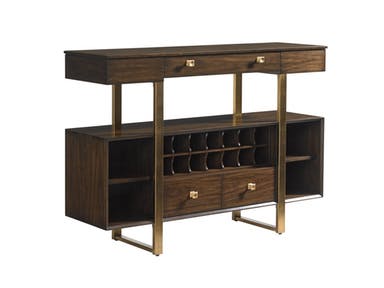
Stanley Furniture Living Room Crosley Sideboard 436-11-06
Horizontal Storage
Bottles are stored on their sides so that the liquid touches the cork at all times. This, theoretically, keeps the corks wet. This storage technique is especially useful where there are no glass, screw caps or plastic corks to stop your wine bottles.
The Basement for a Cellar?
If you don’t have a not-too-damp room such as a basement, then you can always improvise. The simplest racks should be fine to begin with. Don’t even think about storing wine bottles inside the kitchen, the boiler or laundry rooms. These are usually areas that sustain hot temperatures so wander off of there.
Any vacant storage area can actually be repurposed as a wine cellar. This is a location that’s far away from the sun and one that has at least one cooling unit. There are now standalone units called wine coolers that can also be added to your newly set up wine cellar.
If you want to get the best out of this new room in your home, then you just have to install a through-wall cooling unit. Such units can also control the humidity inside the wine cellar.
Follow us on our social media


© McCreery's Home Furnishings | All Rights Reserved | Privacy Policy
