- Follow us:


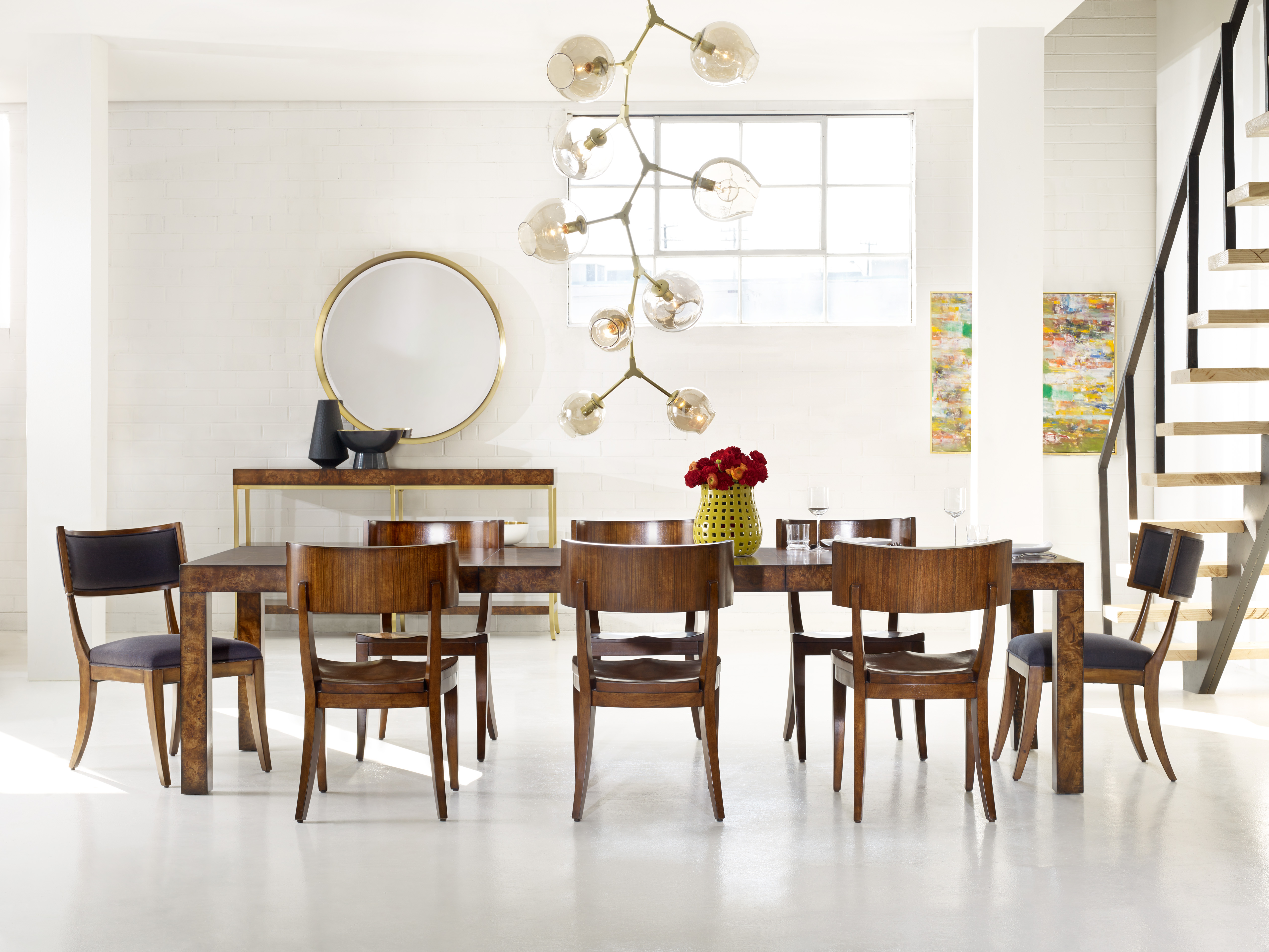
1586-75200B-BRN Long Board Rectangle Dining Table with 2-20in leaves
The growing demand for brass, gold and other metallic accents has thrust the mixed-metal schemes to the public’s attention. The classic combination of gold and silver, the rustic charm of copper, and other metallic fusions form the foundations of a design or are just pieces of a much larger puzzle. So, whether you lovev Art Deco or the contemporary look, there is much, much more to the mixed metal theme that you can enjoy –
Pick Your Favorite
When you are out to mix metals, remember that you are still basically mixing colors. So the same rules apply – the dominant tone must have a secondary tone that would give the room a visual structure that works. Different items can have steely tones like the chair legs, the base of a lamp, or the curtain rods.
There isn’t a single, concrete formula that works for every home. How much metal you use depends on your taste. If you have no idea on how to begin, then it’s safe to start with 70-percent and 30-percent. This is a good ratio for one tone that is dominant and the other being the secondary hue.
Gold Is the Star of the Show
What is a metallic theme without gold, right? A lot of common items have gold tones such as small accessories and curtains. Not a lot come in silver, though. The most common silver pieces are mantel vases.
For gold-inspired theme to work, you have to make sure that the tone is carefully spread throughout the entire room. This color should not be cramped in just one place.
A large room with more elements and accessories should have a single goal – to keep the eyes moving throughout the room, with each metallic element shown here and there.
Fabrics in Metallic Finishes
Don’t forget to use fabric with metallic finishes when working with metallic tones. Add variety then spread the palette everywhere in your home. For example, you can use a gold-yellow accent pillow to bring warmth on a seat. This is an effective way of using metallic tones without going overboard.
You can also use one large object such as a coffee table as an anchor. The gold color of this table will serve as the dominant color and then accents can be added everywhere else.
While gold and silver are a great combo, it wouldn’t be wise to use a lot of silver. Silver is brighter and it tends to sparkle more than gold. Don’t drown the beauty of gold by using more silver. Just have a few hints of silver against the more dominant gold tone.
Choose and Fuse
It is possible to use more than two metal tones inside a room. When you do this, though, be sure to consider the actual size of the room. A wide room should have dashes of silver, copper and gold. These will add personality to the space without making it look cluttered.
Every metal must be equally represented. Allow each to blend with the rest of the natural and eclectic finishes. Every metal is approximately 1/3 of the metal palette so use it sparingly but visibly.
A smaller space – the ones that are smaller than 500 square feet – should have no more than two metal tones. This is so the space won’t look like an antique shop in the process.
Mismatch Mishaps
At times, the best way to have finishes balance elegantly is to not match them at all. An example of a dreamy space made dreamy by metallic tones is having a stool, accessories, and nightstand in different metallic colors. When you do this, be sure to make the cooler tones more dominant. So use more pale gold than silver.
Objects must also come with varying finishes. Your options range from the aged, polished to brushed.
Follow us on our social media


© McCreery's Home Furnishings | All Rights Reserved | Privacy Policy
