- Follow us:


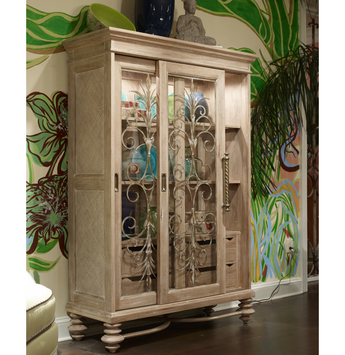
FFDM’s Palm Island Collection will pair right off with just about any countertop material.
One of the most common questions asked to a bathroom and kitchen designer is this – what other materials, apart from granite, can you suggest for my kitchen counters? While it is true that granite is widely used in most kitchen and bath projects, there are moments when granite simply won’t work.
Granite is a beautiful counter material but it usually steals the spotlight from the rest of the design elements. The mirror finish of granite makes it difficult to subdue this material. There are moments when it works but there are also times when it just won’t support the look that a homeowner has chosen.
The good news is, there are a lot of options in the market for alternatives on granite. Here are some surfaces that would work on your kitchen or bath. Mind you, these are non-granite but absolutely stunning –
Marble
This easily tops the list of materials that can be used to replace granite on kitchen countertops. This is a softer stone when compared to granite. It can be stained and it can also have scratches over time. This is not the material that you would use, though, if you don’t want the look of wearing and aging.
Soapstone
Soapstone is a material that is non-porous, soft and classified as natural stone. It may be soft but it is a pretty resilient material for countertops. It is a dark stone (almost black) plus it comes with a honed surface. Those who love to cook would find soapstone to be a wonderful heat insulator.
Wood
Wood is an excellent alternative to granite because it is both functional and interesting. This material requires periodic oiling, though. This oiling maintenance is needed so that the wood won’t dry out.
Wood also works beautifully in bathrooms.
Quartz Composites
If you love granite so much but would want to avoid the downsides that it offers, then quartz is the way to go. This is made from quart aggregate. It can replicate the beauty of any natural stone.
These are a newer category in the world of countertops. Composites are stone aggregates as well as polymers that were compressed under extreme pressures. The result is a material that is strong and non-porous. Its strength and durability is comparable to natural stones though it is a manufactured product.
Quartz composites come with consistent patterns and colors.
Concrete
Concrete counters are also great because they are one-of-a-kind, durable and long-lasting. Adding stone or any different colored glass to concrete will result an integrated design that is difficult to match.
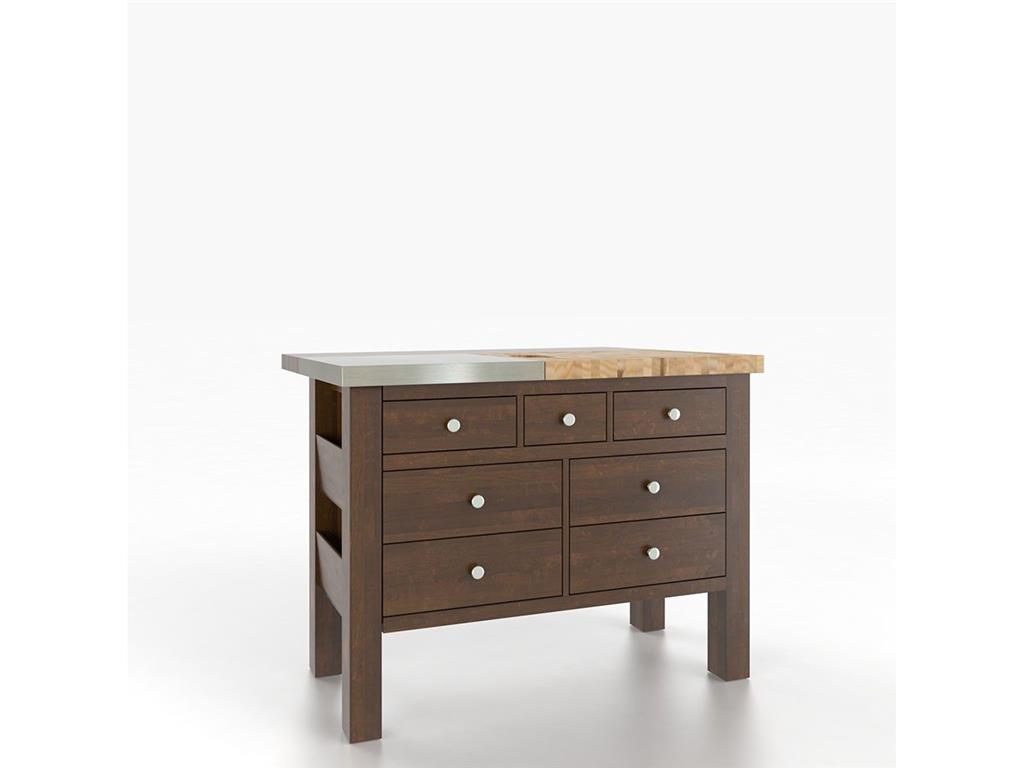
This is an example of a kitchen island with wood and steel top. (Canadel Kitchen Island ISL4836-T4)
Glass
This is another counter material that may not be as durable as granite but it is just as stylish. Glass can be painted and stacked to provide a strength that is difficult to match. It is one of those unexpected materials that you could use which never fails to get a good response.
There is another type of glass material that you can resort to especially if you’re living a green lifestyle.
Recycled glass sparkles and shines the same way that newly-manufactured ones do. This is often a terrazzo piece, meaning, it has been combined with other materials such as marble chips with concrete. In the case of recycled chip glass chips which are mixed with concrete, well, the resulting products are many eye-catching surfaces.
Steel
Ease of cleaning, sleek style, and durability – these are all the features that make steel a wonderful material for countertops. It also offers a clean, crisp look to any kitchen, thus, those who want to stage a modern space would find it useful.
Steel is also durable enough to literally last for thousands of years. It is also a recyclable material so that’s added great news.
Follow us on our social media


© McCreery's Home Furnishings | All Rights Reserved | Privacy Policy
